


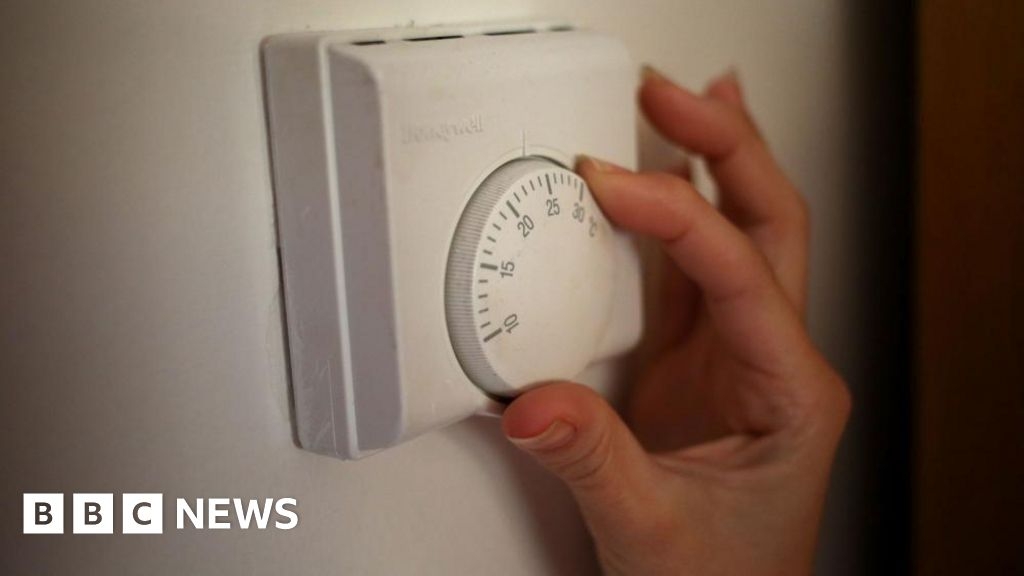
£7m grant to tackle fuel poverty in Stoke-on-Trent
"Everybody deserves the right to live in a safe and warm home and we are already making significant improvements to council-owned homes to ensure this is the case for all our residents, councillor Chris Robinson said.The improvements, which would most likely be implemented from June, are expected to reduce energy bills, raise housing standards and reduce carbon emissions.The city council's cabinet is set to agree to accept the funding from the government's Warm Homes scheme at a meeting on 25 February. The authority will then find out exactly how much it has been awarded from government before releasing information on how to apply for funding.
Follow BBC Stoke & Staffordshire on BBC Sounds, Facebook, X and Instagram.

Try Our AI Features
Explore what Daily8 AI can do for you:
Comments
No comments yet...
Related Articles


Times
 3 days ago
- Times
British horse racing to go on strike over betting tax rise
British racing will take the unprecedented step of going on strike next month, cancelling all meets for a day in protest at the proposed rise to betting tax. Four events due to be staged on September 10 at Carlisle, Uttoxeter in Staffordshire, and Kempton and Lingfield Park in Surrey are to be scrapped. The first voluntary racing blackout in the sport's modern history is expected to cost the industry about £700,000. The chosen day is just before the start of the St Leger Festival at Doncaster, which prime minister Sir Keir Starmer and his wife Victoria attended last year. The British Horseracing Authority (BHA) is campaigning against the Treasury's proposal to raise the 15 per cent tax paid by bookmakers on profits from racing and other sports bets placed in the UK to 21 per cent — the same level due on online slot and casino games. The sport is heavily dependent on the separate horseracing betting levy of 10 per cent paid by bookmakers on annual gross profits on racing wagers, which amounted to £108 million paid back into the industry in 2024-25. Industry bosses have warned that the government reforms could have catastrophic consequences. Jim Mullen, the chief executive of the Jockey Club, which owns the Kempton and Carlisle racecourses, warned the tax rise would cause 'irreparable damage that threatens a sport the nation is, and should be, proud of'. Industry experts say bookmakers are likely to seek to offset the impact of a tax hike by increasing prices, cutting bonuses and reducing advertising and marketing budgets while further promoting online gaming, which has lower overheads and fixed margins. Economic analysis commissioned by the BHA estimated the proposed 21 per cent tax rate would cause a £330 million loss in revenue to the industry in its first five years and put 2,752 jobs at risk in the first year alone. The nation's second-largest spectator sport is worth £4.1 billion to the UK economy, supports 85,000 jobs, and is attended by almost five million people a year. • Plan for betting tax will kill racing, warn sport's chiefs Gordon Brown, the former prime minister, has backed a separate plan proposed by the Institute for Public Policy Research to raise some betting taxes, including the duty on online casinos, from 21 per cent to 50 per cent. He said the moves would raise £3.2 billion a year, which could be used to lift welfare restrictions such as the two-child benefits cap. The collective decision to stop racing on September 10 is recognition of what the sport's differing factions regard as an existential threat. Race meetings in Britain usually take place on 363 days a year, with Christmas Eve and Christmas Day the exceptions. Although meetings have regularly been rescheduled due to adverse weather, and crises such as the equine virus outbreak and the Covid-19 pandemic have caused racing to be suspended in the past, this will be the first time in history the sport has decided to strike. The races will be rescheduled but the action, forecast to cost £500,000 in media rights and £200,000 in levy income, is designed to underline to the government the importance of betting revenue to the sport's health. Owners, trainers and jockeys will instead join racing leaders and MPs for a campaign event in Westminster. Mullen said: 'Our sport has come together today, and by cancelling racing fixtures, we hope the government will take a moment to reflect on the harm this tax will cause to a sport in which our country leads in so many ways.' Martin Cruddace, chief executive of Arena Racing Company, which owns Lingfield and Uttoxeter racecourses, described the threat of the tax as 'existential' to the sport. 'Unlike online casino games, British horseracing makes an enormous contribution to society and employment, has vastly different rates of gambling-related harm and is not available every ten seconds, 24 hours a day,' he said. 'We have always been taxed and regulated differently, and it is imperative for our future that we continue to be so. If the government wants Britain to be a world leader in online [casinos] and a world pauper in a sport at the heart of its culture, then tax harmonisation will achieve that aim.' • My audience with Frankel — king of racehorses Brant Dunshea, chief executive of the BHA, said: 'British racing is already in a precarious financial position and research has shown that a tax rise on racing could be catastrophic for the sport and the thousands of jobs that rely on it in towns and communities across the country. 'We haven't taken this decision lightly but in doing so we are urging the government to rethink this tax proposal to protect the future of our sport which is a cherished part of Britain's heritage and culture. 'Our message to government is clear: axe the racing tax and back British racing.' The Treasury argued in a consultation paper in April that a single duty would 'provide tax certainty and increase simplification for remote gambling'.


Reuters
4 days ago
- Reuters
Indian miner IREL seeks Japan, South Korea partnerships for rare earth magnet production
NEW DELHI, Aug 14 (Reuters) - India's state-owned miner IREL is seeking to collaborate with Japanese and South Korean companies to start commercial production of rare earth magnets, a source familiar with the matter said, as part of efforts to reduce reliance on China. The company is looking at both Japan and South Korea for rare earth processing technology, potentially through government-to-government channels, the source said, declining to be named as the discussions are not public. The miner aims to formalise talks with other countries on rare earth mining and technology partnerships and plans to seek IREL board approval for commercial magnet production this year, the source said. IREL and the Department of Atomic Energy, which oversees the company, did not respond to requests for comment. India currently lacks commercial-scale facilities to refine and separate the full range of rare earth elements to high-purity levels. China, which controls the bulk of global rare earth mining, suspended exports of a wide range of rare earths and related magnets in April, upending the supply chains central to automakers, aerospace manufacturers, and semiconductor companies among others that use them. IREL has also approached Toyotsu Rare Earths India, a unit of Japanese trading house Toyota Tsusho (8015.T), opens new tab, to seek help in reaching out to companies in Japan for processing of rare earth materials, the source said. The source said IREL had an initial meeting with Toyotsu to explore whether it could engage Japanese magnet manufacturers, with one proposal involving the possibility of a Japanese company setting up a plant in India. Toyota Tsusho and Toyotsu Rare Earths India did not immediately comment. Japan's Ministry of Economy, Trade and Industry, in charge of rare earths, did not immediately respond to a Reuters email seeking comment. In June, Reuters reported that India asked IREL to suspend a 13-year-old rare earth export agreement with Japan to conserve domestic supplies. IREL is prepared to supply rare earth element neodymium oxide to a technology partner, who would then produce the magnets and send them back to India, the source said. The state miner currently has the capacity to produce 400–500 metric tons of neodymium annually, the source said, noting that output could increase depending on the terms of the collaboration. IREL also plans to expand domestic rare earth mining and processing. In India, rare earth mining is restricted to IREL, which supplies the Department of Atomic Energy with materials for nuclear power and defence-related applications. The company is also exploring potential rare earth mining opportunities in Argentina, Australia, Malawi and Myanmar, the source said.


The Independent
5 days ago
- The Independent
Homes, school and green spaces to replace old coal-fired power station
The site of a decommissioned power station in Staffordshire is being transformed into new homes, a school and accessible green spaces. Rugeley Power Station joins a growing number of coal-fired power stations that have been or are in the process of being repurposed into mixed-use developments. Energy services firm Engie has been working on turning Rugeley into a sustainable community asset since its closure in 2016, underpinned by a £45 million investment. This has included the demolition of the coal-fired plant and restoring the site to create the foundations for a safe, green neighbourhood. After the completion of these remedial works, the site has been sold to housebuilding firm Vistry Group, Engie said on Tuesday. Planning consent has been secured for the building of 2,300 new homes, five hectares of employment space, green spaces and an all-through school that will open to its first students in September. Engie said it donated the land for the school and supported its construction, as well as the delivery of a new access road. The firm also partnered with Staffordshire Wildlife Trust to donate land and create a 26-hectare Riverside Park, providing accessible green space and environmental benefits. Miya Paolucci, Engie UK chief executive, said: 'Rugeley Power Station played an important role in the UK's energy history, and we have been proud to lead its transformation into a place focused on sustainability, community and opportunity. 'From the outset our ambition extended beyond redevelopment to responsible stewardship, ensuring that the site would serve the long-term needs of the local community and the environment. 'We are deeply grateful to the local stakeholders, partners and residents who have helped shape the site, guiding a regeneration effort that reflects both the area's heritage and its aspirations. 'We are pleased to confirm the transfer of the site to Vistry Group, who will continue to deliver our vison of a beautiful and sustainable community asset.' Michael Moore, managing director of Vistry North West Midlands, said: 'This is an important development that will contribute to Rugeley's economic growth, providing both new jobs and high-quality places to live. 'Like many areas of the UK, Rugeley has a severe shortage of housing and that's something we're aiming to address by delivering affordable and social rent homes, as well as PRS (private rented sector) and open market homes, and crucially delivering them at pace.' Ratcliffe-on-Soar in Nottinghamshire became the last coal-fired power station in the UK to close last year, with plans in the works for its redevelopment into a zero-carbon technology and energy hub. Other notable transformations include Battersea Power Station becoming homes and a shopping centre, and the Bankside Power Station being repurposed into the Tate Modern art gallery, both in London.
