


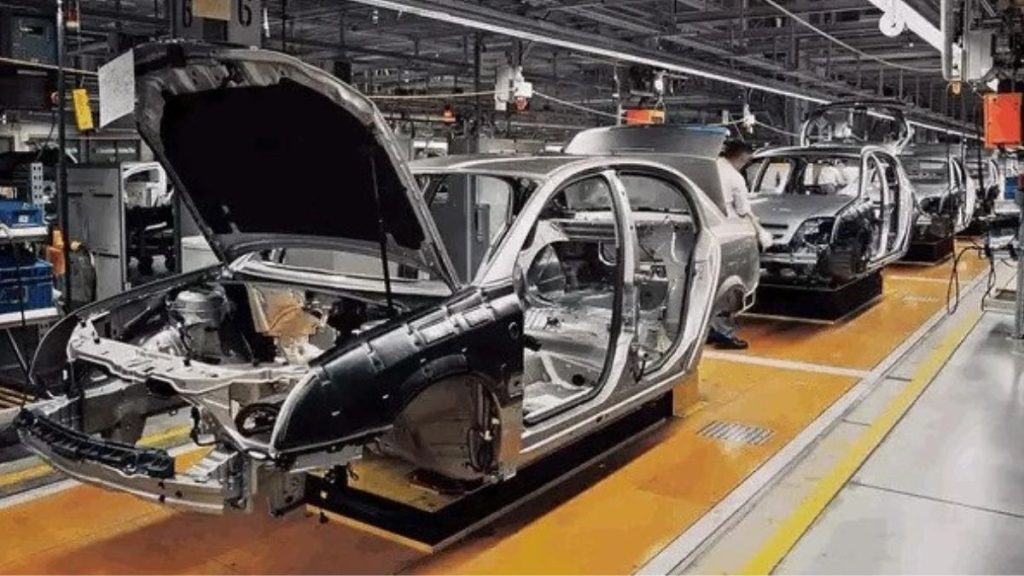
Auto stocks rally: Hero MotoCorp jumps 8.29%, Maruti Suzuki up 7.28%, TVS Motor rises 6.24% as Government plans GST relief for cars and two-wheelers
As of 9:45 AM, auto stocks were trading with significant momentum: Hero MotoCorp rose 8.29% to ₹5,098.50
Maruti Suzuki jumped 7.28% to ₹13,878.00
Ashok Leyland gained 6.80% to ₹130.25
Hyundai Motor India advanced 6.32% to ₹2,382.30
TVS Motor moved up 6.24% to ₹3,208.70
Bajaj Auto climbed 4.88% to ₹8,614.00
Mahindra & Mahindra (M&M) rose 4.50% to ₹3,412.40
Eicher Motors added 3.83% to ₹5,985.00
Tata Motors gained 2.54% to ₹681.50
The rally comes after Prime Minister Narendra Modi, in his Independence Day speech, hinted at a possible reduction in GST rates for cars, SUVs, and two-wheelers. Currently, small cars attract 28% GST plus a cess of 1–3%, while SUVs are taxed at nearly 50% (including cess). New GST Regime on the Horizon
According to reports, the government plans to introduce a simplified GST structure with two tax slabs: Merit and Standard. The Merit category will feature goods with GST up to 5% .
The Standard category is expected to attract 18% GST.
The government is also considering scrapping the current definition of SUVs for GST classification, which has long been a point of confusion for automakers. Apart from the automobile sector, the proposed GST rejig could also bring relief to consumers of air conditioners and construction materials.
Disclaimer: The information provided is for informational purposes only and should not be considered financial or investment advice. Stock market investments are subject to market risks. Always conduct your own research or consult a financial advisor before making investment decisions. Author or Business Upturn is not liable for any losses arising from the use of this information.
Ahmedabad Plane Crash
Aman Shukla is a post-graduate in mass communication . A media enthusiast who has a strong hold on communication ,content writing and copy writing. Aman is currently working as journalist at BusinessUpturn.com
Hashtags

Try Our AI Features
Explore what Daily8 AI can do for you:
Comments
No comments yet...
Related Articles
Yahoo
 14 minutes ago
- Yahoo
India and China: US Tariffs Turn Rivals Toward Friendship in Major Geopolitical Shift
Chinese Foreign Minister Wang Yi arrived in New Delhi on Monday for a two-day visit viewed by many as the first indication of a thaw in relations between two rivals. The last such meeting took place in 2020 after a border clash heightened tensions between China and India, which have long been locked in a state of controlled hostility. More from Sourcing Journal No Hint of a Slowdown at Arc'teryx Parent Amer Sports Despite Tariff Impacts India Suspends Duties on Raw Cotton Imports, Benefitting US Exporters EU Tech Regulation Could Be Holding Up Final Trade Agreement With U.S. Moving forward in the wake of extraordinarily high U.S. tariffs of 50 percent on India, the two largest economies in Asia are looking for synergy and a positive outlook to navigate the turbulence in global trade. Neither side is pretending past tensions are moot, even though it is clear that geopolitics in South Asia stands at an important crossroads. After their meeting on Monday, India's foreign minister S. Jaishankar said it was time to 'move ahead from a difficult period in our ties,' while Wang Yi indicated it was time to 'move beyond being adversaries, to being partners.' Both sides agreed that 'stability had now been restored at the borders,' although analysts warned that years of mistrust could not 'so easily be swept aside by business interests.' Wang Yi's meeting on Tuesday with Prime Minister Narendra Modi at his official residence further underlined the effort. After the meeting, Modi tweeted: 'Glad to meet foreign minister Wang Yi. Stable, predictable, constructive ties between India and China will contribute significantly to regional as well as global peace and prosperity.' He added, 'I look forward to our next meeting in Tianjin on the sidelines of the SCO Summit,' referring to his accepted visit to the Shanghai Cooperation Organisation summit on Aug. 31 and Sept. 1. Pushed further together by what is being seen as a rupture in friendship with President Donald Trump through the punishing 50 percent tariff on Indian goods (the highest in the region), Modi is recalibrating India's strategy. The tariff began with a 25 percent duty for India, compared to 20 percent for Bangladesh, Vietnam and Sri Lanka, along with 19 percent for Pakistan, Cambodia and Indonesia. The additional 25 percent was slapped on India for its imports of Russian crude oil, bringing the total to 50 percent are set to take effect on Aug. 27. India has held firm in its objections to the tariffs, with the Ministry of External Affairs calling the targeting of India 'unjustified and unreasonable.' The overtures to China are viewed as a part of the fallout between the U.S. and India. Premal Udani, former chairman of the Apparel Export Promotion Council (AEPC) and managing director of Kaytee Corp Pvt Ltd, described the situation as an 'existential crisis for the apparel and textile industry.' He told Sourcing Journal that many U.S. buyers had paused shipments and put new orders on hold. 'The industry cannot take this kind of impact. Current effective duties are already at around 40 percent and will climb to 65 percent next week,' he said. Hopes that a U.S. delegation visit this week might advance bilateral trade talks appear dim, with reports suggesting the visit has been put on hold. 'There were two things happening at the same time. There was talk of a Bilateral Trade Agreement (BTA), and the delegation was coming for that—it wasn't to negotiate on tariffs. Realistically, none of us expected much headway in the BTA until these contentious issues were resolved. We were not holding our breath,' Udani explained. According to a recent report by the Indian Council for Research on International Economic Relations (ICRIER), nearly 70 percent of Indian exports to the U.S. will face 50 percent tariffs under the new tariff regime. 'While this represents just 1.56 percent of the gross domestic product (GDP) and 7.38 percent of total exports—far from catastrophic for a $3.9 trillion economy—the impact is concentrated in labor-intensive and high-value sectors such as textiles, apparel, gems, jewelry, auto parts, and agricultural products like shrimp. These sectors not only anchor India's merchandise exports to the U.S. but also directly affect employment and the livelihoods of millions. The U.S. alone accounted for approximately 29 percent of India's textile and apparel exports last financial year, valued at about $10.3 billion,' the report noted. Manufacturers have been faced with some dire conversations with the brands and retailers these past weeks. In Tirupur, which accounts for 68 percent of India's knitwear exports, manufacturers have paused shipments and voiced deep uncertainty. U.S. buyers account for nearly one-quarter of exports from Tirupur, and Tamil Nadu officials warned that the entire state—which sends 31 percent of its $52.18 billion exports to the U.S.—faces urgent threats to livelihoods. The Tirupur Exporters and Manufacturers Association (TEAMA) said that 3 million jobs and 20,000 factories are 'at immediate risk' due to the extra 25 percent to 50 percent tariff. The association has appealed to Prime Minister Modi for relief measures, including high-level diplomatic talks, loan-repayment moratoriums, collateral-free working capital loans, and the temporary suspension of the goods and service tax, income tax and other levies for affected exporters. Sanjay Jain, chair of the Indian Chamber of Commerce National Textiles Committee and managing director of TT Ltd, echoed the depth of the crisis throughout the textile and apparel sectors. 'It's a bad situation—buyers are putting orders on hold, and even ready goods are being asked not to dispatch. Exporters are having to give steep discounts just to move shipments or secure new orders. It's a total loss for exporters,' he said. Jain urged urgent action, warning that summer orders were already being placed and India could not afford to lose market share to other countries. 'The U.S. is the single largest buyer of home textiles and apparel in the world—we cannot ignore it. Now it is about the survival of the small and medium companies and skilled labor. The government must act boldly and support the industry in finding new pastures.' His suggestions included quickly reducing raw material costs, removing import duties on cotton and textile raw materials, and offering a 10 percent U.S.-focused incentive for products facing the 50 percent tariff. Other manufacturers told Sourcing Journal that a 'comparative paralysis has set in.' 'While there's no point in hand-wringing over the so-called friendship with the U.S. and casting blame, all eyes are on our government to see how they protect this badly hit, labor-intensive industry. It's hard to see how the government can cover the 30 percent tariff gap monetarily. We need a multi-pronged strategy,' said a Tirupur based manufacturer, requesting anonymity. Prime Minister Modi's Independence Day speech on Aug. 15, in which he promised relief for the industry through tax reforms before the festival of Diwali in November, signals movement toward India holding its own. Additionally, on Monday, the Finance Ministry announced the elimination of the 11 percent duty on cotton imports until Sept. 30, a step welcomed by manufacturers and a move that also eases access for U.S. cotton into India. Hansa Sharma, founder of the eco-friendly sustainable fashion brand Hansa, described how the situation was transforming the entire supply chain in a post: 'This is a reminder that trade policies don't just change numbers on a balance sheet—they reshape entire supply chains. As a manufacturer, we see first-hand how tariffs tilt the playing field, making adaptability and efficiency more critical than ever. While challenges are real, they also push us to rethink sourcing, diversify markets, and lean into innovation. In the end, resilience becomes the true currency of global trade.' A northern India manufacturer, described it as a 'huge ripple effect.' 'In India it is creating a de facto embargo for exports to the U.S., but the impact is much bigger than that. The tariffs are not only straining local supply chains but also reshaping the geopolitics of sourcing in South Asia,' he said, adding that manufacturers were already considering building factories in other countries, although that would result in a loss of employment in India. Despite the palpable tension, not all are swamped in gloom. Many manufacturers endorsed Jaishankar's point to Wang Yi that 'differences must not become disputes, nor competition conflict,' and that the same point could well be applied to the business of sourcing. While the tentative Chinese connections were not immediately seen as bridges to building business, Udani said that they were overall a 'very positive step forward.' 'They need our raw materials and we need a lot of their goods as well. If it works out it's a win-win situation for 25 percent of humanity,' he said. As for the upcoming deadline for additional U.S. tariffs that is causing disruptions across the supply chain, it's still being seen as a possible window to change. 'We're still cautiously optimistic,' said Udani. 'As Russia-U.S. talks are on, and Ukraine-U.S. talks are on, this issue of tariffs for crude oil imports from Russia may well be swept aside for India.' He pointed to China's last-minute extension on tariffs as an encouraging precedent, while acknowledging that 'given the impulsive and uncertain way tariffs are being distributed, it could quite go the opposite way, too.' 'So, Aug. 27 is the date to watch,' he said, referring to the deadline for the second 25 percent in tariff measures to take effect. His optimism went further: 'I wish other countries well, but in the end, India has great strength in its verticality in the sector. It's only a matter of time, and hopefully we will get a chance to get there.' Solve the daily Crossword

Bloomberg
2 hours ago
- Bloomberg
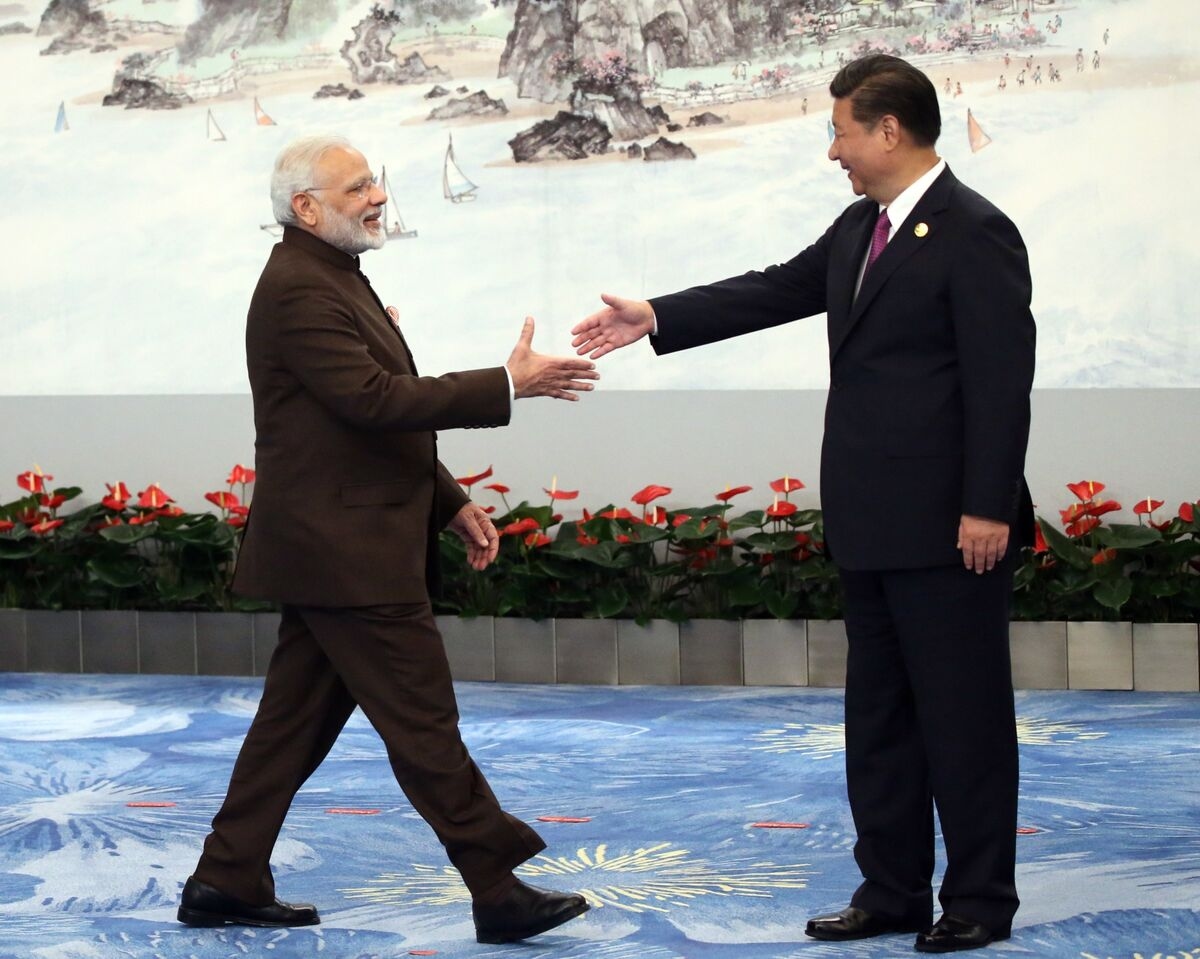
Modi Hails China Ties as Bessent Swipes at India's Rich Families
By and Chiranjivi Chakraborty Save Indian Prime Minister Narendra Modi welcomed improved ties with China as US Treasury Secretary Scott Bessent escalated criticism of the South Asian nation over its purchases of Russian oil. Modi said he's looking forward to visiting China later this month — his first trip to the country in seven years — and meeting President Xi Jinping. The Indian leader met Chinese Foreign Minister Wang Yi on Tuesday in New Delhi. Wang was visiting India for the first time in three years.
Yahoo
2 hours ago
- Yahoo
India suspends cotton import duty in signal to US, relief for garment industry
By Nikunj Ohri and Manoj Kumar NEW DELHI (Reuters) -India has suspended an 11% import duty on cotton until September 30, in a move seen as a signal to Washington that New Delhi is willing to address U.S. concerns on agricultural tariffs, while also easing pressure on its garment industry. The temporary suspension, announced late on Monday, could benefit U.S. cotton growers and provide relief to India's apparel sector, which faces tariffs of nearly 60% on shipments to the United States from later this month. A planned visit by U.S. trade negotiators to New Delhi from August 25-29 has been called off, delaying talks on a proposed bilateral trade agreement and dashing hopes of relief from an additional 25% U.S. tariff on Indian goods from August 27. President Donald Trump earlier this month announced an extra tariff on Indian goods as punishment for New Delhi's purchases of Russian oil, doubling the total duty to 50% on U.S. imports of Indian goods from later this month. Indian exports had previously faced levies of 0-5%, with duties on some textiles ranging between 9% and 13% before Trump raised tariffs in April. The United States is the biggest market for India's garment exporters, who say steep tariffs are leading to order cancellations and making them uncompetitive against Bangladesh and Vietnam, which have U.S. duties of 20%, and China at 30%. India's labour-intensive sectors, including textiles, footwear, engineering goods and shrimp, have been jolted by U.S. tariffs, and are now seeking alternative markets. "The largest beneficiary of the duty free import will be the U.S., the second largest supplier to India," said Ajay Srivastava, founder of Global Trade Research Initiative, a New Delhi-based think tank, adding India already allows duty-free cotton imports from Australia within a quota. Cotton imports more than doubled to $1.2 billion in the 2024/25 fiscal year to March, from $579 million a year earlier, led by $258 million from Australia, $234 million from the United States, $181 million from Brazil and $116 million from Egypt, Srivastava said. The sharp rise in U.S. tariffs comes just as India was emerging as a stronger alternative for American garment buyers, with Bangladesh facing political uncertainty and companies seeking to diversify supply chains beyond China. Industry bodies such as the Confederation of Indian Textile Industry (CITI) had urged the government to scrap the cotton import duty to help make the sector more competitive. Reuters earlier reported that some Indian exporters were scrambling to explore manufacturing options overseas to offset the impact of the higher tariffs. India's garment sector was already grappling with a labour crunch and limited production capacity. The prospect of exporters relocating production abroad poses a further challenge to the government's "Make in India" manufacturing drive. Industry officials now expect the government to extend duty-free cotton imports beyond September. Error in retrieving data Sign in to access your portfolio Error in retrieving data Error in retrieving data Error in retrieving data Error in retrieving data
