


Single mum urges help to buy special back brace for daughter
Published on: Tue, Jul 22, 2025
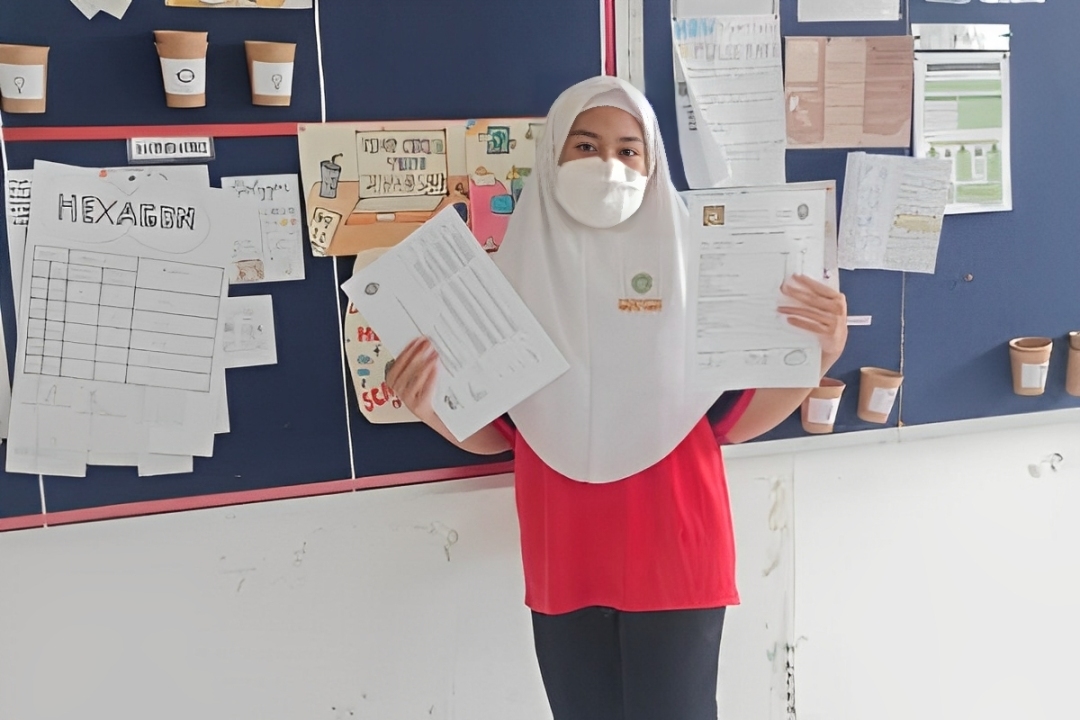
By: Sherell Jeffrey Text Size: Nazihah posing with some of her certificates (Photo Credit: Nor) Kota Kinabalu: A single mother is seeking public help to buy a special back brace for her 17-year-old daughter who has a curved spine and is getting ready for her SPM exams. Nor said her daughter Nazihah has had scoliosis, a condition where the spine curves sideways since 2020 during the Covid-19 pandemic. Back then, it was hard to get proper medical help because of the movement restrictions. 'She always complains about back pain, especially when she wakes up. She cannot stand or sit for long, cannot do heavy work and cannot play sports,' Nor said. Even with her health problems, Nazihah is still a top student studying Science subjects. She has won many awards including a Gold Award at the STEM PBL Carnival 2024 and represented Sabah at the National Science Competition 2024. She also holds important positions in school, including President of the PPIM school body and Head of the Biology Subject Committee. Her spine problem has gotten worse over time. Doctors now say she needs a special back brace instead of surgery to stop her spine from curving more. 'Sometimes she even says it is hard to breathe because her lungs are being squeezed by her curved spine,' Nor said. The back brace costs about RM7,800. This does not include the money needed for weekly treatment and X-rays, making it even more expensive for the family. As a single mother, Nor had to stop her daughter's physiotherapy sessions because she could not afford them after losing her job. 'I can only take her for treatment when I have extra money. If not, she does simple exercises at home to help with the pain,' Nor said. With SPM exams coming up soon, an important test that will decide if she can go to university, there is no time to waste. Her health problems do not just cause pain but could also affect how well she does in her exams during this important time. 'Even if we could get just a few thousand Ringgit, I would be so grateful. I hope there are kind people willing to help my daughter, especially since she is preparing for her SPM exams,' Nor said. She said doctors cautioned that if treatment is delayed, her daughter's spine could curve even more, cause more pain and lead to problems including breathing difficulties. Nor is appealing to the public for donations to help buy the essential medical equipment for her daughter. 'I really hope there are kind and generous people who would help lighten our burden by donating money to buying a scoliosis brace for my daughter. This help would mean so much to us, especially for her health and future. 'I pray that everyone who helps us will be blessed with good health, plenty of food and God's protection,' Nor said. Those wishing to contribute can make donations directly to Nor's Maybank account (Account Number: 1600 185 848 51, Account Holder: Dayangku Nor Laila Bt Pg Ahmad Tajuddin). * Follow us on our official WhatsApp channel and Telegram for breaking news alerts and key updates! * Do you have access to the Daily Express e-paper and online exclusive news? Check out subscription plans available.
Stay up-to-date by following Daily Express's Telegram channel. Daily Express Malaysia
Hashtags

Try Our AI Features
Explore what Daily8 AI can do for you:
Comments
No comments yet...
Related Articles


The Star
 3 hours ago
- The Star
Normalise mental health talks at universities
PETALING JAYA: As over 900,000 Malaysian adolescents faced mental health issues in 2023, experts stress the need to normalise discussions on mental health, as well as to reduce stigma and to improve access to support systems. Malaysian Mental Health Association president Prof Datuk Dr Andrew Mohanraj highlighted the growing mental health concerns of university students, which worsened during the Covid-19 pandemic. Factors such as academic pressure, financial strain, social isolation and uncertain job prospects continue to affect students, he said. 'Even now after the pandemic, the mental health of students at universities continues to be a concern as they worry about their employability and career prospects when the economy of the country is not perceptibly encouraging. 'Many jobs are being made redundant due to the rise of artificial intelligence, as well as the prevalence of remote working and part-time employment,' he said. Despite existing mental health support in some institutions, the stigma discourages students from seeking help, especially from in-house counsellors. Many prefer external services, which are often costly. Some married students also juggle family responsibilities alongside studies, adding to their mental burden. To address this, Dr Mohanraj proposed an inter-university counselling network to widen access. He urges universities to embed mental health education, including stress management and emotional regulation, in their curricula to normalise the conversation. He recommended replacing high-stakes exams with continuous assessments, improving financial aid options like hardship allowances and part-time jobs, and enhancing campus environments through recreational spaces and nutritious food. 'There must be a national-level action plan to coordinate efforts across universities. This must be spearheaded by the Higher Education Ministry. 'This strategy must include anti-bullying policies and enforcement across universities instead of leaving it to the sole discretion of the individual universities to truly reflect zero-tolerance towards bullying,' he said. This will also enhance public confidence in our tertiary education system. Bullying, particularly cyberbullying and body shaming, is also one of the leading causes of increased stress, anxiety and depression among university students. 'This phenomenon is not just restricted to primary and secondary school students,' he added. Prof Dr Mariani Md Nor, a psychologist at SEGi University, called for a multi-pronged strategy. This includes strong institutional support, mental health awareness, balanced academic systems, active parental and community involvement, and national policies. Universities and schools should establish counselling services, peer support groups and mental health hotlines. Trained counsellors can provide early interventions before problems escalate. 'For that reason, it is crucially important to promote mental health awareness by sending information to the public that normalising discussions around mental wellbeing can reduce stigma,' she said. The lack of support, she said, discourages students from seeking help and leaves issues unaddressed until they become severe. On the policy front, Dr Mariani suggested more government funding for mental health resources, subsidised counselling and school-based screening programmes for early detection of at-risk students. She also addressed the impact of social media, noting that excessive screen time can disrupt sleep and reduce real-world social interactions. Unrealistic portrayals of success and lifestyle online can also lead to low self-esteem, while cyberbullying and misinformation further harm mental wellbeing. Sunway Medical Centre clinical psychologist Evelyn Ngui Ailing said fostering community within higher education institutions is vital. 'Universities can offer interest-based clubs and activities like yoga, Pilates, book clubs and spirituality circles to promote connectivity. 'Teachers and mental health advocates can be trained to conduct weekly check-ins with small student groups to identify warning signs early,' she said. She also recommended creating 'safe spaces' on campus – small, private areas where students can seek emotional support. This fosters a culture where mental health is treated as part of overall health, encouraging openness and reducing stigma. 'The awareness of mental health has improved in recent years due to the power and influence of social media. I hear issues on mental health being voiced out and shared regularly among young adults. 'Although some content may contain misinformation, consumers of social media should always verify and cross-check mental health information. 'On the other hand, social media (and virtual messaging) cannot be used as the sole compensation to improve social connectivity, as the presence of supportive individuals is key to improving mental wellbeing,' she added. The National Health and Morbidity Survey (NHMS) 2023 found that one million Malaysians aged 16 and above suffer from depression. Additionally, mental health issues among children and adolescents have more than doubled, from 424,000 cases in 2019 to 922,000 in 2023.

New Straits Times
2 days ago
- New Straits Times
Digital devices impacting M'sian children's eyesight
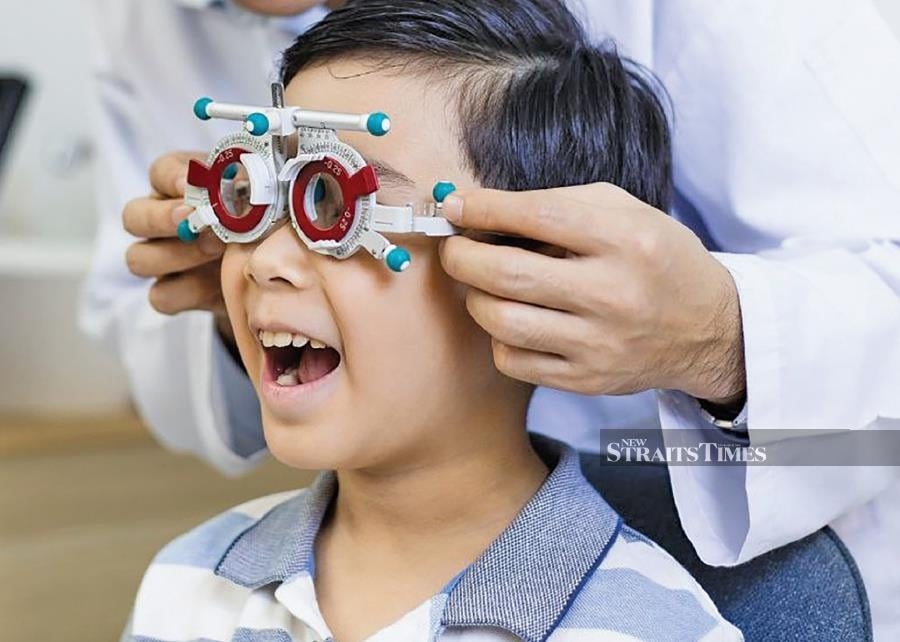
KUALA LUMPUR: Vision problems are becoming increasingly common among Malaysian children, yet many remain undiagnosed until they begin to affect behaviour, school performance, or overall development. Sunway Medical Centre Velocity (SMCV) Consultant Ophthalmologist, Paediatric Ophthalmologist and Strabismus Surgeon Dr Fiona Chew Lee Min said most of these cases stem from refractive errors, a condition where light is not focused properly on the eye due to the shape of the eyeball, resulting in blurry vision. She said Myopia (nearsightedness) and astigmatism (a common condition that causes distortion of vision) are the most common refractive errors among Malaysian children, and both are becoming increasingly prevalent. "Nearly one in two Malaysian children is affected by refractive errors, with a local study reporting a prevalence of 47.8 per cent. Myopia affects 30.2 per cent and occurs when light focuses in front of the retina, causing distant objects to appear blurry. "Astigmatism, which affects 16.3 per cent, is caused by an uneven curvature of the cornea, resulting in blurred vision at all distances. While hyperopia, or long-sightedness, is less common at 1.2 per cent and occurs when light focuses behind the retina, making near objects appear blurry," she said in a statement. With August marking Children's Eye Health and Safety Awareness Month, Dr Fiona reminded parents to prioritise regular vision checks, even when there are no obvious symptoms. The surgeon said that while the conditions are common, they are often overlooked by parents because children rarely complain of vision problems and tend to adapt to their limitations, leading parents to believe nothing is wrong. "Symptoms may be subtle, such as squinting to see distant objects, frequent blinking or rubbing of the eyes, or even holding books and devices unusually close to the face. Dr Fiona also added that while behaviours like sitting too close to the television are often mistaken for bad habits, they could indicate that a child is struggling to see clearly and may have myopia. "If left untreated, refractive errors can lead to more serious vision problems, including lazy eye which causes permanent poor vision, eye alignment issues, headaches from eye strain, problems with depth perception and even difficulties in concentration," she explained. These risks are further compounded by modern lifestyle habits such as prolonged screen use, especially as reliance on digital devices has increased significantly over the years post-COVID-19 pandemic. As a result, more than half of Malaysian students experience headaches linked to extended periods in front of screens. Regarding the recommended screen time for children, Dr Fiona said it should be introduced as late as possible, preferably from the age of seven, adding that children over the age of three should have no more than one hour of screen time per day, while those under three should avoid screens entirely. Dr Fiona said spending more time outdoors can help protect children's vision by giving their eyes a break from digital devices, allowing them to focus on varying distances and exposing them to natural sunlight, which reduces the risk of developing myopia. With that, Dr Fiona encouraged the adoption of the 20-20-20 rule, which is beneficial for people of all ages, noting that it is a simple yet effective habit she practises herself - taking a 20-second break every 20 minutes of near-distance work to focus on something 20 feet away. Alongside preventive habits, she said appropriate corrective measures, including prescription glasses, are key to protecting a child's vision, as they remain the most effective way to correct refractive errors in children, and those who require them should wear their glasses consistently to prevent eye strain and help stabilise the refractive error. She also noted on the concerns about glasses will weaken a child's eyesight and said such thing is unfounded, as the correct prescription actually helps the eye focus properly. For older children from the age of 10 to 12, contact lenses may be introduced as an alternative, but strict hygiene must be practised to avoid eye infections. Dr Fiona said routine eye screening also plays an important role in maintaining children's eye health, starting as early as at birth, followed by a formal eye assessment at the age of three. Should there be any signs of vision problems in between, parents are encouraged to take proactive steps and have their children's eyes assessed earlier. Meanwhile, a registered dietitian at SMCV, Chow Yu Fei, said nutrition is a critical yet often overlooked factor in protecting children's vision, as a balanced diet during early childhood supports optimal visual development, eye muscle coordination and overall eye function. She said key nutrients such as vitamin A, lutein, zeaxanthin and omega-3 fatty acids play an essential role in maintaining clear vision and protecting the retina from harmful light exposure, adding that deficiencies during this stage may not only affect children's vision now but also increase the risk of potential eye conditions in the future. "These nutrients can be found through everyday foods such as carrots, sweet potatoes, eggs, spinach, broccoli, corn, salmon, mackerel, local favourites such as ikan tenggiri, ikan kembung, ikan patin, walnuts and chia seeds. Vitamin A deficiency can significantly impair a child's ability to see in low-light conditions and, in severe cases, may cause permanent damage to the cornea. "Insufficient lutein and zeaxanthin intake reduces the retina's natural defence against harmful blue light, increasing its vulnerability to long-term damage. While lack of omega-3 fatty acids can hinder the development and function of the retina, affecting the clarity and efficiency of visual processing," she said.

The Star
2 days ago
- The Star
Long wait for a cure to healthcare system
BURSTING at the seams and held together by a mere 'bandage strip', it has been a tumultuous and challenging decade for the public healthcare sector that was teetering on the brink of collapse. And the heart of the problem is the contract system that was introduced in 2016. The system that saw new healthcare workers hired under contract was announced in Budget 2017. The rationale for the contract system was to address the glut in medical graduates. It was meant to be a temporary stopgap solution to clear the backlog of medical graduates waiting too long for placements in the government service. It began with over 2,000 medical, dental and pharmacy graduates serving the government on a contractual basis and the numbers have grown to some 30,000 now. Then health minister Tan Sri S. Subramaniam said that the contract system would provide flexibility in recruitment in the future, as the number of contracts could be increased based on need. 'So with this move, waiting period for doctors to get the placements will also be reduced,' he said back then. ALSO READ: A timely boost to doctors' morale Also, the contract system was meant to serve as an evaluation tool to gauge the performances of under-performing healthcare workers. On top of that, in 2011 there was a five-year freeze on new medical courses in the country to address the glut of future doctors graduating from 32 local institutions, and more than 360 medical programmes in 36 countries. In 2016, the freeze was extended. At the time, the rationale seemed to make sense. In fact, this writer recalls that in 2016, a whistleblower provided documented evidence of the poor quality of some medical students, including those with subpar science results who had nonetheless been accepted into medical schools, raising concerns about whether entry was a matter of money over merit for such a highly specialised field. What no one foresaw then, however, was that less than five years later, the healthcare system would face its most severe test in a century – the Covid-19 pandemic. Covid-19 exposed the cracks in the contract system, reminding the nation that the temporary solution was never meant to be long term. Hospitals did not have enough manpower. Healthcare workers were worked to the bone due to the rising number of patients and fatalities, that many of the biggest and reputable government hospitals in the country looked like 'war zones', unable to cope with the patient load. The manpower shortage and the cries of exhausted healthcare workers became a constant fixture in news reports during the pandemic. ALSO READ: MOH working to end medical doctor contract system Such SOS calls for help came from hospitals, ironically the very place where lives are saved. Contract doctors who wanted to serve the government could not continue to do so as they were not offered permanent positions. Some quit as the contract system did not offer job security. In fact, contract healthcare workers also reached their boiling point when they launched two separate movements to protest the unfair contract system in July 2021. The Code Black social media campaign which culminated in the 'Black Monday' on July 12 and the Hartal Doktor Kontrak strike on July 26 the same year. Some of my own schoolmates who were first batch contract healthcare workers had left the country. A commentator once told this writer that there will come a time where there will be jobless doctors and the situation would be dire as patients would not get timely care. And that has rang true, with many of the contract doctors who had exhausted the seven-year maximum extension being rendered jobless and having to find other fields of work. And now, 'brain drain' has become a term we hear all too often with the migration of doctors overseas being spoken about over and over again. The public is paying the price. The waiting times at hospitals have become longer. That means a six-hour wait at the Emergency Department or one doctor seeing up to 100 patients a day at some Klinik Kesihatan. It has taken a toll on the quality of patient care. In fact, there have been claims of cases of death and accidents due to exhaustion and micro-sleep among healthcare workers. Many doctors have questioned whether the system for placement and permanent positions was actually done on meritocracy or first-come, first-served basis. Dr Sean Thum, who is a long-time advocate for junior doctor rights and a doctor who had been in the contract system himself, said he would only believe it when the Health Ministry can provide in black and white that it is working to end the contract system. 'It is less about a new achievement and more about righting a long-standing wrong,' he said. Like Dr Thum, many doctors are sceptical about the announcement by Health Minister Datuk Seri Dr Dzulkefly Ahmad that the government is working to abolish the contract system. They have waited too long and heard too many unfulfilled promises and about-turns in policies. This matter has been unresolved and has spanned over five governments. It remains to be seen whether Dzulkefly will be able to resolve this and find a cure to the biggest problem plaguing the healthcare system. It is in the best interest of the nation to abolish the contract system. We can never have enough healthcare workers. We cannot afford a 'sick' public healthcare system.
