



Kettering kitten with leg deformity has successful surgery
Since making a full recovery, the cat has been adopted and has become a "much-loved" part of his new owner's family, the centre said."Andy is a wonderful kitten; his big heart and resilience shone through in his time with us," said centre deputy manager Stacey Ely."The operation has given him a chance to run, jump and play like any normal kitten and has ensured he will be able to live a happy and pain-free life."The centre said it was fundraising to cover the £1,300 that was spent on Andy's surgery.
Follow East of England news on X, Instagram and Facebook: BBC Beds, Herts & Bucks, BBC Cambridgeshire, BBC Essex, BBC Norfolk, BBC Northamptonshire or BBC Suffolk.
Hashtags

Try Our AI Features
Explore what Daily8 AI can do for you:
Comments
No comments yet...
Related Articles

Daily Mail
 32 minutes ago
- Daily Mail
Father-of-two, 39, thought stomach pain was from 'dodgy sausage' at BBQ... but it was colon cancer - doctors gave him 'months to live'
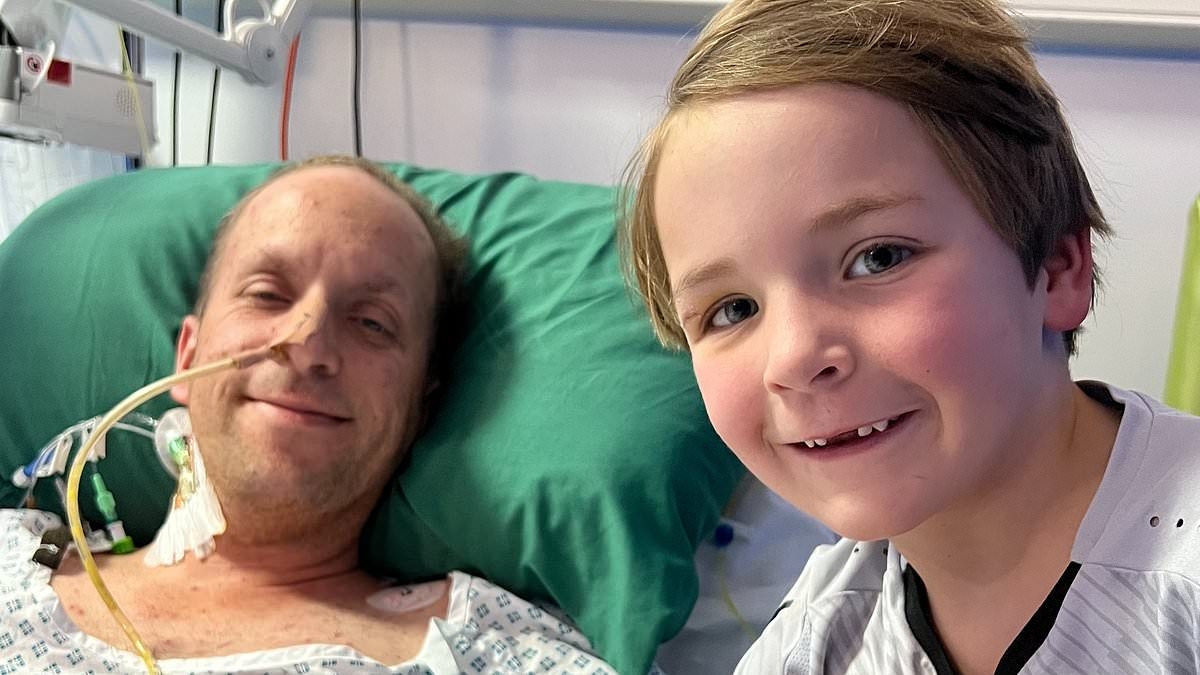
The first sign something was wrong for Matt Eamer came just days after a family barbeque, celebrating his son's second birthday. The then 39-year-old father-of-two from Redhill, Surrey, dismissed the sudden 'spiky' stomach pain as food poisoning. 'I was speaking to work colleagues over the first week or two and thought I'd cooked a dodgy sausage,' he said. But his pain escalated quickly. After a rushed trip to A&E he was sent home with anti-nausea medication Buscopan, yet still felt dreadful. His wife Sarah, 41, a doula, took him to East Surrey Hospital where scans revealed a 'big blockage' in his large intestine. Surgeons removed two-thirds of his bowel in an emergency op. 'A few days later they confirmed it was cancer,' Matt said. The diagnosis was stage four bowel cancer. The disease had already spread to his liver and the lining of his abdomen, and further tests revealed a rare BRAF mutation which drives tumours to grow at speed. 'I can still remember the person's voice when she phoned and said, "the plan for your diagnosis has changed… we're talking months not years from a survival point of view",' Matt recalled of the events in September 2020. On his 40th birthday he was told standard chemotherapy had failed and surgeons found the cancer had advanced further. 'It was a very dramatic, movie-like point,' he said. 'It was a pivotal change. They said, "we've gone in, it's gone further, we're going to try these new drugs." My wife Sarah collapsed to the floor.' Matt began fortnightly Cetuximab infusions combined with four daily Encorafenib pills, new immunotherapy drugs approved just months earlier. Designed to buy only 'three to six months', they had a remarkable effect. Within six months, scans showed no trace of cancer. Five years on, he is still clear and continues treatment. 'Hitting five years with stage four is a rarity,' he said. 'You're not on your death bed but you're forced to think about how you spend your time.' In December 2024, he underwent a 14-hour surgery to remove cancerous tissue in his ribcage, followed by heated HIPEC chemotherapy. The disease had already spread to his liver and the lining of his abdomen, and further tests revealed a rare BRAF mutation which drives tumours to grow at speed. Again, scans showed 'things clear.' Matt, who runs his own design agency, continues working and raising his two children. 'The reality is younger people are able to deal with treatments better and live longer, better lives even if it is stage four,' he said. He adds: 'The reality is the 'bucket and spade things', the little moments. I spend more time looking at my kids' faces, taking them to a show or swimming in the sea — they are heightened. 'It means your ability to be present and focus upon what matters is heightened.' To mark five years since his diagnosis, Matt will join Sir Chris Hoy's charity cycle in Glasgow on September 7, raising funds for Bowel Cancer UK. 'It's marking a milestone in a meaningful, positive way,' he said. Bowel cancer, also known as colorectal cancer, is one of the most common cancers in both Britain and the United States. In the UK around 43,000 people are diagnosed every year, while in the US the figure is more than 150,000. It is the third most common cancer worldwide and the second leading cause of cancer deaths. In older age groups incidence is declining thanks to better screening and awareness, yet in younger people rates are rising sharply, a trend baffling doctors. In England cases among those aged 25 to 49 have surged by around 3.6 per cent per year, one of the steepest increases in Europe, while in America rates in under-50s have been rising by about 2.4 per cent annually over the past decade. Outcomes depend heavily on how early the disease is caught. In the UK one-year survival is around 97 per cent if picked up through screening, but just 49 per cent if discovered in an emergency admission, as was the case for Matt. In the US five-year survival is 92 per cent at stage one but only 13 per cent at stage four. Most people with a diagnosis as advanced as Matt's do not reach the five-year mark, making his story unusual. Risk factors include family history, inflammatory bowel disease, obesity, alcohol, smoking, and diets low in fibre and high in red or processed meats. Researchers are also examining the role of ultra-processed foods, though evidence remains inconclusive, and some studies point to gut bacteria toxins such as colibactin, found in food poisoning, as a possible trigger for early-onset cases. Screening programmes remain vital. In the US guidelines now recommend testing from age 45, while in the UK stool tests are currently offered from 56, with pilot schemes lowering the age to 50. Symptoms to watch for include persistent changes in bowel habits, blood in stools, unexplained weight loss, abdominal pain or bloating, and lumps in the abdomen. Doctors stress that catching the disease early saves lives. Patients diagnosed at stage one are several times more likely to survive long term than those at stage four. But as Matt's case shows, advances in treatment—from new targeted drugs to more effective surgery—are beginning to change what is possible, even in the most serious cases. For him, the experience has redefined life. 'The reality isn't bucket-list dolphins—it's the bucket and spade things,' he said.


BreakingNews.ie
9 hours ago
- BreakingNews.ie
Review of child hip surgery cases won't begin until January, HSE confirms
A review of the individual cases of children who may have undergone unnecessary hip surgeries will not take place until January, the HSE has confirmed. It comes after a clinical audit of surgeries for dysplasia of the hips in children found that a lower threshold for operations was used at CHI Temple Street hospital and the National Orthopaedic Hospital Cappagh (NOHC) than the threshold used at CHI Crumlin. Advertisement The review discovered that in the period 2021 to 2023, almost 80 per cent of children operated on at the NOHC, and 60 per cent of those at Temple Street, did not meet the threshold for surgery. In a statement, the HSE said an expert review is being commissioned and the independent panel will be convened to review patient files 'to determine, in so far as possible, the appropriateness of the original decision to operate in individual cases'. It said this would be based on the 'appropriate radiological indices and clinical history' of the cases. An international call for experts to apply for the panel closed on Friday and saw submissions from Ireland, the UK, the US, Canada, Asia, and other parts of Europe. Advertisement The HSE said these submissions will be subject to a shortlisting and recruitment process prior to the formal announcement of the panel, which is expected to convene in September. It is also negotiating terms and conditions for an independent international expert to chair the panel who has already been identified, adding that their name will be published 'in due course'. The HSE added: 'It is expected that the review of individual cases will commence in January. This timeline reflects the complexity of the work involved and the need to ensure a rigorous and comprehensive approach. 'This is a highly complex piece of work that requires sufficient time for planning and preparation. As such the following steps are in progress.' Advertisement The HSE said it had 'engaged meaningfully with patient advocates' and a workshop is being scheduled to progress terms of reference for the review. The Hip Dysplasia Advocacy Group, acting for children who may have undergone unnecessary surgeries, met CHI and HSE officials last Thursday. It said it was told the HSE is aiming for a six-month timeframe for the process. In a statement, it said: 'There has yet to be any correspondence surrounding the retrospective review from the HSE to the families of the children who are potentially affected. Advertisement 'We, the advocacy group, relayed this information to the families immediately post our meeting. Representatives from the Hip Dysplasia Advocacy Group said that this is unacceptable. 'There needs to be full transparency between the HSE and the families regarding these reviews, everyone is left completely in the dark.' Ireland Tánaiste agrees to meet parents of boy who died af... Read More It added that the HSE is yet to confirm the criteria it will use to assess the children's need for surgery. 'A member from the HSE has suggested it will be determined by the expert panel when they are appointed. Advertisement 'We have asked for the HSE to issue an update to all families involved as the lack of correspondence to parents is unacceptable. They have been left in limbo.'


The Independent
10 hours ago
- The Independent
Researchers discovered by accident a possible alternative to LASIK surgery
LASIK eye surgery has been performed successfully in the U.S. since the late 90s, helping nearly 40 million patients to improve their vision through a procedure that cuts into the eye using lasers. Some 600,000 of the Food and Drug Administration-approved surgeries are carried out on American adults each year. Now, researchers say they have come up with an alternative method that wouldn't need invasive incisions and could be cheaper. It uses a process called electromechanical reshaping, which helps to reshape the cornea using electrical current. The cornea is a dome-shaped, clear structure at the front of the eye that helps us to process images. Irregularly shaped corneas are the cause of nearsighted and farsighted vision and astigmatism, and LASIK fixes that by burning away tissue to reshape it. 'The whole effect was discovered by accident,' Brian Wong, a professor and surgeon at the University of California, Irvine, explained in a statement. 'I was looking at living tissues as moldable materials and discovered this whole process of chemical modification.' While the work is in its early stages, it could offer an alternative to LASIK. Although the surgery has been safely performed for nearly 30 years with rare complications, it has some limitations and risks. The surgeons say that cutting the cornea compromises the structural integrity of the eye. This procedure has yet to be performed in humans, but researchers previously used electromechanical reshaping to alter scars and skin in pigs and reshape cartilage-rich rabbit ears. Working with rabbit eyeballs, they constructed platinum 'contact lenses' that served as a template for the corrected shape of the cornea, placing them over a rabbit eyeball in a saline solution meant to mimic natural tears. After about a minute following a small electric charge to the lens, the cornea's curvature conformed to the shape of the lens. That happened in the same amount of time as LASIK, with fewer steps, no incisions, and less expensive equipment. Then, they repeated the step on 12 other rabbit eyeballs. Of those dozen, 10 were treated as if they had nearsighted vision, and the researchers found success. In others, they saw that their technique might be able to reverse some chemical-caused cloudiness to the cornea, which is currently only treatable through a complete transplant of the cornea. In the future, the researchers are planning tests on living rabbits, and looking at far-sightedness and astigmatism. Uncertainties in the team's scientific funding have put those plans on hold, but Michael Hill, a professor of chemistry at Occidental College, will present their findings this week at the fall meeting of the American Chemical Society. 'There's a long road between what we've done and the clinic. But, if we get there, this technique is widely applicable, vastly cheaper and potentially even reversible,' said Hill.
