


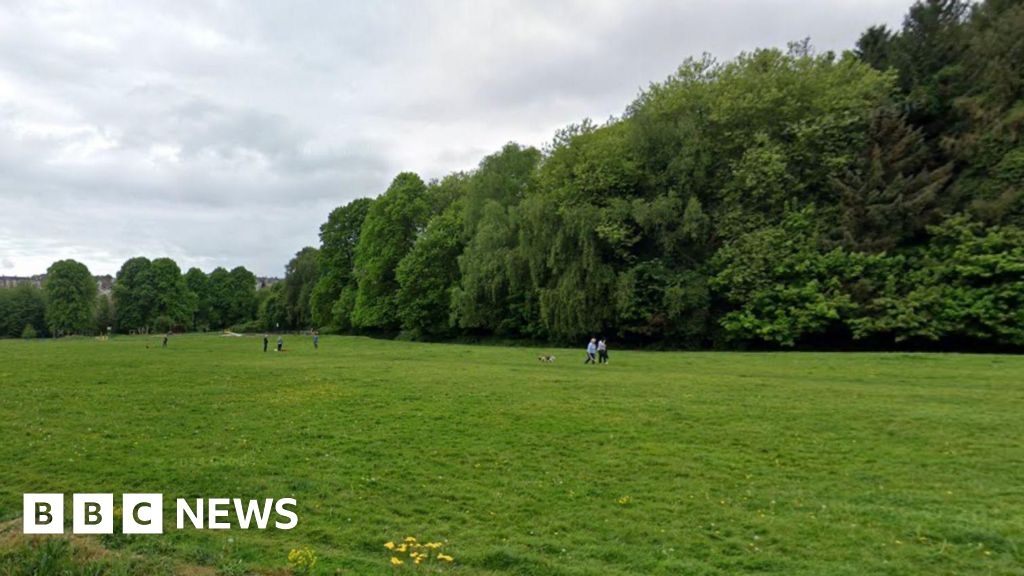
Plymouth's Trefusis Park transformation to help reduce flood risk
'Key natural solution'
Councillor Tom Briars-Delve, Cabinet Member for the Environment and Climate Change, said: "I'm really pleased that this project is able to progress and that we'll be able to get spades in the ground in the very near future."This project is not just crucial from an aesthetics and nature point of view but it's also a key natural solution to flooding."We see time and again what happens when there is heavy rainfall in this area and I hope that residents and businesses in Lipson Vale will welcome this news."The Trefusis Park Ponds Project is being delivered by Plymouth City Council in partnership with the Environment Agency and South West Water.
Hashtags

Try Our AI Features
Explore what Daily8 AI can do for you:
Comments
No comments yet...
Related Articles


South Wales Guardian
 6 hours ago
- South Wales Guardian
Woman, 88, fears her clifftop home will be lost to the sea if nothing is done
Jean Flick, 88, remarried in 1999 after the death of her first husband from cancer and later bought the seaside property in Thorpeness, Suffolk, with her second husband for a fresh start. She said they were 'very happy' in their coastal home before her second husband also died of cancer. Ms Flick said coastal erosion has worsened in recent years, with a section of her garden wall dropping to the beach below earlier this year. Another home in her street was demolished in 2022, and Ms Flick fears she could lose her home too. She and her daughter Frances Paul, who lives nearby, are trying to secure planning permission for rock-filled cages called gabions to be placed at the foot of the cliffs to slow the erosion. This would be a self-funded project, after previous defences were washed away. Ms Flick said she has been told that if the cliff edge gets to within five metres of the house, the property will have to be demolished. 'If nothing is done, if it comes within five metres of the house it will be pulled down,' she said. 'No compensation, we have to pay for it to be pulled down and my heart will just break because it's my home. 'I know a lot of people have this problem (on) the coast and I sympathise with them because until it happens to you you don't realise the emotion that goes into the fact you're going to lose your home. 'Without any compensation, where do you buy a house with nothing? 'Your home is gone and it's just devastating really.' The house was built in 1928 and had five bedrooms, now four after one was turned into a sitting room for the sea view. 'I just absolutely love it,' said Ms Flick, who is from a farming family. 'It's my home, I know the people, it's a village, we have lots of things going on in the village.' The property is around two miles south of Sizewell, where a new nuclear power station is being built. Ms Flick said that Storm Babet in 2023 'really ravaged' the cliffs. 'It really came with full force and I think that weakened the whole system along because it is sandy and there's no way of making sand stay still,' she said. 'Sand erodes.' The policy in the Shoreline Management Plan – developed by agencies including the Environment Agency and the local authority – for the stretch of coast is of managed realignment. This means measures might be allowed that slow – but do not stop – the erosion. 'We're working with the council and all the other people who are involved in it but it's a job getting them all to meet together and agree together,' said Ms Flick. 'We would have liked to have carried on with rocks as our next door neighbour has but we're not allowed that.' She said it was a 'case now of getting paperwork signed which seems to be taking ages' before they could get permission for gabion defences. 'It's very urgent because most days you see another little bit gone,' Ms Flick said. 'It's the erosion coming underneath that brings the top down. 'My wall that was there is now on the beach.' She continued: 'You just don't know. 'When I draw the curtains in the morning it can be there, when I draw them the next morning another piece can be gone.' Her daughter Ms Paul, a retired retail worker, said: 'Even the low tides now are quite high.' She said that as they would need to fund defences themselves, if permission were granted it would then be 'a question of what's it going to cost, is it possible'. An East Suffolk Council spokesperson said: 'Our key priority is to keep people safe while managing a rapidly eroding coastline at Thorpeness. 'We are supporting affected residents to explore potential temporary, short-term interventions that could be applied within an achievable timescale while plans are explored for any possible longer-term solutions. 'We have been working closely with the community for a number of years and due to recent accelerated rates of erosion the options available are now quite limited.' Defences must accord with the Shoreline Management Plan policy of managed realignment and would only be permitted to slow erosion, the spokesperson said. 'Therefore, it is important to consider alternatives to hard defences, to adapt and become more resilient to the risks of climate change and sea level rise.' The village of Thorpeness was developed as a fantasy holiday resort by a wealthy friend of Peter Pan author JM Barrie. Scottish playwright and barrister Glencairn Stuart Ogilvie had inherited an estate there in 1908, and Thorpeness was officially opened in 1913. Thorpeness, with its large artificial boating lake and Peter Pan-inspired islands, is the earlier of two complete planned resort villages in Britain built before the advent of holiday camps such as Butlin's. The other is Portmeirion in North Wales, designed by Clough Williams-Ellis between 1925 and 1975.


Glasgow Times
11 hours ago
- Glasgow Times
Woman, 88, fears her clifftop home will be lost to the sea if nothing is done
Jean Flick, 88, remarried in 1999 after the death of her first husband from cancer and later bought the seaside property in Thorpeness, Suffolk, with her second husband for a fresh start. She said they were 'very happy' in their coastal home before her second husband also died of cancer. Jean Flick pictured with her late husband on the beach below their home in North End Avenue, Thorpeness, Suffolk (Family photo/PA) Ms Flick said coastal erosion has worsened in recent years, with a section of her garden wall dropping to the beach below earlier this year. Another home in her street was demolished in 2022, and Ms Flick fears she could lose her home too. She and her daughter Frances Paul, who lives nearby, are trying to secure planning permission for rock-filled cages called gabions to be placed at the foot of the cliffs to slow the erosion. This would be a self-funded project, after previous defences were washed away. Ms Flick said she has been told that if the cliff edge gets to within five metres of the house, the property will have to be demolished. 'If nothing is done, if it comes within five metres of the house it will be pulled down,' she said. 'No compensation, we have to pay for it to be pulled down and my heart will just break because it's my home. Jean Flick, 88, with daughter Frances, 60, in the garden at her home in Thorpeness, which is at risk of falling into the sea following coastal erosion (Joe Giddens/PA) 'I know a lot of people have this problem (on) the coast and I sympathise with them because until it happens to you you don't realise the emotion that goes into the fact you're going to lose your home. 'Without any compensation, where do you buy a house with nothing? 'Your home is gone and it's just devastating really.' The house was built in 1928 and had five bedrooms, now four after one was turned into a sitting room for the sea view. 'I just absolutely love it,' said Ms Flick, who is from a farming family. 'It's my home, I know the people, it's a village, we have lots of things going on in the village.' Jean Flick looking through family photos at her home (Joe Giddens/PA) The property is around two miles south of Sizewell, where a new nuclear power station is being built. Ms Flick said that Storm Babet in 2023 'really ravaged' the cliffs. 'It really came with full force and I think that weakened the whole system along because it is sandy and there's no way of making sand stay still,' she said. 'Sand erodes.' The policy in the Shoreline Management Plan – developed by agencies including the Environment Agency and the local authority – for the stretch of coast is of managed realignment. This means measures might be allowed that slow – but do not stop – the erosion. Jean Flick with daughter Frances in the garden at her home in Thorpeness (Joe Giddens/PA) 'We're working with the council and all the other people who are involved in it but it's a job getting them all to meet together and agree together,' said Ms Flick. 'We would have liked to have carried on with rocks as our next door neighbour has but we're not allowed that.' She said it was a 'case now of getting paperwork signed which seems to be taking ages' before they could get permission for gabion defences. 'It's very urgent because most days you see another little bit gone,' Ms Flick said. 'It's the erosion coming underneath that brings the top down. 'My wall that was there is now on the beach.' She continued: 'You just don't know. The garden wall is seen on the beach below (Joe Giddens/PA) 'When I draw the curtains in the morning it can be there, when I draw them the next morning another piece can be gone.' Her daughter Ms Paul, a retired retail worker, said: 'Even the low tides now are quite high.' She said that as they would need to fund defences themselves, if permission were granted it would then be 'a question of what's it going to cost, is it possible'. An East Suffolk Council spokesperson said: 'Our key priority is to keep people safe while managing a rapidly eroding coastline at Thorpeness. 'We are supporting affected residents to explore potential temporary, short-term interventions that could be applied within an achievable timescale while plans are explored for any possible longer-term solutions. 'We have been working closely with the community for a number of years and due to recent accelerated rates of erosion the options available are now quite limited.' Jean Flick with daughter Frances in her garden in Thorpeness (Joe Giddens/PA) Defences must accord with the Shoreline Management Plan policy of managed realignment and would only be permitted to slow erosion, the spokesperson said. 'Therefore, it is important to consider alternatives to hard defences, to adapt and become more resilient to the risks of climate change and sea level rise.' The village of Thorpeness was developed as a fantasy holiday resort by a wealthy friend of Peter Pan author JM Barrie. Scottish playwright and barrister Glencairn Stuart Ogilvie had inherited an estate there in 1908, and Thorpeness was officially opened in 1913. Thorpeness, with its large artificial boating lake and Peter Pan-inspired islands, is the earlier of two complete planned resort villages in Britain built before the advent of holiday camps such as Butlin's. The other is Portmeirion in North Wales, designed by Clough Williams-Ellis between 1925 and 1975.


North Wales Chronicle
11 hours ago
- North Wales Chronicle
Woman, 88, fears her clifftop home will be lost to the sea if nothing is done
Jean Flick, 88, remarried in 1999 after the death of her first husband from cancer and later bought the seaside property in Thorpeness, Suffolk, with her second husband for a fresh start. She said they were 'very happy' in their coastal home before her second husband also died of cancer. Ms Flick said coastal erosion has worsened in recent years, with a section of her garden wall dropping to the beach below earlier this year. Another home in her street was demolished in 2022, and Ms Flick fears she could lose her home too. She and her daughter Frances Paul, who lives nearby, are trying to secure planning permission for rock-filled cages called gabions to be placed at the foot of the cliffs to slow the erosion. This would be a self-funded project, after previous defences were washed away. Ms Flick said she has been told that if the cliff edge gets to within five metres of the house, the property will have to be demolished. 'If nothing is done, if it comes within five metres of the house it will be pulled down,' she said. 'No compensation, we have to pay for it to be pulled down and my heart will just break because it's my home. 'I know a lot of people have this problem (on) the coast and I sympathise with them because until it happens to you you don't realise the emotion that goes into the fact you're going to lose your home. 'Without any compensation, where do you buy a house with nothing? 'Your home is gone and it's just devastating really.' The house was built in 1928 and had five bedrooms, now four after one was turned into a sitting room for the sea view. 'I just absolutely love it,' said Ms Flick, who is from a farming family. 'It's my home, I know the people, it's a village, we have lots of things going on in the village.' The property is around two miles south of Sizewell, where a new nuclear power station is being built. Ms Flick said that Storm Babet in 2023 'really ravaged' the cliffs. 'It really came with full force and I think that weakened the whole system along because it is sandy and there's no way of making sand stay still,' she said. 'Sand erodes.' The policy in the Shoreline Management Plan – developed by agencies including the Environment Agency and the local authority – for the stretch of coast is of managed realignment. This means measures might be allowed that slow – but do not stop – the erosion. 'We're working with the council and all the other people who are involved in it but it's a job getting them all to meet together and agree together,' said Ms Flick. 'We would have liked to have carried on with rocks as our next door neighbour has but we're not allowed that.' She said it was a 'case now of getting paperwork signed which seems to be taking ages' before they could get permission for gabion defences. 'It's very urgent because most days you see another little bit gone,' Ms Flick said. 'It's the erosion coming underneath that brings the top down. 'My wall that was there is now on the beach.' She continued: 'You just don't know. 'When I draw the curtains in the morning it can be there, when I draw them the next morning another piece can be gone.' Her daughter Ms Paul, a retired retail worker, said: 'Even the low tides now are quite high.' She said that as they would need to fund defences themselves, if permission were granted it would then be 'a question of what's it going to cost, is it possible'. An East Suffolk Council spokesperson said: 'Our key priority is to keep people safe while managing a rapidly eroding coastline at Thorpeness. 'We are supporting affected residents to explore potential temporary, short-term interventions that could be applied within an achievable timescale while plans are explored for any possible longer-term solutions. 'We have been working closely with the community for a number of years and due to recent accelerated rates of erosion the options available are now quite limited.' Defences must accord with the Shoreline Management Plan policy of managed realignment and would only be permitted to slow erosion, the spokesperson said. 'Therefore, it is important to consider alternatives to hard defences, to adapt and become more resilient to the risks of climate change and sea level rise.' The village of Thorpeness was developed as a fantasy holiday resort by a wealthy friend of Peter Pan author JM Barrie. Scottish playwright and barrister Glencairn Stuart Ogilvie had inherited an estate there in 1908, and Thorpeness was officially opened in 1913. Thorpeness, with its large artificial boating lake and Peter Pan-inspired islands, is the earlier of two complete planned resort villages in Britain built before the advent of holiday camps such as Butlin's. The other is Portmeirion in North Wales, designed by Clough Williams-Ellis between 1925 and 1975.
