



Now is the time to implement and scale apprenticeships — here's why
According to survey results released in January by the Boyd Center for Business and Economic Research at the University of Tennessee's Haslam School of Business, 66.2% of business leaders in the state answered 'no' to the question, 'Is there an ample supply of local workers who are appropriately trained for your employment needs?'
Of the 167 million people in the U.S. workforce, 62% do not have a postsecondary degree — meaning 103 million people are not being fully recognized for the talent and skill they've already developed through work. As many as two-thirds of jobs in the future are expected to require postsecondary credentials, either an industry-recognized certification or academic degree.
Apprenticeship programs, also known as work-based learning, allow individuals to earn income by working, learn from mentors in the workplace and classroom, and receive an employer credential while taking on little to no student debt. They offer significant value by developing both technical skills and essential soft skills, such as communication, teamwork and problem-solving, which are crucial for success in the modern workplace. Apprenticeships provide hands-on experience and can help develop a strong work ethic, making apprentices highly desirable to employers.
The United States armed forces recognize the value of apprenticeships, having created the United Services Military Apprenticeship Program to help active duty, reserve and guard members improve their job skills and earn recognition equal to their civilian counterparts.
Many college degree programs do not include a work-based learning component in the curriculum, which could create a gap for students who lack prior direct-related work experience. According on an article in Forbes, the U.K. and Germany have developed 'apprenticeship degree' programs as one solution.
According to the same Forbes article, in 2022, Tennessee became the first state to receive Department of Labor approval for a partnership program between Austin Peay State University and the Clarksville-Montgomery County School System. Tennessee led the way for the 45 states (plus the District of Columbia, Puerto Rico and the U.S. Virgin Islands) that now have Department of Labor approval to offer teacher apprenticeship programs.
Craft Education, a Nashville-based technology platform that integrates work-based learning experiences to expand degree apprenticeship programs, states that the five keys to apprenticeship degrees are efficiency, flexibility, relevance, affordability and professional capital.
The challenge for many apprenticeship programs is how to document the hours worked and skills learned by the apprentice. Western Governors University recently acquired Craft Education in its endeavor to develop, launch and scale work-based learning pathways.
Apprenticeship programs present a win-win scenario for employers and employees. Employers can help fill their workforce needs by training, retaining and promoting their own trusted employees. Employees get paid, fill the 'experience gap' missing from most degree programs, learn from experienced mentors and supervisors, and take on little to no student debt. This model is the best pathway for adult learners who usually have to work at a job of some kind while they pursue higher education.
Employers, educators and career seekers can learn more about the value of apprenticeships at apprenticeship.gov.
Hashtags

Try Our AI Features
Explore what Daily8 AI can do for you:
Comments
No comments yet...
Related Articles

San Francisco Chronicle
 28 minutes ago
- San Francisco Chronicle
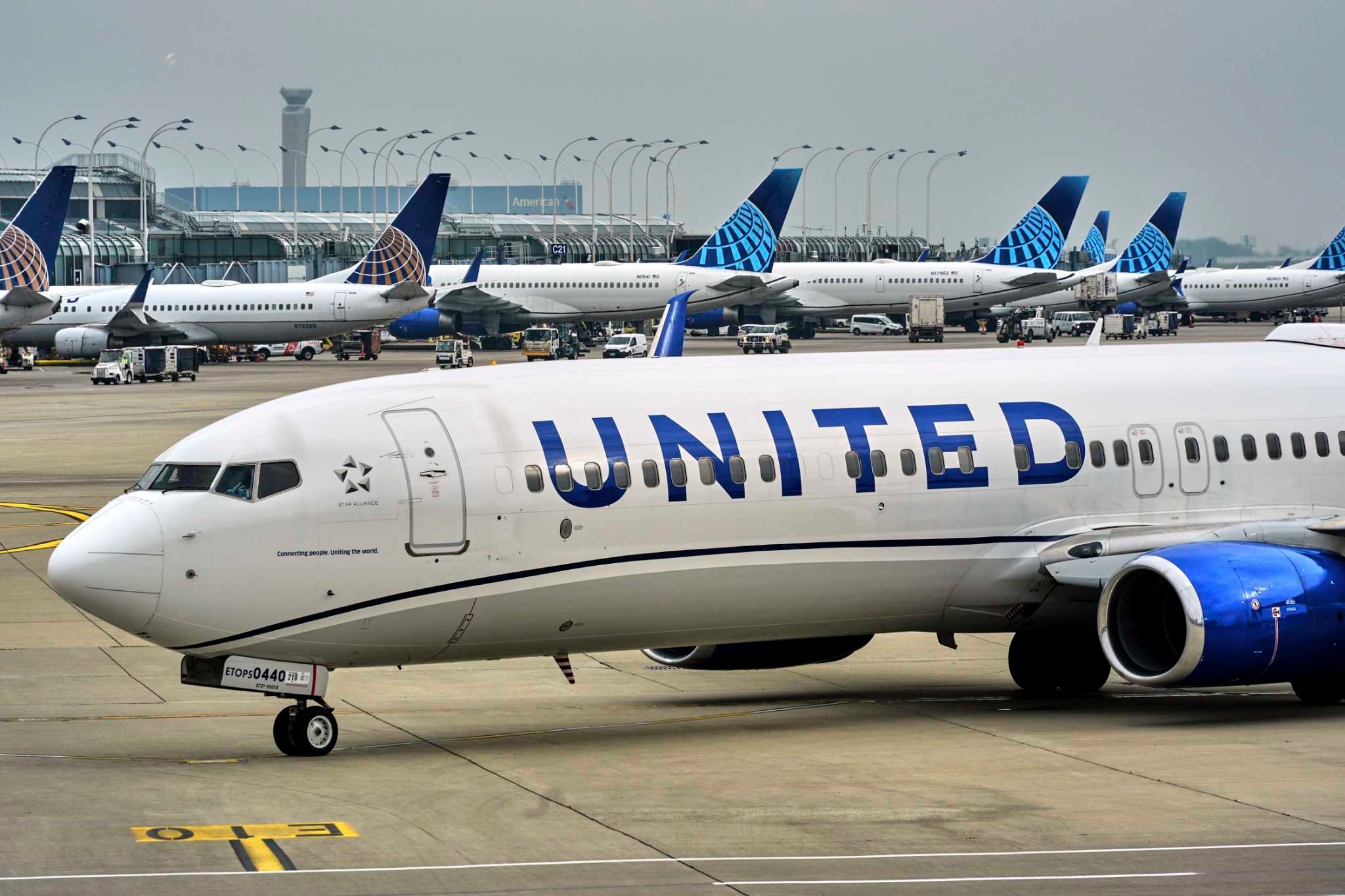
United and Delta sued for allegedly selling window seats without windows
United Airlines and Delta Air Lines are facing class action lawsuits accusing them of charging passengers extra for window seats that, in some cases, have no windows at all. The lawsuits, filed Tuesday in federal courts in San Francisco and Brooklyn, allege the carriers misled customers by labeling certain seats as 'window' during booking, even though aircraft design left those spots against blank walls. Plaintiffs say the practice has affected more than a million passengers. The complaints cite Boeing 737s and Airbus A321s, where air ducts and wiring often block windows in specific rows. Yet unlike rivals Alaska Airlines and American Airlines, which flag such seats as 'no window view,' United and Delta allegedly kept charging full fees. 'Had plaintiffs and the class members known that the seats they were purchasing (were) windowless, they would not have selected them — much less have paid extra,' the United filing states. A nearly identical claim was filed against Delta. Aviva Copaken, a Los Angeles resident who experiences claustrophobia, said she paid between $45.99 and $169.99 for three United flights labeled as window seats, only to find herself staring at a wall. United refunded two charges but not the third, which the lawsuit calls a 'bad faith attempt' to undercut her claims. Marc Brenman of San Francisco said United returned 7,500 miles after his 'window' seat lacked a window, far less than the value he gave up. The complaint also highlights a 2017 United tweet responding to a passenger who complained: 'Sorry. We never guaranteed you will get a window.' 'For many, it is a special experience to see the world from 30,000 feet,' the lawsuit says. 'Windows can captivate or distract an antsy child. For many with a fear of flying or motion sickness, windows provide a greater level of comfort.'
Yahoo
an hour ago
- Yahoo
This Is Officially the No. 1 Pickle Brand in America
From sandwiches to snack packs, pickles are officially dominating grocery carts — and Instacart's new report reveals the brands Americans can't stop buying Key Points Instacart's latest report uncovers surprising insights into the most popular pickle brands among Americans. Regional preferences vary, with Vlasic leading in most states, Mt. Olive dominating the South, and Grillo's emerging as a favorite in states from Florida to New York. Pickle collaborations and crossover products — from Lay's Dill Pickle Potato Chips to Taylor Farms' Dill Pickle Salad Kit — continue to fuel consumer enthusiasm nationwide. Pickles have practically bewitched online foodies — and even captured the attention of brands' innovation teams. Instacart has officially dubbed it a 'brine boom,' and no, this sudden resurgence isn't just in your head. The California-based delivery platform recently released its 2024 pickle sales report, and heritage brands are still holding strong. Longtime favorites Mt. Olive and Vlasic — both founded more than 50 years ago — remain among the nation's best-sellers. Grocery staple Claussen and snack-ready Oh Snap! follow closely behind, while premium player Grillo's Pickles lands firmly in the No. 5 spot. Despite all the buzz about indie launches, the classics still dominate in most shoppers' carts. 'How people shop for pickles is a good insight about grocery shopping in general: Consumers like to stick with the classics they know, but they're also curious to try something new,' Instacart trends analyst Alex Orellana tells Food & Wine. 'Pickle lovers want both reliability and novelty — a familiar jar in the fridge and something unexpected to change things up.' Regional pickle preferences When it comes to geography, pickle loyalty gets surprisingly specific. Vlasic tops the charts nationwide, but Mt. Olive reigns supreme across much of the South — except in Florida, where Grillo's Pickles enjoys an overwhelming lead. The Boston-based brand also comes out on top in states as varied as Colorado, New York, Pennsylvania, Hawaii, and Montana. Claussen, meanwhile, earned a devoted following in exactly one state: Minnesota. To build these rankings, Instacart analyzed shopping data across all of 2024, tallying the total number of items sold in each state. As with past reports, data from certain states was excluded where legally required, but the broader takeaway is clear: even with the explosion of pickle hype online, most consumers are still loyal to tried-and-true brands. Who's buying the most pickles? Not all shoppers are equally invested in the briny boom. Midwesterners are driving the trend on Instacart, with states like North Dakota, Missouri, Kansas, and Kentucky ordering noticeably more pickles than the national average. Coastal consumers, particularly in California and Florida, appear lighter on their pickle consumption by comparison. That said, regional sales don't always reflect the full picture — Florida, for instance, is a hotbed for Grillo's, showing that passionate pickle fandom can override broader trends. Related: We Tasted 12 Dill Pickles — and This Supermarket Brand Came Out on Top Looking forward, Instacart predicts that smaller brands could soon elbow their way further into the spotlight. Labels like Yee-Haw and SuckerPunch are already catching attention with adventurous flavors such as three-pepper spears and honey-sweet chips. These bolder profiles are resonating with a younger audience looking for heat, spice, and novelty in their snacks. Pickle collabs keep the craze going Food & Wine has tracked the pickle phenomenon since it began bubbling up last year, and collaborations continue to push the category into unexpected places. Some partnerships have been playful, others eyebrow-raising (dill-breaded Popeyes chicken), and a few genuinely clever. (Pickle chip–stuffed Sonic burgers or Popeyes Pickle Lemonade, anyone?) Grillo's, in particular, has emerged as a brand built for collaborations, extending its reach into products like Pickle de Gallo, while TikTok creators have fueled the obsession with recipes for homemade pickle lemonade and even pickle-flavored martinis. Related: Yes, You Can Replace Sandwich Bread with Pickles — Here's How Crossovers are also translating into real sales. Instacart reports that Lay's Dill Pickle Potato Chips remain a runaway favorite, while Taylor Farms' Dill Pickle Chopped Salad Kit and Grillo's Pickle de Gallo consistently rank near the top. Even Quaker got in on the trend, landing its dill-flavored rice cakes in the No. 10 spot for pickle-inspired products. For the pickle-curious, Instacart is making it easy to join in: Oh Snap! pickles and Taylor Farms' Dill Pickle Salad Kit are available for free with eligible app orders placed today. It's the brand's way of leaning into the craze — and ensuring hesitant shoppers have a low-stakes chance to sample the trend. Will the boom last? Whether the pickle wave will keep its crunch into 2026 remains to be seen. Fads have a way of fizzling, but the strong sales of century-old brands like Vlasic and Mt. Olive suggest that America's appetite for pickles isn't going anywhere. For now, though, one thing is certain: The humble pickle has gone from refrigerator sidekick to bona fide grocery star — and it's still kind of a big dill. Top 10 pickle brands in America Mt. Olive Vlasic Claussen Oh Snap! Grillo's Pickles Bubbies Wickles Famous Dave's Maille Talk O' Texas Read the original article on Food & Wine Solve the daily Crossword
Yahoo
an hour ago
- Yahoo
This Unstoppable Stock Is Crushing the S&P 500 in 2025, and Here's Why It's Probably Going Higher
Key Points Sea Limited is a triple threat with its online presence in commerce, financial services, and entertainment. All three of Sea's core businesses generated solid revenue growth during the second quarter of 2025. Sea stock is crushing the S&P 500 this year -- surging 66% so far this year -- but it's still cheap. 10 stocks we like better than Sea Limited › Sea Limited (NYSE: SE) is a Singapore-based tech giant with operations in e-commerce, digital financial services, and gaming. Its stock has soared by 66% already in 2025 on the back of the company's accelerating revenue growth and surging profits, crushing the S&P 500 index, which is up by just 10% year to date. Despite its recent rally, Sea stock is still down 51% from its 2021 record high, when a frenzy in the tech sector drove it to an unsustainable valuation. Here's why I think the stock will continue to recover, and outpace the S&P 500 in the process. A triple threat in the digital economy Shopee is Sea's hybrid consumer-to-consumer and business-to-consumer e-commerce platform. It's the largest app of its kind in Southeast Asia, and it's quickly breaking into new markets across Latin America. Shopee processed 3.3 billion orders valued at $29.8 billion during the second quarter of 2025 (ended June 30) alone, with both numbers climbing by 28% year over year. Sea also operates a booming digital financial services business. Its Monee platform lends money to merchants on Shopee to help them grow their businesses, and it also writes small buy now, pay later loans to consumers, which increase their purchasing power. Monee's loan book grew by an eye-popping 90% to $6.9 billion during Q2, driven by a record-high 30 million active users on the platform. The company's third segment is digital entertainment, which is home to the Garena mobile game development studio. It's responsible for several smash hits like Free Fire, Call of Duty: Mobile, and Arena of Valor. The digital entertainment segment struggled to build on its pandemic-era momentum. Its quarterly active users reached a peak of 729 million in third-quarter 2021 as gamers spent more time online while under lockdowns and social restrictions, but declined sharply when conditions returned to normal. However, it reported 664.8 million active users during Q2, which marked the third consecutive quarter of sequential growth. This is a sign that perhaps a sustained recovery is underway. Accelerating revenue growth and soaring profits Sea generated $5.3 billion in total revenue during Q2, which was up by a whopping 38.2% from the year-ago period. That marked an acceleration from the 29.6% growth the company delivered during the first quarter, highlighting the significant momentum across its businesses. Here's how the Q2 revenue number was broken down: Segment Q2 Revenue Year-Over-Year Growth E-commerce (Shopee) $3.8 billion 33.7% Digital Financial Services (Monee) $882.8 million 70% Digital Entertainment (Garena) $559.1 million 28.4% Data source: Sea Limited. The e-commerce segment remained Sea's dominant source of revenue by a wide margin, but the digital financial services business continued to grow at the fastest pace, which has been the status quo over the last few quarters. But the e-commerce segment typically operates on razor-thin profit margins, because Shopee focuses on providing customers with the lowest possible prices. It still generated $227.7 million in adjusted (non-GAAP) EBITDA, which is Sea's preferred measure of profitability, but the digital financial services and digital entertainment businesses made far more money. They generated a combined $623.5 million in adjusted EBITDA on significantly less revenue. So, while e-commerce drives Sea's top line, the company's other two segments are the source of most of its profits, which highlights the benefits of having such a diversified business. Sea's total adjusted EBITDA surged by 85% year over year during Q2, coming in at $829.2 million. Sea stock looks cheap, despite its recent upside When Sea stock peaked in 2021, its price-to-sales (P/S) ratio was hovering at around 30, which wasn't a sustainable valuation in the long term. However, since the stock is trading 51% below its record high while the company's revenue has grown consistently, its P/S ratio is now at a more reasonable level of 5.4. In fact, it's far below Sea's average P/S ratio of 9, dating back to when its stock went public in 2017. Wall Street's consensus estimate (provided by Yahoo! Finance) suggests that Sea's annual revenue could grow to a record $26.4 billion in 2026, which places its stock at a forward P/S ratio of just 3.6. In other words, Sea stock could climb by 104% over the next 18 months to reclaim its 2021 record high of $357, and its P/S ratio would still be below its long-term average of 9. To cap things off, Sea is in a great financial position right now with $10.6 billion in cash and equivalents on its balance sheet. That number is increasing steadily because the company is profitable. This gives management room to invest more aggressively to expand the business and potentially fuel a further acceleration in its revenue growth. As a result, I think Sea stock is likely to continue moving higher from here, so it's probably not too late for investors to buy. Should you buy stock in Sea Limited right now? Before you buy stock in Sea Limited, consider this: The Motley Fool Stock Advisor analyst team just identified what they believe are the for investors to buy now… and Sea Limited wasn't one of them. The 10 stocks that made the cut could produce monster returns in the coming years. Consider when Netflix made this list on December 17, 2004... if you invested $1,000 at the time of our recommendation, you'd have $668,155!* Or when Nvidia made this list on April 15, 2005... if you invested $1,000 at the time of our recommendation, you'd have $1,106,071!* Now, it's worth noting Stock Advisor's total average return is 1,070% — a market-crushing outperformance compared to 184% for the S&P 500. Don't miss out on the latest top 10 list, available when you join Stock Advisor. See the 10 stocks » *Stock Advisor returns as of August 13, 2025 Anthony Di Pizio has no position in any of the stocks mentioned. The Motley Fool has positions in and recommends Sea Limited. The Motley Fool has a disclosure policy. This Unstoppable Stock Is Crushing the S&P 500 in 2025, and Here's Why It's Probably Going Higher was originally published by The Motley Fool Error in retrieving data Sign in to access your portfolio Error in retrieving data Error in retrieving data Error in retrieving data Error in retrieving data
