



The Hindu partners with WorkL to scout for best places to work in India
As part of the initiative, The Hindu Best Places to Work Awards are now open for organisations across India to enter the prestigious list, which would help businesses attract and retain talent.
The survey, which entrants will send to their employees via a personalised link, will comprise 29 questions centered around WorkL's widely approved employee engagement theory: Six steps to workplace happiness, which include reward and recognition, which are integral to retaining talent. Developed by behavioural scientists, data analysts, psychologists, business leaders, academics and other independent parties, the survey would accurately monitor employee engagement and wellbeing in the workplace.
To achieve a high overall engagement score, a company must consistently perform well across its six-step framework, encompassing reward and recognition, instilling pride, information sharing, empowerment, wellbeing and job satisfaction. Each of WorkL's six steps consists of three to five key elements which are measured on a scale of 0-10.
The awards will recognise organisations with the highest levels of employee engagement, wellbeing and satisfaction and businesses on four main categories:
• Best Places to Work: Small Organisation (10-49 Employees)
• Best Places to Work: Medium Organisation (50-249 Employees)
• Best Places to Work: Big Organisation (250-1,999 Employees)
• Best Places to Work: Very Big Organisation (2,000+ Employees)
The deadline for entry is February 28, 2026. The results will be announced early next year.
'Launching these awards with The Hindu will help employers in India to better understand their workforce as well as support employees looking for the best places to work. We are delighted to be in partnership and look forward to a fruitful working relationship,' said Lord Mark Price, founder of WorkL.
'We are delighted to launch The Hindu Best Places to Work Awards in partnership with Workl, a global leader in employee engagement. At The Hindu Group, we believe people are the cornerstone of our, and every organisation's success. These awards will recognise Indian workplaces that prioritise employee wellbeing and engagement, helping them stand out in an increasingly competitive talent landscape. With Workl's robust, science-backed framework, this initiative offers not just recognition, but real insights to help organisations grow from within. We invite businesses across India to participate and be celebrated as truly great places to work,' said L.V. Navaneeth, CEO Of The Hindu Group.

Try Our AI Features
Explore what Daily8 AI can do for you:
Comments
No comments yet...
Related Articles

Hans India
 19 minutes ago
- Hans India
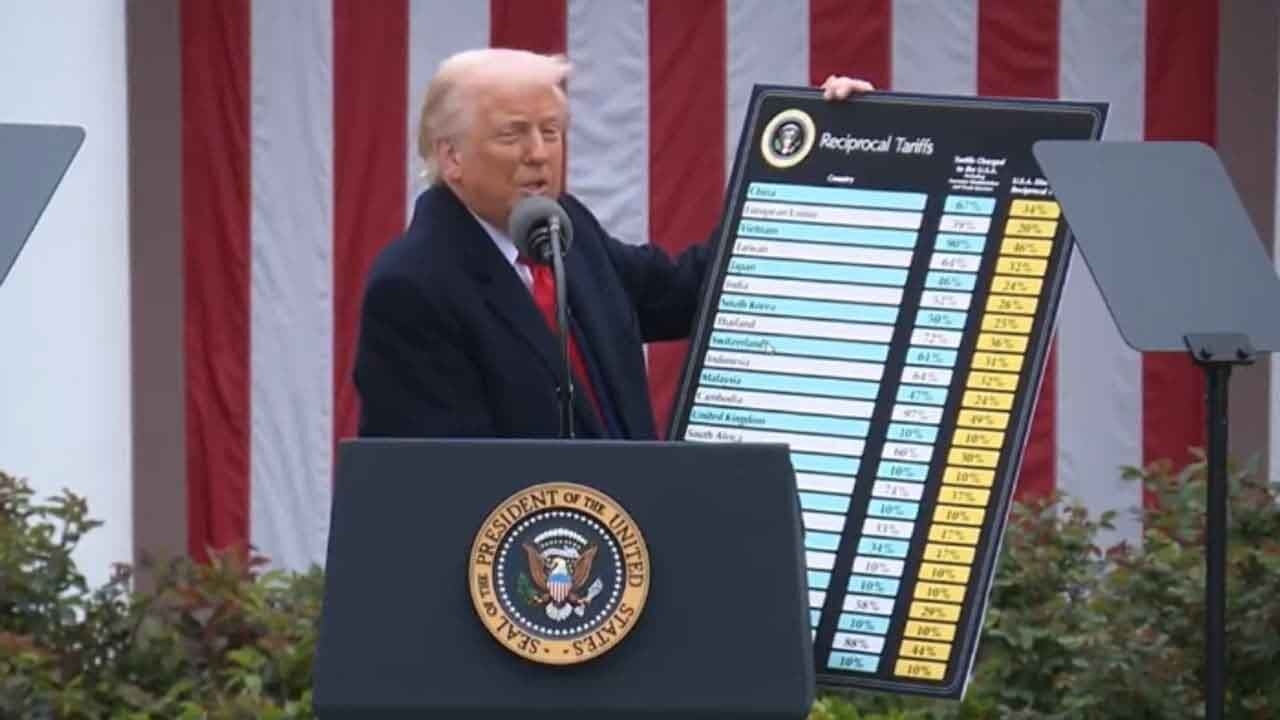
Trump tariffs-A dark cloud and a silver lining
US President Donald Trump has suffered a bad press in India. Still, it is indisputable that the crisis his tariffs have triggered for our economy may not be such a bad thing: it has already goaded the government to reset the GST and FDI regimes. It is a truism that crises force governments into long-overdue reforms, and the present turbulence may, paradoxically, prove to be an inflection point for India's economy. Early signs indicate that Trump's tariffs have broken the policy inertia of the Narendra Modi government; it is rethinking the goods and services tax (GST), foreign direct investment (FDI), and export promotion policies. The government is reportedly working on a 100-day reform agenda prepared by the Commerce & Industry Ministry. It is not merely a firefighting exercise but a comprehensive strategy to improve India's global competitiveness. This is significant because, for too long, India has managed its trade policies reactively, focusing on ad hoc measures rather than laying down forward-looking, structural reforms. Another key area under review is the GST regime. While GST has streamlined indirect taxation, its complexity and compliance burdens have stifled smaller exporters and startups. Rationalising and reducing GST slabs, simplifying compliance, and ensuring quicker refunds could ease liquidity pressures and incentivise export-oriented businesses. If the current crisis accelerates this process, Indian exporters may be better positioned in the medium term, not just against US tariffs but also against rising competition from countries like Vietnam and Bangladesh. Equally important is the prospect of further liberalising the FDI regime. India has already been one of the top global recipients of foreign investment, but procedural hurdles, sectoral restrictions, and unpredictable regulatory interventions have often diluted the benefits. A push to ease investments—particularly from neighbouring countries and emerging Asian markets—signals a pragmatic recognition that India must diversify its capital inflows rather than remain overly reliant on Western investors. Such reforms could open up capital for high-growth sectors like digital infrastructure, renewable energy, and advanced manufacturing. The government's reported plan to provide more tax incentives for startups also reflects an awareness of the shifting global economic landscape. With traditional manufacturing exports facing headwinds, India must increasingly rely on knowledge-driven industries, digital services, and innovative startups to power growth. A supportive tax regime, combined with easier access to foreign capital, could help create globally competitive unicorns and deepen India's digital economy. Then there are proposals to ease certain environmental norms for the leather and footwear sectors. These industries employ millions, generate significant export revenues, and are heavily labour-intensive—precisely the kind of sectors India needs to expand if it hopes to absorb its growing workforce. While the idea is good, the government must ensure that this easing remains focused on cutting red tape; there should be no adverse impact on the environment. On the export infrastructure front, the emphasis on establishing e-commerce hubs and fast-tracking initiatives like BharatTradeNet is timely. Global trade is increasingly digital, and seamless integration of logistics, customs, testing, and certification into unified platforms could sharply reduce transaction costs for exporters. By enabling smaller firms and startups to tap global markets with fewer bureaucratic hurdles, such steps could democratise trade opportunities across sectors and geographies. If all these reforms are implemented effectively, they could make India's export basket more resilient and its domestic economy more attractive for investment.


Mint
19 minutes ago
- Mint
3-year jail, ₹1 Cr fine: Modi Govt set to ban online games played with money; bill likely in Parliament today
Prime Minister Narendra Modi-led Union government is all set to ban online games played with money. A proposed bill will be moved in the Lok Sabha today. If passed in Parliament, the move would strike a heavy blow to an industry that has attracted billions of dollars of foreign investment, according to news agency Reuters. The Bill – 'Promotion and Regulation of Online Gaming Bill 2025' – cites psychological and financial harm which can be caused by such games and says that no person "shall offer, aid, abet, induce or otherwise indulge or engage in" the offering of online money games and such services. The proposed law, cleared by the Union Cabinet, would mean a blanket ban on all online real-money gaming services, where users can play games after depositing money in the form of a stake or a wager. According to reports, the move comes owing to growing concerns about alleged money laundering through these services. The 13-page bill drafted by the Union Ministry of Electronics and Information Technology (MeitY)describes an online money game as one played by a user who deposits money in expectation of winning monetary and other enrichment, the news agency said. The Indian market for such gaming is set to be worth $3.6 billion by 2029, venture capital firm Lumikai says. Endorsements by celebrities from cricket and Bollywood and other marketing efforts have boosted the appeal and investor interest of real money gaming apps. In a letter to the Union Home Ministry this week, major gaming industry bodies said that the blanket ban would strike a 'death knell' for the legitimate, job-creating industry. The government will prohibit any person from offering online real-money games, and failing to comply will result in a prison term of up to three years and a penalty of ₹ 1 crore. Those promoting such platforms, including social media influencers , could also face a prison term of two years and a penalty of ₹ 50 Lakh "Such games often use manipulative design features, addictive algorithms ... while promoting compulsive behaviour leading to financial ruin," the bill said. The government, however, views competitive e-sports and game development as a crucial driver of the online gaming industry and is keen to promote them via the proposed law, Indian Express said in a report.

Mint
19 minutes ago
- Mint
Stocks to buy under ₹100: Experts recommend four shares to buy today — 20 August 2025
Stocks to buy under ₹ 100: The key benchmark indices of the Indian stock market extended gains for the fourth session amid strong global cues. Investor sentiment remained buoyed by reports of a streamlined Goods and Services Tax (GST) structure, expected to boost spending and fuel consumption. The Nifty 50 index started the session flat; however, it gained momentum as the session progressed to form an intraday high of 25,012 in the mid-session. The 50-stock index thereafter consolidated in a range to close just below the 25,000 levels. At close, the Sensex was up 370 points or 0.46% at 81,644, and the Nifty was up 103 points or 0.42% at 24,980. Among sectors, except pharma, all other sectoral indices ended in the green, with telecom, FMCG, media, auto, and oil and gas up 1%- 2% each. The Nifty midcap 100 and small cap 100 indices rose 0.97% and 0.7%, respectively. On the Indian stock market's outlook today, Siddhartha Khemka, Head of Research — Wealth Management at Motilal Oswal, said, "Positive momentum is likely to continue, supported by sector-specific relief measures, ongoing government policy support, and robust institutional flows. These factors are expected to sustain market activity and drive confidence across key sectors over the near term." Speaking on the outlook of the Nifty 50 index, Rajesh Bhosale, Equity Technical Analyst, Angel One, said, "Given the broad-based participation and intraday dips getting absorbed, we expect the positive momentum to continue. Prices could test the 61.8% retracement around 25,150, and a move beyond this golden ratio would technically open doors eventually toward the recent swing high of 25,670. The sharp upward slope of the RSI smoothed indicator also reinforces this positive bias. Hence, traders are advised to adopt a 'buy-on-dips' approach. Immediate support lies at 24,850 (last two sessions' low), while 24,700 remains a strong support. On the sectoral front, thematic moves around GST updates continue to create buzz, and traders should stay focused on such spaces for potential outperformance." On the outlook of the Bank Nifty today, Om Mehra, Technical Research Analyst, SAMCO Securities, said, "The Bank Nifty index may face resistance near 56,100–56,150, while a move above this zone would lift the index higher. The support is placed at 55,600, followed by 55,500. Until Nifty Bank closes decisively above 56,150, the outlook stays cautious, and any intraday rise may meet resistance. A buy on dip approach is reasonable as long as 55,500–55,450 holds on a closing basis." Regarding intraday stocks to buy today, market experts — Shiju Kuthupalakkal, Senior Manager of Technical Research at Anand Rathi; Sugandha Sachdeva, Founder of SS WealthStreet; and Anshul Jain, Head of Research at Lakshmishree Investment, recommended four stocks to buy under ₹ 100: MMTC, Ola Electric Mobility, Patel Engineering, and Geojit Financial Services. 1] MMTC: Buy at ₹ 65.30, Target ₹ 70, Stop Loss ₹ 63.50. 2] Ola Electric Mobility: Buy at ₹ 44.20, Targets ₹ 47, ₹ 48.30, Stop Loss ₹ 41.80; and 3] Patel Engineering: Buy at ₹ 38.20, Targets ₹ 41, ₹ 42.90, Stop Loss ₹ 36.40. 4] Geojit Financial Services: Buy at ₹ 75.50, Target ₹ 80, Stop Loss ₹ 72. Disclaimer: The views and recommendations above are those of individual analysts or brokerage companies, not Mint. We advise investors to check with certified experts before making any investment decisions.
