



Massive explosion triggers fire at Ecuador's largest oil refinery
The explosion reportedly originated in the facility's sulfur plant, part of the state-owned complex on the Pacific coast. Firefighters were immediately deployed to the scene, working alongside plant personnel to contain the blaze.
🚨#AlertaADN
Una fuerte explosión en la refinería de Esmeraldas, en una planta de azufre, ha movilizado a los servicios de emergencia en Ecuador; hasta el momento se desconoce el saldo del accidente pic.twitter.com/Z2CdzgoChl — adn40 (@adn40) May 26, 2025
In response, the Bloque de Seguridad mobilized operational and logistical units to assist in controlling the fire and protecting the facility. Authorities have also begun evacuating nearby residents as a precautionary measure to safeguard civilian lives.
There are no confirmed reports of casualties, and officials have not disclosed the full extent of the damage. The Esmeraldas Refinery is a key component of Ecuador's energy infrastructure.
Hashtags

Try Our AI Features
Explore what Daily8 AI can do for you:
Comments
No comments yet...
Related Articles

Roya News
 2 days ago
- Roya News
Iran grapples with navigation chaos as GPS jamming continues
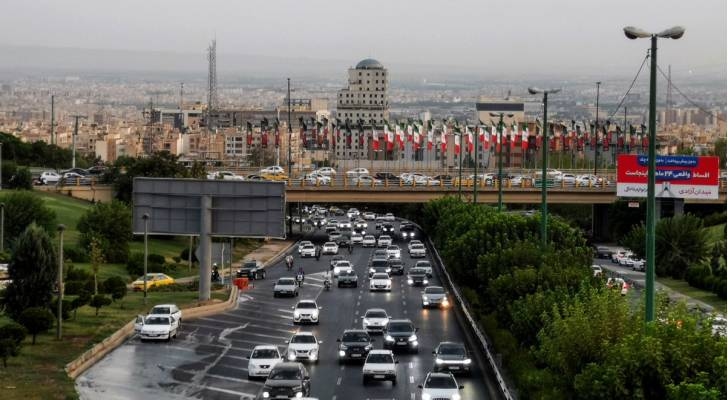
Nearly two months after the end of Iran and 'Israel's' unprecedented 12-day war, daily life in Tehran remains unsettled by widespread GPS disruptions that continue to paralyze transportation and digital services, according to a report by Agence France-Presse (AFP). For drivers like 35-year-old Farshad Fooladi, who relies on Iran's popular ride-hailing platform Snapp, the chaos has been devastating. 'For weeks I have been unable to work,' he said. 'Most of the time was wasted wandering around aimlessly.' - Disruptions across Iran - GPS signals began to falter shortly after 'Israel' launched its surprise attack in mid-June, sparking the conflict. Iran's communications ministry later admitted the interference was deliberate, citing 'security and military purposes' without further explanation. Satellite navigation systems are often critical for guiding missiles, rockets, and drones, prompting Iran to use jamming or spoofing tactics in the past, especially near military facilities. But this episode marks the most prolonged and widespread disruption to date, leaving businesses, commuters, and even emergency services in disarray. Basic navigation tools such as Google Maps and Iran's local mapping service Neshan have been hit particularly hard. Users in Tehran frequently find their locations misplaced by hundreds of kilometers, while some delivery and transport apps have nearly collapsed. 'To get around, you either need a sharp memory for routes or already know the city well,' Fooladi explained. Originally from Lorestan province, he admits he now avoids passengers unfamiliar with the capital's streets, a choice that has drastically cut into his income. - Economic impact deepens - In August, Neshan's chief executive Javad Amel revealed that the app's daily user activity had fallen by up to 20 percent, attributing the decline to persistent spoofing. The disruptions, layered onto an economy already battered by decades of sanctions and mismanagement, have intensified public anxiety. 'This war has upended our lives and frozen our future plans,' Fooladi said. The Khabar Online news agency recently warned that the interference has caused 'collateral damage' to Iran's digital economy and even public safety, noting delays to critical services like ambulances. Former communications minister Mohammad Javad Azari Jahromi also questioned the effectiveness of the tactic. 'Drone manufacturers and operators are not stupid either. If the GPS is disrupted and another positioning system replaces it, they will also use the new system,' he argued on his Telegram channel. - Searching for alternatives - Iranian officials are now weighing whether to migrate away from GPS entirely. Deputy communications minister Ehsan Chitsaz suggested adopting China's BeiDou satellite navigation system, which became fully operational in 2020 and is seen as a rival to the US-operated GPS. 'Disruptions are created by domestic systems on GPS, and this has pushed us toward alternative options such as BeiDou,' Chitsaz told the Iranian daily Ham Mihan. He confirmed that plans are being drafted to gradually shift location-based services in transport and agriculture to the Chinese network. But experts warn such a move would be complicated. 'Doing so would require extensive and costly infrastructure changes,' said Amir Rashidi of the US-based Miaan group, adding that Iran remains 'highly vulnerable in cyberspace.' - Uncertain future - The continued technological disruptions come against a backdrop of stalled nuclear talks with Washington and fears of renewed conflict. 'Israel' and the US have repeatedly threatened further military action should Iran restart its nuclear program. For many Iranians, the uncertainty is unbearable. 'Everything is uncertain, and we can't plan. The future is unclear,' said Mohammad Hossein Ghanbari, a 32-year-old Snapp driver. 'We don't know whether the war will break out again or what will happen next.'

Roya News
01-08-2025
- Roya News
Taiwan to seek lower tariff after Trump's 'temporary' 20% levy
Taiwan vowed on Friday to seek a lower tariff after Donald Trump imposed a "temporary" 20 percent levy on its shipments to the United States as part of his trade war. The US president's announcement was part of a sweep of measures -- reaching 41 percent -- against dozens of global partners as they scrambled for deals with Washington to avert the painful tolls. The figure is down from the 32 percent toll imposed in his April 2 "Liberation Day", since when Taipei and Washington have held four rounds of face-to-face talks and multiple video conferences to resolve the issue. On Friday Taiwan President Lai Ching-te said on Facebook they were still working to strike an agreement "The US has announced a temporary 20 percent tariff for Taiwan, with the possibility of further reductions should an agreement be reached," he wrote. "The government will continue to strive for a reasonable tariff rate and complete the final stages of the tariff negotiations." While Trump had set Friday as the deadline for agreements to be made, he delayed it until the end of next week. No timeline was given for Taiwan, which could mean the island was caught in the middle of US-China trade negotiations, said Alicia Garcia-Herrero, chief economist for Asia Pacific at Natixis. Washington and Beijing held two days of talks this week aimed at reaching a deal to extend a truce in their trade war and prevent the reimposition of sky-high tariffs on August 12. "The conditions on Taiwan might be relevant for China, imagine export controls," Garcia-Herrero told AFP. After US tech giant Nvidia announced it will resume sales of its H20 AI chips to China, Garcia-Herrero said "there could be other stuff that China needs from Taiwan that the US can offer". 'This is the ceiling' Taiwan is a global powerhouse in chip manufacturing, with more than half the world's semiconductors and nearly all of the high-end ones made there. The owner of a Taiwanese machinery exporter to the United States said he was worried that lower tariff rates on Japan and South Korea -- 15 percent -- would advantage his competitors there. He told AFP the recent appreciation in the Taiwan dollar against the greenback had also "put a lot of pressure on us, creating a double whammy". The uncertainty over tariffs was hurting US sales, said textile producer Eddie Wang, with clients "feeling overwhelmed" and reluctant to place orders. Soaring demand for AI-related technology has fuelled Taiwan's trade surplus with the United States -- and put it in Trump's crosshairs. Around 60 percent of Taiwan's exports to the United States are information and communications technology, which includes chips. In a bid to avoid the tariffs, Taipei has pledged to increase investment in the United States, buy ore of its energy and increase its own defence spending. Economist Sun Ming-te said the 20 percent levy was "probably the best outcome Taiwan can achieve with the US under the current conditions."
Roya News
20-07-2025
- Roya News
European powers plan new round of nuclear talks with Iran
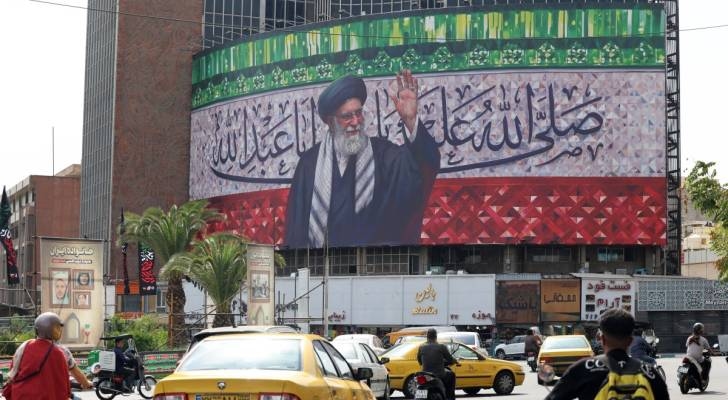
Britain, France, and Germany are preparing to hold a new round of discussions with Iran over its nuclear program in the coming days, a German diplomatic source confirmed to Agence France-Presse (AFP) on Sunday. The three European powers, known collectively as the E3, 'are in contact with Iran to schedule further talks for the coming week,' the source said. The move follows renewed warnings from the E3 that international sanctions suspended under a 2015 nuclear agreement could be reinstated if Tehran does not return to negotiations. Iran's Tasnim news agency also reported that Tehran had agreed to engage with the European trio, citing an unnamed official. Discussions are ongoing to determine the date and location of the talks. On Friday, Iranian Foreign Minister Abbas Araghchi held a call with his British, French, and German counterparts, as well as EU foreign policy chief Kaja Kallas. During the call, the Europeans cautioned Iran that they could trigger the so-called 'snapback' mechanism to restore sanctions lifted under the 2015 Joint Comprehensive Plan of Action (JCPOA) if no progress is made. 'Iran must never be allowed to acquire a nuclear weapon. That is why Germany, France and the United Kingdom are continuing to work intensively in the E3 format to find a sustainable and verifiable diplomatic solution to the Iranian nuclear programme,' the German source said. Iran has consistently denied pursuing nuclear weapons. The JCPOA, agreed in 2015, imposed strict limits on Iran's nuclear activities in exchange for sanctions relief. However, the accord began unraveling in 2018 when then-U.S. President Donald Trump withdrew from the deal and reimposed sanctions. Efforts to revive talks suffered another blow after June 13, when 'Israel' launched a 12-day offensive against Iran. Washington, under Trump, joined 'Israel' in striking Iranian nuclear facilities, effectively halting indirect negotiations mediated by Oman.
