


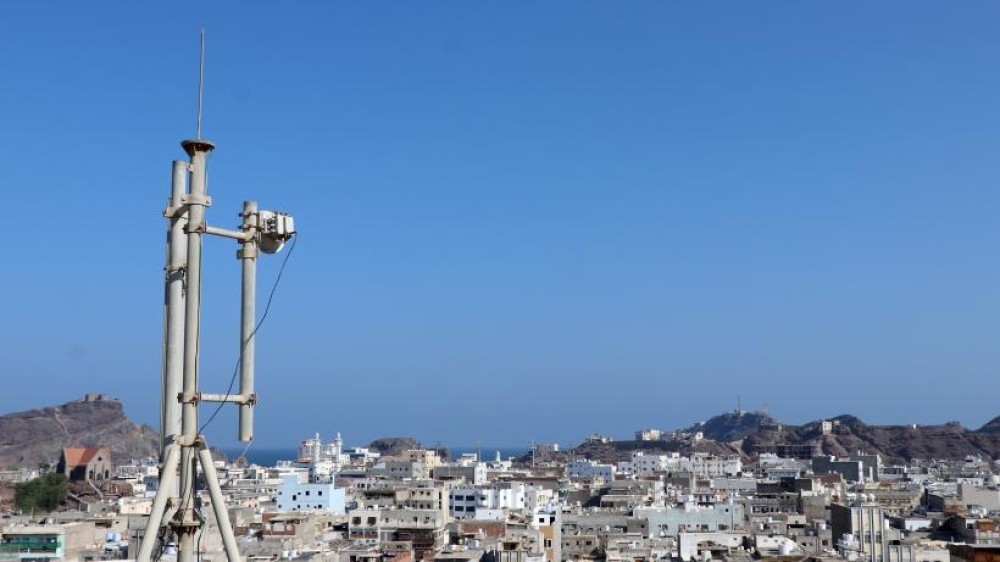
A technical failure affected telecommunications services across Yemen
The outage, which affected both mobile and internet services, was reported to have originated from a critical infrastructure failure
The disruption has caused widespread frustration, as families rely heavily on telecommunications to share greetings and coordinate festivities during Eid.
The timing of the failure has heightened its impact, as Eid al-Fitr marks the end of Ramadan and is traditionally a time for family gatherings and community celebrations.
Businesses, particularly those dependent on online transactions, have also been affected, adding to the economic strain in a country already facing challenges due to ongoing conflict.
While the technical failure has cast a shadow over the Eid celebrations, it has also highlighted the critical importance of reliable telecommunications infrastructure in fostering connections and supporting economic activity.

Try Our AI Features
Explore what Daily8 AI can do for you:
Comments
No comments yet...
Related Articles

Saba Yemen
 a day ago
- Saba Yemen
Tourism sector in Ibb commemorates Prophet's birthday with celebratory events
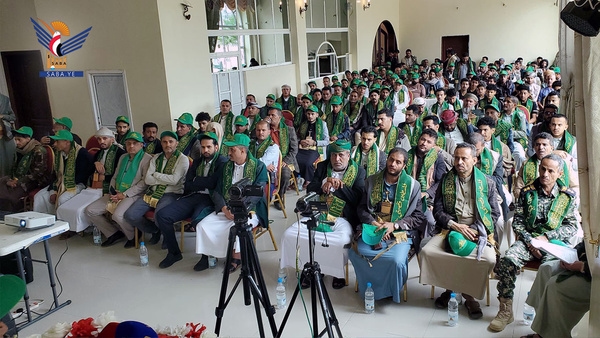
Ibb - Saba: The tourism sector in Ibb Governorate held a speech and cultural event on Monday under the slogan 'At Your Service, O Messenger of God' to mark the Prophet Muhammad's birthday, emphasizing national unity, faith, and support for the oppressed in Gaza. Officials highlighted the religious and social significance of the celebration, noting that it strengthens the people's faith-based identity and honors their connection to the Messenger of God. Preparatory activities included street decorations, illuminated panels, and aesthetic displays across Ibb city, showcasing joy and spirituality. Speakers emphasized the role of the tourism sector in mobilizing public participation, supporting the faithful, and reinforcing the nation's adherence to the Prophet's teachings. Poems and documentary presentations further highlighted the cultural and educational aspects of the occasion, reflecting the community's reverence and commitment to Islamic values.
Saba Yemen
06-08-2025
- Saba Yemen
Manifestations of Arab Complicity in Aggression on Gaza in Light of Firm Yemeni Position
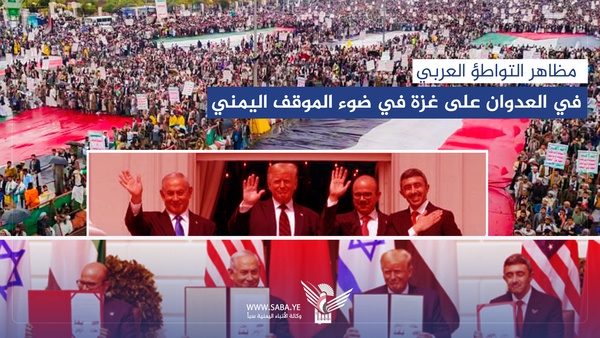
Sana'a - Saba: The Israeli enemy is waging a complex aggression against the Gaza Strip, going beyond bombing and starvation to unprecedented political complexity. Regional parties are participating in this indirect role, varying between directed silence, field facilitation, political cover, and economic engagement, this makes the situation go beyond the concept of absence to the level of complicity in the crime and its repercussions. The official Arab response to the massacres in Gaza has been characterized by a complete disconnect from the necessary humanitarian and political stance. Narrow strategic calculations have been present, while the imperatives of belonging and position have been absent. Palestine has transformed from a central issue into a negotiable matter, and the priorities of some capitals have shifted from supporting the victim to securing the interests of the aggressor partner. Arab support for the enemy emerged through multiple channels, most notably the supply of fuel to Israeli fighter jets, this provided them with additional capacity to continue their strikes on the Gaza Strip without relying entirely on Western supplies, thus enhancing the efficiency of the aggression and reducing its operational costs. On the financial side, some Arab countries maintained the pace of funding the US administration, knowing in advance that this money was included in the annual military aid allocations to the Israeli entity, this made this funding a direct factor in sustaining the aggression, perpetuating the perpetration of crimes, and starving Gaza and its people. The opening of Arab airspace to Israeli aircraft, whether for the transport of equipment or diplomatic travel, expanded the enemy's operational margin and granted it undeclared regional coverage, which contributed to reducing the logistical barriers that previously limited its freedom of movement. Trade relations between some regimes and the Israeli enemy continued during the aggression, with shipments of food, medicine, and essential goods continuing to arrive at the occupied ports, while the besieged Gaza Strip suffered from a shortage of vital supplies due to the joint blockade. On the political front, no serious Arab steps were taken to reduce representation, freeze relations, or review bilateral agreements. Rather, official meetings were held at various levels, and some capitals maintained direct communication channels with the occupation government. This coincided with continued Arab-Israeli security cooperation on sensitive issues, including data exchange, tracking of activists, and restrictions on resistance support activities, including preventing donations, closing accounts, and banning some Islamic entities active in this field. The Palestinian Authority has emerged as one of the fundamental weaknesses on the internal front, through its continued security coordination, pursuit of resistance cadres, and the extradition of some of them, this has weakened the environment for field action and dismantled the Popular Front in the West Bank. On the religious and media levels, major voices in the Arab world have failed to cover the massacres in the Gaza Strip, the official positions of religious institutions have declined, with some outlets issuing limited statements. Meanwhile, some platforms have maintained a discourse of criminalization of the resistance and warnings against escalation. In the popular sphere, the imposed security and legislative restrictions have limited the space for expression and demonstrations, and have prevented marches and solidarity protests, this has led to the complete disruption of popular pressure tools, despite the clarity of the bloody scene and the scale of the massacres. This was paralleled by the deliberate marginalization of educational and media platforms from their awareness-raising role. Resistance discourse was excluded from curricula, universities were emptied of their political content, and official and private media outlets were subject to controls that prevented the narrative of the Palestinian victim from being conveyed as it is. Some media platforms became tools of justification, focusing on rhetoric of "calm," "peace," and "restraint." This gave the enemy additional cover in its battle and contributed to reshaping public opinion toward accepting normalization as a rational option. The negative classification of the resistance increased, with major factions being placed on terrorist lists, their leaders demonized, and their supporters accused of threatening security and stability. Meanwhile, Zionist delegations remained welcomed in a number of Arab capitals. In this context, Sayyed Abdulmalik Badr al-Din al-Houthi affirms that granting the Israeli enemy Arab cover under any pretext does not express neutrality. Rather, it establishes a position on the front line of aggression and places the regimes involved in a political path that paves the way for comprehensive Zionist hegemony over Arab decision-making, beginning with Palestine and not stopping there. The Leader believes that classifying Gaza's defenders as terrorists and treating them as a threat represents a reversal of principles and exposes the profound imbalance in the political compass of some regimes, this paves the way for the liquidation of the cause and drags the nation toward an existential cost that goes beyond the current battle. In this climate, the Yemeni position has emerged as a firm and clear one, not subjecting its support for Palestine to any circumstantial considerations. Rather, it has maintained its principled compass and strengthened its media, political, and field presence through official positions, major demonstrations, popular mobilization, and armed forces operations deep within the enemy's territory. Sana'a has adopted an approach that links the Palestinian cause with religious identity, classifies the confrontation with the Israeli enemy as part of the nation's central battle, and views the continuation of the aggression as a primary cause of destabilizing Arab national security and a constant source of existential threat. The Yemeni position was not limited to condemnation, but rather constituted a strategic support element in the battle, in terms of strikes supporting Gaza and in terms of political clarity, public presence, and media and mobilization engagement, at a time when many countries were shrinking and retreating from their previous positions. This cohesion affirms that strengthening the position does not come from a balance of interests, but rather from clarity of principles. Supporting Palestine is not tied to momentary calculations, but rather is built on a comprehensive vision that considers the Israeli enemy a direct threat to all Arab and Islamic peoples. The developments in the aggression on Gaza reveal an unprecedented level of official Arab complicity, matched by continued Palestinian steadfastness and a steadfast Yemeni position, this position redefines the map of alignment in the region and forces peoples to reconsider who governs them, who stands with them, and who sells them out. Observers believe that Sana'a is advancing a position rooted in the values of faith and the responsibility of belonging, this position reflects the identity of the nation and the conscience of its peoples. It embodies a state of strategic vigilance based on insight, not self-interest, and on self-sacrifice, not bargaining, this makes its political and military presence more consistent with the requirements of the current stage. The facts of the Gaza massacre demonstrate that the moment no longer allows for ambiguity, the lines of alignment have crystallized with extreme clarity: one side is writing its positions in blood, waging its battle with dignity, and offering its martyrs with a cohesive ideological awareness, the other side is signing off on facilitating the situation, participating in supplying weapons, and securing the enemy's back with fuel, transit, and normalization. M.M

Saba Yemen
30-06-2025
- Saba Yemen
Dhamar: Oil, Gas companies host cultural event commemorating Prophet's migration
Dhamar - Saba: The branches of the Oil and Gas Companies in Dhamar governorate on Monday organized a cultural event commemorating the Prophet's noble migration (Hijra). During the event, Dhamar undersecretary Mohammed Abdulrazzaq emphasized the anniversary's significance as a pivotal moment in establishing the Islamic state. Abdulrazzaq highlighted the virtues of the Prophet's migration and the role of Yemenis in this foundational event for Islamic history. He also reviewed lessons from the Hijra that the nation's people should recall and apply in their practical lives, particularly concerning the struggle against enemies. Director of the Oil Company branch Engineer Abdullah al-Ashbat discussed the implications of commemorating the Prophet's migration. He stressed the importance of drawing lessons from it to advance the nation and confront aggressive schemes targeting it. Al-Ashbat noted the significance of the Great Prophet's migration, which marked a decisive turning point in human history and the beginning of the Islamic state, founded on noble values and principles. Cultural speaker Nasr al-Dhulaimi present at the event alongside Engineer Nabil al-Mutawakil, Director of the Gas Company branch, and his deputy Nasr al-Din al-Harouji, spoke about the motives and accompanying miracles of the blessed Prophet's migration. He affirmed the importance of commemorating this great anniversary and the Yemeni people's deep connection to it, highlighting the Prophet's sacrifices, his patience in delivering the message, the challenges he faced from Quraysh infidels, and the crucial support from Aws and Khazraj tribes. Whatsapp Telegram Email Print
