


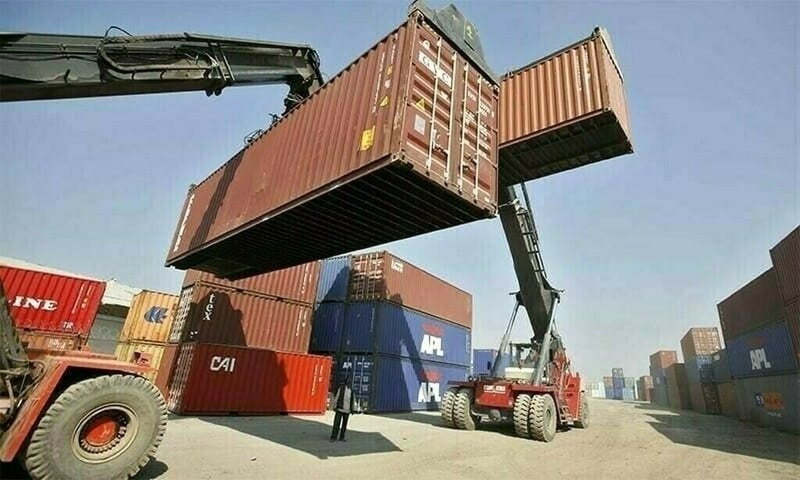
Import of Iranian scrap: DG Customs Valuation likely to take up matter of revision of values
The issue has been taken up by Quetta Chamber of Commerce and Industry (QCCI) President Muhammad Ayub Maryani with the officials of the directorate valuation Karachi.
The industry has requested the directorate an urgent review of Valuation Ruling No. 63/2025.
New customs values on import of iron & steel scrap fixed
According to the sources, the Director General Customs Valuation Karachi will review the request of the industry on realistic assessment of duties and taxes on the import of low quality of Iranian Scrap.
According to the QCCI presentation to the directorate, with reference to Valuation Ruling No. 63/2025 dated 08-08-2025, issued after the stakeholder meeting held on July 29, 2025 under section 25A of the Customs Act, 1969, the Quetta Chamber of Commerce & Industry (QCCI) conveyed its gratitude for allowing a deduction of US$ 60/MT on LME-linked customs value for scrap imports through land routes on account of freight. This recognition of freight advantage for land route trade is highly appreciated.
However, after carefully further reviewing VR 63/2025, it has been found that the US$ 60/MT deduction does not fully reflect the unique economic realities of Iranian origin scrap, which is imported exclusively via land routes (Taftan, Panjgur, and 250-Gabd) and is not imported through any seaport of Pakistan or elsewhere due to U.S. sanctions.
Key Considerations Supporting Urgent Revision of VR 63/2025:
a) Lower Quality of Iranian Scrap: 'Iranian and CARs-origin' scrap is generally of lower quality compared to European/US scrap. This factor has historically been recognized in customs valuation through deeper discounts.
b) The Sales Tax SRO 170(1)/2008: When customs duty on scrap imports was zero, FBR issued Sales Tax SRO 170(1)/2008 dated 22-02-2008, wherein the assessed value for re-rollable scrap
imported via land routes from Iran/Afghanistan was fixed at US$ 275/MT on account of its inferior quality and low freight charges, whereas the value for scrap at sea ports remained US$440/MT at that time. This policy clearly reflected both the lower quality and the cheaper rate of Iranian scrap due to sanctions.
c) The Valuation Ruling (VR 1566/2021): A 35 percent discount was accorded to land route scrap imports, which satisfied stakeholders and aligned with market realities. The present deduction of US$ 60/MT is substantially below this benchmark.
In light of the above, and under the powers vested in the Director General Valuation under Section 25D of the Customs Act, 1969, the Quetta Chamber of Commerce & Industry requested an urgent review of Valuation Ruling No. 63/2025.
The industry urged that a realistic and equitable discount be restored, ideally closer to the precedent of 35% under VR 1566/2021 or at least in line with the historic precedent of 37.5 percent discount reflected in Sales tax SRO 170(1)/2008.
Copyright Business Recorder, 2025
Hashtags

Try Our AI Features
Explore what Daily8 AI can do for you:
Comments
No comments yet...
Related Articles

Business Recorder
 2 hours ago
- Business Recorder
Preparations for PM's visit, CPEC JCC session reviewed
ISLAMABAD: Federal Minister for Planning, Development and Special Initiatives, Professor Ahsan Iqbal, on Tuesday, chaired a high-level meeting to review preparations for the upcoming Joint Cooperation Committee (JCC) session of the China–Pakistan Economic Corridor (CPEC) and the prime minister's planned visit to Beijing. The minister said that the future of CPEC should focus on quality over quantity, stressing that only well-planned, high-impact projects will move forward to ensure sustainability and strengthen Pakistan's institutions. Sharing details of his recent visit to China, he said that, on the prime minister's behalf, he invited President Xi Jinping to visit Islamabad in 2026 to celebrate 75 years of diplomatic relations between Pakistan and China. He added that the prime minister's upcoming trip to Beijing will formally launch CPEC Phase-II, during which, both sides are expected to set clear priorities and agree on concrete, measurable outcomes. The minister stressed the need to expand Pakistan's trade and exports to China and directed that visa processing for genuine businesspersons be expedited to avoid unnecessary delays. He also called for a practical, results-oriented plan to diversify exports, strengthen industrial linkages, and fully utilise the expanded market access available under CPEC. On human resource development, Iqbal stressed the need to make full use of the 10,000 training opportunities offered by China in various sectors. He directed that a transparent system be put in place to ensure the right people are selected for the right training, in line with institutional needs, so Pakistan can achieve lasting capacity-building and organisational benefits. The meeting reviewed progress on key priority areas, including the Multan–Sukkur Motorway, training programmes for IT graduates, artificial intelligence infrastructure, industrial relocation, special economic zones, mining, and agriculture. The minister directed that detailed, data-based studies be carried out on China's industrial relocation patterns and that Pakistan's export strengths be carefully matched with Chinese market needs. Noting that China imports goods worth over US$2 trillion annually, he stressed that Pakistan should set a clear target of capturing at least US$30–50 billion of this trade by improving competitiveness and preparing its key sectors. He directed that an outcome-oriented study be completed to identify high-potential sectors and products for export to China, with the objective of creating an exportable surplus, attracting sustained investment, and strengthening the balance of payments over the medium term. He reiterated the need for policy continuity and institutional reforms to realise long-term CPEC gains, and affirmed close engagement with the private sector, academia, and research institutions in industrial cooperation, technology, agriculture, energy, and human resource development. Copyright Business Recorder, 2025
Business Recorder
2 hours ago
- Business Recorder
China, Hong Kong benchmarks close lower on profit taking
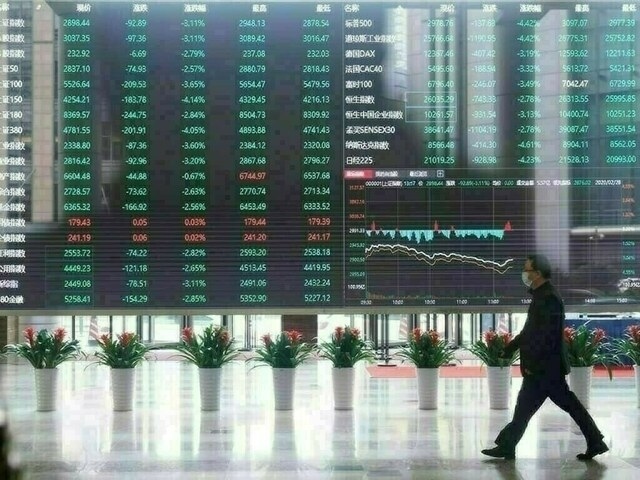
HONG KONG: China and Hong Kong equity benchmarks closed lower on Tuesday, as investors booked profits after a rally on the mainland index, and ahead of a key US central bank meeting this week that could provide clues on its policy path. The Shanghai Composite index was down 0.02% at 3,727.29, while the blue-chip CSI300 index was down 0.38%. Hong Kong's benchmark Hang Seng index closed 0.3% lower, marking a fourth straight losing session. Analysts said market optimism, underpinned by the extension of the US-China trade truce and expectations of a weaker dollar, increased inflows over the past few weeks. Some investors may want to cash out at the high point after the strong rally, they said. 'The national team has a track record of selling into strength, and we believe it will continue to do the same,' Richard Tang, China strategist at Julius Baer, said in a note on Tuesday. Yet the private bank expects 'strong return potential for the Chinese equity market into year-end', as improving liquidity in the onshore market can offset the worsening macro narrative. In Hong Kong, with the benchmark Hang Seng rising over 25% this year, there has been 'mild profit-taking/position-squaring' in the market, said Charu Chanana, chief investment strategist at Saxo. Some investors reduced their risk profile ahead of the Jackson Hole meeting and geopolitical risks, she said. Investors are closely watching the Fed's Jackson Hole conference between August 21 and 23, where Chair Jerome Powell is expected to speak and could offer more clarity on the economic outlook and the central bank's policy framework. By sector, semiconductors and brokers were among worst performers among mainland A-shares, down 1.9% and 1.8%, respectively. Mainland property developers listed in Hong Kong rose 0.6%, after Premier Li Qiang called for forceful measures to stop losses in the sector. The smaller Shenzhen index ended up 0.11% and the start-up board ChiNext Composite index was weaker by 0.17%.

Business Recorder
2 hours ago
- Business Recorder
ICH agreement: CAT upholds CCP's decision to penalize PTCL, LDI operators
ISLAMABAD: The Competition Appellate Tribunal has upheld the Competition Commission of Pakistan's decision to penalize Pakistan Telecommunication Company Limited (PTCL) and other Long Distance International (LDI) operators for entering into an anti-competitive International Clearing House (ICH) agreement. The companies have been directed to deposit the fine within 30 days. The ICH agreement, signed in 2012, routed all incoming international calls through a single gateway operated by PTCL as the head of LDI consortium. All other LDIs assigned their termination rights to the consortium, and traffic and revenues were shared on a quota basis rather than through competition. The arrangement fixed termination rates at around 8.8 US cents per minute, up from about 2 cents earlier, effectively eliminating competition and reducing consumer choice. Data from the Pakistan Telecommunication Authority (PTA) showed that incoming call volume dropped by 70 percent, from 1.9 billion minutes in September 2012 to 579 million minutes in February 2013. Despite the sharp decline in traffic, LDI operator revenues surged by 308 percent. In April 2013, the CCP declared the ICH a cartel arrangement involving price-fixing and market sharing. It imposed penalties of 7.5 percent of annual turnover of on each LDI operator (approximately 11 billion) and directed PTA to restore competition to pre-ICH levels. The ICH policy was subsequently withdrawn in June 2014. During the proceedings, LDI operators claimed they entered into the ICH agreement under directives from the Ministry of Information Technology (MOIT) and PTA, arguing that non-compliance would have risked the loss of their licenses. However, the Tribunal found no genuine state compulsion and ruled that records showed LDI operators themselves had lobbied for the ICH policy. The MOIT had no authority under the Telecom Act, 1996, to issue directives to operators; its powers were limited to issuing policy directives to PTA. The Tribunal noted that even if directives had been given, operators were fully aware that the ICH violated competition laws, as evidenced by their earlier application for an exemption under Section 5 of the Competition Act. The agreement, it held, restricted competition, prevented new entrants, and clearly fell under the jurisdiction of the CCP. The ruling reaffirmed that the Competition Act, 2010, applies to all undertakings, including regulators and government bodies. The Tribunal stated that even PTA could be held liable if found guilty of restricting or reducing competition. The PTCL had argued that CCP should have conducted an inquiry before issuing a show-cause notice. The Tribunal rejected this, holding that an inquiry is not necessary in every case, particularly where facts are admitted. LDI operators had already acknowledged the existence of the ICH agreement, which was the root cause of the violation. While upholding the CCP's findings, the Tribunal reduced the penalty from 7.5 percent to 2 percent of turnover generated from ICH-related activity. It directed the operators to deposit the penalty within 30 days, warning that failure to do so would automatically reinstate the original 7.5 percent fine. The Tribunal's ruling reinforces CCP's mandate to combat collusion and protect market competition. It also sends a clear message that no undertaking, whether private or regulatory, is above competition law. Copyright Business Recorder, 2025
