


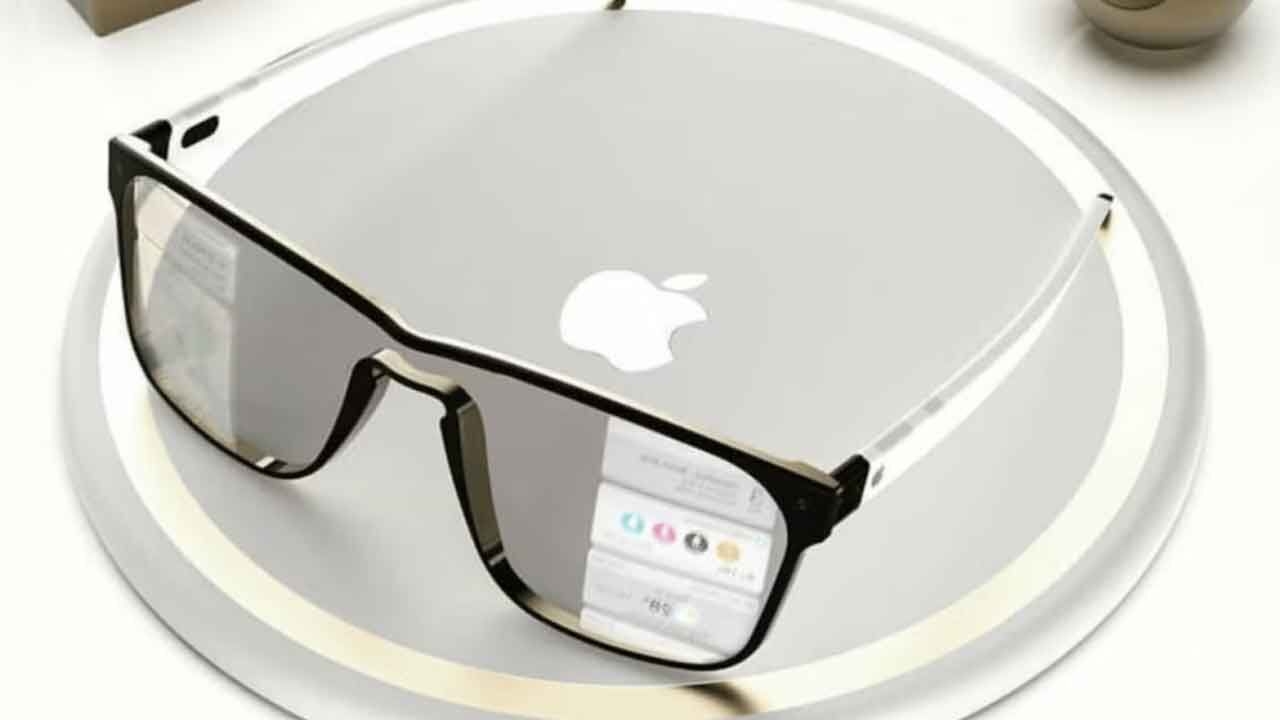
Apple is Developing AI Smart Glasses and AirPods with Cameras; Launch is Still Years Away
Reports have been swirling for some time about Apple's ambitions in the smart glasses space. CEO Tim Cook is reportedly highly invested in the project, with insiders saying he 'cares about nothing else,' putting full focus on creating revolutionary hardware that could outperform anything currently on the market. Buzz suggests that Apple's smart glasses may come loaded with cameras and microphones to enhance functionality dramatically. Meanwhile, smarter AirPods with integrated infrared cameras are also said to be in development.
In his latest Power On newsletter, Bloomberg's Mark Gurman confirmed that Apple is actively working on its smart glasses project, code-named N50. These glasses are designed to be a truly "Apple Intelligence" device, making full use of AI innovations.
Rather than offering full-blown augmented reality (AR) like bulky headsets, Apple's vision for these glasses is more subtle. Gurman explains, 'The product will analyse the surrounding environment and feed information to the wearer, though it will stop well short of true augmented reality.' Essentially, the glasses would use onboard cameras and sensors to scan the environment and feed real-time contextual data back to the user via AI systems.
Despite all the excitement, the project is facing hurdles. Gurman cautions that the glasses are 'not close to being ready yet' and that a commercial launch is not expected anytime soon.
Apple's Smart Glasses: Facing Technical and Design Challenges
Building lightweight, comfortable smart glasses that offer powerful AI-backed features is proving to be a significant challenge for Apple. Gurman previously noted that fully functioning AR glasses from Apple could be delayed by at least three to five years. This is mainly because finding the right balance between display quality, battery life, hardware power, and sleek design remains a "difficult formula" to crack.
AirPods with Cameras Also in the Works
Smart glasses aren't the only futuristic device Apple is betting on. According to Gurman, Apple is also working on a new generation of AirPods equipped with outward-facing infrared cameras. These cameras are not typical visual cameras but sensors similar to those used in the iPhone's Face ID technology.
The main purpose of the cameras in the AirPods would be to collect spatial and environmental data. This data would then be used to enhance the user experience, offering improved spatial audio and possibly personalized interactions based on surroundings.
Even more exciting is the possibility of gesture-based controls. Thanks to the infrared sensors, users might be able to perform hand gestures to control music, answer calls, or even interact with augmented environments — all without touching their devices.
When Can We Expect These Devices?
Analyst Ming-Chi Kuo has previously predicted that AirPods with infrared cameras might enter mass production around 2026 or 2027, suggesting that, while promising, the technology is still a few years away from consumer hands.
While Apple is moving deliberately with these projects, the competition isn't sitting still. Meta, for instance, launched its Ray-Ban Meta smart glasses in 2023 and has confirmed a launch in India soon. Developed with EssilorLuxottica, these glasses combine classic Ray-Ban style with Meta's AI prowess, allowing users to capture photos, make calls, and get real-time translations hands-free — all for $299 in the U.S.
Clearly, Apple's vision for the future is bold, but patience will be key as it works through the technological challenges.

Try Our AI Features
Explore what Daily8 AI can do for you:
Comments
No comments yet...
Related Articles


Time of India
 3 hours ago
- Time of India
Britain agrees to drop mandate for Apple to provide 'back door'
Representative Image SAN FRANCISCO: The Trump administration has reached an agreement with Britain to spare Apple from a request that the company create a tool to give British law enforcement organisations access to customers' cloud data. Tulsi Gabbard, US director of national intelligence, said Monday night that Britain had "agreed to drop its mandate for Apple to provide a 'back door' that would have enabled access to the protected encrypted data of American citizens and encroached on our civil liberties." Britain's decision to back off the policy comes after Apple spent months lobbying officials in Washington and rolled back an encrypted storage feature for British users. In the face of govt pressure around the world, the company has been resolute that it won't create a back door that allows access to phones or encrypted user data because it is afraid such a tool could be abused. Much of Apple's predicament in Britain played out in private after the govt issued a secret order this year. The request came after Britain amended its Investigatory Powers Act of 2016, which allows it to compel companies to turn over data and communications to law enforcement and intelligence agencies. Apple helped make the secret order public by declaring in Feb that iPhone users in Britain would begin seeing messages on their phones saying the company no longer offered its Advanced Data Protection feature. The capability, which remained available in the US, had allowed British users to encrypt almost all of their iCloud data, including messages,notes, photos and backups. Gabbard said Britain's agreement would "ensure Americans' private data remains private and our Constitutional rights and civil liberties are protected." nyt

Time of India
3 hours ago
- Time of India
Foxconn shifts from Apple to AI servers for growth in Taiwan tech sector
Taiwan's Foxconn, which rose to become a global tech manufacturing juggernaut by assembling millions of iPhones, can now say its main business is no longer Apple as it takes advantage of the AI-boom to diversify its income. Its revenue from making AI servers and other cloud and networking products, including for major customer Nvidia, surpassed smart consumer products such as iPhones for the first time in the second quarter, marking the culmination of a shift that began years ago and has swept through Taiwan's tech industry. Foxconn's heavy reliance on the smartphone business has long been viewed by investors as a significant risk, as demand growth for new iPhones has gradually weakened since they were first introduced nearly two decades ago, leaving the top iPhone assembler grappling with slowing sales momentum, analysts said. Wary of the risk, Foxconn Chairman Young Liu has been championing new businesses such as AI servers, electric vehicles and semiconductors since taking the top job in 2019. While its expansion into EVs and chips has yet to show a meaningful contribution to its topline, Foxconn's success in AI server manufacturing - the company is Nvidia's biggest server maker - is the result of its early bets before the technology was thrust into the limelight with the advent of ChatGPT in late 2022. Consumer electronics accounted for 35 per cent of Foxconn's total revenue in the second quarter, while cloud and networking business represented 41%. In 2021, consumer electronics represented 54 per cent of its revenue. The firm's prudent wagers years back helped it cultivate a now-prized relationship with the U.S. AI chip firm and other major AI players, analysts said. "The company has been in the business for years, meeting higher quality requirements, diversifying assembly and operations across sites, and pursuing vertical integration," said Ming-Chi Kuo, an analyst at TF International Securities. Foxconn began producing reference designs for Nvidia's graphics cards around 2002 and started making general-purpose servers for cloud service providers' data centres as early as around 2009. Its AI server business with Nvidia is in many ways the culmination of that history, analysts said. Foxconn says it is now one of the world's largest suppliers of both general-purpose and AI servers, with a market share of nearly 40 per cent in each. The company has also shown a willingness to commit investment to a project at an earlier stage than other companies, Kuo said, citing its past investments for Apple and similar moves for Nvidia. "In long-term partnerships, Foxconn is more willing to take the initiative," he said. Foxconn's plan to build factories in Houston, Texas - part of Nvidia's $500 billion U.S. investment plan - and in Mexico to produce AI servers for the U.S. client underscores this strategy, analysts said. Foxconn now expects its AI server revenue would grow more than 170 per cent in the third quarter year-on-year. Foxconn and Nvidia declined to comment. Apple did not respond to request for comment. BROADER SHIFT The shift at Foxconn mirrors a broader trend in Taiwan's technology sector, where companies once centred on consumer electronics - such as Foxconn with iPhones, and Quanta Computer and Wistron Corp with notebooks - are now investing heavily in AI servers. Nvidia partner Wistron's revenue for January to July rose 92.7%, while Quanta's grew 65.6 per cent in the same period. "The monthly sales jump for Taiwan ODMs in the first half of 2025 is evidence of this trend," said Robert Cheng, head of Asia technology hardware research at BofA Global Research, referring to original design manufacturers like Foxconn that contract manufacture products for their clients. Their fast transition into AI servers is also the result of Taiwanese tech supply chain working closely with U.S. tech giants on data centre infrastructure work for a decade now, according to Chris Wei, industry consultant at Taiwan's Market Intelligence & Consulting Institute. He estimates Taiwan accounts for about 80% of global server shipments and more than 90 per cent of AI servers. Cheng agrees. "We think this shift toward AI servers, whatever form it takes, is good for Taiwan's tech industry," he said, noting Taiwanese firms' ability to rapidly shift to cater to changing needs from their customers.


Economic Times
5 hours ago
- Economic Times
Apple drops iOS 26 with massive updates — see what's new for iPhone and iPad users
Live Events Key New Features in iOS 26 Big Changes Coming to iPadOS 26 New AirPods Features in iOS 26 Studio-quality audio recording for better voice capture in noisy environments A camera shutter gesture that allows you to snap pictures or record videos with a touch on your AirPods Rumored live translation feature, teased in iOS 26 beta code Why the Update Called iOS 26 Instead of iOS 19? Siri's Big AI Upgrade Isn't Here Yet Which iPhones Will Support iOS 26? iPhone SE (2nd gen or newer) iPhone 11, 12, 13, 14, 15, and 16 series The upcoming iPhone 17 lineup (expected September 2025) How to Get the iOS 26 Public Beta FAQs (You can now subscribe to our (You can now subscribe to our Economic Times WhatsApp channel Apple will soon be formally revealing the date for downloading iOS 26, which is going to be one of the year's largest updates for iPhone and iPad users, as per a report. First previewed in June's WWDC keynote and now available as a public beta, iOS 26 introduces a home and lock screen redesign called Liquid Glass, smarter built-in features, and significant improvements that get everyday things done faster and more easily, according to a Engadget a revamped lock screen to better spam filtering and even built-in screenshot search functionality powered by Google and ChatGPT, Apple is at last launching updates that include several big changes coming to iOS, macOS, iPadOS and the rest of Apple's software suite, as per the READ: 10 must-change iOS 18.6 settings that'll make your iPhone feel like day one again Among the most apparent shifts in iOS 26 is a fresh "Liquid Glass" aesthetic. It provides your iPhone or iPad with a foggy, layered appearance, with app icons and widgets suspended subtly above your background. It's a full transformation of the home and lock screens, something that hasn't changed in look has evoked some controversy among users, but Apple is already refining it based on initial criticism. The organization has toned back a bit of transparency in some places, and the design will likely see further refinement through subsequent READ: Leaked: iPhone 17 Pro Max internal design shows game-changing metal battery, hints at big redesign iOS 26 brings a number of significant advancements, including:Hold Assist: Your phone will now inform you when a customer service representative returns on the line, so you don't have to be stuck by the phone waiting for long periods of Translation: If you're on a phone call, FaceTime, or texting via Messages, this feature is live-translating your conversation as it Intelligence: This new feature allows you to search the web with just a screenshot. Take a photo of something you want, and your iPhone will assist you in finding it on the in Group Chats: Great for planning with friends, you can now send quick polls in Messages to assist your group in deciding on restaurants or meeting Message Filtering: iOS 26 automatically filters out suspicious or unfamiliar messages into a different folder, leaving your inbox App Update: The Library and Collections tabs have returned, making it simpler to locate and group your READ: Big change: 500,000 older Americans will now get Social Security checks online - here's the scoop iPad users will not be forgotten as iPadOS 26 introduces full windowing capability, resize and move apps at will across the screen, and a new menu bar that brings multitasking closer to the desktop experience. Liquid Glass design comes to iPad, too, bringing together the look and feel of all Apple are also receiving a few useful new features:ALSO READ: Google's Gemini can now talk — new audio tool reads your Docs out loud with ease Apple is bypassing iOS 19 through 25 and going directly to iOS 26 as the company is moving to an annual naming convention, so this release is being associated with the year 2026, similar to how car models are you were expecting a powerful new AI version of Siri this fall, you'll have to wait a bit longer. Apple says the upgraded assistant is coming sometime in the company is reportedly testing integration with AI models from OpenAI and Anthropic, and working on a 'stripped-down' AI chatbot to take on READ: Apple just dropped 2 free iPhone apps with iOS 26, and users can't stop talking about them If you're using an iPhone from 2019 or later, you'll likely be eligible for iOS 26, but models like the iPhone XR, XS, and XS Max won't get the update, as per the Engadget following models are compatible:To test iOS 26 yourself, enroll in the Apple Beta Software Program on After enrolling, navigate to Settings > General > Software Update on your iPhone and choose the iOS 26 public beta to your phone is from 2019 or later (iPhone 11 and up) it will, but older models like XR or XS are not supported, as per the Engadget iPadOS 26 includes many of the same features, plus multitasking upgrades, as per the Engadget report.
