



Secrets of an Antarctic garden shed frozen in time
Blaiklock Island Refuge has been frozen in time since for decades (Image: UKAHT/Michael Duff)
Time froze decades ago at Blaiklock Island Refuge, situated in one of the world's most remote and difficult to reach places, when the pioneers who used it as a shelter while they charted the first maps of the Antarctic Peninsula, moved on.
Like many ordinary garden sheds across the land that have served its owners well, it bears scars of past use – old nails hammered into walls where soggy coats and equipment were once hung up to dry, hammers with their wooden handles stained with use, rusty old oil cans and pots of grease and that shed essential, an old torch.
Tins of food stashed on a shelf within Blaiklock Island Refuge Hut (Image: UKAHT/Michael Duff)
Now, though, it has been given a gentle makeover – so subtle that it's barely noticeable – thanks to the steady hand of a Peebleshire carpenter, some well-travelled roofing felt and a conservation effort that went to the ends of the earth.
Graham Gillie, 58, a fifth-generation carpenter, has just returned from Blaiklock Island after working with the UK Antarctic Heritage Trust (UKAHT) to repair the hut that once sheltered explorers, scientists, and their dogs as they ventured into the interior of the continent.
Read more by Sandra Dick:
Just like an ordinary garden sheds in need of some care and attention, the job involved nothing fancier than some roofing felt, nails and old-fashioned hammering.
While the task itself may have been familiar, the logistics were anything but.
Getting to Blaiklock involved a 9,000-mile journey via Port Lockroy, established during the Second World War, Port Lockroy was the setting for top secret mission Operation Tabarin, which aimed to reinforce British claims to the Falkland Islands and other locations, as pressure mounted from Argentina and Chile.
The newly restored Blaiklock Island Refuge Hut (Image: UKAHT/Michael Duff)
From there, Graham, along with a fellow carpenter, an archivist who planned to record the entire contents of the Blaiklock hut and a film-maker to capture their work on film, spent several days travelling through icy and mostly unchartered waters by sailing boat.
Once close enough, they faced a daily commute by inflatable boat, all the time keeping a constant eye on the changing weather and the threat that sea ice might restrict their escape route to safety.
Having planned their journey, the small team also had to ensure they had the materials they needed in place, from large rolls of roofing felt to the smallest nails.
It was shipped separately to Blaiklock Island by British Antarctic Survey polar research vessel, RRS Sir David Attenborough.
Carpenter Graham Gillie travelled 9000 miles to carry out repairs to Blaiklock Island refuge (Image: UKAHT/Michael Duff)
Work to re-felt both the roof and the sides of the refuge had to be carried out under strict conservation controls, even down to keeping the old rusty nails once used to hang up wet jackets and equipment in place.
The Blaiklock structure is the only British Antarctic refuge remaining from the 1950s, when it was used as a satellite base for survey and geological parties from Horseshoe Island, Detaille Island and Stonington Island.
In those days, it could be reached by dog-pulled sleds driven over a glacier which attached the island to the mainland.
Graham Gillie at work re-felting Blaiklock Island Refuge (Image: UKAHT/Michael Duff)
The changing climate, however, has seen the glacier retreat, making the journey even more difficult.
When Graham and his team arrived in February, it was the first time a specialist conservation team had been sent to carry out repairs and document the site.
They found it almost as if the last occupants had just popped out, with cooking pots still neatly stacked, boxes filled with supplies, tins of food on shelves and rusty nails from the original build still embedded in the timber.
Items left behind by researchers who once used the refuge hut at Blaiklock Island (Image: UKAHT/Michael Duff)
Graham's key task would be familiar to anyone with a shed of a certain age in the back garden: make sure it doesn't let in water.
'It's just like re-felting the roof of a garden shed, except we were covering whole of the building,' says Graham. 'We had to strip off the old felt and redo it.
'The felt protects the building from the wind and from blowing ice that scars the building and wears it down.
'It's like it's being rubbed with sandpaper all of the time.'
The hut at Blaiklock Island had to be stripped and re-felted to protect it from the Antarctic weather (Image: UKAHT/Michael Duff)
One of the biggest challenges was working around the fickle Antarctic weather and the risk of becoming trapped by rapidly forming sea ice.
'You have to keep an eye on the weather and be aware in case we needed to escape quickly.
'The sea ice can blow in fast, and if it does, there's a risk the ship can't get back in to pick you up,' says Graham.
'It makes it all the more exciting.'
While outside the hut was given a new protective layer, inside work was done to repair part of the roof and to document its contents.
Blaiklock Island was a base for pioneers who charted the first maps of the region (Image: UKAHT/Michael Duff)
'The building is like a little bothy,' he adds. 'It's small, there's a workshop area where they stored skis, a room with six bunk beds and a little cooking area with a table.
'It's literally a garden shed without any insulation in it.'
Inside was a scene of Antarctic life straight from the 1950s.
'Initially you think it's quite empty but there are boxes stuffed with all kinds of things, a lot has been left,' he says.
'It is as if someone has just been in, cooked dinner, tidied up a bit and then left.
Read more by Sandra Dick:
'You feel a real connection with the people that were there before,' he adds.
Blaiklock Island's refuge hut is one of five bases on the Antarctic Peninsula established in the aftermath of the war to serve British scientists based at Port Lockroy as they carried out mapping, geology and meteorology studies.
They, and other sites, are looked after by the UKAHT and kept as frozen-in-time examples of scientific exploration.
Items line a shelf inside Blaiklock Island Refuge, a former shelter used by Antarctic scientists (Image: UKAHT/Michael Duff)
Graham is no stranger to working in the harsh conditions, often under the watch of troops of penguins and in sub-zero temperatures: he first visited Port Lockroy nearly 20 years ago as a general assistant and museum guide.
He later helped build a Nissen hut for team accommodation at Port Lockroy, constructing it in two halves to avoid nesting penguins.
Despite running his own carpentry business at home, the father of two returned to Antarctica to carry out urgent repairs to Base W Detaille Island, a science station dating from the 1950s, and then at Port Lockroy's Bransfield House, home to the world's remotest post office.
This time around he completed important work at Port Lockroy to repair concrete foundations and replace rotten floor timbers before going traveling to Blaiklock Island Refuge.
Peebleshire carpenter Graham Gillie at work restoring an Antarctic hut (Image: UKAHT/Michael Duff)
Working in such isolation takes a special temperament: while Graham and the UKAHT team were busy carrying out their repair tasks, concerns were raised for the safety of researchers at South African-run research base in Vesleskarvet, Queen Maud Land, Antarctica, amid "deeply disturbing behaviour" from one researcher.
The grind of months away from home in a landscape that while beautiful can also be harsh and monotonous, requires a carefully selected group of people, agrees Graham.
A seal basks in front of the shed at Blaiklock Island during repairs (Image: UKAHT/Michael Duff)
'It's all about sending people there who are good at adapting to situations, don't react too badly to anything that's stressful.
'You have got to get on with people,' he adds.
'You've got to be someone who can adapt, talk things through, or just take a step back. I've never had any real issues.'
Antarctica, he adds, has an undeniable pull.
'The more remote, the more challenging, the more you get out of it.
'There's something about it that draws you in. It gets under your skin.'
Hashtags

Try Our AI Features
Explore what Daily8 AI can do for you:
Comments
No comments yet...
Related Articles

Daily Mirror
 42 minutes ago
- Daily Mirror
UK's ‘fairytale village' is ‘frozen in time' with no cars allowed
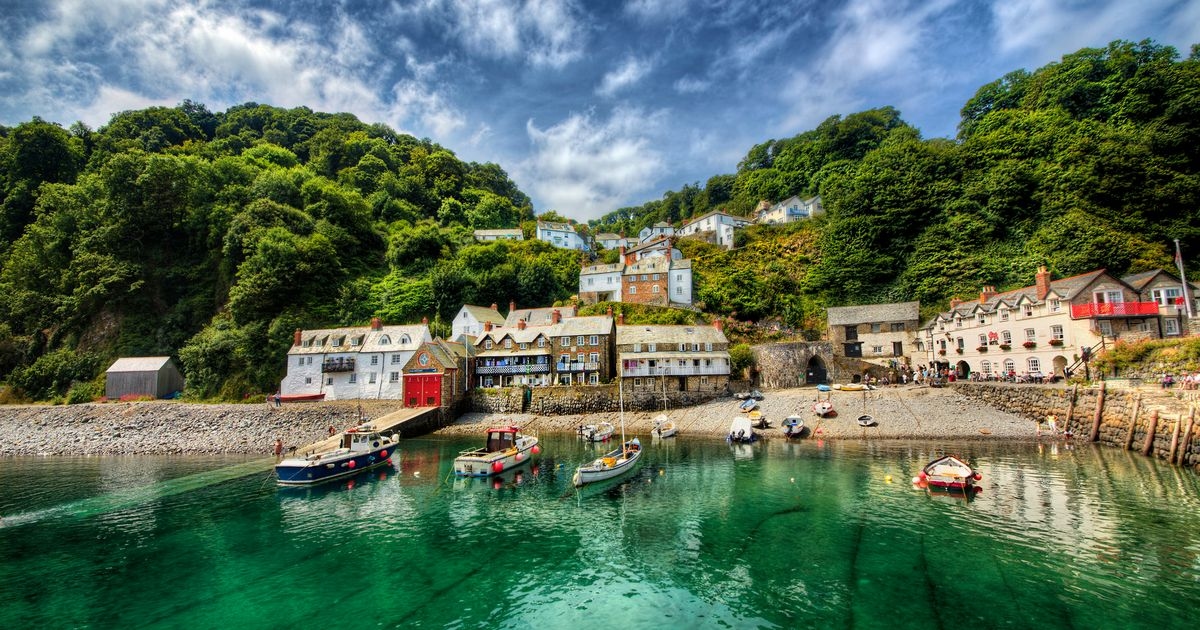
In Clovelly in North Devon, life moves at a slower pace, with goods hauled on wooden sledges and donkeys still making occasional appearances on the cobbled streets Cars are banned in a UK village where locals have decided to do things the old-fashioned way. Perched on the cliffs of North Devon lies Clovelly, a village where it can feel as if time simply stopped. Here, cars aren't just discouraged — they're completely banned. Instead, life moves at a slower pace, with goods hauled on wooden sledges and donkeys still making occasional appearances on the cobbled streets. Visitors to Clovelly quickly discover that modern transport is left firmly at the top of the hill. The only way into the village is on foot, down steep cobbled lanes that wind between whitewashed cottages and burst open into a postcard-worthy harbour. It comes after a British man claimed 'I moved from UK to Benidorm – price of a pint and Full English left me floored'. The absence of cars isn't the result of modern environmental policies but centuries of practicality — the roads are too steep and narrow for vehicles. Deliveries are made on sledges dragged by hand, inching goods down the cobbles to shops and homes. Rubbish is hauled back up in the same way, keeping the village running as it has for generations. For hundreds of years, donkeys were the workhorses of Clovelly. They carried fish from the harbour, hauled building supplies, and transported luggage for visitors. Today, they've retired from hard labour, but you can still meet them in the stables at the top of the village. Meanwhile, the wooden sledge has taken over most of the donkey's workload. Each one is handmade by locals, often adapted to carry everything from crates of food to furniture. Clovell was once owned by the Queen of England, the estate having originally been owned by William the Conqueror, King of England, and then gifted to his had many royal associations until 1242 when first acquired by the Giffard family. Until the middle of the 19th century Clovelly was all-but-unknown to the outside world, such was the private way in which the village was run. Motoring experts at Show Plates World say Clovelly is a fascinating contrast to the UK's car-obsessed culture. 'Britain has always been a nation on the move, but Clovelly shows us what happens when the car is taken out of the picture. The village thrives on tradition and community, proving that life without traffic isn't just possible — it can be beautiful. While cars dominate almost every aspect of modern life, Clovelly's charm comes from rejecting them altogether," a representative of the company said in a statement. 'It's also a reminder of how much cars shape our environment. Walking through Clovelly, you notice the peace, the clean air, and the sounds of people and nature instead of engines. That's an experience you don't forget.' Clovelly's history stretches back to the Domesday Book. For centuries, it's been privately owned and carefully maintained, ensuring its streets, cottages, and harbour retain their unique character. Visitors pay a small entrance fee of around £9.50 for adults and £5.50 for children, which helps maintain the village, its museums and gardens — keeping the cobbles and cottages in pristine condition. Throughout the year, Clovelly also hosts festivals celebrating its maritime roots, including herring, lobster and crab fairs. These events fill the car-free streets with music, food and laughter, reinforcing its strong ties to the sea and its heritage. With its cobbled lanes, flower-draped cottages and sweeping sea views, Clovelly is often described as one of the most beautiful villages in Britain. What sets it apart is not just its looks, but its atmosphere — a sense of stepping out of the modern world into something slower, calmer and more magical.

Rhyl Journal
an hour ago
- Rhyl Journal
Starmer returns to Scotland after family holiday interrupted by Ukraine talks
The Prime Minister's plane flew from the US to Glasgow overnight following the White House discussions, landing on Tuesday morning. It had taken off from the same airport the previous day when Sir Keir was heading to the US for the brief trip. On his return to Scotland, Sir Keir will co-chair a call of the so-called 'coalition of the willing', a group of nations looking to help Ukraine that he has been leading with French President Emmanuel Macron. It is the second summer in a row that the Prime Minister's holiday plans have been disrupted after he cancelled a European trip last August when rioting broke out in the UK and tensions escalated in the Middle East. The Prime Minister also delayed his departure for a trip last Christmas following the death of his brother aged 60 who had been suffering from cancer. A minister has said it is an 'occupational hazard' that prime ministers can see their holidays disrupted. Pensions minister Torsten Bell told Sky News that Sir Keir has been making a 'real difference' in the negotiations over Ukraine. He told the broadcaster: 'It is an occupational hazard for prime ministers that holidays are interrupted. You'll have been covering that for years. 'I've been around British politics enough to have seen that happen, unfortunately, year after year. 'I want the Prime Minister to have a rest […] all we want to do is make sure that we're addressing these big issues, and that in this summer means making sure we get those security guarantees in Ukraine.'


South Wales Guardian
7 hours ago
- South Wales Guardian
Starmer returns to Scotland after family holiday interrupted by Ukraine talks
The Prime Minister's plane flew from the US to Glasgow overnight following the White House discussions, landing on Tuesday morning. It had taken off from the same airport the previous day when Sir Keir was heading to the US for the brief trip. On his return to Scotland, Sir Keir will co-chair a call of the so-called 'coalition of the willing', a group of nations looking to help Ukraine that he has been leading with French President Emmanuel Macron. It is the second summer in a row that the Prime Minister's holiday plans have been disrupted after he cancelled a European trip last August when rioting broke out in the UK and tensions escalated in the Middle East. The Prime Minister also delayed his departure for a trip last Christmas following the death of his brother aged 60 who had been suffering from cancer. A minister has said it is an 'occupational hazard' that prime ministers can see their holidays disrupted. Pensions minister Torsten Bell told Sky News that Sir Keir has been making a 'real difference' in the negotiations over Ukraine. He told the broadcaster: 'It is an occupational hazard for prime ministers that holidays are interrupted. You'll have been covering that for years. 'I've been around British politics enough to have seen that happen, unfortunately, year after year. 'I want the Prime Minister to have a rest […] all we want to do is make sure that we're addressing these big issues, and that in this summer means making sure we get those security guarantees in Ukraine.'
