


Business Matters: Chinese billionaire in B.C. wants to buy Hudson's Bay

Try Our AI Features
Explore what Daily8 AI can do for you:
Comments
No comments yet...
Related Articles


CNBC
 18 minutes ago
- CNBC
Pop Mart shares fall after Labubu-maker posts near-400% profit surge
Shares in Chinese toymaker Pop Mart fell Wednesday, a day after the company posted a near-400% surge in net profit, driven by booming global demand for its Labubu dolls. Pop Mart's revenue jumped 204.4% year on year to 13.88 billion yuan ($1.93 billion), and its net profit attributable to shareholders soared 396.5% to 4.57 billion yuan for the first six months of 2025, compared with last month's forecast of at least 200% revenue growth and 350% rise in profit. Pop Mart dropped as much as 4.7% before paring losses to 0.85% as of 10.15 a.m. local time (10:15 p.m. ET Tuesday) The Beijing-headquartered company's Labubu plushies — sharp-toothed, big-eared ugly-cute dolls have taken the world by a storm, with its $30 keychains spotted on the bags of Rihanna and K-pop band Blackpink's Lisa. The company markets its toys in "blind boxes," where buyers discover the character only after opening the mystery box. In June, Chinese state media urged stricter oversight of blind-box toys and trading cards sold to children under the age of eight, suggesting measures such as age verification at checkout and parental consent for online purchases. While not directly naming Pop Mart, state media criticized businesses for encouraging kids to spend excessively on "mystery boxes" and "blind cards." "We think the longevity of popularity for Pop Mart's key IPs remain uncertain. While sales growth of Labubu and other IPs remain robust, there is no guarantee that consumers will continue to favor them in the next 5-10 years, as their preferences may change very fast," said Jeff Zhang, equity analyst at Morningstar. Pop Mart's stock has rallied more than 200% since the start of the year, data from LSEG showed. "Shares likely remain overpriced as investors are overlooking the high business risk in the long run, in our view," Zhang added. Asia-Pacific, excluding China, was the company's largest overseas market, with revenue soaring 257.8% to 2.85 billion yuan compared to the same period a year ago. The Americas made up its second-largest overseas market, with revenue jumping over 1,000% to 2.26 billion yuan. Intellectual Property is at the "core" of Pop Mart's business, the toymaker said in its earnings statement, adding that it will seek to continue expanding its global business footprint.

Bloomberg
18 minutes ago
- Bloomberg
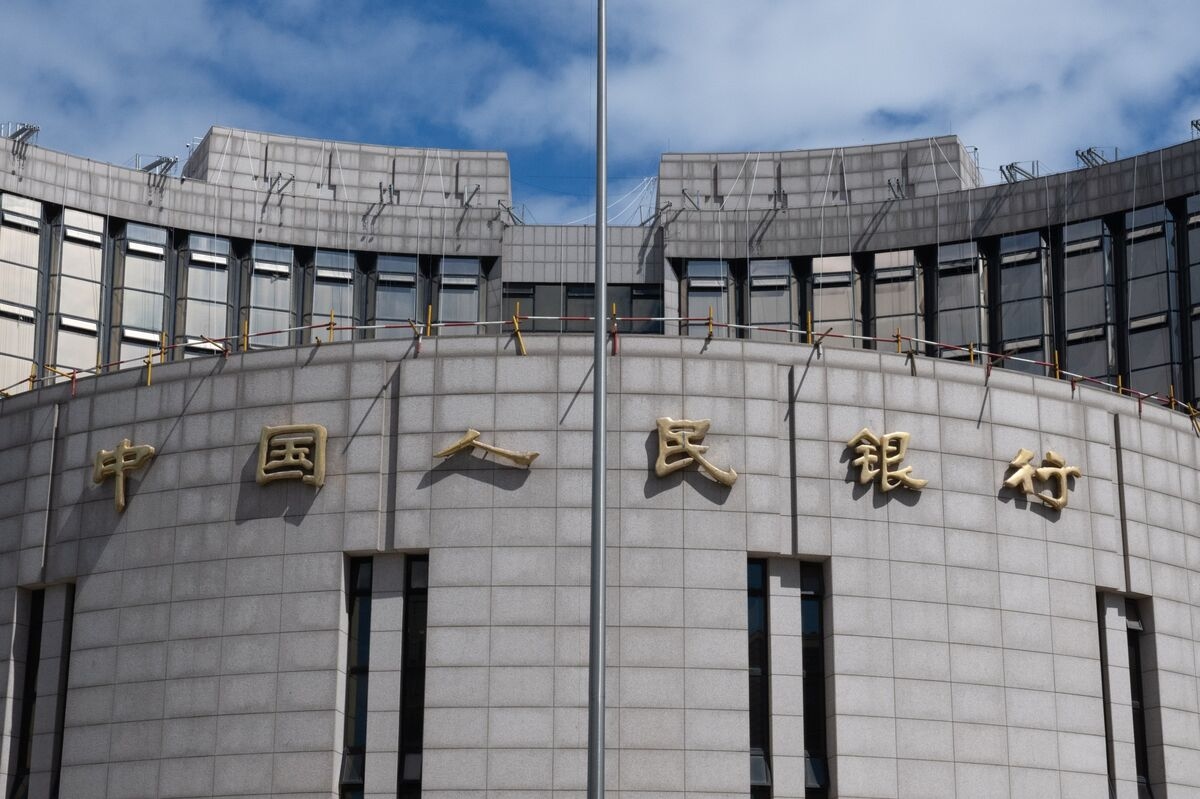
China's Bond Rout Seen Fading as Higher Yields Draw in Buyers
The selloff in Chinese bonds that sent them to near the bottom of Asia's performance rankings is likely to cool for now as yields rise to near levels which some investors may perceive as attractive, analysts say. The benchmark 10-year bond yield has climbed to the highest in four months and is within whisker of 1.8%, a level that brokerages including Huachuang Securities see as appealing. Investors may start to rethink their strategy of shunning stocks for bonds, with rising yields also enhancing returns on trades that involve borrowing from the money market to buy debt.
Yahoo
19 minutes ago
- Yahoo
India and China: US Tariffs Turn Rivals Toward Friendship in Major Geopolitical Shift
Chinese Foreign Minister Wang Yi arrived in New Delhi on Monday for a two-day visit viewed by many as the first indication of a thaw in relations between two rivals. The last such meeting took place in 2020 after a border clash heightened tensions between China and India, which have long been locked in a state of controlled hostility. More from Sourcing Journal No Hint of a Slowdown at Arc'teryx Parent Amer Sports Despite Tariff Impacts India Suspends Duties on Raw Cotton Imports, Benefitting US Exporters EU Tech Regulation Could Be Holding Up Final Trade Agreement With U.S. Moving forward in the wake of extraordinarily high U.S. tariffs of 50 percent on India, the two largest economies in Asia are looking for synergy and a positive outlook to navigate the turbulence in global trade. Neither side is pretending past tensions are moot, even though it is clear that geopolitics in South Asia stands at an important crossroads. After their meeting on Monday, India's foreign minister S. Jaishankar said it was time to 'move ahead from a difficult period in our ties,' while Wang Yi indicated it was time to 'move beyond being adversaries, to being partners.' Both sides agreed that 'stability had now been restored at the borders,' although analysts warned that years of mistrust could not 'so easily be swept aside by business interests.' Wang Yi's meeting on Tuesday with Prime Minister Narendra Modi at his official residence further underlined the effort. After the meeting, Modi tweeted: 'Glad to meet foreign minister Wang Yi. Stable, predictable, constructive ties between India and China will contribute significantly to regional as well as global peace and prosperity.' He added, 'I look forward to our next meeting in Tianjin on the sidelines of the SCO Summit,' referring to his accepted visit to the Shanghai Cooperation Organisation summit on Aug. 31 and Sept. 1. Pushed further together by what is being seen as a rupture in friendship with President Donald Trump through the punishing 50 percent tariff on Indian goods (the highest in the region), Modi is recalibrating India's strategy. The tariff began with a 25 percent duty for India, compared to 20 percent for Bangladesh, Vietnam and Sri Lanka, along with 19 percent for Pakistan, Cambodia and Indonesia. The additional 25 percent was slapped on India for its imports of Russian crude oil, bringing the total to 50 percent are set to take effect on Aug. 27. India has held firm in its objections to the tariffs, with the Ministry of External Affairs calling the targeting of India 'unjustified and unreasonable.' The overtures to China are viewed as a part of the fallout between the U.S. and India. Premal Udani, former chairman of the Apparel Export Promotion Council (AEPC) and managing director of Kaytee Corp Pvt Ltd, described the situation as an 'existential crisis for the apparel and textile industry.' He told Sourcing Journal that many U.S. buyers had paused shipments and put new orders on hold. 'The industry cannot take this kind of impact. Current effective duties are already at around 40 percent and will climb to 65 percent next week,' he said. Hopes that a U.S. delegation visit this week might advance bilateral trade talks appear dim, with reports suggesting the visit has been put on hold. 'There were two things happening at the same time. There was talk of a Bilateral Trade Agreement (BTA), and the delegation was coming for that—it wasn't to negotiate on tariffs. Realistically, none of us expected much headway in the BTA until these contentious issues were resolved. We were not holding our breath,' Udani explained. According to a recent report by the Indian Council for Research on International Economic Relations (ICRIER), nearly 70 percent of Indian exports to the U.S. will face 50 percent tariffs under the new tariff regime. 'While this represents just 1.56 percent of the gross domestic product (GDP) and 7.38 percent of total exports—far from catastrophic for a $3.9 trillion economy—the impact is concentrated in labor-intensive and high-value sectors such as textiles, apparel, gems, jewelry, auto parts, and agricultural products like shrimp. These sectors not only anchor India's merchandise exports to the U.S. but also directly affect employment and the livelihoods of millions. The U.S. alone accounted for approximately 29 percent of India's textile and apparel exports last financial year, valued at about $10.3 billion,' the report noted. Manufacturers have been faced with some dire conversations with the brands and retailers these past weeks. In Tirupur, which accounts for 68 percent of India's knitwear exports, manufacturers have paused shipments and voiced deep uncertainty. U.S. buyers account for nearly one-quarter of exports from Tirupur, and Tamil Nadu officials warned that the entire state—which sends 31 percent of its $52.18 billion exports to the U.S.—faces urgent threats to livelihoods. The Tirupur Exporters and Manufacturers Association (TEAMA) said that 3 million jobs and 20,000 factories are 'at immediate risk' due to the extra 25 percent to 50 percent tariff. The association has appealed to Prime Minister Modi for relief measures, including high-level diplomatic talks, loan-repayment moratoriums, collateral-free working capital loans, and the temporary suspension of the goods and service tax, income tax and other levies for affected exporters. Sanjay Jain, chair of the Indian Chamber of Commerce National Textiles Committee and managing director of TT Ltd, echoed the depth of the crisis throughout the textile and apparel sectors. 'It's a bad situation—buyers are putting orders on hold, and even ready goods are being asked not to dispatch. Exporters are having to give steep discounts just to move shipments or secure new orders. It's a total loss for exporters,' he said. Jain urged urgent action, warning that summer orders were already being placed and India could not afford to lose market share to other countries. 'The U.S. is the single largest buyer of home textiles and apparel in the world—we cannot ignore it. Now it is about the survival of the small and medium companies and skilled labor. The government must act boldly and support the industry in finding new pastures.' His suggestions included quickly reducing raw material costs, removing import duties on cotton and textile raw materials, and offering a 10 percent U.S.-focused incentive for products facing the 50 percent tariff. Other manufacturers told Sourcing Journal that a 'comparative paralysis has set in.' 'While there's no point in hand-wringing over the so-called friendship with the U.S. and casting blame, all eyes are on our government to see how they protect this badly hit, labor-intensive industry. It's hard to see how the government can cover the 30 percent tariff gap monetarily. We need a multi-pronged strategy,' said a Tirupur based manufacturer, requesting anonymity. Prime Minister Modi's Independence Day speech on Aug. 15, in which he promised relief for the industry through tax reforms before the festival of Diwali in November, signals movement toward India holding its own. Additionally, on Monday, the Finance Ministry announced the elimination of the 11 percent duty on cotton imports until Sept. 30, a step welcomed by manufacturers and a move that also eases access for U.S. cotton into India. Hansa Sharma, founder of the eco-friendly sustainable fashion brand Hansa, described how the situation was transforming the entire supply chain in a post: 'This is a reminder that trade policies don't just change numbers on a balance sheet—they reshape entire supply chains. As a manufacturer, we see first-hand how tariffs tilt the playing field, making adaptability and efficiency more critical than ever. While challenges are real, they also push us to rethink sourcing, diversify markets, and lean into innovation. In the end, resilience becomes the true currency of global trade.' A northern India manufacturer, described it as a 'huge ripple effect.' 'In India it is creating a de facto embargo for exports to the U.S., but the impact is much bigger than that. The tariffs are not only straining local supply chains but also reshaping the geopolitics of sourcing in South Asia,' he said, adding that manufacturers were already considering building factories in other countries, although that would result in a loss of employment in India. Despite the palpable tension, not all are swamped in gloom. Many manufacturers endorsed Jaishankar's point to Wang Yi that 'differences must not become disputes, nor competition conflict,' and that the same point could well be applied to the business of sourcing. While the tentative Chinese connections were not immediately seen as bridges to building business, Udani said that they were overall a 'very positive step forward.' 'They need our raw materials and we need a lot of their goods as well. If it works out it's a win-win situation for 25 percent of humanity,' he said. As for the upcoming deadline for additional U.S. tariffs that is causing disruptions across the supply chain, it's still being seen as a possible window to change. 'We're still cautiously optimistic,' said Udani. 'As Russia-U.S. talks are on, and Ukraine-U.S. talks are on, this issue of tariffs for crude oil imports from Russia may well be swept aside for India.' He pointed to China's last-minute extension on tariffs as an encouraging precedent, while acknowledging that 'given the impulsive and uncertain way tariffs are being distributed, it could quite go the opposite way, too.' 'So, Aug. 27 is the date to watch,' he said, referring to the deadline for the second 25 percent in tariff measures to take effect. His optimism went further: 'I wish other countries well, but in the end, India has great strength in its verticality in the sector. It's only a matter of time, and hopefully we will get a chance to get there.' Solve the daily Crossword
