



The government departments that pushed back on cutting diversity, equity and inclusion requirements from the Public Service Act
Other government agencies gave similar feedback.
The Department of Conservation added it 'disagrees' with the proposed changes, because diversity and inclusion were 'important for living standards, inclusion [and] trust'.
Numerous concerns were laid out by the Ministry for Pacific Peoples, which explained to Collins that diversity and inclusion had 'levelled [the] entry point' for Pasifika people in the public sector.
The agency suggested moving diversity requirements out of the Public Service Act and to a Government Workforce Policy Statement (GWPS) risked a 'legal challenge' under both the Human Rights Act and Employment Relations Act, which it said 'require equal employment opportunities'.
The Ministry of Defence suggested that removing the aforementioned provisions might mean agencies would not 'cast the net' as widely when appointing people to roles.
Hernandez pointed to a moment when Collins was before the governance and administration select committee for scrutiny week and was unable to give an example of a non-merit-based appointment. He called it 'quite frankly, embarrassing'.
'The purpose of equity policies [is] actually to promote merit, or actually to promote groups that usually wouldn't get a look in,' Hernandez said.
'The public service works best when it looks like the communities it's designed to represent. I mean, we wouldn't want, for example, a Parliament of just 123 people from Dunedin.'
Numerous Government departments gave feedback on proposals to change diversity and inclusion requirements.
A separate briefing to Collins noted the proposals were consistent with the coalition agreement between the National Party and Act.
The February briefing, also from the Public Service Commission to the minister, said it understood Collins was concerned there was 'not sufficient focus on merit' when chief executives were being appointed.
The commission's paper noted that at the time, the minister wanted advice on removing diversity and inclusion requirements in those instances.
The Public Service Commission told the minister that diversity policies are most suited to large groups of people, 'like the public service', where it said many societal groups can be reflected.
Collins was then told that some departments were known as 'population agencies', where they relate directly to one or more groups in society.
'In these cases, knowledge of that community, relationships within that community and respect and trust of that community may be critical to the successful performance of the role. These attributes would be included in the position description for the role and therefore assessed as part of 'merit' or being most suited to the role,' the briefing read.
The commission's paper went on to state that it would be possible to remove diversity requirements for public sector bosses while still considering relationships with specified communities when looking at population agencies.
Collins earlier this year confirmed she was actively looking at cutting diversity requirements from legislation that guides government agencies and their workers.
Her plans included proposing to remove requirements for public sector bosses to 'promote' diversity and inclusion .
Such requirements have also faced scrutiny from New Zealand First leader Winston Peters, who labelled them 'woke' .
When asked for a statement on the matter, the Ministry for the Environment pointed to an email sent from Environment Secretary James Palmer to Public Service Commissioner Sir Brian Roche in March.
Palmer wrote that removing diversity and equity matters would not reduce much effort in terms of chief executive responsibilities.
He noted such matters could be picked up in a workforce policy statement, but highlighted risks with the proposal.
'I think their removal from the Public Service Act risks sending a signal that we don't value diversity and pay equity, and the need for the public service to reflect the populations it serves. In other words, the downside of these proposals risk[s] outweighing the benefits in practical terms.'
Te Puni Kokiri, which recommended diversity and inclusion remain an expectation for chief executives, said the paper's summary was an accurate representation of its feedback.
The Ministry for Pacific Peoples said that as decisions on the amendments were under active consideration, it was unable to comment further.
Azaria Howell is a multimedia reporter working from Parliament's press gallery. She joined NZME in 2022 and became a Newstalk ZB political reporter in late 2024, with a keen interest in public service agency reform and government spending.
Hashtags

Try Our AI Features
Explore what Daily8 AI can do for you:
Comments
No comments yet...
Related Articles

The Spinoff
 5 hours ago
- The Spinoff
Could we be saying ‘ka kite' to our conservation estate?
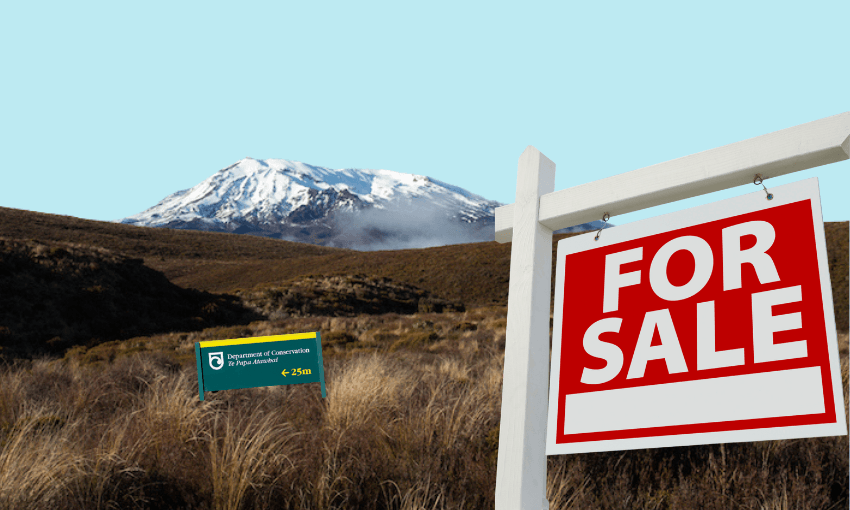
A new government proposal could open up millions of hectares of public land for sale or disposal. A version of this article was originally published on Melanie Nelson's Substack Disinterpeted. If successful, the government's Modernising Conservation Land Management proposals would mark the most far-reaching shake-up of New Zealand's public conservation estate in a generation. The plan centres on making around five million hectares – over 60% of public conservation land – eligible to be sold or exchanged if deemed surplus or needed to support other government priorities. Concessions processes will also be overhauled, with the government's explicit intention to 'unleash economic growth on one third of New Zealand's land'. Public conservation land covers about 8.5 million hectares, or one third of New Zealand's total land area. This includes national parks, conservation parks, reserves and stewardship land. For perspective, five million ha is roughly 30% of the entire South Island These areas are highly valued for their ecological and scenic value, as cultural landscapes, for recreation and as the backdrop for our significant tourism industry. What land is on the line Currently, the threshold for disposing of public conservation land is strong, ensuring it is retained in the public interest. A cabinet paper on the proposed reforms stated: 'Disposal of public conservation land is currently limited to reserves and stewardship areas that have been assessed as having 'no or very low' conservation values. In practice this is too restrictive.' While the government does not appear to be proposing large-scale proactive disposals of conservation land, the law change is significant nonetheless. Under the new settings, the government could determine that land with medium or high conservation values was 'surplus to conservation needs' or repurpose it to 'support other government priorities by making land available for development'. Land disposals would be subject to tests to protect conservation values and other factors like public access, cultural and historical significance. However, critics note that 'surplus' is not clearly defined, leaving open the possibility that land with substantial biodiversity or cultural value could be lost to private ownership or more intensive commercial use. The government has noted that 40% of conservation land would not be eligible for disposal – namely national parks, nature reserves, wilderness areas and sites with World Heritage or Ramsar designation. While a detailed list of sites has not been provided, the five million ha which may become eligible for sale or exchange likely includes: Stewardship land (2.4m ha) – much of it still unassessed for conservation value, but known to contain areas of high ecological and cultural significance. Other Department of Conservation-managed areas – including conservation parks, forest parks and most types of reserves. Alongside the disposal provisions, the proposals seek to increase amenities areas and streamline concessions for commercial activities on conservation land by pre-approving or exempting some types of activities, setting new statutory timeframes for decisions, reducing public notification and reconsideration steps and allowing longer terms or competitive allocation of some types of concessions. This could lead to faster approvals for tourism, mining or infrastructure projects. It could also facilitate more intensive development – potentially even in currently sensitive areas – through a more market-driven allocation process, including pre-approvals for activities deemed lower-impact. Also tabled is the removal of statutory planning decision-making powers from the New Zealand Conservation Authority / Te Pou Taiao o Aotearoa and Conservation Boards. The current multi-layer policy and planning process would be replaced by a National Conservation Policy Statement and a single tier of Area Plans. Decision making for all statutory plans would be shifted to the minister of conservation (currently Tama Potaka). This would be a highly significant change for conservation lands, as the conservation authority and boards consist of a wide range of community and iwi members, providing crucial checks and balances for lands which are essentially held in trust for the public. Treaty principles at the core Conservation lands are the traditional lands of tāngata whenua, and much of it was appropriated in unjust ways. A critical fault in the proposals lies in how the Crown proposes to uphold Treaty principles – specifically through section 4 of the Conservation Act –and the essential role of iwi in decisions about conservation land. Section 4 obliges the Department of Conservation and the minister of conservation to give effect to the principles of the Treaty of Waitangi when exercising conservation powers. It applies not just to the Conservation Act, but to all conservation legislation listed on Schedule 1 of the Conservation Act. Significantly, it was recently reported that the government has removed the Conservation Act and the Crown Minerals Act from its broader Treaty clause review – opting to subject both to a separate, standalone review instead. This decision underscores their complexity and distinct importance in managing Crown obligations, and the legal risks to the Crown, particularly regarding the interdependence of Treaty settlements with conservation legislation. The government has signalled in the Modernising Conservation proposals its intention to retain section 4, but clarify specific requirements to give effect to Treaty principles in management planning, concessions processes, amenities areas, and for land exchanges and disposals. The importance of iwi input In his submission on the proposed conservation reforms, the parliamentary commissioner for the environment, Simon Upton, emphasised that conservation decisions must reflect both national and regional perspectives: '…different hapū and iwi will also have their own taonga and significant places on public land that need to be protected. For that reason, access to public conservation land and the experiences it can offer must also be considered regionally.' The Waitangi Tribunal's report on the Wai 262 claim acknowledges the conservation estate is far more than protected scenery – it's a repository of taonga places, where kaitiaki relationships with the land endure: 'The conservation estate… is home to most of the surviving 'taonga places', where kaitiaki relationships with the natural environment and flora and fauna are possible in a way that they are not in other areas.' For many iwi, the conservation estate holds ancestral whenua, sources of rongoā, wāhi tapu, and taonga species – elements essential to maintaining identity, tino rangatiratanga and cultural continuity. The Waitangi Tribunal affirms: 'Within the conservation estate is ancestral whenua, taonga species, ngahere, wāhi tapu, sources of rongoā and kai… The Treaty guaranteed that such taonga would remain in the control of whānau, hapū and iwi for as long as they wished to possess them.' The five million ha that the proposed law changes would make possible to exchange or dispose of represent some of New Zealand's most significant natural landscapes and ecosystems, and are of immense value to iwi, hapū and communities throughout New Zealand. The voices of local communities, iwi, advocacy groups and those who enjoy recreational activities on conservation land have played a strong role in protecting and retaining public conservation lands for all New Zealanders, our international visitors and our many native species which are found nowhere else in the world. These proposals suggest that public conservation land and the public's role in determining its future should not be taken for granted. The government intends to introduce the legislation to make these changes next year. At that point there will be an opportunity for the public to contribute through the select committee process, with the legislation expected to pass prior to the 2026 election. Balancing economic growth with the protection of our conservation estate is not just about defending access, biodiversity and cultural heritage – it is about safeguarding the heart of our nation for future generations.


Scoop
2 days ago
- Scoop
Communities Call For Shut Down Of Methanex
Press Release – Climate Justice Taranaki The action follows a three day Together for Te Taiao wnanga at Owae marae with community and indigenous experts from across Aotearoa, Aboriginal and Pasifika nations, who have been struggling for indigenous rights and environmental justice for generations. Climate Justice Taranaki (CJT) and other activists from across the country protested at the Canadian owned Methanex gas-fed plant in Taranaki today. 'The action was to highlight why communities across Aotearoa face rising energy prices yet the New Zealand government gives hundreds of millions of dollars in tax payer subsidies to the Canadian gas company and pursues, rather than transitions the country off fossil fuels,' said CJT spokesperson Tuhi-Ao Bailey. The action follows a three day Together for Te Taiao wānanga at Owae marae with community and indigenous experts from across Aotearoa, Aboriginal and Pasifika nations, who have been struggling for indigenous rights and environmental justice for generations. 'As keynote speaker Tina Ngata explained, the extraction of resources from indigenous peoples' territories has been in progress since the Doctrine of Discovery papal bulls in 1493 encouraged European monarchies to send out their people and new corporations to steal resources and slaughter other nations under the ideology of white supremacy. This ideology based theft has never stopped and now leaves the world with the largest environmental and economic catastrophe humankind has ever faced,' said Bailey. 'This company has absolutely no morals. While working families and vulnerable communities are suffering increasing energy prices, Methanex has received $300 million worth of free carbon credit subsidies in the last 10 years to stop the company leaving Aotearoa. They have also claimed they can't afford to pay tax for the last 2 years but managed to pay out $70 million to their overseas shareholders, while taking the gas they buy at cheap rates from NZ wells, and selling it off at five times the rate to NZ residential users. It's criminal.' 'On top of that, the New Zealand government recently removed the 2018 ban on new oil and gas extraction offshore and announced a $200 million fund for oil and gas companies like OMV and Todd, to increase fossil gas exploration. This has been widely condemned by other countries and seen us removed from the international Beyond Oil and Gas Alliance (BOGA), putting our international trade at risk.' 'The company consumes around 40% of New Zealand's dwindling gas supply to make methanol, of which 95% is exported overseas to create fuels, plastics and other chemicals. Ironically on the company website they proudly claim the chemicals are sustainable – if made from renewable resources – which they are not.' 'The local hapu and wider community have objected to the methanol plant since it was installed under the National government in 1981 and again when the offshore Pohokura gas well and pipeline was added in 2006 to feed the plant. The company nowadays gives back a tiny fraction of what they already receive in tax cuts as branded sponsorships which silence much of the community's objection to the gigantic ugly factory and the health impacts of its localised pollution and greenhouse gas emissions.' 'Communities in Aotearoa shouldn't be subsidising a Canadian corporation while struggling to heat their homes,' said Bailey. 'Our taxes should be funding initiatives to urgently transition us off fossil fuels such as free public transport, community-owned solar cooperatives, onshore wind farms, and geothermal projects that keep energy affordable and profits local. We want Methanex shut down now and an end to gas extraction.'
Scoop
2 days ago
- Scoop
Communities Call For Shut Down Of Methanex
Press Release – Climate Justice Taranaki The action follows a three day Together for Te Taiao wnanga at Owae marae with community and indigenous experts from across Aotearoa, Aboriginal and Pasifika nations, who have been struggling for indigenous rights and environmental justice for generations. Climate Justice Taranaki (CJT) and other activists from across the country protested at the Canadian owned Methanex gas-fed plant in Taranaki today. 'The action was to highlight why communities across Aotearoa face rising energy prices yet the New Zealand government gives hundreds of millions of dollars in tax payer subsidies to the Canadian gas company and pursues, rather than transitions the country off fossil fuels,' said CJT spokesperson Tuhi-Ao Bailey. The action follows a three day Together for Te Taiao wānanga at Owae marae with community and indigenous experts from across Aotearoa, Aboriginal and Pasifika nations, who have been struggling for indigenous rights and environmental justice for generations. 'As keynote speaker Tina Ngata explained, the extraction of resources from indigenous peoples' territories has been in progress since the Doctrine of Discovery papal bulls in 1493 encouraged European monarchies to send out their people and new corporations to steal resources and slaughter other nations under the ideology of white supremacy. This ideology based theft has never stopped and now leaves the world with the largest environmental and economic catastrophe humankind has ever faced,' said Bailey. 'This company has absolutely no morals. While working families and vulnerable communities are suffering increasing energy prices, Methanex has received $300 million worth of free carbon credit subsidies in the last 10 years to stop the company leaving Aotearoa. They have also claimed they can't afford to pay tax for the last 2 years but managed to pay out $70 million to their overseas shareholders, while taking the gas they buy at cheap rates from NZ wells, and selling it off at five times the rate to NZ residential users. It's criminal.' 'On top of that, the New Zealand government recently removed the 2018 ban on new oil and gas extraction offshore and announced a $200 million fund for oil and gas companies like OMV and Todd, to increase fossil gas exploration. This has been widely condemned by other countries and seen us removed from the international Beyond Oil and Gas Alliance (BOGA), putting our international trade at risk.' 'The company consumes around 40% of New Zealand's dwindling gas supply to make methanol, of which 95% is exported overseas to create fuels, plastics and other chemicals. Ironically on the company website they proudly claim the chemicals are sustainable – if made from renewable resources – which they are not.' 'The local hapu and wider community have objected to the methanol plant since it was installed under the National government in 1981 and again when the offshore Pohokura gas well and pipeline was added in 2006 to feed the plant. The company nowadays gives back a tiny fraction of what they already receive in tax cuts as branded sponsorships which silence much of the community's objection to the gigantic ugly factory and the health impacts of its localised pollution and greenhouse gas emissions.' 'Communities in Aotearoa shouldn't be subsidising a Canadian corporation while struggling to heat their homes,' said Bailey. 'Our taxes should be funding initiatives to urgently transition us off fossil fuels such as free public transport, community-owned solar cooperatives, onshore wind farms, and geothermal projects that keep energy affordable and profits local. We want Methanex shut down now and an end to gas extraction.'
