



Slugfest in the Middle East
Slugfest, yes; but of no ordinary consequences. It will take the world to keep it contained. Iran in the western construct is Middle East, not West Asia, and it is important to note. It comes under the geographical responsibility of US Central Command that oversees the Middle East. Israel too is a part as is Pakistan on its eastern most boundary.
Nothing moves in the US CENTCOM AOR without its consent or at least without its notice. To imagine anything else is naïve. That is why the CENTCOM was created with its forward Headquarters conveniently placed in Al Udeid in Doha, Qatar. General Kurilla, the CENTCOM Chief, knows it all.
Dial back a few weeks. President Trump wanted a 'deal' with Iran on the Nuclear Enrichment issue. Iran too wanted to settle now that a more aggressive administration was in power in Washington with its own peculiar worldview and willingness to support Israel to establish its dominance over the Middle East. For the more pliable wary of Israeli prowess there exist the Abraham Accords to help secure their future for Israel's acceptability only if Iran, the remaining stumbling block, could be subdued.
The Houthis in Yemen would then easily acquiesce too. Iran's aspiration to be a nuclear power was already established. Agreement with the P5+1 had laid limits on Iran's ambition (Iran is a signatory to the Non-Proliferation Treaty). But then Trump chose to dump the Agreement in 2018, three years after the JCPOA (Joint Comprehensive Plan of Action) was first signed. It opened the space for Iran to pursue its nuclear enrichment programme at its own pace. The IAEA could visit to inspect if Iran was complying to the limits of enrichment levels and the stockpiled enriched uranium.
Iran though built in greater ambiguity. It is said that Iran moved significantly ahead of its below-5 per cent limit on enrichment under the Agreement and held a significantly higher value of stockpiled enriched uranium than stipulated. In 2023 it was reported that Iran had enriched up to and over 83 per cent level. It was barely short of the magical 90 per cent mark to turn into a weapon.
Trump in his second term, aware of the leeway the US exit had afforded Iran, sought an immediate renegotiation of the deal to rein Iran in. Implicitly he may have had in mind to reinforce his credentials of a deal and a peacemaker before the Alfred Nobel Committee. Israel did not seem to agree nor did some from within Trump's team.
Donald Trump's was the stated position. More likely it left space for its partner, Israel, to eliminate or at the least significantly degrade Iran's nuclear programme as a living and present danger to Israel's long-term health and security. Iran had/has two major nuclear enrichment facilities, one at Natanz, that Israel struck with some effect in the ongoing war with Iran, and at Fordow near Qom, which is far more sophisticated and secure where enrichment levels are suspected to have been breached.
When Iran was reluctant to enter negotiations, Trump declared a sixty-day window for Iran to agree to a deal proposed by the US, else the cost to Iran would be heavy and unbearable in military terms. Five rounds down and sixth on the anvil when it was more than likely that Iran was coming around to agree on most terms, Israel attacked Iran. It was the sixty-first day from the day Trump had announced the window of opportunity. Coincidence? Or a well deliberated execution? I don't think it needs much thought.
What has followed since June 13 has been a conflagration ready to envelop the whole region unless handled with care. Both sides rain missiles on each other and wreak untold pain and misery. Soon, civilian populations will be the victims to test and breach their threshold of tolerance and of the two societies and their political masters. In a slugfest, one who can absorb more is usually the one to prevail. Mohammad Ali, the late Boxing Champion, perfected this art and established a psychological edge over his opponent by inviting him to give him body blows.
The national character of Iran and its thousands of years of civilisational history and the size of its population hold it in better stead than Israel which is still young as a nation even if it boasts of a history of suffering over centuries. In the Iranian character, death is celebrated albeit with remorse; in the Israeli experience suffering and victimhood is emphasised to gain empathy. These two characteristics will hugely define the ultimate victor in the civilisational sense.
Either Iran will now run out of its missiles or Israel will breach its threshold of pain. Each may be the first sign for that side to find accommodation or exhaust itself to desperate resort. How might Iran's nuclear programmes be affected will depend on the damage the programme suffers, possibly delaying the timeline for weaponising its ability – an important Israel-US aim for this war.
Negotiations will surely follow when the war finally ends but how much Iran may give to the US will depend on how Iran has fared in the war in perceptions and in real terms. If Iran seems to have held her line resolutely the regime and the ongoing system in power will sustain and survive – it can surely outrun Israel in this madmen race. Or if the US offers it a chance for peace on terms that may save the regime and buy time and keep foundations of Iran's nuclear programme, Iran may take that route. It would be prudent in a long game. It will also save the region from chaos, uncertainty and falling dominoes which are sure to follow. Regime change, the deeper or implicit political objective, is a more complicated and extended effect of the war and where might it first happen, Iran or Israel, is moot.
What is of essence here is that Israel and its supporters are now loudly calling for the US to intervene on Israel's behalf; that Israel with its existing capacity cannot complete the mission of eliminating Iran's nuclear programme. Iran's resilience and unexpectedly ferocious response on an overly sensitive Israeli psyche to the losses amidst their population centers is the key to shout for the patron to come to the rescue. Israel stands exposed with its civilisational inadequacies. This is Iran's great achievement.
Similarly, were Trump to jump in and directly attack Iranian assets it shall not only be an act of desperation but will also puncture Trump's long held position of withdrawing from forever wars. Iraq is what he always refers to as an example. Iran will still survive despite Fordow but what carnage may ensue at the US installations in the Middle East will only expand, engorge and envelop all the Middle East which will be rendered chaotic, explosive and uncontrollable for years to come. Iraq, Libya and Syria stand as sorry examples of such ill-thought adventurism. More likely better sense will prevail despite Netanyahu's Israel.
Hashtags

Try Our AI Features
Explore what Daily8 AI can do for you:
Comments
No comments yet...
Related Articles


Business Recorder
 2 hours ago
- Business Recorder
Oil prices fall as traders bet Russia sanctions could end soon
HOUSTON: Oil prices fell on Tuesday as traders thought a possible cease-fire in Russia's war with Ukraine might lead to easing or the end to sanctions on Russian crude oil, which would in turn boost global supply. Brent crude futures were down 50 cents, or 0.75%, at $66.10 a barrel at 10:38 a.m. CDT (1538 GMT). US West Texas Intermediate crude futures for September delivery, set to expire on Wednesday, were down 72 cents, or 1.14%, at $62.70 per barrel. The more active October WTI contract was down 66 cents, or 1.05%, at $62.04 a barrel. 'Even with this peace dividend, we have a record short position,' said Phil Flynn, senior analyst with Price Futures Group. 'Because of the size of the short position, people are betting on a cease-fire and if we don't get one there could be a bounce.' Following a White House meeting on Monday with Ukrainian President Volodymyr Zelenskiy and European allies, US President Donald Trump announced in a social media post that he had spoken with Russian President Vladimir Putin. Trump said arrangements were being made for a meeting between Putin and Zelenskiy, which could lead to a trilateral summit involving all three leaders. Suvro Sarkar, lead energy analyst at DBS Bank, said Trump's softened stance on secondary sanctions targeting importers of Russian oil had reduced the risk of global supply disruptions, easing geopolitical tensions slightly. Chinese refineries have purchased 15 cargoes of Russian oil for October and November delivery as Indian demand for Moscow's exports has fallen away, two analysts and one trader said on Tuesday. Zelenskiy described his talks with Trump as 'very good' and noted discussions about potential US security guarantees for Ukraine. Trump confirmed the US would provide such guarantees, though the extent of support remains unclear. Trump has pressed for a quick end to Europe's deadliest war in 80 years, but Kyiv and its allies worry he could seek to force an agreement on Russia's terms. 'An outcome which would see a ratcheting down of tensions and remove threats of secondary tariffs or sanctions would see oil drift lower toward our $58 per barrel Q4-25/Q1-26 average target,' Bart Melek, head of commodity strategy at TD Securities, said in a note.
Business Recorder
2 hours ago
- Business Recorder
S&P affirms ‘AA+' credit rating for US
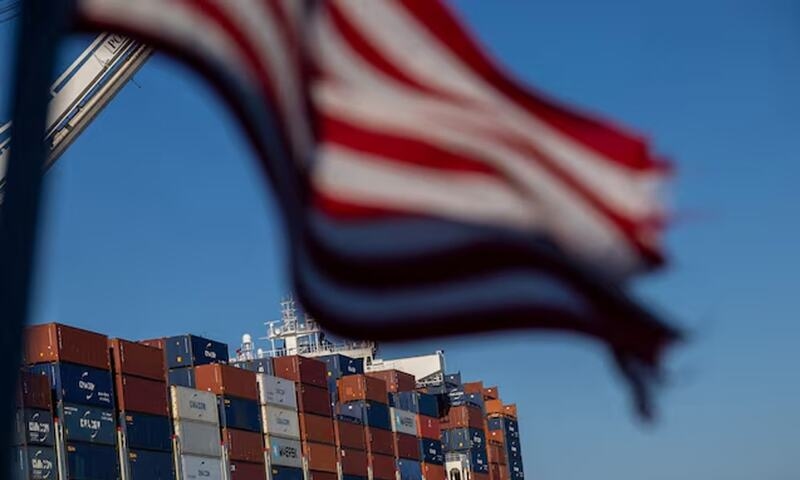
WASHINGTON: S&P Global on Monday affirmed its 'AA+' credit rating on the US, saying the revenue from President Donald Trump's tariffs will offset the fiscal hit from his massive tax-cut and spending bill. Trump signed the 'One Big Beautiful Bill Act' into law in July after it was passed by the Republican-controlled Congress. The bill, which delivered new tax breaks, also made Trump's 2017 tax cuts permanent. 'Amid the rise in effective tariff rates, we expect meaningful tariff revenue to generally offset weaker fiscal outcomes that might otherwise be associated with the recent fiscal legislation, which contains both cuts and increases in tax and spending,' S&P said in a statement. 'At this time, it appears that meaningful tariff revenue has the potential to offset the deficit-raising aspects of the recent budget legislation.' The US reported a $21 billion jump in customs duty collections from Trump's tariffs in July, but the government budget deficit still grew nearly 20% in the same month to $291 billion. Interest on the public debt also continued to grow, hitting $1.013 trillion in the first 10 months of the fiscal year, an increase of 6%, or $57 billion, over the prior-year period due to slightly higher interest rates and increased debt levels. Since returning to power in January this year, Trump has launched a global trade war with a range of tariffs that have targeted individual products and countries. The Republican president has set a baseline tariff of 10% on all imports to the US, as well as additional duties on some items and trading partners. IMPACT OF TARIFFS S&P, which became the first ratings agency to cut the pristine US government rating in 2011, said the outlook on the US rating remains stable. The ratings agency said it expects the Federal Reserve, which Trump has criticized this year for not cutting interest rates, 'to navigate the challenges of lowering domestic inflation and addressing financial market vulnerabilities.' It projected the country's general government deficit to average 6.0% of GDP during the 2025-2028 period, down from 7.5% in 2024 and from an average 9.8% of GDP in 2020-2023. S&P said it could lower the rating over the next two to three years if already high deficits increase. 'The ratings could also come under pressure if political developments weigh on the strength of American institutions and the effectiveness of long-term policymaking or independence of the Federal Reserve,' it said. S&P, however, said it could raise the US rating in the event of sustained economic growth and adjustments to the US fiscal profile that would diminish recent increases in the country's debt burden. There was no reaction in markets on Tuesday to S&P's credit rating affirmation, which follows a US sovereign credit downgrade by Moody's in May, when that ratings agency cut the triple-A US rating by one notch, citing rising debt levels. The US national debt load surged above a record $37 trillion last week. James Ragan, co-chief investment officer and director of investment management research at D.A. Davidson, said the S&P rating affirmation was an acknowledgment of the meaningful tariff revenue generated so far. 'That's all good revenue (coming) in, but that's also a drag on the economy, so I think we don't know the impact of that going forward,' he said.
Business Recorder
2 hours ago
- Business Recorder
European stocks close at five-month highs
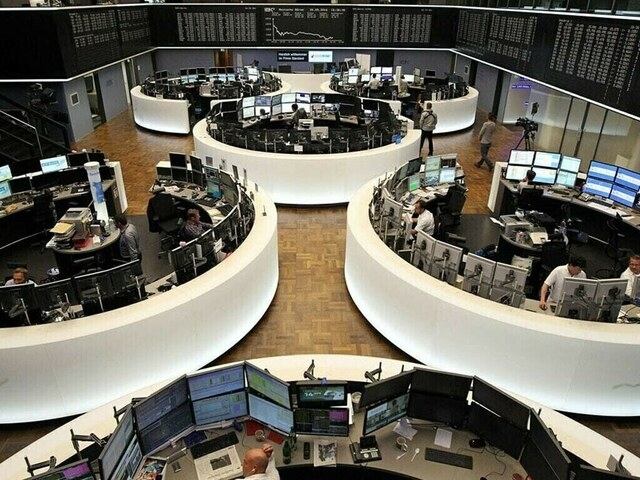
FRANKFURT: European shares closed at their highest level in more than five months on Tuesday as investors assessed the chances of an end of the war in Ukraine, following Monday's talks in Washington between US, Ukrainian and European leaders. The pan-European STOXX 600 index closed 0.7% up. Most major regional bourses also traded firmer. Markets were buoyed by hopes of more talks to resolve Russia's war in Ukraine after US President Donald Trump promised security guarantees for Kyiv at a summit with Ukrainian and a group of European leaders, though there was little clarity on the specifics. He said arrangements for a trilateral summit between the US, Russia and Ukraine were being made. On Tuesday, Trump said he hoped Putin would move forward on ending the war but conceded the Kremlin leader may not want to make a deal. European defence stocks fell 2.6%, marking their worst day in over a month, and were the biggest laggards on the STOXX 600 index. Shares in Italy's Leonardo fell 10.2%, the most on the index. Hensoldt and Renk Group fell 9.5% and 8.3% respectively, while Rheinmetall was down 4.9%. 'The rest of the market is edging cautiously higher... that really reflects what we think about the prospect of a peace deal - it's likely in some shape or form,' said Nick Saunders, CEO of stock trading platform Webull UK. 'What form that takes is going to be difficult to determine.' Consumer discretionary sectors led broader gains with automobiles and food and beverage stocks up 2.4% and 1.6% respectively. Luxury stocks surged on a boost from Moncler , up 4.9%, and Burberry rising 5.1%. Meanwhile, latest forecasts showed a dip in the outlook for European corporate health, marking a change of direction after several weeks of improvement. However, of the 259 STOXX 600 companies that have reported second-quarter earnings so far, almost 53% have exceeded analyst estimates, LSEG I/B/E/S data showed. The STOXX 600 has gained almost 10% this year driven by hopes of higher spending in the bloc, a shift to European assets in the first half of 2025 and rising expectations of a US interest rate cut. However, Saunders did not expect continued capital flow into Europe as global trade war fears had somewhat subsided. The Federal Reserve's annual Jackson Hole symposium will also be in focus this week. Investors will scrutinize any clues from Chair Jerome Powell and others on monetary policy, even as a September cut remains priced in. Among other stocks, JD Sports gained 6.9% after Deutsche Bank raised the British sportswear retailer's target price to 100 pence from 85 pence.
