


European leaders to quiz Trump on Ukraine security guarantees
LONDON/KYIV: European leaders will join Volodymyr Zelensky to meet Donald Trump in Washington, they said on Sunday, seeking to shore up Zelensky's position as the US president presses Ukraine to accept a quick peace deal to end Europe's deadliest war in 80 years.
Trump is leaning on Zelensky to strike an agreement after he met Kremlin chief Vladimir Putin in Alaska and emerged more aligned with Moscow on seeking a peace deal instead of a ceasefire first. Trump and Zelensky will meet on Monday. 'If peace is not going to be possible here and this is just going to continue on as a war, people will continue to die by the thousands ... we may unfortunately wind up there, but we don't want to wind up there,' Secretary of State Marco Rubio said in an interview with CBS' 'Face the Nation.'
French President Emmanuel Macron said Sunday that the European leaders would ask US President Donald Trump how far he would back security guarantees for Ukraine, adding he did not think Russia wanted peace. Macron was speaking from his summer residence after joining a call with other European leaders to coordinate their joint position.
Macron said the leaders' 'will is to present a united front between Europeans and Ukrainians' and to ask the Americans 'to what extent' they are ready to contribute to the security guarantees that would be offered to Ukraine in a peace agreement. On Moscow's position, he said: 'There is only one state proposing a peace that would be a capitulation: Russia.' And just as there could be no discussion of Ukrainian territory without Ukraine, so there could be 'no discussions about the security of Europeans without them', he added.
Trump on Sunday promised 'BIG PROGRESS ON RUSSIA' in a social media post without specifying what this might be. Sources briefed on Moscow's thinking told Reuters the US and Russian leaders have discussed proposals for Russia to relinquish tiny pockets of occupied Ukraine in exchange for Kyiv ceding a swathe of fortified land in the east and freezing the front lines elsewhere.
Top Trump officials hinted that the fate of Ukraine's eastern Donbas region - which incorporates Donetsk and Luhansk and which is already mostly under Russian control - was on the line, while some sort of defensive pact was also on the table. 'We were able to win the following concession, that the United States could offer Article 5-like protection,' Trump envoy Steve Witkoff told CNN's 'State of the Union' on Sunday, suggesting this would be in lieu of Ukraine seeking NATO membership. 'The United States could offer Article 5 protection, which was the first time we had ever heard the Russians agree to that.'
Article 5 of NATO's founding treaty enshrines the principle of collective defense - the notion that an attack on a single member is considered an attack on them all. That pledge may not be enough to sway leaders in Kyiv to sign over Donbas. Ukraine's borders were already meant to have been guaranteed when Ukraine surrendered a Soviet-era nuclear arsenal in 1994, and it proved to be little deterrent when Russia absorbed Crimea in 2014 and then launched its full-scale invasion in 2022. The war has now dragged on for 3-1/2 years and killed or wounded more than 1 million people.
German Chancellor Friedrich Merz, French President Emmanuel Macron, and British Prime Minister Keir Starmer hosted a meeting of allies on Sunday to bolster Zelensky's hand, hoping in particular to lock down robust security guarantees for Ukraine that would include a US role.
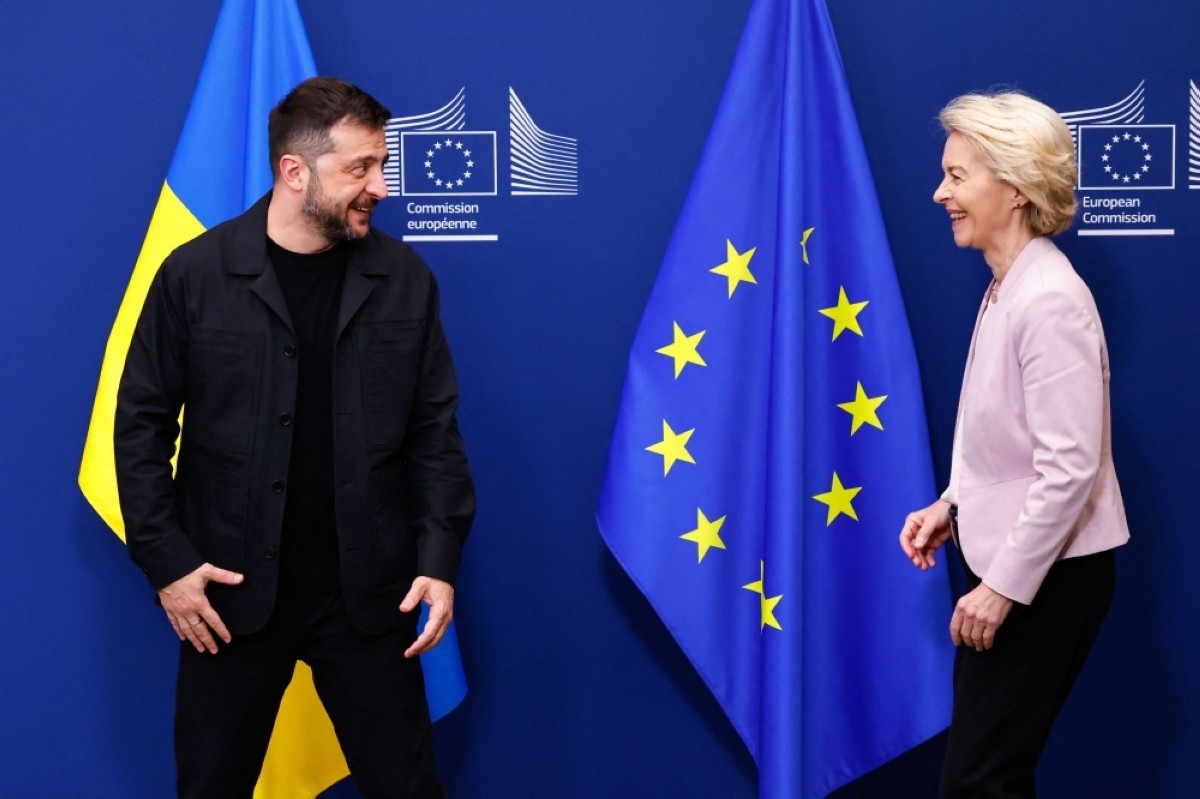
The Europeans are keen to help Zelensky avoid a repeat of his last Oval Office meeting in February. That went disastrously, with Trump and Vice President JD Vance giving the Ukrainian leader a public dressing-down, accusing him of being ungrateful and disrespectful. European Commission President Ursula von der Leyen will also travel to Washington, as will Finland's President Alexander Stubb, whose access to Trump included rounds of golf in Florida earlier this year, and Italian Prime Minister Giorgia Meloni, who is an admirer of many of Trump's policies. 'It's important that Washington is with us,' Zelensky said alongside von der Leyen on a visit to Brussels, saying that the current front lines in the war should be the basis for peace talks. 'Putin does not want to stop the killing, but he must do it.'
'Steel porcupine'
Setting out red lines, von der Leyen said Ukraine's allies wanted robust security guarantees for Ukraine, no limits to Ukraine's armed forces, and a seat at the table with Trump and Putin for Ukraine to discuss its territory. 'As I've often said, Ukraine must become a steel porcupine, indigestible for potential invaders,' she said. Rubio said both Russia and Ukraine would need to make concessions to reach a peace deal and that security guarantees for Ukraine would be discussed on Monday. He also said there would have to be additional consequences for Russia if no deal was reached.
'I'm not saying we're on the verge of a peace deal, but I am saying that we saw movement, enough movement to justify a follow-up meeting with Zelensky and the Europeans, enough movement for us to dedicate even more time to this,' Rubio told broadcaster CBS. However, he said the US may not be able to create a scenario to end the war.
'Very big powder'
Putin briefed his close ally, Belarusian President Alexander Lukashenko, about the Alaska talks, and also spoke with Kazakhstan's President Kassym-Jomart Tokayev. Trump said on Friday that Ukraine should make a deal to end the war because 'Russia is a very big power, and they're not.'
After the Alaska summit, Trump phoned Zelensky and told him that the Kremlin chief had offered to freeze most front lines if Ukraine ceded all of Donetsk, the industrial region that is one of Moscow's main targets, a source familiar with the matter said. Zelensky rejected the demand. Russia already controls a fifth of Ukraine, including about three-quarters of Donetsk province, which it first entered in 2014. Trump also said he agreed with Putin that a peace deal should be sought without the prior ceasefire that Ukraine and its European allies have called for. That was a reversal of his position before the summit, when he said he would not be happy unless a ceasefire was agreed on. — Reuters

Try Our AI Features
Explore what Daily8 AI can do for you:
Comments
No comments yet...
Related Articles

Kuwait Times
 6 hours ago
- Kuwait Times
Poilievre secures return to Canadian parliament
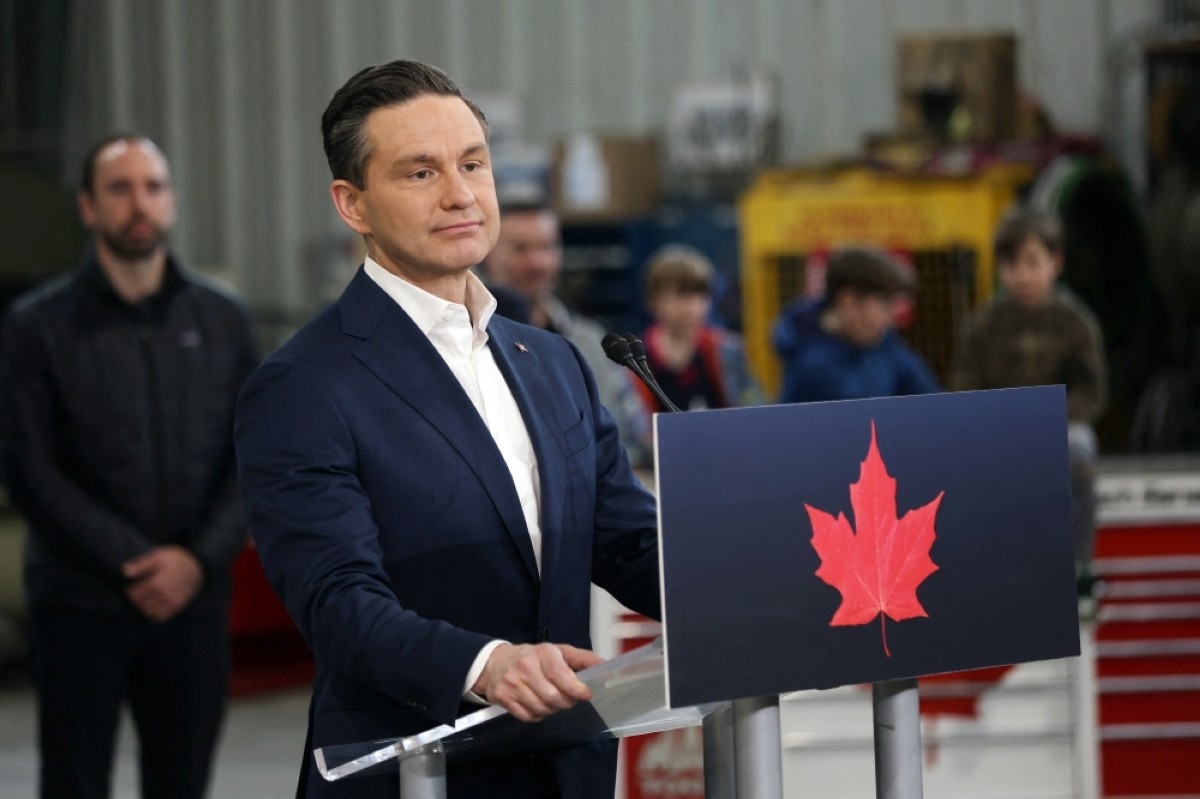
TORONTO: Canada's Conservative Party leader Pierre Poilievre secured a return to parliament after winning more than 80 percent support in a by-election held in a heavily right-wing district, official results showed Tuesday. The result, four months after Poilievre lost his seat in a humiliating general election defeat, sets him up to reclaim his role as opposition leader in parliament, where he will confront Prime Minister Mark Carney. Poilievre had been on track to become prime minister in April's elections until US President Donald Trump's return to power upended Canadian politics with talk of annexing his northern neighbor. Poilievre's Conservatives blew a massive polling lead as voters backed Carney to confront Trump. In an added blow, Poilievre lost to a Liberal in his own constituency, an Ottawa-area district he had represented for two decades. He vowed to stay on as the Conservative party head, but needed a seat in parliament before he could return as leader of the opposition. The MP for Battle River-Crowfoot — a rural district in the western province of Alberta where Conservatives dominate — offered to step down so Poilievre could run for his seat. Results posted by Elections Canada showed Poilievre taking 80.4 percent of the vote, trouncing his nearest rival, an independent candidate who took just 9.9 percent. 'Canada first' In his victory speech, Poilievre vowed to oppose the policies of Carney's government, which he said had sent crime, immigration and inflation 'spiralling out of control.' 'I am grateful that I will have the chance to be (your) humble servant, to fight every day and in every way for the people in this region,' he said in a video of the address posted on X. 'We'll put Canada first,' he said to cheers and applause in front of a giant national flag. Carney congratulated his rival. 'Working together, Canada's new government will keep building a stronger future for all,' he said on X. Elections Canada was forced to use a special ballot after a protest group seeking electoral reform successfully nominated a dizzying 214 candidates for the vote. Voters had to write the name of their preferred candidate on their ballot, not tick a box, to help people find the correct name in the enormous list. Experts say Poilievre, 46, may struggle to rebuild momentum in a political arena heavily shaped by Trump. Some voters still view Poilievre as a Trump-aligned figure, a major liability in Canada, where attitudes towards Washington have plunged to historic lows since the US president's return to power. — AFP

Kuwait Times
6 hours ago
- Kuwait Times
India's shrimp farmers consider switching to other businesses
HYDERABAD, India/GUAYAQUIL, Ecuador: On India's southern coast, V Srinivas thrived for two decades by farming shrimp, as the country became the top supplier of the delicacy to the United States. Now, Donald Trump's 50 percent tariff threat is forcing many to consider other ways of making money. Andhra Pradesh state sends the most shrimp from India to the US and farmers there have spent millions of rupees (hundreds of thousands of US dollars) over the years to cultivate high-quality shrimp in saline ponds. Now they are being hit hard as Indian exporters have slashed rates they offer farmers by almost 20 percent after the tariff shock, wiping out most of their profits. 'I am contemplating if I should do fish farming,' said the 46-year-old from Veeravasaram village who has already mortgaged his family property and has $45,800 in outstanding loans. 'These prices will not help me get any profits and I will not be able to pay off my loan.' The United States is the biggest market for India's shrimp farmers and exporters, with clients including US supermarket chains such as Walmart and Kroger. Last year, total seafood exports from India globally stood at $7.4 billion, with shrimp accounting for 40 percent. But the industry is now in troubled waters with President Trump's 25 percent tariff on imports from India already in place - the highest among major economies, and another 25 percent levy to kick in from August 27 to penalize New Delhi for buying Russian oil. By comparison, Ecuador, India's main rival for shrimp exports to the US, faces a much lower 15 percent tariff, heightening its competitive edge. In Andhra, there are around 300,000 farmers engaged in shrimp farming, selling products to dozens of exporters who ship to America. Pawan Kumar, head of the Seafood Exporters Association of India, said orders from US clients have been paused in recent weeks as buyers aren't willing to absorb the tariff, and neither can exporters, forcing the latter to cut prices they pay to farmers. Although India also sells shrimp to other countries such as China, Japan and the UK, and likely will look to expand sales there and diversify into new markets, 'that's not going to happen overnight,' Kumar said. The impact is yet another example of how Trump's tariff threats are causing business disruptions across the world, especially in India, given it faces one of the steepest levies that have soured its relations with Washington. In Andhra, six of 12 farmers Reuters interviewed said they were considering putting shrimp farming on hold and looking at fish farming, vegetable retailing or other local businesses to tide over the crisis. The other six are choosing to wait it out a bit. Each round of shrimp cultivation takes about 2 months or more. While prices being offered for their shrimp are being slashed, the farmers said they still face loan payments and high operating costs for electricity, raw material and feed, as well as high land rentals. 'There's hardly a 20-25 percent profit for us on good days, and if that's getting eaten up, what else is left?,' said Gopinath Duggineni, the chief of a local union in Ongole city, adding the farmers plan to seek financial support from the state government. Ecuador, meanwhile, is closely tracking tariffs on India to seize on business opportunities, but producers there will go slow on new investments amid uncertainty over whether India and the Trump administration could strike a tariff deal, said Jose Antonio Camposano, president of National Chamber of Aquaculture of Ecuador. 'India's exports are highly concentrated in the United States ... just as China is for us. So that is where we could gain ground if India withdraws,' he said. — Reuters

Kuwait Times
6 hours ago
- Kuwait Times
Intel gets $2bn lifeline from Japan's Softbank
WASHINGTON: Intel is getting a $2 billion capital injection from SoftBank Group in a major vote of confidence for the troubled US chipmaker in the middle of a turnaround. The equity investment, announced by the companies on Monday, is a lifeline for the once-iconic US firm which has struggled to compete after years of management blunders that left it with virtually no foothold in the booming artificial intelligence chip industry. It will make SoftBank a top-10 shareholder of Intel and add to the Japanese tech investor's ambitious bet on semiconductor and AI assets that includes the $500 billion Stargate US datacenter project. SoftBank also held talks with Intel on buying its contract chipmaking business ahead of the investment announcement, the Financial Times reported on Tuesday, citing multiple people with knowledge of the talks. Intel has invested billions of dollars in setting up a contract manufacturing business that has struggled to compete with Taiwan's TSMC and barely attracted external customers. 'SoftBank's investment helps, but it is not what is going to move the dial for Intel,' said Amir Anvarzadeh, Japan equity strategist at Asymmetric Advisors. 'It's more to maintain this very good relationship he has with Trump,' he said, referring to SoftBank CEO Masayoshi Son. The deal follows media reports last week that the US government may buy a stake in Intel, after a meeting between new CEO Lip-Bu Tan and President Donald Trump that was sparked by the President's demand for Tan's resignation over his ties to Chinese firms. It also comes as Tokyo pledged a $550 billion investment package into the US last month as part of a trade deal with Washington. The Intel investment is not currently part of that package, a Japanese government source with knowledge of the negotiations said. SoftBank's decision to invest in Intel is not connected to Trump, a person familiar with the matter told Reuters. The White House did not immediately respond to a request for comment. 'This strategic investment reflects our belief that advanced semiconductor manufacturing and supply will further expand in the United States, with Intel playing a critical role,' Son said in a statement. It will pay $23 per Intel share, a slight discount to Monday's closing price of $23.66. SoftBank's investment will come via a primary issuance of common stock by Intel, and, based on the US company's market capitalization at close of trading on Monday, represent an equity stake of just under 2 percent, an Intel spokesperson said. The Japanese company would become the sixth largest investor in Intel, according to LSEG data. SoftBank shares closed down 4 percent on Tuesday following the announcement, while Intel surged 6.6 percent in US premarket trading. The Japanese company will only take an equity stake in Intel and will neither seek a board seat nor commit to buying Intel's chips, the person familiar with the matter said. Intel has struggled financially and recorded an annual loss of $18.8 billion in 2024, its first such loss since 1986, as it grapples with multiple challenges. Its longtime rival AMD has been gaining share in Intel's mainstay personal computer and server semiconductor markets, while its ambitious and costly plan for a chip contracting business has failed to take off. The company is now considering a significant change to its contract chip manufacturing business to win major customers, Reuters reported last month, in a potentially expensive shift from its previous strategies. SoftBank's Son held talks with Tan since his appointment as Intel CEO in March to discuss a potential deal, according to the FT's Tuesday report. They discussed a wide range of outcomes, including joint ventures with third parties or a minority investment similar to Monday's announcement, according to the report. The $2 billion investment did not preclude a bigger deal over Intel's foundry business in the future, the report said. SoftBank and Intel did not immediately respond to Reuters requests for comment on the report. 'Intel's dual role as designer and manufacturer/fabricator uniquely positions it as potentially the best platform in the US to compete with TSMC,' said Charu Chanana, chief investment strategist at Saxo. Bloomberg News reported earlier on Monday that the US government is in talks to take a 10 percent stake in Intel. SoftBank declined to provide more details on the Intel investment when asked to comment by Reuters. Tan, a chip industry veteran who also served as a SoftBank board member before quitting in 2022, thanked Son for 'the confidence he has placed in Intel with this investment.' The Intel funding is the latest in the Japanese company's run of mammoth investment announcements in 2025, which include committing $30 billion to ChatGPT maker OpenAI as well as leading the financing for Stargate. – Reuters
