



'We will not leave Gaza City': Palestinians vow to resist, stay put
Umm Ibrahim Banat, a 55-year-old mother displaced four times from northern Gaza, expressed her fear and anxiety to The Guardian after hearing about the evacuation order for Gaza City, "Where will we go with the children and the elderly? I swear we are exhausted from displacement, starvation, and being driven from one place to another."
'Now,' she said, 'we are the walking dead.'
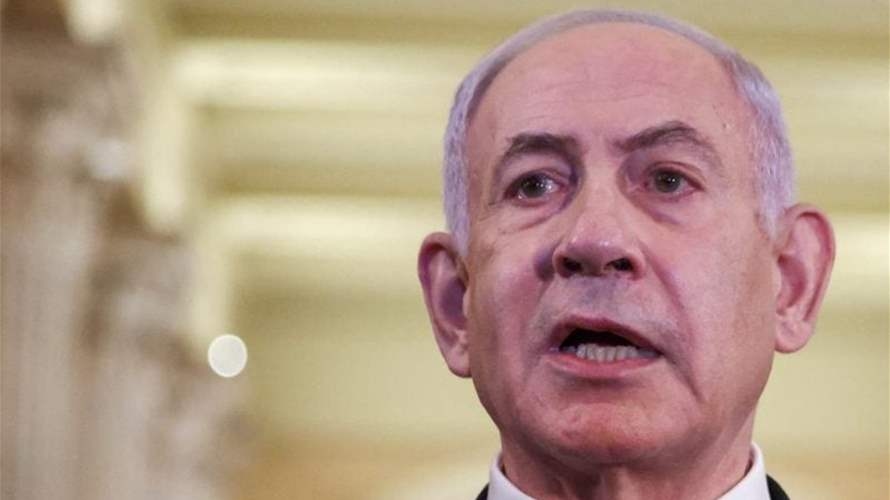
Following a 10-hour overnight meeting on Friday, Israeli Prime Minister Benjamin Netanyahu's office announced that his security cabinet had approved a plan to seize control of Gaza City, further escalating "Israel's" war on Gaza, which has already claimed the lives of at least 61,000 Palestinians, the majority of them civilians.
"Israel's" Channel 12 reported that the plan, involving the deployment of ground troops into the territory, could displace tens of thousands of people, worsen the already strained aid delivery efforts, and push around 1 million Palestinians in Gaza City and surrounding areas toward evacuation zones in the southern part of the strip.
Heartbroken after losing her daughter's entire family, Banat denounced Gaza's unbearable conditions, the disease-ridden tent camps, undrinkable water, collapsed hospitals, and endless suffering, demanding to know what more could be taken from a people who've lost everything.
Abu Nasser Mushtaha, a 35-year-old father of four from Gaza's Rimal neighborhood, expressed his fear for his family's safety, stating, "If we are ordered to evacuate, I will leave everything and go, fearing for my family and children. The cost of staying would be too high. I have already lost enough; my mother was killed at the beginning of the war when the Israeli occupation bombed a neighbouring house."
Mushtaha revealed he had begun financial preparations to cut costs while planning to take only essential belongings, grimly predicting that this impending crisis would undoubtedly mark the final destruction of Gaza's population.
With over 90% of Palestinians already displaced at least once during the war and nearly 10% suffering injuries from Israeli attacks, the population now faces even greater suffering as the decimated healthcare system collapses further and "Israel" blocks most aid agencies like the UN from delivering critical assistance.
Hossam al-Saqa, a 46-year-old father of two from Gaza City, told The Guardian he couldn't comprehend how authorities expected to relocate Gaza's entire population to the already overwhelmed south, declaring his family's determination to remain on their land despite the mortal dangers, vowing he would stay even at gunpoint.
'I see Netanyahu's and Israel's propaganda as nothing more than media fireworks meant to intimidate and spread fear among the people,' al-Saqa said, adding, 'This will not scare us, for God is with us, and He is stronger than everyone.'
Al-Saqa, echoing sentiments widespread across Gaza City, interpreted the occupation plan as a coercive tactic to force Hamas into surrender following the collapse of last month's US, Egyptian, and Qatari-mediated negotiations.
Ibrahim Abu al-Husni, a 47-year-old man who lost his 23-year-old son in the war, defiantly declared his attachment to his homeland, stating, "This is our land where we grew up since childhood, and we will not give it up easily. I will not leave this city."
'I will live here, and I will die here," he assertively stated.
Hashtags

Try Our AI Features
Explore what Daily8 AI can do for you:
Comments
No comments yet...
Related Articles

LBCI
 2 hours ago
- LBCI
Elysee calls Netanyahu antisemitism claim 'abject', 'erroneous'
France on Tuesday slammed as "abject" and "erroneous" Israeli Prime Minister Benjamin Netanyahu's accusation of antisemitism against President Emmanuel Macron's move to recognise a Palestinian state. France "protects and will always protect its Jewish citizens", the Elysee said, adding that a letter from Netanyahu containing his allegation "will not go unanswered." "This is a time for seriousness and responsibility, not for conflation and manipulation," the Elysee added. AFP

LBCI
2 hours ago
- LBCI
Reshaping trade operations: Lebanon pushes digitalization drive at borders and ports
Report by Wissam Nasrallah, English adaptation by Yasmine Jaroudi Long known for its reliance on paperwork, intermediaries, and personal connections, Lebanon is beginning to embrace digital transformation as the government rolls out electronic systems across key institutions. With the launch of a new administration, digitization efforts that had been tested in several ministries are now expanding to the country's land, sea, and air border crossings. The Economy Ministry has developed an online platform that allows importers to enter required data electronically before their goods enter Lebanese territory. At Beirut Port, a vital hub linking international markets to the domestic economy, Economy Minister Amer Bisat showcased how the system is reshaping trade operations. While certain goods, especially food products, still require sampling and laboratory testing before clearance, the digital process has significantly reduced wait times and cut through red tape. Officials say the initiative not only speeds up import procedures but also enhances transparency and curbs corruption by limiting the need for intermediaries. The move is seen as an essential step in bringing government services closer to citizens and aligning Lebanon's administration with modern standards. Digitalization, once viewed as a luxury in Lebanon, has become a necessity to accelerate transactions, strengthen governance, and restore confidence between the state and its people.

LBCI
2 hours ago
- LBCI
$250 million loan marks start of Lebanon's major reconstruction efforts—the details
Early next week in Beirut, Finance Minister Yassine Jaber and Jean-Christophe Carret, the World Bank's regional director for the Middle East, will sign a $250 million loan agreement dedicated to rebuilding infrastructure, restoration, and clearing the remaining rubble from the Israeli assault. The loan will be subject to parliamentary approval in early September. This loan serves as seed funding for a $1 billion financing program known as LEAP, which will launch reconstruction and recovery efforts. The remaining $750 million is expected to come in the form of grants from international entities and organizations. An initial installment of 75 million euros has already been provided by Paris, while $20 million from Iraq has been transferred through the relevant ministries. What about the overall reconstruction process, estimated at about $7 billion—$4 billion for residential buildings, $1 billion for infrastructure, and $2 billion for economic institutions? Clearing debris and rubble began months ago. The Finance Ministry has transferred 600 billion LBP to the Council for South Lebanon to advance this effort, and another 200 billion LBP to the Higher Relief Commission to complete debris removal. A separate $40 million loan is allocated for agriculture, benefiting southern farmers in areas affected by erosion, fire, or phosphorus. In addition, the $250 million electricity loan recently approved by Parliament will also benefit the south, alongside other regions, by repairing transmission networks to reduce technical losses.
