


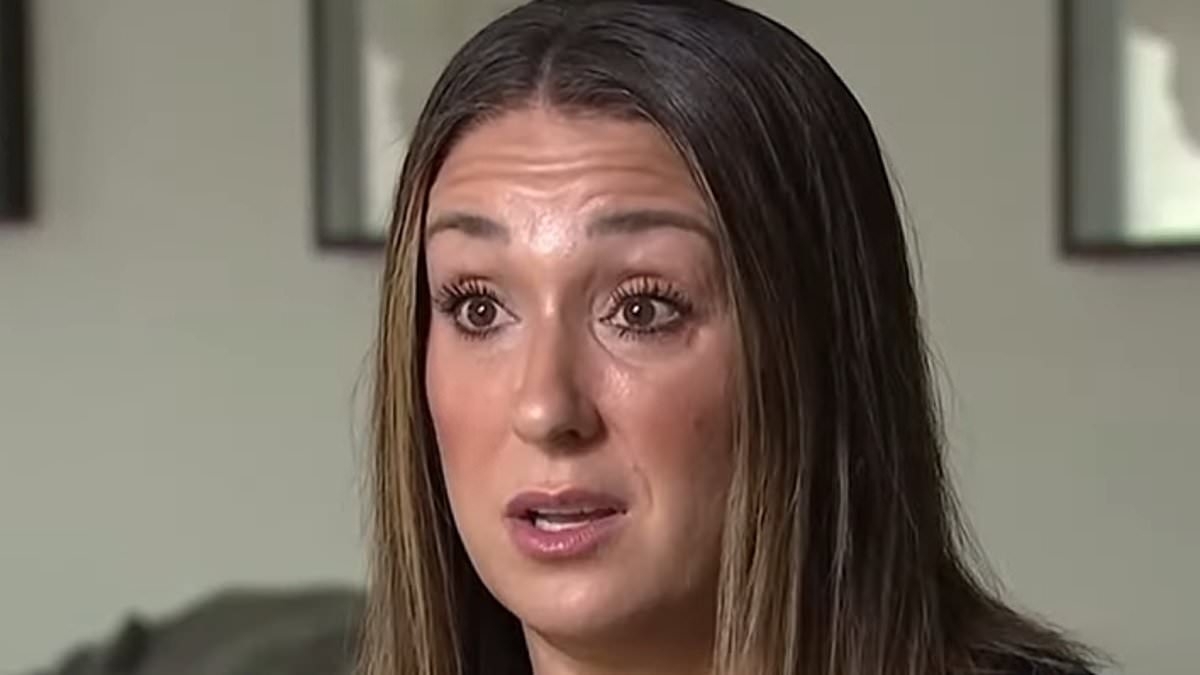
Arizona mom explains how TikTok saved her son's life
Nicholas McCollum, 7, was diagnosed with the flu after experiencing a fever and mobility issues, but the mother remembered how TikTok's urged parents to get a certain type of blood test.
'His fever was about 103-104 degrees, and that morning he said he couldn't walk,' his mom, Jennifer McCollum, told Live 5 News.
As doctors were about to discharge Nicholas, his mother spoke up and pushed for further attention for her son.
'They were going to send me home, and I said I want his CK levels checked,' she said.
'I got looked at like it was so weird to ask for CK levels for a child because this diagnosis is usually only in athletes and cross-fitters.'
Nicholas was diagnosed with rhabdomyolysis.
Rhabdomyolysis is a disorder of skeletal muscle breakdown that releases toxins into the bloodstream, according to the Cleveland Clinic.
'They were going to send me home, and I said I want his CK levels checked,' she said. 'I got looked at like it was so weird to ask for CK levels for a child because this diagnosis is usually only in athletes and cross-fitters'
It can lead to muscle death and kidney failure, and often presents after overexertion, trauma, medications or an underlying health condition.
Common signs include muscle weakness or stiffness, muscle pain or a change in urine color.
Around 26,000 people in the United States develop the condition every year, according to Cleveland Clinic.
The Phoenix-area mother said the social media platform reminded her to advocate for her son's health and push for the right diagnosis.
Nicholas has since returned home and has been feeling much better following his diagnosis.
Hashtags

Try Our AI Features
Explore what Daily8 AI can do for you:
Comments
No comments yet...
Related Articles


Daily Mail
 an hour ago
- Daily Mail
Former LSU football coach reveals absurd amount of Red Bull he used to drink
Former LSU head coach Ed Orgeron says he regularly consumed between 12 and 15 Red Bulls a day at the height of his coaching career. Orgeron made the admission during a recent appearance on the Pardon My Take podcast, where he spoke candidly about life as a major college football coach. Asked about his well-known love of energy drinks, Orgeron acknowledged that his consumption had once reached extreme levels. 'I've gotten down to maybe six,' he said, referring to how many Red Bulls he drinks now. When pressed on how many he used to consume while coaching, he said, 'Oh, 12 to 15 easily.' A single 12-ounce can of Red Bull contains about 111 milligrams of caffeine, meaning Orgeron may have been ingesting anywhere from 1,332 to 1,665 milligrams of caffeine per day. Even if he was drinking the smaller 8.4-ounce cans - each with about 77 milligrams of caffeine - his daily total would still fall between 924 and 1,155 milligrams. For comparison, the U.S. Food and Drug Administration recommends that healthy adults limit their caffeine intake to no more than 400 milligrams per day. Regularly consuming significantly more than that amount can increase the risk of heart palpitations, high blood pressure, anxiety and other cardiovascular concerns. Coaching at the FBS level is known for its grueling hours and high-pressure environment. Orgeron's schedule during his tenure at LSU, which included a national championship win in 2019, was likely no exception. Orgeron made a name for himself as the head coach of the LSU Tigers from 2016 to 2021, especially after the team went on a 15-0 run during the 2019 season. It ultimately led to the Tigers winning a national championship in January 2020 under then-quarterback Joe Burrow - defeating the Clemson Tigers. Two seasons later and Orgeron was out of the door at LSU. Brian Kelly was named as his successor in November 2021 after guiding Notre Dame back into the College Football Playoff in 2018 and 2020.


The Independent
2 hours ago
- The Independent
FDA recalls five types of cheese over contamination concerns
The Middlefield Original Cheese Co-Op facility in Ohio has recalled over 5,000 lbs of cheese due to potential contamination with Listeria monocytogenes. Listeria can cause serious infections, particularly in vulnerable individuals, and can lead to miscarriages or stillbirths in pregnant women, though no illnesses have been reported in connection with this recall. Five different types of cheese are affected by the recall, including 100% Grass-fed Pepper Jack, Horseradish Flavored, Monterey Jack, and White Cheddar. The recall was initiated after product testing confirmed the presence of Listeria, with the source identified as environmental contamination that spread to food-contact areas during production. Customers who have purchased the affected cheese are advised to dispose of it or return it to the store for a refund.


The Sun
2 hours ago
- The Sun
Are you sleepy all the time? The 10 surprising foods that could be making it worse – and it's bad news for cheese lovers
CONSTANTLY sleepy throughout the day? What you eat may have something to do with it, scientists say. Researchers from Mass General Brigham linked key metabolites - molecules found in the blood that influenced by diet and hormones - to daytime drowsiness. 1 One of these was tyramine, a molecule found in fermented and overripe foods, like cheddar cheese and Parmesan, salami, pickles, soy sauce, tofu and some types of beer. It's not the first time cheese has been linked to poor sleep - researchers from the University of Montreal recently found that dairy could bring on bad dreams. The new study, led by investigators from Mass General Brigham and Beth Israel Deaconess Medical Center, looked into factors behing excessive daytime sleepiness (EDS) - a condition causing people to nap repeatedly during the day. They identified seven metabolites which they said were linked to EDS. The findings - published in Lancet eBioMedicine - suggest that excessive sleepiness is caused by internal body processes, such as hormone levels, as well as external factors such as diet. Lead author Tariq Faquih, a postdoctoral fellow in the Division of Sleep and Circadian Disorders at Brigham and Women's Hospital, said: 'Our study suggests diet and genetics may play an important role in EDS. 'As we learn what's happening biologically, we are beginning to understand how and why EDS occurs, the early signs that someone might have it, and what we can do to help patients.' Researchers collected data on 877 metabolites, using blood samples from 6,000 participants. The team also used data from a questionnaire that assessed how often people dozed off during the day. They identified seven metabolites associated with EDS, as well as an additional three metabolites that varied by sex. I spent three days at a sleep retreat - these are the top 7 things I learnt Tyramine was associated with increased daytime sleepiness, especially in men. Meanwhile, omega-3 and omega-6 fatty acids, found in oily fish, nuts and seeds, were associated with lower risk of EDS. According to Benenden Health, "tyramine causes the adrenal gland to release the 'fight or flight' hormone, which increases alertness for a number of hours". Foods high in tyramine include: Aged cheeses like cheddar, feta, blue, Swiss, Parmesan, provolone, Camembert, brie, Edam and Gruyere Alcohol such as draft or artisan beer or wine Cured meat and processed meat, such as salami, sausage, bacon, mortadella and pepperoni Yeast-extract spreads, such as Marmite and Vegemite Fermented sauces such as soy sauce, teriyaki sauce, miso, Worcestershire sauce and teriyaki sauce Pickled or salt-dried foods like fish Fermented foods such as kimchi, sauerkraut, kefir, tofu Dried or overripe fruits, such as raisins and overripe bananas or avocados Foods that have not been properly stored or are past their 'best-before' date Coffee Researchers said their results suggest dietary changes or medications may help treat EDS. But they noted that their study had some limitations, including difficulty in interpreting exact values of metabolites and using a sleep questionnaire instead of bringing participants into a sleep lab for tests. The team suggested conducting a clinical trial to see if dietary changes or supplements can help reduce daytime sleepiness. They also identified some unknown metabolites that they plan to explore further. 'Conducting a clinical trial would be a big next step and could help us understand if omega-3s and omega-6s obtained from diet could help lower risk of EDS,' Dr Faquih said. 5 other sleeping hacks The NHS says we should all aim for seven to nine hours a night — but even the best sleepers struggle sometimes. For most of us, a proper night's kip feels like the ultimate prize. So how do you actually get it? Here are some well-known hacks which might be worth a try: 1. The military hack Used by soldiers to fall asleep in just 2 minutes, this technique involves relaxing your entire body step-by-step, starting with your face, then your shoulders, arms, and down to your legs. Clear your mind and take slow, deep breaths. It is meant to work, even if you're lying in a noisy room. 2. The melatonin boost Melatonin is the hormone your body makes to signal bedtime. You can help it along by dimming lights an hour before sleep and avoiding screens. In the UK, melatonin supplements aren't sold over the counter—you need a prescription to get them. 3. Cool down to nod off Your body needs to drop its core temperature to fall asleep easily. Which can be a bit of an issue in the summer. Keep your bedroom cool, around 18C is perfect, and use breathable bedding. Cooler temps help you drift off faster and get deeper sleep. 4. Cut caffeine after midday That afternoon cuppa might keep you wired when you should be winding down. At least eight hours should pass between your last hit of caffeine and bedtime. Try switching to decaf or herbal teas after lunch to avoid a late-night buzz. 5. Breathe and relax Try slow, deep breathing or a quick meditation before bed. It calms your mind and body, making it easier to switch off and drift off.
