



Delta flight diverted to Minneapolis after severe turbulence: 25 hospitalized
The big picture: The plane was carrying 275 passengers and 13 crew when it was forced to make the emergency landing at Minneapolis -Saint Paul International Airport, a Delta spokesperson said in an emailed statement.
Driving the news: Flight 56 diverted to the Twin Cities airport "due to reported in-flight turbulence that caused injuries on board," per a Metropolitan Airports Commission spokesperson.
The Airbus A330-900 "landed safely" around 7:45pm local time, the spokesperson added in the an emailed statement early Thursday.
Medical personnel "met the flight upon arrival to evaluate customers and crew," per a statement posted to Delta's website.
What they're saying: "We are grateful for the support of all emergency responders involved," added the statement, which noted Delta teams were "working directly" with affected customers "to support their immediate needs."

Try Our AI Features
Explore what Daily8 AI can do for you:
Comments
No comments yet...
Related Articles

San Francisco Chronicle
 an hour ago
- San Francisco Chronicle
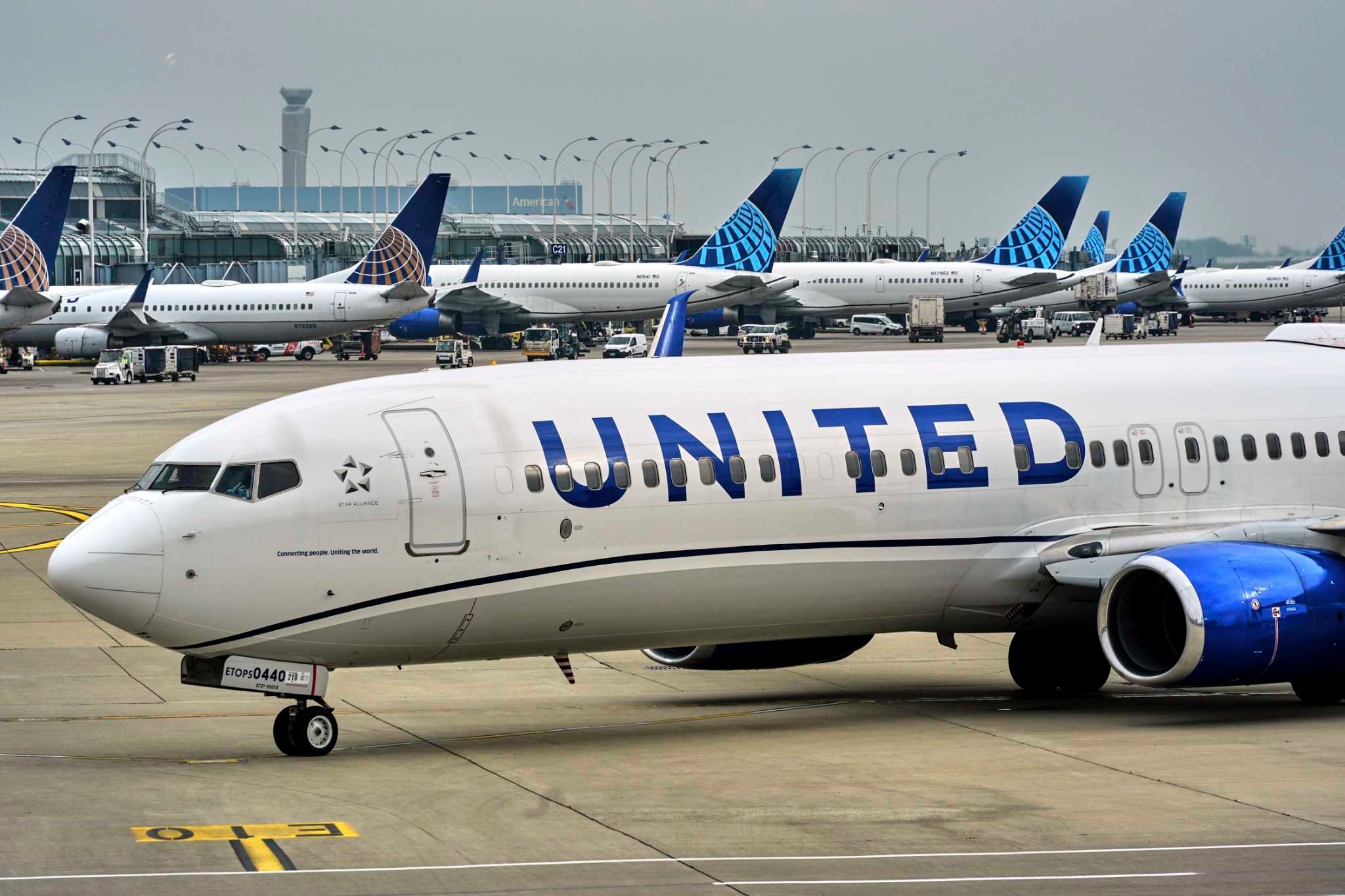
United and Delta sued for allegedly selling window seats without windows
United Airlines and Delta Air Lines are facing class action lawsuits accusing them of charging passengers extra for window seats that, in some cases, have no windows at all. The lawsuits, filed Tuesday in federal courts in San Francisco and Brooklyn, allege the carriers misled customers by labeling certain seats as 'window' during booking, even though aircraft design left those spots against blank walls. Plaintiffs say the practice has affected more than a million passengers. The complaints cite Boeing 737s and Airbus A321s, where air ducts and wiring often block windows in specific rows. Yet unlike rivals Alaska Airlines and American Airlines, which flag such seats as 'no window view,' United and Delta allegedly kept charging full fees. 'Had plaintiffs and the class members known that the seats they were purchasing (were) windowless, they would not have selected them — much less have paid extra,' the United filing states. A nearly identical claim was filed against Delta. Aviva Copaken, a Los Angeles resident who experiences claustrophobia, said she paid between $45.99 and $169.99 for three United flights labeled as window seats, only to find herself staring at a wall. United refunded two charges but not the third, which the lawsuit calls a 'bad faith attempt' to undercut her claims. Marc Brenman of San Francisco said United returned 7,500 miles after his 'window' seat lacked a window, far less than the value he gave up. The complaint also highlights a 2017 United tweet responding to a passenger who complained: 'Sorry. We never guaranteed you will get a window.' 'For many, it is a special experience to see the world from 30,000 feet,' the lawsuit says. 'Windows can captivate or distract an antsy child. For many with a fear of flying or motion sickness, windows provide a greater level of comfort.'


New York Post
2 hours ago
- New York Post
Delta, United Airlines sued for charging extra for windowless ‘window seats'
Delta Air Lines and United Airlines were sued on Tuesday by passengers who claimed they paid extra money to sit in 'window' seats, only to find themselves placed in seats next to a blank wall. Proposed class actions were filed against United in San Francisco federal court and against Delta in Brooklyn, NY, federal court, seeking millions of dollars of damages for more than 1 million passengers at each carrier. The complaints say some Boeing 737, Boeing 757 and Airbus A321 planes contain seats that would normally contain windows, but lack them because of the placement of air conditioning ducts, electrical conduits or other components. The complaints say some Boeing 737, Boeing 757 and Airbus A321 planes contain seats that would normally contain windows, but lack them because of the placement of air conditioning ducts, electrical conduits or other components. AFP via Getty Images Passengers said Delta and United do not flag these seats during the booking process, unlike rivals such as Alaska Airlines and American Airlines, even when charging tens or occasionally hundreds of dollars for them. The lawsuits say people buy window seats for several reasons including to address fear of flying or motion sickness, keep a child occupied, get extra light or watch the world go by. 'Had plaintiffs and the class members known that the seats they were purchasing (were) windowless, they would not have selected them — much less have paid extra,' the United complaint said. The Delta complaint contained similar language. Delta is based in Atlanta, and United in Chicago. Neither immediately responded to requests for comment. Ancillary revenue from seat selection, baggage fees, cabin upgrades, airport lounges and other services help carriers generate more cash when they fly while keeping base fares lower. Ancillary revenue from seat selection, baggage fees, cabin upgrades, airport lounges and other services help carriers generate more cash when they fly while keeping base fares lower. Getty Images The Delta lawsuit is led by Nicholas Meyer of Brooklyn, and the United lawsuit is led by Marc Brenman of San Francisco and Aviva Copaken of Los Angeles. Copaken said United refunded fees for her windowless seats on two flights, but not a third. Passengers can use websites such as SeatGuru to find pluses and minuses of specific seats, including those lacking windows. Carter Greenbaum, a lawyer whose firm filed the two lawsuits, said the ability to find information from third party websites doesn't excuse Delta's and United's conduct. 'A company can't misrepresent the nature of the products it sells and then rely on third party reviews to say a customer should have known that it was lying,' he said in an email. The cases are Meyer v Delta Air Lines Inc, US District Court, Eastern District of New York, No. 25-04608; and Brenman et al v United Airlines Inc, US District Court, Northern District of San Francisco, No. 25-06995.
Yahoo
a day ago
- Yahoo
Delta Air Lines Makes Big Seasonal Cut to NYC Hubs. Here's Why
In a move that says as much about the state of winter air travel as it does about federal slot policy, Delta Air Lines will significantly scale back its flying from New York City this January and February. But it will do so without actually dropping any routes altogether. Delta to reduce winter flights from JFK and LaGuardia by nearly 20% According to schedule data from Cirium, Delta will trim 16% of flights at John F. Kennedy International Airport (JFK) and 19% at LaGuardia Airport (LGA) during those deep-winter months, traditionally among the slowest in the travel calendar. In real terms, that's about 75 fewer peak-day departures compared to busier times of year. Routes remain, but frequencies drop The cuts won't just be felt in January and February. November, December, March, and April will also see reductions—around 10% fewer scheduled flights—with 50 peak-day departures removed in each of those months. Routes will still operate, but with thinner schedules. For example, LaGuardia-to-Myrtle Beach, S.C., service will drop from three flights a day to just one. Wilmington, N.C., and Des Moines, Iowa, will see similar reductions. FAA Slot Waiver allows Delta to cut NYC winter flights without losing access Delta's explanation hinges on a recent Federal Aviation Administration decision. Normally, takeoff and landing slots at New York's airports operate under a strict 'use it or lose it' policy: fail to fly them, and a competitor could scoop them up. That rule drives airlines to maintain robust schedules, even in off-peak periods when demand is thin. But the FAA recently extended its NYC slot utilization waiver through summer 2026. The change allows airlines to hold onto slots even if they don't use them—effectively freeing Delta to cut less-profitable flights without risking its valuable long-term position in the market. Impact on travelers and ticket prices 'Following the FAA's extension of the NYC slot utilization waiver through Summer 2026, Delta is making select adjustments to our winter schedule at LaGuardia and JFK,' a Delta spokesperson said. 'We apologize for any inconvenience these schedule changes may cause.' The timing reflects broader industry headwinds. Domestic demand, particularly in off-peak months, hasn't rebounded to pre-pandemic levels, and airlines are more willing to sacrifice flight frequency than eat the cost of flying half-empty planes. For travelers, that could mean fewer scheduling options and potentially higher fares—less competition tends to tilt pricing power toward the carriers. The silver lining: if you already booked your winter trip out of New York on Delta, your route likely still exists. Just don't be surprised if you have fewer departure times to choose from. Here's what to know about the changes: No. Delta will keep all existing routes from both airports, but will operate fewer daily flights on certain routes during off-peak winter months. Delta is scaling back due to softer domestic demand in off-peak months and a Federal Aviation Administration waiver that allows airlines to keep their New York slots without flying them. The airline will cut around 16% of flights from JFK and 19% from LaGuardia in January and February, with smaller reductions in November, December, March, and April. Possibly. With fewer flights and less competition, airlines often gain more pricing power, which can lead to higher fares on certain routes. Delta Air Lines Makes Big Seasonal Cut to NYC Hubs. Here's Why first appeared on Men's Journal on Aug 12, 2025 Error in retrieving data Sign in to access your portfolio Error in retrieving data Error in retrieving data Error in retrieving data Error in retrieving data
