



2 Signs That You're A Conventionally ‘Cool' Person, By A Psychologist
'Am I cool?' is a question we've all probably asked ourselves at some point. Or, we may have wondered, 'Do they like me?' or 'Do I fit in?'
But do we know what it means to be cool? Does it mean being likeable and socially accepted? Is the meaning the same across cultures?
A team of researchers set out to answer these questions in a new large-scale study published in the Journal of Experimental Psychology: General. They carried out experiments with over 5900 participants from around the world. Participants were asked to think of someone who they thought was cool, not cool, good, or not good and then rate the personality and values of those people.
Their findings were striking: while there's some cultural variation, the core characteristics of 'cool' people are surprisingly consistent across societies. Importantly, these are perceived traits; not necessarily what people are really like, but how they're seen.
Researchers also wanted to explore whether being cool is simply another way of saying you like someone or think they're a good person. Their findings revealed that while there is some overlap, perceptions of 'cool' and 'good' are distinct.
Based on the research findings, here are the key traits that define a 'cool' person versus a 'good' person.
1. You Question Convention And Strive For Change
If you're someone who takes risks based on what you think is right, then you might be on the path to coolness. Researchers found that qualities like extroversion, power, open-mindedness and independence are some of the key traits associated with being cool.
Cool people tend to challenge the status quo and embrace new ideas. That is why, researchers argue, coolness thrives in information societies. This is because such societies tend to value ideas, culture and social innovation.
'Our data reveal that cool people are autonomous, adventurous, open, and hedonistic, all of which make a person more likely to seek new and different experiences. Research also suggests a relationship between being cool and being influential,' the researchers noted.
This link between coolness and influence helps explain why certain public figures resonate as both daring and aspirational. Take CEOs, for example. When we picture one, the image that often comes to mind is someone stoic and suited, perhaps even rigid, like Bart Bass from Gossip Girl, a fictional billionaire. He may be successful, but he's far from cool or good, given how cold and individualistic he appears.
On the other hand, a real-world CEO like Richard Branson might be perceived as cool because he visited outer space. It makes him seem adventurous, exciting and bold. He pushed the boundaries of what's possible for private citizens and challenged the idea that space is only for astronauts or government agencies.
At the same time, perceptions of coolness may vary across different age brackets. For instance, Tesla CEO Elon Musk allegedly smoking marijuana on a Joe Rogan podcast may not have sat well with investors and Tesla's stock price drop the day after reflected their sentiments. Yet, the same act may have been perceived as rebellious or cool by younger audiences, particularly college students, who look up to people in power who challenge norms.
Again, it also depends on how much effort someone appears to be putting in. For instance, Musk's constant posting on X might strike some as 'trying too hard,' while others enthusiastically consume his content by the hour.
2. You Are Warm, Reliable And Conscientious
While a cool person might be agreeable and friendly, it does not necessarily mean they are ethical. Good people embody qualities like calmness, conscientiousness, universalism, agreeableness, warmth, security, tradition and conformity.
Such people may not necessarily be influencers or trendsetters, but they are dependable and prosocial. The study found that 9 of the 15 positive traits and values that they assessed were associated with both cool people and good people.
Coolness in certain contexts can undermine goodness. For example, someone who's adventurous and thrill-seeking may be admired, but if that same person engages in reckless or selfish behavior (e.g., drug use, cheating, exploitative relationships), they might lose their moral credibility.
Moreover, in a society where influence is currency, being perceived as cool may be rewarded more than being good. But, the cost is often paid by those excluded or exploited in the pursuit of personal gain. This is when coolness becomes more performative than it should be.
However, people still seek popularity because cool people tend to reap more social rewards. They often receive more attention, admiration and influence. But those same traits, like hedonism or a desire to dominate, can sometimes push them away from traits associated with goodness, like humility or altruism.
In a study on high school students' consumption patterns and identity construction, researchers found that consumption was important to those trying to fit in.
'Consumption is becoming more important than anything. Everybody wants Dolce Gabbana, Calvin Klein, and at the same time there is the crowd that cannot pay for a trivial meal at the street vendor,' a 16-year old participant from the study explains.
The research suggests that to consume or to dream of consuming creates illusions of belonging to a different social class. People may think that possessing luxury brands will signify higher social status. Ironically, the study found that the 'cool' approach criticizes consumption.
Both goodness and coolness can coexist. If you're trying to be a good person, remember to stand your ground, even as you strive to build a better world. But if you're trying to be cool, remember that you do not have to give up on the goodness within you.
Ultimately, all you need is to have confidence and the courage to make your own decisions and be your own person. That, arguably, is the coolest thing of all.
How self-aware are you about the qualities you possess? Take this science-backed test to find out: Self-Awareness Outcomes Questionnaire
Hashtags

Try Our AI Features
Explore what Daily8 AI can do for you:
Comments
No comments yet...
Related Articles
Yahoo
 3 hours ago
- Yahoo
A 19-Year-Old Chemist Turned a Perfume Ingredient Into a Lifesaving Drug
"Hearst Magazines and Yahoo may earn commission or revenue on some items through these links." Here's what you'll learn when you read this story: 19-year-old Adam Kovalčík has created a stronger—and much cheaper—version of a powerful emerging medication known as galidesivir. Instead of starting out with the sugar, which is normally used in the production of this drug, he rebuilt the formula with a base molecule of corn alcohol. This change increases efficiency and cuts costs by reducing production steps and using inexpensive materials. We live in the aftermath of a global pandemic. Leftover COVID-19 trauma and world news updates reporting outbreaks of Zika or Ebola have made us apprehensive about viruses, and most of us have been vigilant about being vaccinated and re-vaccinated. But what about when preventative measures aren't enough? What happens if a virus invades us before we can get to a vaccine? Adam Kovalčík is only 19, but the high school senior at Gymnázium Nové Zámky in Slovakia he has created something beyond what anyone would expect of someone his age. He has managed to turn an alcohol derived from corncobs and husks into galidesivir, an antiviral drug that targets RNA viruses like Zika and Ebola. Generating the drug this way, in his words, 'could potentially save tens of thousands of lives.' Kovalčík recently won the $100,000 Genrge D. Yancopoulos Innovator Award at the 2025 Regeneration International Science and Engineering Fair (ISEF). Galidesivir is the human-synthesized version of adenosine, which itself is a nucleoside—the components of nuclei acids. Among other biochemical functions, they are involved in storing and transferring genetic information. Adenosine is also an inhibitor of the enzyme RNA polymerase, which interferes with the function of certain enzymes in RNA viruses. The adenosine produced by our our bodies can inhibit RNA viruses (which clone their genomes in order to keep producing infinite copies of themselves), but it usually needs a boost when faced with potentially fatal pathogens like Ebola and Zika. This is where galidesivir comes in. Though not yet approved by the FDA, in vitro and animal tests have shown that galidesivir increases survival rates and has few side effects, which is why it is also being considered for treating COVID-19. It binds to the molecules that viruses use to clone themselves, making that function no longer accessible to the virus. The problem with galidesivir is that it costs $75 per gram (0.035 ounce) to produce, making the cost of a future prescription almost unfathomable, especially considering the state of healthcare. Kovalčík's process could bring that cost down to $12.50 per gram. Why is galidesivir so expensive? There is an extra step in the production of the most powerful form of this drug that ultimately affects the cost. When drugs are being developed, unwanted materials—such as variants of that drug—often end up in the first batch. These variants, or stereoisomers, have the same molecular formula as the finished drug, but their atoms form molecules in different arrangements. Kovalčík wanted to synthesize cis-OH galidesivir because it is 20 times stronger than its stereoisomer trans-OH galidesivir, so the trans version needs to be separated out to isolate the cis version. Separation involves extras steps that take extra time and cost more. Kovalčík used his experience working on perfumes in a chemistry lab to figure out how to synthesize galidesivir in a different way. He needed a starter molecule—typically, sugar is used for galidesivir, but sugar would just repeat the existing process, which was not efficient enough. Perfume taught Kovalčík that some scent compounds used furfural alcohol (corn alcohol) as a starter molecule, so he rebuilt the drug using it as the replacement starter molecule and was able to reduce the production steps from 15 to 10. Using corn alcohol also lowered the cost. This production method is not restricted to galidevisir—it could create other antivirals. Kovalčík used computer models to design new molecules that were supposed to operate in the same way as galidesivir, and one molecule he came up with (ADK-98) had the potential to be even more effective. The furfural alcohol distilled from corn would be the base for these future drugs. Kovalčík plans to continue refining his research and development process for this and other potential antivirals in collaboration with the Slovak University of Technology in Bratislava. And to think, this all started with a realization that came from molecules in perfume. Think about that with your next spritz of Dior Homme or Chanel No. 5. You Might Also Like The Do's and Don'ts of Using Painter's Tape The Best Portable BBQ Grills for Cooking Anywhere Can a Smart Watch Prolong Your Life? Solve the daily Crossword

Harvard Business Review
7 hours ago
- Harvard Business Review
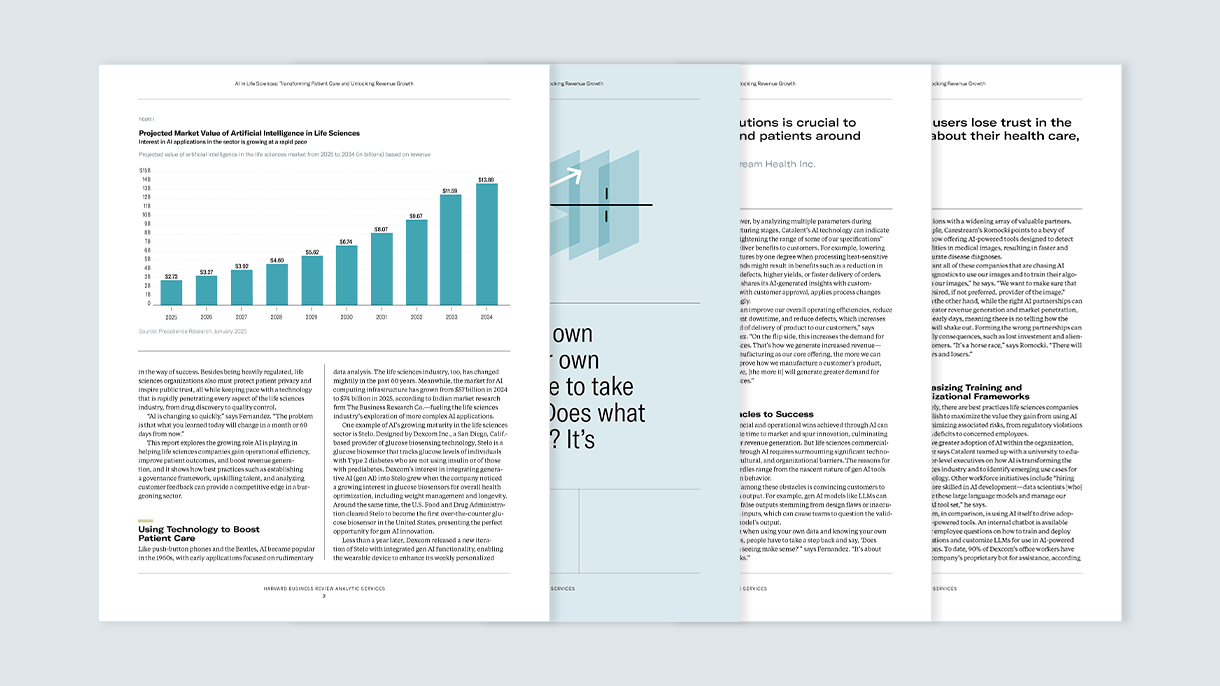
AI in Life Sciences
Download the Report The life sciences industry needs a shot of adrenaline. An aging population and a rise in chronic diseases are fueling the demand for highly accurate medical imaging and diagnostic tools. Pharmaceutical companies and manufacturers are under growing pressure to keep pace with supply and demand for critical medications and medical devices, respectively. Patients, meanwhile, are increasingly demanding personalized health care experiences that cater to their unique needs.


WebMD
8 hours ago
- WebMD
The Surge in Type 1 Diabetes, and the New Ways to Fight It
Aug. 19, 2025 — Cases of type 1 diabetes — an autoimmune condition where the body attacks insulin-producing beta cells — are rising faster than ever, climbing about 42% in since 1990. That's a huge increase in a disease that's expensive, incurable, and still shortens lifespan by more than a decade. But the number of new and emerging treatments is surging too, and experts say we're in the most promising era of type 1 diabetes treatments in history, with new medications that slow the disease's progression, advanced insulin delivery systems, inhalable options, and drugs that improve insulin resistance. It's a shift in the management of a chronic lifelong disease for patients who are often diagnosed in childhood. 'These patients are living much longer than they used to with an improved quality of life,' said Kupper A. Wintergerst, MD, a pediatric endocrinologist and executive director of the Wendy Novak Diabetes Institute. Experts attribute the rise in type 1 cases to a few factors. Genetics play a role in who will get type 1 diabetes, increasing a patient's risk by about 40%. And in people with an increased risk, certain environmental factors may serve to nudge them toward getting the disease. For example, infections in early childhood like mumps, rubella, and influenza B as well as childhood obesity and certain environmental factors like antibiotics overuse, vitamin D deficiency, and the hygiene hypothesis — which suggests that kids who aren't exposed to enough microorganisms in childhood may end up with an overactive immune system — may also be playing a role. Additionally, certain chemicals found in foods and drinking water, including PFAS, dioxins, and arsenic, may jolt inflammation in the body. Once these chemicals build up in the bloodstream, it triggers a chronic inflammatory state, which contributes to the immune system mistakenly attacking and destroying its own insulin-producing beta cells in the pancreas. Over time, this lack of beta cells causes the body to stop making insulin, which starts to raise blood sugar. Researchers are responding with new treatment strategies that leverage a slowed progression of the disease while also more accurately monitoring and regulating blood sugars, which all work to extend lifespan. The number of patients living past 65 has tripled in the last four decades. Slowing Progression of the Disease Type 1 diabetes is usually diagnosed in childhood, though it can develop in adulthood, too. A new medication, called teplizumab (Tzield), has been shown to slow the disease's progression, potentially staving off the disease for two or three years. It's now for patients either before they're diagnosed or early after a diagnosis. Once patients have tested positive for two or more type 1 diabetes-related autoantibodies, they're considered eligible for the medicine. They may also have abnormal blood sugar levels but don't yet have other symptoms of type 1 diabetes like excessive thirst, frequent urination, slowed wound healing, and excessive hunger. The medication works by binding to CD3 proteins on the surface of the white blood cell, helping to block the autoimmune attack. The medication must be started a few weeks or months after diagnosis. While it's not good for all patients, it can be helpful especially for children in staving off this life-altering condition for up to three more years of childhood. 'For patients who are early on in their type 1 disease, this medication can help prolong the beta cell function that is remaining and decrease how much insulin a person needs, depending on when it's used in their disease course,' said Bethany L. Gottesman, MD, a pediatric endocrinologist at Phoenix Children's in Phoenix, Arizona. Patients need to visit a facility that offers infusion services over the weekend. These infusion centers are available throughout the country. You can also contact the TZIELD COMPASS Support Program to find a center near you. Beyond slowing the progression of the disease, the next step would be preserving beta cell function indefinitely, which would prevent the disease. Stem cell-derived beta cells are designed to mimic the function of natural beta cells, restoring function to damaged cells before the damage can to type 1 diabetes. A stem cell-derived treatment called zimislecel has shown promising results in early trials, but it is about a decade away from being available to patients, according to experts. Improved Insulin Delivery Systems Science has revolutionized insulin delivery systems, which now do a much better job of mimicking the pancreas — because they measure sugars beneath the skin and between cells and communicate with the insulin pump. A sensor inserted just beneath the skin measures the interstitial fluid that surrounds cells. After that, software built into the device analyzes the glucose data, sending a message to the insulin pump to deliver insulin through a small needle that penetrates the skin. The data gathered from the cells is transmitted wirelessly to a smartphone or directly to an insulin pump. 'As sugar levels rise or fall, the pump can respond by decreasing or increasing the amount of insulin that's delivered through an algorithm,' said Wintergerst. The algorithm is the computer programming process that tells the glucose monitoring system when more insulin is required, all based on data it's collected on blood sugar in the body as well as other potential inputs such as how many carbohydrates a person consumes. The system can provide extra insulin, for example, if it looks like a patient's blood sugar is going to spike. Still, these insulin delivery systems require the user to input the size of a meal or the amount of carbohydrates that a patient is consuming in order to know whether blood sugar is going to go up or go down in the near future, which can make it more difficult for young children. Experts contend that these more optimized systems help patients deal with type 1 diabetic burnout — when people with diabetes become mentally and physically exhausted as a result of all the demands that are put on them in terms of diet and glucose monitoring. This can be a concerning issue especially among children with diabetes who are new to the disease and must tend to their blood sugar for years to come, said Michael Yafi, MD, director of the Pediatric Endocrinology Division at McGovern Medical School at The University of Texas Health Science Center in Houston. When patients are better able to monitor their condition with ease, they're more likely to be able to stay on track with their blood sugar. This way they'll avoid experiencing the organ damage caused by elevated blood sugars, which over time damages the body's blood vessels and nerves, leading to blurred vision, kidney failure, neuropathy, and early death as the body's systems break down. Inhaled Insulin for Both Kids and Adults The inhaled insulin Afrezza provides rapid delivery of insulin to patients after a meal or after exercise to help stabilize blood sugar levels. People with type 1 diabetes will still need insulin injections or an insulin pump to provide a steady, continuous supply of insulin for longer periods of time, but inhaled insulin can provide additional help for people who need a boost of insulin after eating a meal. It can also reduce the risk of hypoglycemia or low blood sugar after exercise because it's faster acting than the injectable version. For example, in patients who eat carbohydrates before exercise to prevent the low blood sugar that impacts their performance, it can keep the body from overcompensating and causing high blood sugar. Afrezza has already been approved for adults and is likely to be approved for children by the end of 2025, giving patients additional options while also easing some of the needle fatigue. Still, it does have its drawbacks, said Gottesman. 'It's not meant to be used if you have lung disease, and some pediatric patients have asthma. This is also true of older patients with type 1 diabetes, who are more likely to have other lung diseases,' she said. Gottesman added that the insulin only comes in set doses, which for the youngest children might not be appropriate. It's typically not as exact as rapid-acting injections. Inhaled versions of insulin provide a convenience factor for patients. It's also discreet for children who are embarrassed by their condition or don't want to inject themselves with needles in public places like at school. Newer versions of inhaled insulin are also in development, perhaps supplying a version of insulin that's liquid rather than powder, which would reduce respiratory irritation. Aerami Therapeutics has a liquid formulation in development, though it's unclear when it will be ready for the public. GLP-1s for Type 1 Diabetes With Insulin Resistance It might seem obvious: In type 1 diabetes, the problem is lack of insulin production. In type 2, it's insulin resistance – the body still makes insulin but can't use it effectively. But that clear-cut distinction doesn't always hold. Many people, including children, with type 1 diabetes develop insulin resistance, too. Despite lacking natural insulin, their bodies can become resistant to the insulin they do receive, for a number of reasons including excess weight, medications, smoking, puberty, and pregnancy. This overlap has led researchers to explore treatments once thought to be reserved only for type 2 diabetes — including GLP-1 medicines like Ozempic and Wegovy — to help patients drop excess weight and stave off or improve insulin resistance, said Alexandra De Lellis, a nurse practitioner at Parkview Endocrinology in Fort Wayne, Indiana. While type 1 diabetes is mostly an autoimmune disease, insulin resistance can be a secondary issue that causes additional complications when the body resists insulin, causing an increase in the amount of insulin required for patients. This happens when the cells don't react efficiently to insulin as a result of excess body weight, a genetic predisposition, or certain medications. 'Insulin resistance plays a large role especially for type 1 patients diagnosed in adulthood but also those who were diagnosed younger,' said De Lellis. It can be frustrating for these patients who feel like their insulin isn't having the impact it should because the body is resisting it. A study published this year in Frontiers in Endocrinology found that GLP-1s were a 'potential adjunctive therapy in [type 1 diabetes] to reduce weight and improve insulin resistance.' Studies have shown that GLP-1s can reduce blood sugars levels by between by 0.21% and 0.96%, while also reducing weight and the amount of insulin that's required of type 1 patients.
