



Army felicitates family of Kargil hero in Sabarkantha
Kargil Vijay Diwas
celebrations, the
Indian Army
on Thursday honoured the family of Kargil war hero sepoy S K Kavaji, a sena medal awardee, at their residence in Kanthariya village of Vijaynagar taluka in Sabarkantha district.
The felicitation was held under the Army's pre-Kargil Vijay Diwas outreach initiative, aimed at acknowledging the sacrifices of soldiers and extending welfare support to their families. Sepoy Kavaji laid down his life during the 1999 Kargil war, displaying exemplary courage in the service of the nation.
During the ceremony, Khiviben Kavaji, wife of the late Sepoy, was presented with a memento, a welfare booklet, and a personal letter of appreciation from the Indian Army, commemorating her husband's valour.
You Can Also Check:
Ahmedabad AQI
|
Weather in Ahmedabad
|
Bank Holidays in Ahmedabad
|
Public Holidays in Ahmedabad
A team led by naib subedar M V Reddy and regiment havildar Major Rajeesh visited the family, interacted with them, and took note of their concerns and requirements. They assured the family of the Army's continued support and assistance, a statement from the Defence PRO said.
The Indian Army is observing the 26th Kargil Vijay Diwas on July 26 to mark India's victory over Pakistani intruders in the Kargil region and to pay homage to the soldiers who made the supreme sacrifice in the line of duty.
Hashtags

Try Our AI Features
Explore what Daily8 AI can do for you:
Comments
No comments yet...
Related Articles


Time of India
 8 hours ago
- Time of India
Army chopper's emergency landing delights Tinsukia locals
1 2 3 4 5 6 Dibrugarh: An Indian Army Cheetah helicopter carrying four personnel made an emergency landing at a local playground in Tinsukia district on Tuesday morning after developing a technical malfunction during a routine sortie. The aircraft, with two pilots and two Army officials aboard, was en route from the Dinjan-based military station in Dibrugarh to Anini in Arunachal Pradesh when it encountered a sudden technical snag at around 9:05am. The pilots safely landed the helicopter at the Dibrupariya Sports Association's playground in Kathalguri. The unexpected touchdown turned an ordinary morning into a community spectacle. As word spread, scores of students and villagers gathered to witness the rare sight of a military helicopter parked in their neighbourhood. What could have been a tense moment quickly transformed into a cheerful photo opportunity, with locals lining up to take selfies and group pictures against the unusual backdrop. Social media was soon flooded with images, turning the incident into a viral moment. "We were just heading out when we heard the helicopter approaching. At first, we were worried something serious had happened, but the crew remained calm and professional. They assured us it was a minor technical issue and would be resolved soon. They were very kind and even posed for pictures with the children," said Annadeep Moran, a local resident who witnessed the landing. After nearly 50 minutes of on-site repairs, the issue was resolved, and the helicopter resumed its journey without further incident. While the Army has not released an official statement regarding the malfunction, sources said it was a minor glitch that was promptly fixed. The Cheetah helicopter, a light utility aircraft commonly used by the Indian Armed Forces, has long been a reliable workhorse in the northeastern region, often operating in difficult terrain and unpredictable weather conditions. Stay updated with the latest local news from your city on Times of India (TOI). Check upcoming bank holidays , public holidays , and current gold rates and silver prices in your area.

Indian Express
12 hours ago
- Indian Express
Rare war photo exhibition held at Sardar Dastur Hoshang Boys High School to honour war hero on birth anniversary
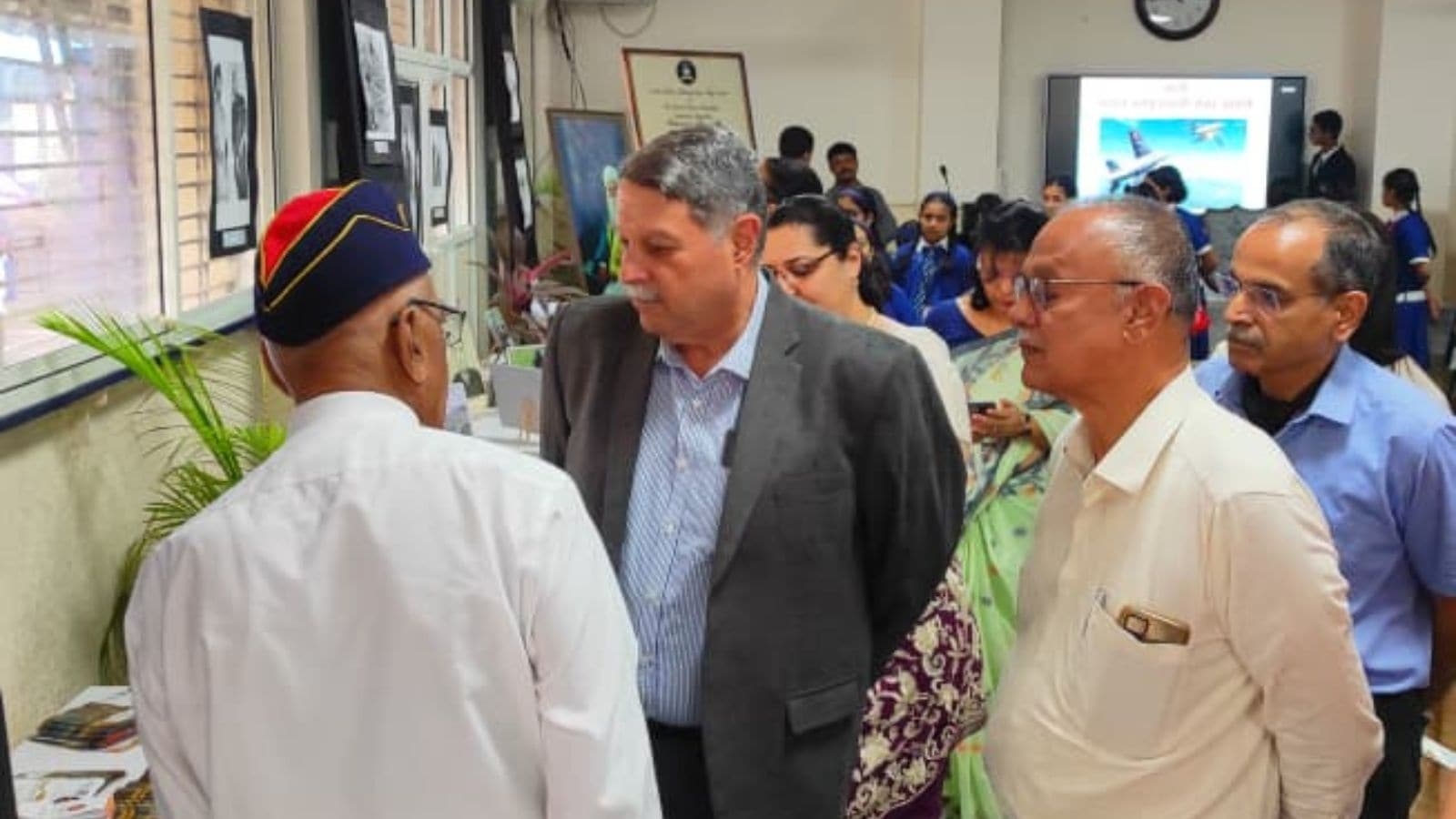
In a solemn yet glorious celebration of courage and sacrifice, Sardar Dastur Hoshang Boys High School, in collaboration with Olive Green Ventures Foundation (a veteran-led not-for-profit dedicated to preserving India's military heritage) hosted a rare photo exhibition titled Valour Saga of the Indian Armed Forces. The exhibition was organised to mark the 101st birth anniversary of Lieutenant Colonel Ardeshir Burzorji Tarapore, Param Vir Chakra, one of India's most legendary war heroes and a distinguished alumnus of Sardar Dastur Hoshang Boys High School, Camp Pune who spent his formative years at the campus from 1934 to 1941. Lieutenant Colonel Ardeshir Burzorji Tarapore,, Param Vir Chakra's immortal saga was etched during the Battle of Phillora in the 1965 Indo-Pak War, one of the fiercest armoured clashes in history. Though grievously wounded, he refused to retreat for four days and led his regiment with unmatched valour, destroying wave after wave of enemy tanks. His leadership turned the tide of battle, but he fell on the field of honour, making the supreme sacrifice. For his unparalleled courage, indomitable spirit, and devotion to duty, he was posthumously awarded the Param Vir Chakra, India's highest military honour, forever enshrining his name in the pantheon of India's greatest warriors. The exhibition was inaugurated by Behram Pudumjee, president of the Dastur Schools Trust, who saluted the courage of India's warriors and urged the students to draw inspiration from their sacrifices. He said that 'the flame of valour should always brighten the young citizens and that they should remain rooted in the ideals of fortitude, honour, and service'. According to principal Nisha Sahay, the exhibition has showcased rare, never before seen photographs chronicling the saga of courage from the 1947 War of Independence to the Kargil conflict, honouring both the famous and unsung heroes whose sacrifices have kept the Tricolour flying high. On the occasion, she also reminded students of their solemn duty. 'Our warriors did not simply fight battles, they lit the torch of freedom with their blood and carved a destiny for us with their sacrifice. Lieutenant Colonel Ardeshir Burzorji Tarapore,, Param Vir Chakra, and countless others sacrificed their lives so that we could walk in the sunlight of liberty with heads held high. To honour them, we must rise above mediocrity and live lives that reflect their courage. Protecting our planet, serving humanity, and embracing purpose with responsibility are not choices, they are sacred duties entrusted to us by their sacrifice,' she said. To widen the reach of this tribute, 15 schools from Pune Camp have been invited to witness this rare and moving exhibit which spans over three days. The event drew students, educators, alumni, and citizens, all of whom walked through the gallery with reverence and awe. 'Each photograph was not merely an image, but a heartbeat from history, whispering tales of courage, sacrifice, and honour. For many young students, it was their first encounter with the stark truth that freedom is never free; it is purchased by the blood and bravery of those who stood unflinching before the enemy,' Sahay said.

The Wire
16 hours ago
- The Wire
Amidst Uncertainty at Flood-Hit Chisoti, Three Lists Hold the Key to Hundreds of Lives
Jehangir Ali As rescue efforts continue, government officials' records offer a glimpse into the extent of damage at the Jammu and Kashmir village. Chisoti, Kishtwar (J&K): In the office of Jammu and Kashmir's revenue department, housed in a tin-shed room in the flood-ravaged Chisoti village, a swarm of anguished men huddle around Kabeet Singh who is seated on a plastic chair. 'To register yourself, I need a bank account number, Aadhaar and ration card,' announced Singh, a patwari (revenue official). After a meaningful pause, Singh lifted a long notebook from the table in front of him: 'Don't even think about lying to me. I am going to verify each claim. If I discover anyone has lied, his name will be struck off the list.' Revenue official Kabeet Singh (right corner) looks on as his colleague notes down the details of stallholders who lost their livelihood in the flood. Photo: Jehangir Ali. On Sunday, August 17, four days after a 40-60-foot column of rainwater came crashing down into the village, killing at least 65 persons, mostly Hindu pilgrims on the way to Mata Machail yatra, dozens of poor stallholders who have suffered grave economic losses made a beeline for the office. One by one, Singh asks the men circling him to tell him their names, addresses, phone numbers and the details of losses suffered by them while noting them down diligently in the notebook. Barefooted Sumit Solanki, a resident of Madhya Pradesh who was among the registered stallholders, steps forward, 'I have lost everything. My personal belongings were also washed away. I don't even have a pair of shoes,' he told Singh. On the table, a red file folder contains three lists. One is the list of 'Injured Persons', their parents' names, age, address and names of the hospitals where they were shifted for treatment and whether they have been discharged. A tributary flows down the mouth of a narrow valley before merging with the Chenab river in Kishtwar district of Jammu and Kashmir. Photo: Jehangir Ali. The second list of 'Dead bodies' does not state the age of the victims. Instead, against the name of each body that has been recovered, it mentions the address of the hospital where the body has been preserved and, if it has been handed over to the family, the name of the person who received it. 'Handed over to shubam (sic),' the list states about Palak Sharma, a resident of Narwal in Jammu, who died in the tragedy. 'Handed Over', it says of Sham Lal, another Jammu resident, without mentioning the recipient's name. A day after the tragedy, Happy Singh travelled more than 300 km from Bari Brahmna in Jammu to Chisoti after losing contact with his mother and aunt. Singh tells The Wire that he learnt about the tragedy through social media and the two women were among a group of 18 people from one locality in Jammu who had come on the pilgrimage. Chisoti village after the flash flood. Photo: Indian Army. More than three days have passed without a breakthrough. 'I don't want any compensation from the government. I only want the bodies of my mother and aunt,' Singh tells the revenue official. At least 23 dead bodies have not been identified yet among dozens recovered from the debris. An official told The Wire that many victims were mutilated and their body parts were pulverised probably by the massive boulders which crashed down into the village along with sludge and floodwater on the fateful day. Among the four missing CISF personnel who were posted in the village to regulate the yatra, two complete bodies and the leg of one have been recovered. 'It (leg) was stuck between two huge boulders,' said an official. The fourth CISF man continues to remain missing. The third list of 'missing persons', which is also the longest, has the phone numbers of the relatives or acquaintances of 87 persons who have been so far reported missing to the authorities besides their regular details like names and addresses. This list has also been updated the most number of times. 'Body Recovered from GMC (Government Medical College) Jammu,' the list says about Happy Sharma, a resident of Bishnah, who was reported missing on the day of the tragedy. His body was found a day later. Two residential houses which bore the brunt of flash flood in Chosoti village. Photo: Jehangir Ali. Some 50 minutes later, the crowd of stallholders around Singh, the revenue official, starts to thin out. He said that the government has set up nine similar help centres in other parts of Kishtwar to help families who may not have yet reached out to the authorities. 'No one is being left out,' Singh said. A narrow, serpentine road winds around the narrow Himalayan valleys of Kishtwar before coming to an abrupt end, some 200 metres from Bhot tributary of Chenab river in Chisoti which was the epicentre of the tragedy. Here, pilgrims disembarked from their vehicles on the fateful day and broke up for food or a hot cup of tea before continuing the pilgrimage. Mata Machail yatra is the third most popular in J&K after Vaishno Devi yatra and Amarnath yatra. On the morning of the disaster, more than two lakh pilgrims had already embarked on the arduous hike to the revered Hindu deity who finds mention in the Vedic myths. Around 5,000 pilgrims were set to embark on the nine-kilometre hike to the sacred temple of 'Ma Chandi', a journey undertaken by the Hindu sages in Kishtwar's Machail area when it started to rain. Within two minutes, the flood wrecked Chisoti. Singh, the revenue official and a resident of Kishtwar was among the first government officials who reached the village for documenting the trail of death and destruction. Rescue workers are racing against time to retrieve the bodies of missing Hindu pilgrims who are feared to be buried the ruble in Chisoti. Photo: Jehangir Ali. The tin shed housing Singh's office was one of the dozens of stalls which sprung up in Chisoti to cater to the pilgrims when the yatra started on July 25 this year. It is also one of the few fortunate structures which have escaped nature's fury. With the calamity having flattened much of Chisoti, the shed has turned into an island of hope for the families who are searching for their loved ones; a solo notebook and some papers capturing the painful story of one of Jammu and Kashmir's worst climate disasters in tone-deaf, heartless statistics. Meanwhile, the roaring Chenab has left little hope for the families of missing persons and locals as the river appears to have swallowed them with little chance of recovery. 'Yesterday six bodies were recovered. Today, just one,' said Dharam Singh, a local whose house on the banks of the Bhot tributary was washed away. 'The Chenab is ruthless. Once more time passes, we may only find the dismembered humans.' The 974 kilometre river which snakes through the narrow Himalayan valleys in Kishtwar, Doda and Ramban districts before moving into the plains of Jammu has a notorious history of gulping its victims without a trace. The 974 kilometre Chenab river snakes through the narrow Himalayan valleys in Kishtwar, Doda and Ramban districts before moving into the plains of Jammu. Photo: Jehangir Ali. 'Bodies vanish in its depths,' said a Seva Bharti volunteer, surveying the damage that has destroyed at least ten homes while three more were partially damaged. While some anguished families of missing persons continue to wait, Meena Devi, daughter of 72-year-old priest Bodh Raj who led prayers at the Kali Mata temple in Chisoti, has given up hope. 'I don't think I will see my father again,' she said. Unlike the Tawi river in Jammu or Kashmir's Lidder river which shrinks in autumn, the Chenab roars year-round. In monsoon, when the Machail Mata yatra coincides with peak flow, Chenab looks dreadful before exiting into the plains of Jammu and merging with the Indus in Pakistan later. The August 14 floods swept away pilgrims, priests, vendors and even children. More than 70 are feared dead and dozens remain missing. Two girls aged 14 months and 14 years pulled out alive after eight and 24 hours respectively were the only miracles in the village of grief. 'Chenab rarely returns what it has swallowed,' said Roma Devi, a local who lost her granddaughter Arundhati in the tragedy. The Wire is now on WhatsApp. Follow our channel for sharp analysis and opinions on the latest developments. Advertisement
