


The sad reason why a $29 Bunnings buy is selling out across Australia
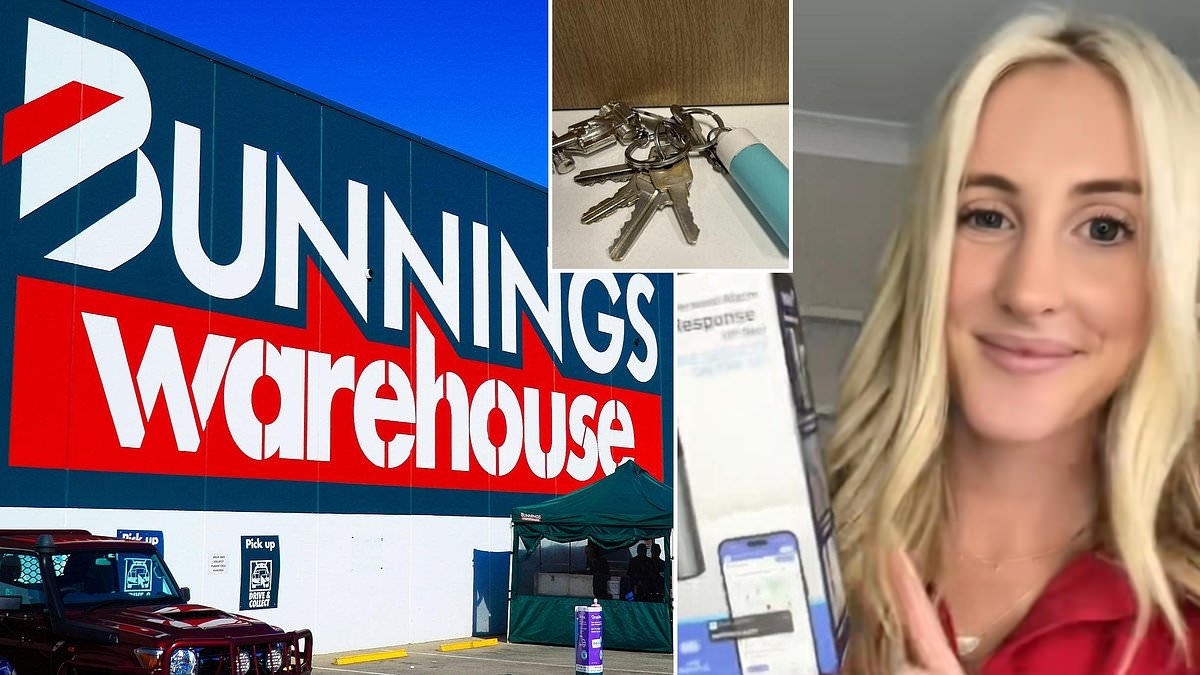
The Swann Graphite Gen 2 ActiveResponse Personal Alarm, retailing for just $29, is flying off the shelves as more women turn to the affordable gadget for extra peace of mind.
But it's not just adults who are reaping the benefits of this modern safety essential, concerned mums are now purchasing the alarm for their kids as they become more independent.
Small enough to clip onto a key ring or backpack, the device features two alarm modes: a siren and flashing light activated by pulling the keychain for immediate attention, and a discreet red button that silently sends an SOS message with real-time GPS coordinates to designated emergency contacts.
'Every parent should get one of these for your child,' one Bunnings reviewer raved. 'It's amazing how well it works.'
The surge in popularity reflects a broader trend in Australia, where women, particularly mothers, are increasingly investing in personal safety tools amid rising concerns about violence and street harassment.
In a 2023 report by Australia's National Research Organisation for Women's Safety, nearly two-thirds of Australian women reported feeling unsafe walking alone at night.
It's no surprise then that products like the Swann personal alarm are gaining traction as a modern solution to an age-old problem.
'This is a wonderful product, small and well made,' another reviewer wrote.
'I bought this for my child who has just started high school and has started catching public transport... We've tested it a few times just to be sure and it's amazing how well it works.'
For mums like this, the device offers 'a little bit of backup just in case.'
'I'm not paranoid,' she wrote in her online review, 'but you still want that little bit of backup… She barely notices it's there, and I know if anything ever felt off, she could press the button and I'd get the alert straight away.'
Unlike traditional personal alarms, the Gen 2 version includes built-in mobile connectivity and GPS, removing the need to pair with a smartphone - a critical feature for younger users or those who may not always carry their phones.
The personal alarm also has the tick of approval from New Zealand TikToker Jen Lourdes, who posted a now-viral video on the device.
Jen said she picked up the device after seeing other women recommend it as a simple but effective way to feel a little safer.
'There was a lady on TikTok that recommended getting the personal alarm,' Jen said.
The small, pocket-size device packs a serious punch when it comes to making enough noise to help ward off danger
'This is really great if you're going runs or you're solo travelling, or if you work night shifts.'
The small, sleek, pocket-size device doesn't look like much, but packs a serious punch when it comes to making enough noise to (hopefully) ward off danger.
'What you do is you pull it, and it makes a really loud noise,' Jen explained.
Alternatively, you can push a button and it texts a friend or family member.
Compact enough to clip onto a keychain or lanyard, the alarm is easy to carry during a jog, stash in a handbag or keep close while walking to the car after a night shift.
'I'm slowly started to get into running so I thought it would be perfect to take with me when I go on a run,' Jen added.
'I also do a lot of solo travelling for work, I feel like it's just a bit of extra security.'
While it's comforting to know gadgets like this exist, the surge in popularity sadly reflects a growing reality: women in 2025 are still forced to think about personal safety every time they step outside alone.
'The fact that we live in a world where we need this to feel safe,' one follower commented.
'These should be handed out for free at police stations tbh. Genius!' added another.
While the Swann ActiveResponse offers a quick, affordable way to feel more empowered, the hope remains that one day, women won't have to plan their day around personal protection.
For now though, many are praising Jen and others like her for spreading the word about such a useful gadget.
'Omg this is such a good idea!! Need this asap.'
Hashtags

Try Our AI Features
Explore what Daily8 AI can do for you:
Comments
No comments yet...
Related Articles


The Sun
 3 hours ago
- The Sun
Urgent ‘hairline SOS' warning from expert who's seen more bald spots than ever caused by a style she begs women to stop
A HAIRDRESSER has shared an urgent 'hairline SOS' warning. So if you want to ensure your locks look healthy and don't get damaged easily, then you've come to the right place and will need to take notes. 4 4 4 Marlie, a hair colourist and mother from Tahmoor, Australia, took to social media to reveal the very popular but incredibly damaging hairstyle she is 'begging' women to avoid. According to this stylist, the much-loved slick back look, whether that's a slick back bun or a slick back ponytail, is causing more bald spots than ever before. It's is a viral hairstyle that's taken not only the fashion world, but the red carpet, by storm. With huge celebs such as Hailey Bieber, Maya Jama and Molly-Mae Hague all showing off their sleek buns, which are often secured down with lots of hairspray, gel or mousse, the on-trend look has shown no signs of disappearing off the radar any time soon. But if you love the slick back look, you may want to think twice about the damage it can cause. Alongside her short 'hairline SOS' clip, the blonde beauty said: 'Stop with the slick backs - I am seeing more tension alopecia now than I ever have in my entire career. 'If you are tying your hair up [in a slick back style] every single day, you are going to pull the hair out from around your hairline. 'It's so bad for your hair and your scalp health.' Sharing her advice on what to do instead, the pro continued: 'Alternatively, use a scrunchie or a claw clip - they don't have as much tension and it's so much better for your hair and your scalp.' Clearly concerned about the damage such slick back hairstyles can cause, Marlie sternly advised: 'Give it up.' Marlie's TikTok clip, which was posted under the username @ hairbymarlieau, has clearly left many open-mouthed, as it has quickly racked up 164,400 views. Not only this, but it's also amassed 1,861 likes, 131 comments and 2,144 shares. Many beauty fans confessed to feeling 'attacked' by the expert's concerns, but others were incredibly thankful for her advice. Stop with the slick backs - I am seeing more tension alopecia now than I ever have in my entire career Marlie One person said: 'I feel attacked, but agree.' Another added: 'This was me! I used to wear a high ponytail everyday and started getting a bald thinning patch in the elastic area. Now I use loose scrunchies or low less tight ponytails and also wear my hair out to give it a break.' A third commented: ' 51 and this is so true. Years of wearing my hair in a high bun has done so much damage.' Everything you need to know about hair loss Marie Nieuwoudt, a Group Education Manager at CLOUD NINE told Fabulous everything you need to know regarding hair loss. What are the common causes of hair loss? Marie explained: "There are so many reasons why someone may face hair loss. "The number one reason is usually hormonal changes or underlying health conditions (like thyroid conditions), and stress of course also plays a big part in changes to your hair health. "But another very common day-to-day cause is excessive damage to your hair created by mistakes in your styling routines – and this a big one to be aware of for people who are regularly applying heat to their hair! "It's important to know the right temperature for your hair type when using styling tools, as this is essential in reducing unintentional heat damage. "I also see a lot of people facing hair loss resulting from hereditary conditions, which are passed down from generation to generation." What are the best hairstyles people should try to reduce their hair loss? According to Marie: "Less is more when it comes to hair loss! It's important to be gentle with your hair, so a low-maintenance style that limits pulling on your scalp will be your best option. "Putting your hair up in a tight ponytail or adding hair clips can cause stress points at the roots. "Instead, try leaving your hair down, or out. "You're not limited in your options, but it pays to be intentional with your hair styling. Using tools which limit damage to your hair is vital. "Discussing your concerns with a hairdresser or hair loss specialist is also a great way to find styles that suit your specific needs, whilst still making sure you look and feel your best." How long does it take for hair loss to stop? If you're itching to know when your hair will grow back, Marie confirmed: "Hair loss is a personal journey – and it's different for everyone, so it's very difficult to put exact timings on this process. "Every head of hair is unique, and so too is your hair loss experience. "As always, you can speak to a professional hairdresser or trichologist about your specific concerns and hair changes, and they'll be able to help you manage those expectations. "I can't emphasise enough how important it is to be kind to your hair. Most people treat their hair quite roughly, and this is something you definitely want to avoid when dealing with hair loss in particular. "Make sure you're choosing products and styling routines that you know are good for your hair, rather than causing additional damage." Someone else admitted: 'Yep, I'm living proof.' At the same time, one beauty fan beamed: 'Ok I love this! I love that you said stop it, gave a reason why and then gave an alternative! At the start I was like 'well I can't I have to have my hair tied up" and then came the end! Thank you! 'So many people give unsolicited advice with no alternative ideas and it's frustrating so I appreciate you!' Meanwhile, one user penned: "It's hard when you work in the hospitality industry and you need to tie your hair back a lot.' But to this, Marlie wrote back and explained: 'You can still tie it up without doing it with heaps of tension.'


The Guardian
5 hours ago
- The Guardian
WA lawyer referred to regulator after preparing documents with AI-generated citations for nonexistent cases
A lawyer has been referred to Western Australia's legal regulator after using artificial intelligence in preparing court documents for an immigration case. The documents contained AI-generated case citations for cases that did not exist. It is one of more than 20 cases so far in Australia in which AI use has resulted in fake citations or other errors in court submissions, with warnings from judges across the country to be wary of using the technology in the legal profession. In a federal court judgment published this week, the anonymised lawyer was referred to the Legal Practice Board of Western Australia for consideration and ordered to pay the federal government's costs of $8,371.30 after submissions to an immigration case were found by the representative for the immigration minister to include four case citations that did not exist. Justice Arran Gerrard said the incident 'demonstrates the inherent dangers associated with practitioners solely relying on the use of artificial intelligence in the preparation of court documents and the way in which that interacts with a practitioner's duty to the court'. The lawyer told the court in an affidavit that he had relied on Anthropic's Claude AI 'as a research tool to identify potentially relevant authorities and to improve my legal arguments and position', and then used Microsoft Copilot to validate the submissions. The lawyer said he had 'developed an overconfidence in relying on AI tools and failed to adequately verify the generated results'. Sign up: AU Breaking News email 'I had an incorrect assumption that content generated by AI tools would be inherently reliable, which led me to neglect independently verifying all citations through established legal databases,' the lawyer said in the affidavit. The lawyer unreservedly apologised to the court and the minister's solicitors for the errors. Gerrard said the court 'does not adopt a luddite approach' to the use of generative AI, and understood why the complexity of migration law might make using an AI tool attractive. But he warned there was now a 'concerning number' of cases where AI had led to citation of fictitious cases. Gerrard said it risked 'a good case to be undermined by rank incompetence' and the prevalence of such cases 'significantly wastes the time and resources of opposing parties and the court'. He said it also risked damage to the legal profession. Gerrard said the lawyer did 'not fully comprehend what was required of him' and it was not sufficient to merely check that the cases cited were not fake, but to review those cases thoroughly. 'Legal principles are not simply slogans which can be affixed to submissions without context or analysis.' There have been at least 20 cases of AI hallucinations reported in Australian courts since generative AI tools exploded in popularity in 2023. Last week, a Victorian supreme court judge criticised lawyers acting for a boy accused of murder for filing misleading information with the courts after failing to check documents created using AI. The documents included references to nonexistent case citations and inaccurate quotes from a parliamentary speech. Sign up to Breaking News Australia Get the most important news as it breaks after newsletter promotion There have also been similar cases involving lawyers in New South Wales and Victoria in the past year, who were referred to their state's regulatory bodies. However, the spate of cases is not just limited to qualified lawyers. In a NSW supreme court decision this month, a self-represented litigant in a trusts case admitted to the chief justice, Andrew Bell, to have used AI to prepare her speech for the appeal hearing. Bell said in his judgment that he was not criticising the person, who he said was doing her best to represent herself. But he said problems with using AI in preparing submissions were exacerbated when the technology was used by unrepresented litigants 'who are not subject to the professional and ethical responsibilities of legal practitioners'. He said the use of generative AI tools 'may introduce added costs and complexity' to proceedings and 'add to the burden of other parties and the court in responding to it'. 'Notwithstanding the fact that generative AI may contribute to improved access to justice, which is itself an obviously laudable goal, the present case illustrates the need for judicial vigilance in its use, especially but not only, by unrepresented litigants.' The Law Council of Australia's president, Juliana Warner, said sophisticated AI tools offered unique opportunities to support the legal profession in administrative tasks, but reliance on AI tools did not diminish the professional judgment a legal practitioner was expected to bring to a client's matter. 'Where these tools are utilised by lawyers, this must be done with extreme care,' she said. 'Lawyers must always keep front of mind their professional and ethical obligations to the court and to their clients.' Warner said courts were regarding cases where AI had generated fake citations as a 'serious concern', but added that given the widespread use of generative AI, a broadly framed prohibition on its use in legal proceedings would be 'neither practical nor proportionate, and risks hindering innovation and access to justice'.

Daily Mail
5 hours ago
- Daily Mail
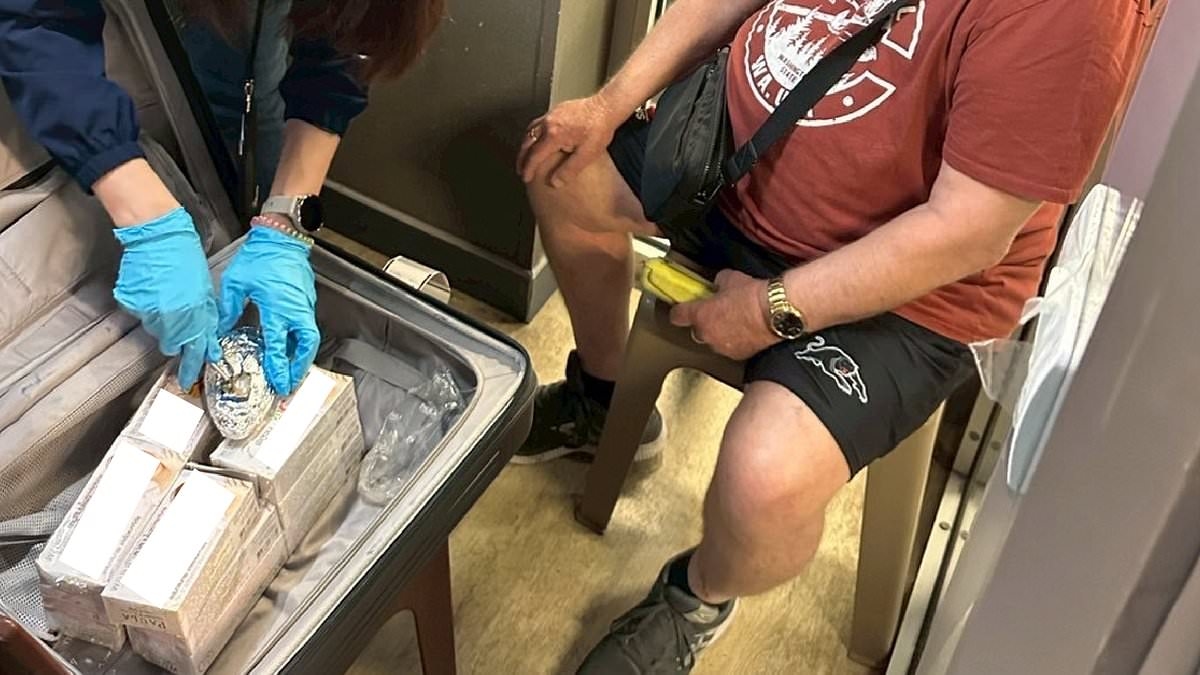
Aussie accused of trying to smuggle 4kg of meth out of Thailand in household item
An Australian man has been arrested after trying to board a flight to Perth while allegedly carrying meth concealed in soap bars. The 68-year-old was apprehended before he reached the departure gate at Suvarnabhumi Airport in Bangkok, on Sunday. He was arrested after 4.26kg of meth was allegedly found hidden inside his baggage. Customs Department spokesman Panthong Loykulnan said the Australian national was arrested by narcotics and Airport Interdiction Task Force. Officers were acting on a tip-off, reported the Bangkok Post. Mr Loykulnan said he had been flagged through intelligence as a high-risk traveller. Authorities allege the Australian was attempting the smuggle the drug back to his home country. The illicit drug was allegedly found concealed in several bars of soap packed in boxes in a bag, while more was also hidden in a concealed suitcase compartment. Mr Loykulnan said authorities had made it a priority to crack down on the drug smuggling trade. Customs workers at Suvarnabhumi Airport have made almost 200 drug seizures involving heroin, cocaine and meth, since October. Australia's Department of Foreign Affairs and Trade said it is providing consular assistance to an Australian man detained in Thailand.
