



Queen Rania visits Al-Quwayrah center, meets female entrepreneurs and community leaders
During a meeting at Al-Quwayrah Youth Center, the queen engaged with beneficiaries of civil society organizations that receive grants from the Royal Hashemite Court, Jordan News Agency reported.
A post shared by Queen Rania Al Abdullah (@queenrania)
These projects, implemented in partnership with the Aqaba Governorate Council and JRF, have created sustainable incomes for over 100 families in the region by supporting small-scale ventures in agriculture, services, and handicrafts.
Commending the initiative, Queen Rania praised the entrepreneurs for their dedication to building businesses that provide new income streams and contribute to community development. She highlighted the crucial role of youth and women-led enterprises in fostering economic growth at the grassroots level.
The queen was welcomed at Al-Quwayrah Youth Center by its director, Ali Njadat, along with Ahmad Ghnaimat, director of the Queen Rania Al-Abdullah Community Empowerment Center in Aqaba; Fadia Al-Amamreh, president of the Golden Triangle Charitable Society; and Hadwa Njadat, president of the Nashmyiat Al-Quwayrah Society for the Welfare of Orphans.
As part of her visit, the queen toured two small businesses supported by community empowerment programs. She visited the home of Harba Al-Rkeibat, also known as Um Enad, who operates a home-based breadmaking business alongside a carpet cleaning venture. The queen also stopped by a print shop owned by Ali Manaj'aa, which has provided employment opportunities for local youth.
Queen Rania also visited the Children's Mobile Museum, currently stationed at the youth center. Launched in 2012, the initiative brings interactive learning experiences to children across Jordan who may not have access to the main Children's Museum in Amman.
In 2024 alone, the mobile museum welcomed nearly 45,000 visitors, including school groups, families, and charitable organizations.

Try Our AI Features
Explore what Daily8 AI can do for you:
Comments
No comments yet...
Related Articles

Asharq Al-Awsat
 2 days ago
- Asharq Al-Awsat
S&P Upgrades Lebanon's Local Credit Rating, Keeps Foreign Debt in Default
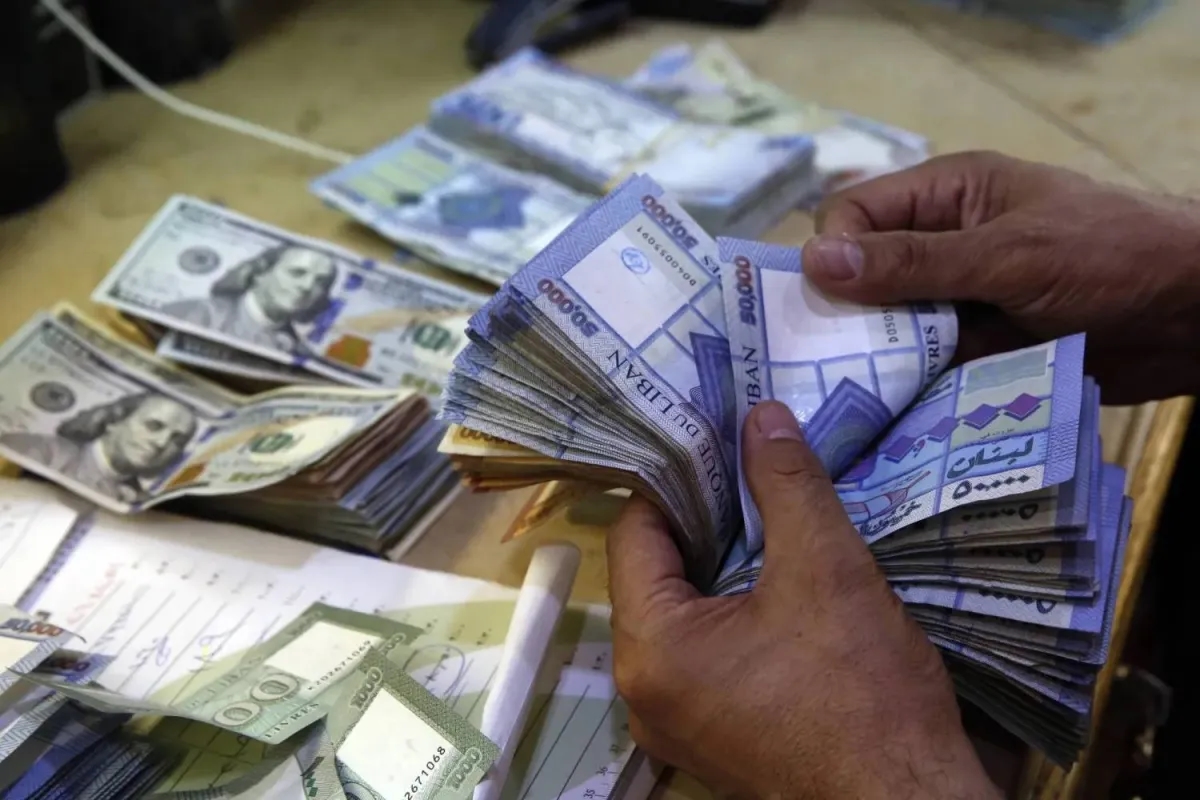
Standard & Poor's (S&P) has raised Lebanon's long-term local currency credit rating to CCC from CC, maintaining a 'stable' outlook. However, the agency left the country's foreign currency rating at Selective Default (SD), underscoring Beirut's ongoing failure to honor certain obligations. The upgrade reflects what S&P described as Lebanon's improved capacity to service domestic commercial debt, supported by fiscal surpluses over the past two years and initial progress on reforms tied to a prospective IMF program. The 'selective default' designation refers to a situation where an entity defaults on specific commitments while continuing to meet others. Lebanon remains among the world's weakest credit risks. Fitch downgraded the country to Restricted Default (RD) in mid-2024 for both local and foreign currencies before withdrawing its ratings altogether, citing lack of essential financial data. Moody's still places Lebanon at C, its lowest rating. Lebanon's local-currency debt has shrunk dramatically, falling to around 2 percent of GDP - less than $1 billion - by the end of 2024, down from roughly 100 percent before the financial collapse in 2020. This was largely the result of a 98 percent collapse in the Lebanese pound's value between 2019 and 2024. Despite the turmoil, the government has maintained payments on local commercial obligations. It resumed interest payments to the central bank in 2024 after a three-year halt and has pledged to start repaying arrears this year. The government formed in early 2025 under President Joseph Aoun and Prime Minister Nawaf Salam has pushed through several reforms, including a revised banking secrecy law and a bank restructuring bill. However, the crucial 'financial gap' law - needed to apportion past losses and protect depositors - remains stalled. The IMF, following a recent mission to Beirut, stressed that passing this law and approving the 2026 budget are essential. The fund has urged Lebanon to adopt a revenue-boosting and spending-rationalization strategy before further support can be unlocked. S&P cautioned that major debt restructuring is unlikely before the May 2026 parliamentary elections, five years after Lebanon defaulted on its Eurobonds. The ongoing conflict between Israel and Hezbollah, despite a November 2024 ceasefire, continues to darken economic prospects. Lebanon's economy contracted by 6.5 percent in 2024, following smaller declines in 2022 and 2023. In dollar terms, GDP has halved from $55 billion in 2018 to $28 billion last year. S&P projects modest average growth of 2.3 percent in 2025–2026. Since February 2024, the pound has stabilized around 89,500 to the dollar. Government net debt is expected to fall to 113 percent of GDP by end-2025, down from about 240 percent in 2022, thanks to fiscal gains, currency stability, and inflation-driven nominal growth.


Al Arabiya
5 days ago
- Al Arabiya
Singapore property tycoon linked to jailed minister fined S$30,000
Property tycoon Ong Beng Seng was fined S$30,000 ($23,000) by a Singapore court on Friday as part of a landmark case that led to the jailing of former Transport Minister S. Iswaran last year. Ong, the 79-year-old founder of Hotel Properties Ltd ( and rights holder to the Singapore Grand Prix, was accused of giving Iswaran, who was an adviser to the Grand Prix's steering committee, high-value gifts including tickets to the Formula One race, English Premier League soccer matches, and West End musicals. Ong last week pleaded guilty to one charge of abetting the obstruction of justice after arranging to bill Iswaran for a flight ticket months after it had taken place. A second charge of abetting an offence was also taken into consideration by the court. The S$30,000 was the maximum fine the court could impose. Ong, who was given a fine in lieu of three months' jail, stepped down as managing director of HPL in April. The case has attracted widespread public interest in Singapore, a wealthy financial hub that pays ministers salaries of more than S$1 million that it says are needed to deter graft and prides itself on its reputation for clean governance. At last week's hearing, the prosecution and defense agreed that because Ong was in poor health with advanced cancer he could be granted judicial mercy, which meant the court could impose a more lenient than normal punishment. In a written judgment, District Judge Lee Lit Cheng wrote: 'The critical question is not whether an offender may receive a lower standard of healthcare in prison, but whether imprisonment would create heightened risks to the offender's life. 'I am satisfied that the circumstances in this case are exceptional and meet the high threshold for the grant of judicial mercy.' Iswaran was sentenced to 12 months in prison last October, the first time a former cabinet member had been jailed in Singapore. He had faced a total of 35 charges, two of which were corruption-related but were amended to charges of receiving S$384,340 worth of gifts from Ong while a public servant. In February, Iswaran was granted house arrest for the remainder of his sentence. ($1 = 1.2831 Singapore dollars)


Arab News
12-08-2025
- Arab News
Water crisis demands a paradigm shift
As African leaders gather in Cape Town for this week's African Water Investment Summit, there can be no equivocation: the world faces an unprecedented water crisis that demands a paradigm shift in how we value and govern our most precious resource. The scale of the challenge is staggering. More than half the world's food production now comes from areas experiencing declining freshwater supplies. Two-thirds of the global population faces water scarcity at least one month per year. More than 1,000 children under five die every day, on average, from water-related diseases. And if current trends continue, high-income countries could see their gross domestic product shrink by 8 percent by 2050, while lower-income countries (many in Africa) face losses of up to 15 percent. Yet this crisis also presents an extraordinary opportunity. When South Africa assumes the G20 presidency in December, it can champion a new economics of water that treats the hydrological cycle as a global common good, rather than as the source of a commodity to be hoarded or traded. The economic case for action is compelling. The International High-Level Panel on Water Investments for Africa shows that every dollar invested in climate-resilient water and sanitation delivers a return of $7. With Africa requiring an additional $30 billion annually to meet the Sustainable Development Goal on water security and sustainable sanitation, the financing gap is significant — but it is surmountable with the right strategy. The Global Commission on the Economics of Water recently called for such a strategy. Treating water as a global common good and adopting mission-oriented approaches to transform the crisis into an opportunity requires that we recognize three critical facts. First, water connects us all — not just through visible rivers and lakes, but through atmospheric moisture flows that travel across continents. Second, the water crisis is inseparable from climate change and biodiversity loss, each of which accelerates the others in a vicious cycle. And third, water runs through every SDG, from food security and health to economic growth. Yet too often, water investments follow the failed playbook of climate and development finance. There is a tendency to derisk private capital without ensuring public returns, to fund projects without strategic direction and to treat water as a technical problem, rather than a systemic challenge. Such approaches risk creating water infrastructure that serves investors more than communities, exacerbates existing inequalities and fails to address the interconnected nature of the water, climate and biodiversity crises. We need to move from short-term thinking to long-term value creation — and that calls for mission-oriented investments. Mariana Mazzucato This interconnectedness demands a new economic framework that aims to shape markets proactively rather than simply fixing failures after the fact. We need to move from short-term cost-benefit thinking to long-term value creation — and that calls for mission-oriented investments that shape markets for the common good. Missions require clear goals, like ensuring that no child dies from unsafe water by 2030. Once goals are established, all financing can be aligned with them through cross-sectoral approaches spanning agriculture, energy, manufacturing and digital infrastructure. Rather than picking sectors or technologies, the point is to find willing partners across all industries to tackle shared challenges. Such mission-oriented investments can also lead to economic diversification, creating new export opportunities and development pathways. Consider Bolivia's approach to lithium extraction. Rather than simply exporting raw materials, the country is developing strategies to avoid the traditional 'resource curse' by building domestic battery production capabilities and participating directly in the energy transition. In doing so, it is converting its resource wealth into innovation capacity, strengthening value chains and creating new export markets for higher-value activities. As matters stand, more than $700 billion per year is channeled into water and agriculture subsidies that often incentivize overuse and pollution. By redirecting these resources toward water-efficient agriculture and ecosystem restoration, with clear conditions attached, we could transform the economics of water overnight. To that end, public development banks can provide patient capital for water infrastructure, while requiring private partners to reinvest profits in watershed protection. Africa is uniquely positioned to lead this transformation. Its vast supply of groundwater remains largely untapped, with 255 million urban inhabitants living above known supplies. Combined with affordable solar power, these supplies present an opportunity to revolutionize agriculture. By focusing on efficiency and reuse, as well as on capacity building, data-sharing and monitoring and evaluation, this relatively stable groundwater resource, accessed by solar-powered pumps, can be a decentralized alternative that minimizes the emissions, waste and other environmental costs implied by larger infrastructure projects that disrupt natural water flows. More than $700 billion per year is channeled into water and agriculture subsidies that often incentivize overuse and pollution. Mariana Mazzucato Through Just Water Partnerships — collaborative frameworks that pool such solar groundwater projects for increased bankability while ensuring community ownership — international finance can be channeled toward water infrastructure that serves both national development goals and the global common good. South Africa's G20 presidency — the first ever for an African country — offers a historic platform to advance this agenda globally. Just as Brazil has used its G20 leadership and role as host of the upcoming COP30 UN Climate Change Conference to drive climate action, South Africa can make water security central to the global economic agenda. With the 2026 UN Water Conference on the horizon, and with the international community recognizing that climate change cannot be tackled without also addressing the water crisis, the time is right for bold leadership. The African Water Investment Summit is not just another gathering — it should be a watershed. This is the moment when we should shift from treating water as a local resource to governing it as a global common good, moving from crisis management to proactive market-shaping and from viewing mission-oriented investment as a cost to recognizing it as the foundation of sustainable growth. Water security underpins Africa's aspirations for health, climate resilience, prosperity and peace. With young Africans set to constitute 42 percent of global youth by 2030, investing in water is tantamount to investing in the world's future. The question is not whether we can afford to act, but whether we can afford not to. • Mariana Mazzucato is Professor in the Economics of Innovation and Public Value at University College London and the author, most recently, of 'The Big Con: How the Consulting Industry Weakens Our Businesses, Infantilizes Our Governments and Warps Our Economies' (Penguin Press, 2023). ©Project Syndicate
