



‘Ente Bhoomi' putting Kerala among global leaders: World Bank official
'I have been travelling globally and I could see that the Ente Bhoomi mission by Kerala is taking the state to one among the global countries, like Estonia, Australia, etc. I had a two-year interaction with the Kerala team from the very initial stages of the launch of the Ente Bhoomi programme,' Torhonen said.
He said he was 'really astonished' by the progress made by the project in two years.

Try Our AI Features
Explore what Daily8 AI can do for you:
Comments
No comments yet...
Related Articles
&w=3840&q=100)

First Post
 11 hours ago
- First Post
US praises Lebanon for backing plan to disarm Hezbollah, envoy to discuss ceasefire with Israel
The US envoy to Lebanon said Washington will negotiate a ceasefire with Israel after Beirut backed a US plan for Hezbollah's disarmament. Hezbollah vowed defiance, raising fears of renewed instability amid Lebanon's ongoing crisis. US Ambassador to Turkey and Special Envoy to Syria Tom Barrack, speaks during a press conference after his meeting with Lebanese President Joseph Aoun at the presidential palace, in Baabda, east of Beirut, Lebanon. AP The US special envoy to Lebanon said Monday that his team will negotiate a long-term cease-fire with Israel after Beirut approved a US-backed proposal for the Hezbollah militant organisation to disarm. Following a meeting with Lebanese President Joseph Aoun, Tom Barrack announced that Washington will seek an economic plan for the country's post-war rebuilding, following months of shuttle diplomacy between the two countries. Barrack is also scheduled to meet with Prime Minister Nawaf Salam and Speaker Nabih Berri, who frequently negotiates on behalf of Hezbollah with Washington. STORY CONTINUES BELOW THIS AD 'I think the Lebanese government has done their part. They've taken the first step,' said Barrack, who is also the US ambassador to Turkey. 'Now what we need is for Israel to comply with that equal handshake.' Lebanon's decision last week to support a plan to disarm Hezbollah enraged the Iran-backed group and its allies, who believe Israel's military should first withdraw from the five hilltops it has occupied in southern Lebanon since the end of its 14-month war with Hezbollah last November and cease launching almost daily airstrikes in the country. Hezbollah's secretary-general, Naim Kassem, has pledged to defy efforts to disarm the group, raising worries of civil instability in the nation. Barrack told Hezbollah that it would have 'missed an opportunity' if it would not support calls for disarmament. Both Aoun and Salam want to disarm Hezbollah and other non-state armed organisations, and they have asked that Israel cease its attacks and leave from the nation. Aoun said he wants to increase funding for Lebanon's cash-strapped military to bolster its capacity. He also wants to raise money from international donors to help rebuild the country. STORY CONTINUES BELOW THIS AD The World Bank estimates that Hezbollah and Israel's monthslong war in late 2024 cost $11.1 billion in damages and economic losses as larges swaths of southern and eastern Lebanon were battered. The country has also faced a crippling economic crisis since 2019.


The Hindu
12 hours ago
- The Hindu
Selective coverage in rubber replanting scheme sparks farmer backlash
A scheme launched by the State government in partnership with the World Bank to provide replanting subsidies has come under fire from rubber growers in Kerala, who allege that its selective district coverage will not only deprive many of Rubber Board benefits but also deepen regional disparities. The initiative, Kerala Climate Resilient Agri-Value Chain Modernisation (KERA) Project, offers a replanting subsidy of ₹75,000 in two phases. Applications have been invited from growers who have replanted rubber this year, as well as those planning to replant within the year. However, eligibility is restricted to growers in just six districts comprising Malappuram and Kannur in the north and Ernakulam, Kottayam, Pathanamthitta and Thiruvananthapuram in the south. This leaves out large swathes of rubber cultivation in districts such as Idukki, Kollam, and Thrissur, prompting discontent among farmers. The growers say farmers who avail themselves of subsidies under the KERA project will have to forgo the replanting subsidy of ₹40,000 per hectare provided by the Union government through the Rubber Board. 'This effectively means that the actual additional benefit under the KERA scheme amounts to only ₹35,000 a hectare. It will also drastically reduce the number of applications for replanting subsidies from Kerala and derail the activities of the Rubber Board in the State,' says Babu Joseph, general secretary of the National Consortium of Rubber Producers Societies. Similar rubber development schemes exist in the north-eastern States, where assistance of up to ₹1.5 lakh is provided. However, in those States, the entire amount is disbursed through the Rubber Board, he says. Rubber Board sources, meanwhile, clarified that each application under the KERA scheme will require inspections by its field officers. However, the reports prepared by these officers will ultimately have to be certified by the Rubber Board. Officials also highlight the heavy financial burden of running the project. 'A substantial sum will be required over the five-year period till the scheme remains active. While KERA officials will undergo training alongside Rubber Board officers, this only leads to duplication of work, since the final approval of subsidy applications still rests with the board,' an official said.

Indian Express
14 hours ago
- Indian Express
What Nehru told Parliament on Indus Waters Treaty: ‘Not at all satisfied but… cannot quarrel indefinitely'
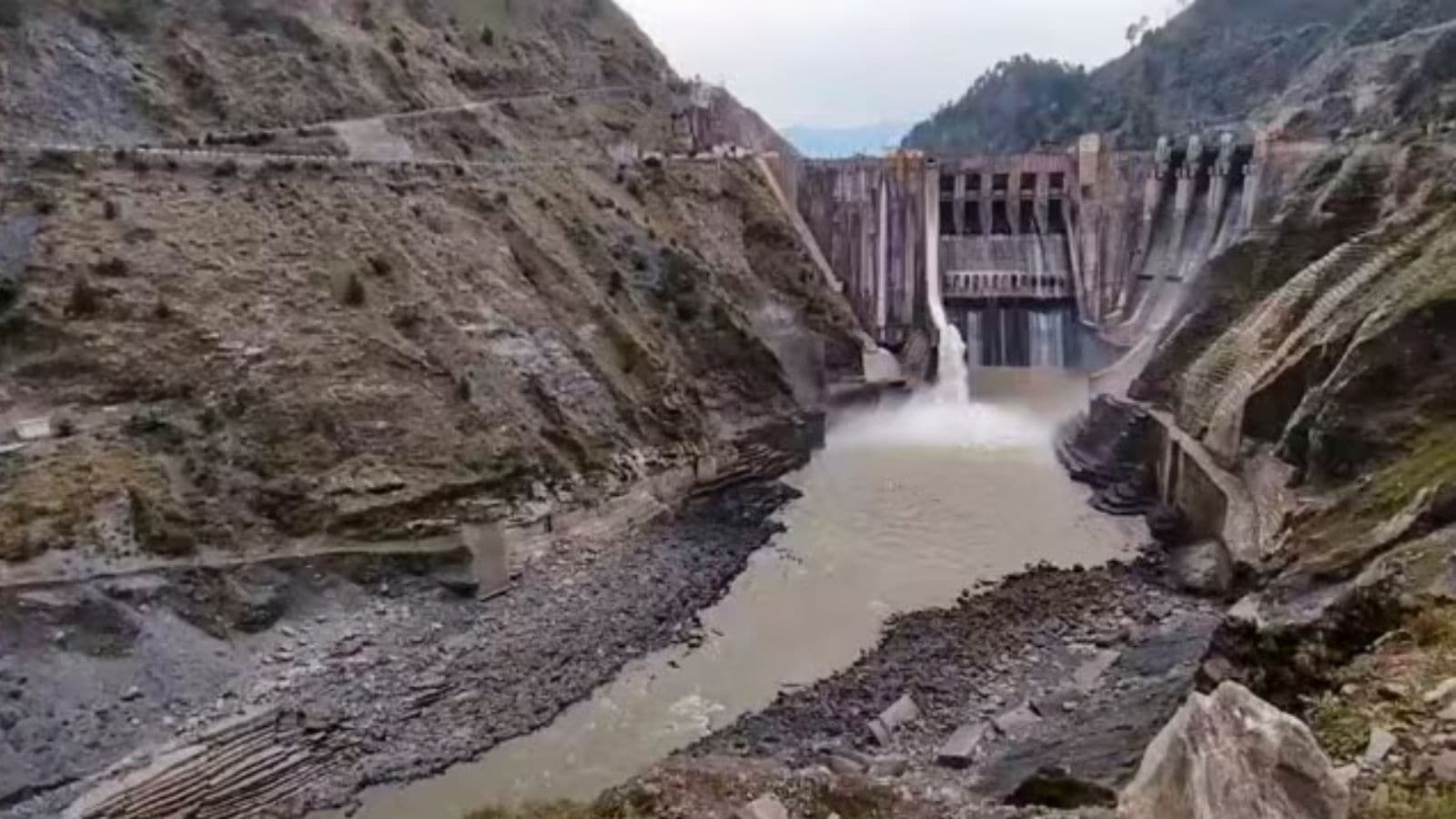
BJP national president J P Nadda on Monday slammed former Prime Minister Jawaharlal Nehru for signing the Indus Waters Treaty (IWT) with Pakistan, terming it 'one of Nehru's biggest blunders'. Nadda also said that Nehru signed the treaty – which was suspended by India in the wake of the recent Pahalgam terror attack – without keeping Parliament in the loop and that the discussion that happened later in the House lasted all of two hours. The IWT was signed between Nehru and then Pakistan President Ayub Khan on September 19, 1960, with the World Bank as a guarantor. The debate on the treaty took place in the Lok Sabha on November 30, 1960. He went on to cite passages critical of the treaty from the Parliament debate. The IWT, brokered by the World Bank, divides the waters of the Indus River system, allocating the eastern rivers (Ravi, Beas, and Sutlej) to India and the western rivers (Indus, Jhelum, and Chenab) to Pakistan. While India controls the eastern rivers, Pakistan gets access to the western rivers, though India can build run-of-the-river hydroelectric projects on the western rivers. Excerpts from the Lok Sabha debate, which lasted just over two hours: The discussion was opened by Akali Dal MP from Ferozepur Sardar Iqbal Singh, who said that Punjab's voice 'was not heard sufficiently despite it being most affected by the treaty'. 'We in Punjab fear that the farmers who depend on these waters may face insecurity. The Centre must ensure that Punjab's interests are fully safeguarded before expecting us to accept this arrangement,' he said. Atal Bihari Vajpayee, then a Jana Sangh MP from Balrampur, also opposed the treaty, saying: 'We have bartered away our rights in the hope that Pakistan would treat us kindly. The government says the World Bank is a guarantor. But can the World Bank guarantee Pakistan's goodwill? This treaty may well become another chapter in the story of our unilateral concessions.' The IWT was not just about water, the future PM said, adding that Pakistan had never reciprocated India's gestures and wondered if the treaty would be any different. Praja Socialist Party (PSP) MP Asoka Mehta argued along the same lines, saying the IWT could not be 'separated from the broader political realities with Pakistan'. Cautioning the government against 'too much sentimentalism in these matters', Mehta added, 'The House must realise that the burden of expenditure is not light. It should not be ignored in enthusiasm… While we support peace with Pakistan, we must remain cautious that sentiment does not override national interest. The PM's optimism is welcome, but Parliament should note the heavy financial burden India has to shoulder.' Ganatantra Parishad MP Surendra Mahanty, urged the government not to be 'carried away by hopes of goodwill and judge agreements with Pakistan with caution'. However, Mahanty added: 'If this Treaty helps our farmers by removing uncertainty, I will not oppose it.' From the Congress's side, the IWT was defended by Nehru and then Irrigation Minister Hafiz Mohammad Ibrahim, apart from MPs A C Guha, B C Mathur and Kalika Singh. Saying that the IWT represents not only an engineering statement but a political settlement of sorts, which gives India a chance to turn a new page, Nehru said, 'I am not at all satisfied with this Treaty in the sense that I should have liked it to be different. But agreements are arrived at by mutual consent, not by one party imposing its will. We could have continued quarrelling indefinitely, but that would have been disastrous for both countries… It is better to have an agreed settlement on a vital matter like water rather than perpetual quarrels. We are not giving away our waters; we are using them in a planned way while ensuring peace and goodwill.' Terming the IWT as 'no small matter', Ibrahim said the treaty would ensure that India got complete control over the waters of the eastern rivers. 'It is not true that Pakistan is being given a gift. They will have to spend hundreds of crores to utilise what has been allocated… This treaty is a great engineering and administrative achievement. It ensures for us a dependable share of waters for generations to come. The World Bank's role as a guarantor strengthens confidence in the execution of works and removal of disputes,' he added. Guha hailed Nehru for his 'vision in ending a long-standing quarrel', and said the objections raised are 'mostly theoretical'. 'We must trust our engineers and planners who assure us that India's requirements are safeguarded,' he said. Mathur said that the treaty was 'not an act of charity', while Kalika Singh said the government had shown 'courage to finalise a matter which was hanging fire for 13 years'. He also urged those opposing the IWT to offer a 'practical alternative'. Swatantra Party's Brijraj Singh said the government should not brush aside the fears of farmers of Punjab and Rajasthan, who were uneasy over the IWT, as 'imaginary'. 'We are asked to believe that this treaty will ensure peace. But peace cannot be bought by surrender.' While acknowledging the merit in the argument that 'certainty was preferable to indefinite conflict (with Pakistan)', Independent MP Krishnaswami said that the cost of the arrangement was 'heavy '.
