


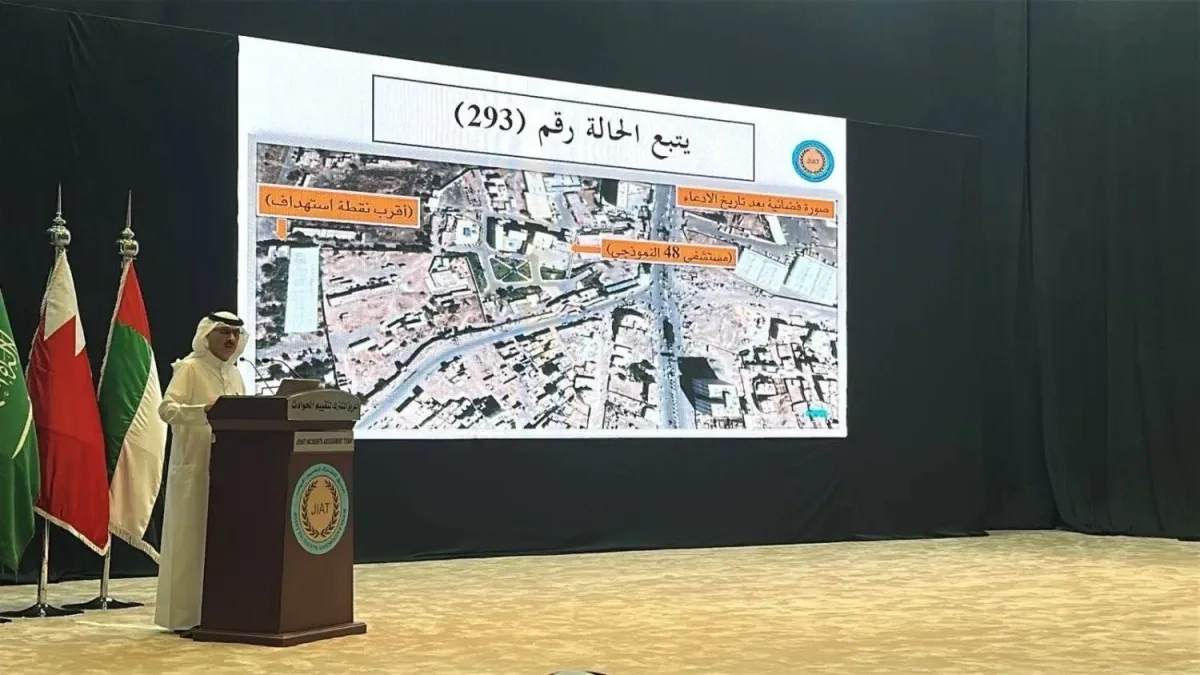
Joint Incident Assessment Team Refutes Four Claims Against Coalition Operations in Yemen
One of the claims addressed was from the Yemeni Human Rights Commission, alleging that Coalition airstrikes targeted the Abyan governorate building in Zinjibar on June 4, 2015. JIAT said field investigations revealed damage consistent with ground fighting, not airstrikes. A review of Coalition air mission records on the date and surrounding days confirmed no operations in the Abyan area, while satellite imagery showed no signs of aerial targeting.
Another claim, issued by the UN High Commissioner for Human Rights on January 18, 2022, accused the Coalition of partially damaging an emergency ward at a hospital in the Al-Sawad area of Sanhan district, Sanaa, during a January 13 airstrike. JIAT found the area hosts the Al-Sawad military camp and the nearby 'Model 48 Hospital,' a site listed on the Coalition's no-strike list.
Intelligence indicated that the camp housed Houthi weapons and drone facilities. A precision strike was carried out at 1:20 a.m. using guided munitions to minimize collateral damage. Satellite imagery confirmed the strike hit its intended target, with the nearest impact point located 210 meters from the hospital—well outside the blast radius.
Regarding a report of a missile allegedly fired from the border near a home in the village of Al-Malahidh, Haydan district, Saada province on February 23, 2020, JIAT confirmed no Coalition artillery or rocket activity occurred in the area. No evidence or impact data supported the claim.
A final allegation stated that an airstrike hit a farm in Al-Watada, Khawlan district, Sanaa, at 1:00 p.m. on March 3, 2021. JIAT said the claim lacked specific coordinates, and a review of operational records showed no air missions in the area during that time frame.
In all four cases, JIAT concluded there was no evidence to support the claims of unlawful Coalition actions.

Try Our AI Features
Explore what Daily8 AI can do for you:
Comments
No comments yet...
Related Articles

Asharq Al-Awsat
 15 hours ago
- Asharq Al-Awsat
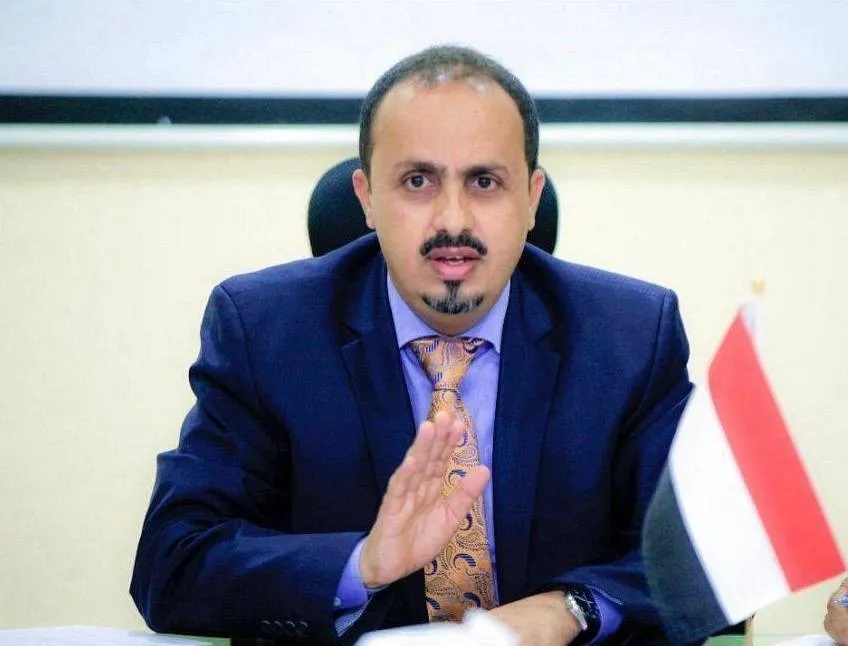
Yemen Minister: Houthis Claiming Support for Gaza to Mask Repression, Looting
Yemen's information minister accused the Iran-aligned Houthi militias of using their rocket launches toward Israel under the banner of 'supporting Gaza' as a propaganda tool to cover up repression and systematic looting of national resources. In an official statement, Moammar al-Eryani said repeated Houthi claims of firing 'hypersonic' missiles at Israel had lost credibility at home and abroad, describing them as 'media stunts' aimed at distracting from internal crises and justifying the militants' abuses against civilians in areas under their control. 'What the Houthis call 'support operations for Gaza' are nothing but a grand lie — a political and media cover for material gain,' Eryani said, adding the militias had amassed more than $103 billion from taxes, levies and confiscated revenues since their 2014 coup, often under the guise of championing the Palestinian cause. He accused the Houthis of imposing new levies on citizens and traders under names such as 'supporting the front' and 'supporting Gaza,' saying the money went to leaders' pockets and to fund their sectarian project, while millions of Yemenis faced hunger, poverty and unpaid salaries. He said the Houthis were also forcing civil servants and students into indoctrination camps under the pretext of preparing to fight Israel and the United States, while in reality recruiting them for their domestic war effort. The minister charged that the 'support for Gaza' slogan had become a tool to suppress dissent, curb freedoms and brand critics as obstructing the cause — a pretext for arrest or harassment. He described the Houthis as an Iranian proxy using the Palestinian issue to extend Tehran's influence after the waning role of Lebanon's Hezbollah. 'The Houthis' practices have only deepened Yemenis' suffering and prolonged the war. They do not support anyone but their sectarian project and Iran's agenda. Their claims of hypersonic missiles provoke only ridicule,' Eryani said. Since November 2023, the Houthis have launched more than 200 missiles and drones toward Israel, killing one person when a drone exploded in a Tel Aviv apartment, but otherwise causing little damage. Israel has retaliated with 13 waves of strikes that destroyed parts of Houthi-held Hodeidah port, energy and cement facilities, Sanaa airport and four civilian planes held there by the Houthis. On Sunday, the Houthis said they had fired a new 'Palestine 2' hypersonic missile at Ben Gurion airport, a claim the Israeli military dismissed, saying the projectile was intercepted without damage. The announcement came hours after Israel struck a power station south of Sanaa. While the Houthis insist their attacks are a 'religious and moral duty' toward Palestine, Yemen's legitimate government says the campaign serves only to justify repression and theft of resources, and to turn the country into a battlefield for Iran's regional ambitions.

Saudi Gazette
2 days ago
- Saudi Gazette
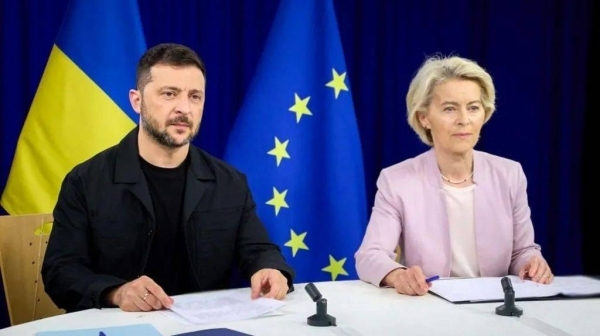
European leaders stress unity with Ukraine ahead of Washington summit
BRUSSELS — Ahead of a landmark meeting of the 'Coalition of the Willing' in Washington on Monday, European leaders reiterated the need for a united front with Ukraine to achieve a robust peace. These European leaders took part in a video call with Ukrainian President Volodymr Zelensky and European Commission President Ursula von der Leyen on Sunday ahead of Monday's talks with US President Donald Trump. Discussions reportedly focused on key matters such as the need to stop the fighting in Ukraine, the commitment to maintain full pressure on Russia through sanctions, the principle that it is up to Ukraine to take decisions on its territory and the need for strong security guarantees to protect both Ukraine and Europe's security interests. Addressing journalists on Sunday evening, French President Emmanuel Macron said: 'The situation ahead of tomorrow's talks in Washington is extremely serious, not only for Ukraine, but also for Europe.' 'If we show weakness today in front of Russia, we are laying the ground for future conflicts,' he said, adding that Ukraine's allies want a strong and lasting peace in Ukraine and for its territorial integrity to be respected. Macron said he supported Trump's desire for peace and underlined that Ukraine must be represented in any talks on Ukraine's future. This sentiment was reaffirmed by Finnish President Alexander Stubb, who said there was 'strong consensus among the Coalition countries on the need to continue supporting Ukraine.' Italian Prime Minister Giorgia Meloni also reiterated her support for Ukrainian security on the eve of the summit in Washington. She said that 'only Ukraine can discuss conditions on its territory.' Czech Prime Minister Petr Fiala said the leaders of the 'Coalition of the Willing' countries agreed that 'clear security guarantees for Ukraine from the United States and Europe will be absolutely essential for further negotiations.' Germany's Foreign Minister Johann Wadephul on Sunday praised the German Chancellor Friedrich Merz and other European leaders planning to accompany Zelenskyy to the White House. "This shows, first, that Germany is playing a leading, moderating and unifying role in this conflict, and second, that Germany stands firmly with Ukraine," he said. "We will not leave President Zelensky alone on this difficult path of upcoming negotiations," Wadephul added. The demonstrations of European support come against the backdrop of remarks by US envoy Steve Witkoff, who said that Russian President Vladimir Putin had signalled new flexibility in Alaska talks with Trump. Witkoff said that Putin agreed to allow the US and its European allies to offer Ukraine a security guarantee resembling NATO's collective defence mandate as part of an eventual deal to end Moscow's ongoing, full-scale invasion. Article 5, at the heart of the 32-member military alliance, states that an armed attack against one or more of the members shall be considered an attack against all members. Though Witkoff offered few details on how such an agreement would work, the news appeared to be a major shift for Putin. — Euronews
Asharq Al-Awsat
11-08-2025
- Asharq Al-Awsat
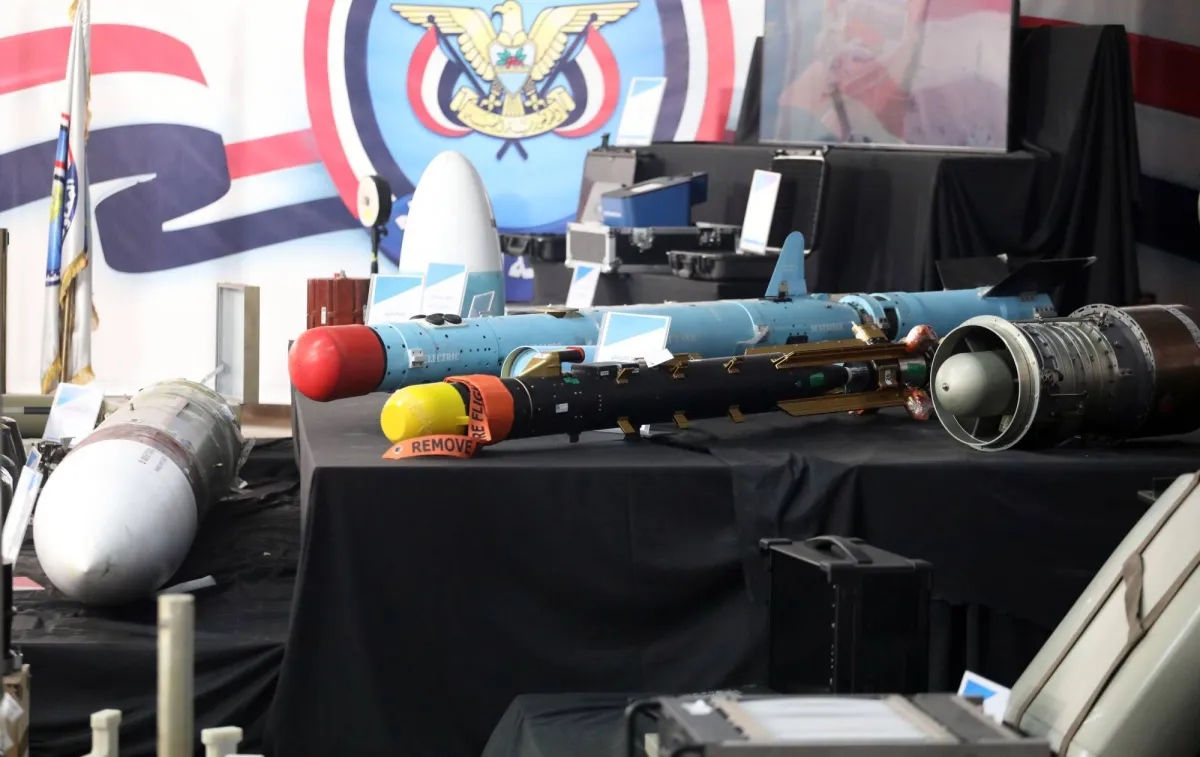
Detained Sailors Reveal Houthi Smuggling Routes from Iran to Yemen
Confessions by detained sailors have revealed the smuggling routes used by the Houthi militants in Yemen to smuggle weapons from Iran. Yemeni forces arrested in July seven people on board a ship they intercepted in the Red Sea. The sailors revealed the details of a significant smuggling network run by Iran's Revolutionary Guards Corps (IRGC) that ran routes through Beirut, Damascus, Somalia and Djibouti to reach the Houthi-held ports of Hodeidah. The confessions were aired by al-Joumhouriya television that is run by the Yemeni national resistance that is based on the western Yemeni coast. Four sailors confessed to smuggling arms shipments from Iran's Bandar Abbas port to Hodeidah. They have been identified as Amer Masawa, Ali Qassir, Issa Qassir and Abdullah Afifi. Masawa revealed that a Houthi official in Hodeidah had tasked him back in 2023 to return a ship from Iran to Yemen. Masawa headed to Houthi-held Sanaa with others where they were granted passports. From there, they boarded a Yemenia Airways flight to the Jordanian capital Amman. From there, they continued on to the Lebanese capital Beirut where a man in his 60s escorted them to an apartment that was ready to receive them. They remained there for three days before being transported by car to the Syrian capital Damascus and from there they flew to Tehran, Iran. In Tehran, a man escorted the travelers to a Houthi camp run by leading Houthi member Mohammed al-Talebi. Yemeni authorities identify him as a Houthi representative of the smuggling network from Iran. After ten days in Tehran, they were flown to Bandar Abbas city where they stayed in a villa owned by Talebi who explained to them their mission. Soon after, they were joined by ten Somali sailors. Oman route The second sailor, Ali Qassir, recalled how he was recruited by people affiliated with a Houthi official at Hodeidah's al-Salif port, Hussein al-Attas, to bring a ship from Iran to Yemen. Ali Qassir and others were taken to the Jowf province east of Sanaa where they met with another smuggler who escorted them along a desert route through Jawf, Marib and Hadramawt to the al-Mahra province bordering Oman. At the Sarfait border crossing, a smuggler escorted them to Oman where another person took them to Salalah city. Three days later, they were transported to Muscat where they were flown to Bandar Abbas. They were taken to a camp run by the Houthis and where they joined their fellow sailors, as well as the ten Somalis. Talebi then set about explaining their missions. Issa Qassir, Ali's brother, said they were divided into two groups to sail with the illegal cargo back to Yemen. They were informed that they were transporting children's toys, power generators and boxes of cancer treatment, which they were instructed must remain refrigerated. As they sailed off the Omani coast, their vessel broke down. They contacted Omani authorities that transported them to Muscat, where they stayed for ten days until the ship was repaired, after which they headed to Yemen. A third sailor said the people on the ship were unaware of the true nature of the cargo they were carrying, assuming it was battering and construction equipment. The coastguard eventually stopped their vessel and boarded it to discover the illegal shipment that included rockets and other weapons. Further confessions revealed that the IRGC used three smuggling routes from Iran. The first was a direct route from Bandar Abbas to al-Salif, the second ran through Somalia and the third through Djibouti to al-Salif. The sailors revealed that international patrols in the Gulf of Aden and Red Sea never intercepted their vessels. While sailing at night, they would cross the Bab al-Mandeb Strait and sail west of the international shipping route to avoid detection by Yemen's coastguard and national resistance.
