


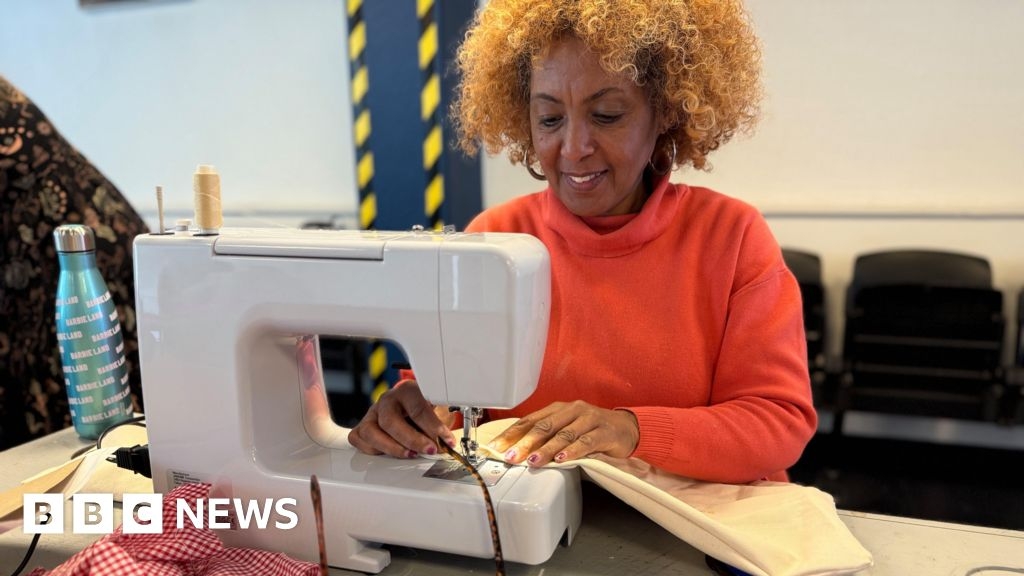
Sewing classes offered by social enterprise to empower women
It was founded by Poornima Kirloskar-Saini as a way for women to develop tailoring and enterprise knowledge."I thought it would be great to give them some skills so that they could look at saving money, reducing debt, and possibly looking at an avenue of income generation," she explains."But what I also realised is that some women from some ethnic minority backgrounds have very fixed traditional roles in the household unit, and the women are the main caregivers, not just for children, but for older members of the family, and the men are the main providers. "So I thought if I were to upskill them, it would be some kind of skill that they could do at home. So I thought of tailoring".
Her social enterprise runs several programmes, including a "make and mend" course, and a more advanced "alterations and upcycling" class."Our main thing was to help them save money and reduce debt. But along the way, we've also had a lot of positive mental health outcomes, social integration, lifelong friendships," says Poornima.Of the 150 women to have been part of the programme so far, 15 have taken what they've learned and started their own microbusinesses.Some make products which they can then sell in local markets, or they carry out alterations and repair services. Others go into offices and workplaces to offer the alteration services, and get paid directly by customers.
"We had the pandemic, then we had the cost of living, crisis, energy bills, so it just helps them feel a bit more comfortable with their financial situation," says Poornima. As well as being a way to earn an income, the sewing skills have also helped the women reduce their spending, according to Poornima."Women from ethnic minority backgrounds normally like to wear ethnic clothes for festivals, and it's really expensive to get those clothes and to alter them, because invariably, if you get them off the shelf, you know the trousers may be too long for your child. "So anecdotally, the women who've been through our programmes have told me that they've saved hundreds of pounds"
One of those to have been helped by Kundakala is Maggie Oparebea who started a sewing programme two years ago and believes it has really helped her."I can do make-up bags and I sell them. I can do repairs," she says."People call me [about making alterations] then I can charge them and I have money in my pocket."
Poornima says that her social enterprise is all about putting women on a path of education and empowerment - something she calls her life's work."Just getting a skill improves their self-esteem, improves their confidence. Some of the ladies who participate in our programs have had no formal learning, and this sets them on the path to getting more skills, more confidence, and therefore more self-esteem. "And then they become role models for their kids, their sons and their daughters."
Hashtags

Try Our AI Features
Explore what Daily8 AI can do for you:
Comments
No comments yet...
Related Articles

Daily Mail
 3 minutes ago
- Daily Mail
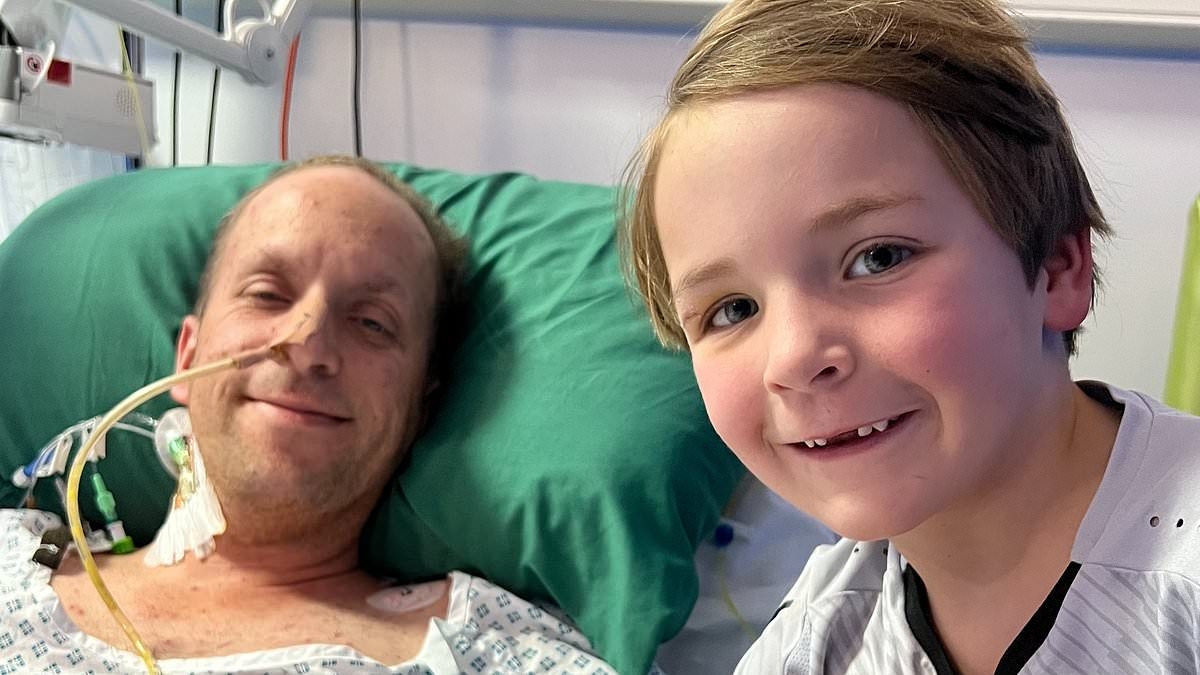
Father-of-two, 39, thought stomach pain was from 'dodgy sausage' at BBQ... but it was colon cancer - doctors gave him 'months to live'
The first sign something was wrong for Matt Eamer came just days after a family barbeque, celebrating his son's second birthday. The then 39-year-old father-of-two from Redhill, Surrey, dismissed the sudden 'spiky' stomach pain as food poisoning. 'I was speaking to work colleagues over the first week or two and thought I'd cooked a dodgy sausage,' he said. But his pain escalated quickly. After a rushed trip to A&E he was sent home with anti-nausea medication Buscopan, yet still felt dreadful. His wife Sarah, 41, a doula, took him to East Surrey Hospital where scans revealed a 'big blockage' in his large intestine. Surgeons removed two-thirds of his bowel in an emergency op. 'A few days later they confirmed it was cancer,' Matt said. The diagnosis was stage four bowel cancer. The disease had already spread to his liver and the lining of his abdomen, and further tests revealed a rare BRAF mutation which drives tumours to grow at speed. 'I can still remember the person's voice when she phoned and said, "the plan for your diagnosis has changed… we're talking months not years from a survival point of view",' Matt recalled of the events in September 2020. On his 40th birthday he was told standard chemotherapy had failed and surgeons found the cancer had advanced further. 'It was a very dramatic, movie-like point,' he said. 'It was a pivotal change. They said, "we've gone in, it's gone further, we're going to try these new drugs." My wife Sarah collapsed to the floor.' Matt began fortnightly Cetuximab infusions combined with four daily Encorafenib pills, new immunotherapy drugs approved just months earlier. Designed to buy only 'three to six months', they had a remarkable effect. Within six months, scans showed no trace of cancer. Five years on, he is still clear and continues treatment. 'Hitting five years with stage four is a rarity,' he said. 'You're not on your death bed but you're forced to think about how you spend your time.' In December 2024, he underwent a 14-hour surgery to remove cancerous tissue in his ribcage, followed by heated HIPEC chemotherapy. The disease had already spread to his liver and the lining of his abdomen, and further tests revealed a rare BRAF mutation which drives tumours to grow at speed. Again, scans showed 'things clear.' Matt, who runs his own design agency, continues working and raising his two children. 'The reality is younger people are able to deal with treatments better and live longer, better lives even if it is stage four,' he said. He adds: 'The reality is the 'bucket and spade things', the little moments. I spend more time looking at my kids' faces, taking them to a show or swimming in the sea — they are heightened. 'It means your ability to be present and focus upon what matters is heightened.' To mark five years since his diagnosis, Matt will join Sir Chris Hoy's charity cycle in Glasgow on September 7, raising funds for Bowel Cancer UK. 'It's marking a milestone in a meaningful, positive way,' he said. Bowel cancer, also known as colorectal cancer, is one of the most common cancers in both Britain and the United States. In the UK around 43,000 people are diagnosed every year, while in the US the figure is more than 150,000. It is the third most common cancer worldwide and the second leading cause of cancer deaths. In older age groups incidence is declining thanks to better screening and awareness, yet in younger people rates are rising sharply, a trend baffling doctors. In England cases among those aged 25 to 49 have surged by around 3.6 per cent per year, one of the steepest increases in Europe, while in America rates in under-50s have been rising by about 2.4 per cent annually over the past decade. Outcomes depend heavily on how early the disease is caught. In the UK one-year survival is around 97 per cent if picked up through screening, but just 49 per cent if discovered in an emergency admission, as was the case for Matt. In the US five-year survival is 92 per cent at stage one but only 13 per cent at stage four. Most people with a diagnosis as advanced as Matt's do not reach the five-year mark, making his story unusual. Risk factors include family history, inflammatory bowel disease, obesity, alcohol, smoking, and diets low in fibre and high in red or processed meats. Researchers are also examining the role of ultra-processed foods, though evidence remains inconclusive, and some studies point to gut bacteria toxins such as colibactin, found in food poisoning, as a possible trigger for early-onset cases. Screening programmes remain vital. In the US guidelines now recommend testing from age 45, while in the UK stool tests are currently offered from 56, with pilot schemes lowering the age to 50. Symptoms to watch for include persistent changes in bowel habits, blood in stools, unexplained weight loss, abdominal pain or bloating, and lumps in the abdomen. Doctors stress that catching the disease early saves lives. Patients diagnosed at stage one are several times more likely to survive long term than those at stage four. But as Matt's case shows, advances in treatment—from new targeted drugs to more effective surgery—are beginning to change what is possible, even in the most serious cases. For him, the experience has redefined life. 'The reality isn't bucket-list dolphins—it's the bucket and spade things,' he said.


BBC News
3 minutes ago
- BBC News
Final £1 coins bearing face of late Queen Elizabeth II enter circulation
The last batch of £1 coins bearing the face of the late Queen Elizabeth II is entering circulation, with more than 23 million of them destined for tills and people's pockets. The Royal Mint said the release of the final Elizabeth II coins, dated 2021 and 2022, marks "a pivotal moment in British coinage history".Alongside them, a further 7.5m new King Charles III coins are also entering face has been seen on UK coins since 2023, but only on £1 and 50p denominations so far. Rebecca Morgan, director of commemorative coin at the Royal Mint, said: "As we release more of the King Charles III £1 coins into circulation alongside the final coins of Queen Elizabeth II, we're witnessing the physical representation of our monarchy's transition." She said she hoped finding the new coins in your change could "spark a rewarding hobby" for some, with the Royal Mint encouraging people to check to see if they receive any in the coming weeks. While the coins were struck up to four years ago, they are being issued now because of demand for £1 coins, the Royal Mint said. The 2022 coins will become the rarest in circulation, they added, with 7.735 million of those being released. There are about 24.7 billion coins in circulation across the UK, with the King's coins currently only making up 0.004% of those. Some 2.975 million £1 coins featuring the King were released last August by the Royal Mint, based in Llantrisant, Rhondda Cynon Taf. They feature an intricate bee design on the tails side, representing his love of nature. They are one of eight new designs that will eventually appear on the nation's coins, from the 1p to the £2. The country's flora and fauna will feature on them all, with animals including the red squirrel, puffin and dormouse they are the same size and shape as previous coins, the new designs feature larger numbers to help children identify figures and learn to count. The change of design followed the death of Queen Elizabeth in September 2022, and the accession to the throne of the new King. All UK coins featuring the late Queen's profile remain legal tender and in active circulation, alongside her son's coins. In general, coins usually last 20 years - so the Queen Elizabeth and King Charles coins will be in circulation together for some time to Royal Mint has made the circulating coinage of each of Britain's monarchs since Alfred the Great.


The Independent
18 minutes ago
- The Independent
Type 2 diabetes patients set for major shake-up in care
People with type 2 diabetes in England are to get the biggest shake up of care in a decade which could see them offered treatments, including jabs that aid weight-loss, sooner. The health service should move from a one-size-fits-all approach of starting everyone on the same medication, to more personalised care that aims to prevent complications like heart failure and heart attacks, according to new draft guidance from the National Institute for Health and Care Excellence (Nice). This includes making newer type 2 diabetes drugs, known as SGLT-2 inhibitors, a first-line treatment option in a move that could eventually help save tens of thousands of lives. SGLT-2 inhibitors, which include canagliflozin, dapagliflozin, empagliflozin, and ertugliflozin, are once-a-day tablets that reduce blood sugar levels by helping the kidneys remove glucose, which is passed from the body through urine. However, analysis by Nice found these drugs are under-prescribed. The new guidelines recommend patients who cannot tolerate metformin – the first-choice in type 2 diabetes medication – should start with an SGLT-2 inhibitor on its own. The decision comes after evidence suggested these drugs protect the heart and kidneys as well as controlling blood sugar, Nice said. It is estimated the change could save almost 22,000 lives once uptake reaches 90% of the population. Nice also suggests some groups of patients would also benefit from GLP-1 receptor agonists such as liraglutide or semaglutide sooner, rather than keeping them for the later stages of treatment. Semaglutide, sold under the brand name Ozempic, is licensed in the UK to treat type 2 diabetes, while its other brand – Wegovy – is also used by the NHS to help obese people lose weight. Professor Jonathan Benger, deputy chief executive and chief medical officer at Nice, said: 'This guidance means more people will be offered medicines where it is right to do so to reduce their future risk of ill health. 'This represents a significant evolution in how we approach type 2 diabetes treatment. 'We're moving beyond simply managing blood sugar to taking a holistic view of a person's health, particularly their cardiovascular and kidney health. 'The evidence shows that certain medicines can provide important cardiovascular benefits, and by recommending them as part of initial treatment, we could help prevent heart attacks, strokes and other serious complications before they occur. 'This is particularly important given that cardiovascular disease is the leading cause of death in people with type 2 diabetes.' Around 4.6 million people in the UK are living with diabetes, with nine in 10 of those having type 2. However, it is estimated that a further 1.3 million people may have undiagnosed type 2 diabetes. Nice analysed the records of 590,000 people and found SGLT-2 inhibitors are under-prescribed, particularly to women, older people, and black patients. Prof Benger added: 'The evidence from our analysis is clear. There are prescribing gaps that need to be addressed. 'The guideline update published today will help to increase equitable uptake of SGLT-2 inhibitors, which we know can prevent serious health complications.' Dr Waqaar Shah, chairman of the guideline committee, added: 'We know that SGLT-2 inhibitors are currently under-prescribed, and our health economics analysis shows that people living in the most deprived areas would particularly benefit from universal access to these treatments. 'These recommendations could help reduce health inequalities while providing better outcomes for everyone.' Elsewhere, the draft guidance suggests different treatments for diabetes patients with certain characteristics or health conditions. These include adults with cardiovascular disease, who should be offered a triple therapy including a GLP-1 receptor agonist. Meanwhile, adults diagnosed with type 2 diabetes before 40 should be offered dual therapy before a GLP-1 receptor agonist is considered, while patients with chronic kidney disease should have tailored recommendations based on their kidney function. A public consultation on the new Nice guidelines is open until October 2. Douglas Twenefour, head of clinical at Diabetes UK, said: 'This long-awaited announcement propels type 2 diabetes treatment into the 21st century. 'Boosting access to newer treatments will be transformative for people with type 2 diabetes, while ensuring the UK keeps pace with the global momentum in treating the condition. 'The majority of people with type 2 diabetes are not currently taking the most effective medication for them, putting them at risk of devastating diabetes-related complications. 'Diabetes is a leading cause of cardiovascular disease, and tailoring treatment based on individual risk could protect thousands against heart attacks and kidney disease. 'These guidelines could go a long way to easing the burden of living with this relentless condition, as well as helping to address inequities in type 2 diabetes treatments and outcomes.'
