



Newly-elected Seventh-day Adventist Church leader reflects on challenges and faith's healthy living
Köhler will serve as the spiritual and administrative leader for the global movement, which claims 23 million members in more than 200 countries. He was voted into the position during a recent gathering of the General Conference, the denomination's top governing body, in St. Louis.
The church's sprawling geographic reach poses just one of the hurdles ahead in his duties as president, especially with today's political polarization and national allegiances, Köhler said in an interview with The Associated Press.
'If I can choose one word that represents the challenge of this moment, the word is 'unity,'' he said. 'It's not easy to keep that unity because our members, they're citizens, they're living in the local society, they're influenced by that.'
The Seventh-day Adventist Church is a Protestant denomination that views the Bible as the literal word of God and the primary authority for Adventists. They are known for their beliefs that Christ's second coming is near, and that the Bible requires observing the Sabbath on Saturday, the seventh day of the week.
Just days into his new role, Köhler shared his hopes for the future, including his plans to use technology and social media to reach young people. He also reflected on how the faith's spiritual focus on healthy living resonates with many today and other issues facing the church.
What is the role of the president?
Köhler explained his job like holding a puzzle together and compared it to that of another recently elected church leader with South American ties, Pope Leo XIV, the Catholic Church's first U.S.-born pontiff who has dual Peruvian citizenship.
'I'm not the pope of the church. I'm a pastor. We don't have a leadership that's vertical, that we can decide something and impose that for everyone,' Köhler said, noting the denomination's various levels of authority.
'We respect those voices. We receive suggestions from other levels, we discuss it; we discuss how to implement it together. My role is to try to keep all this puzzle together in a positive way.'
What are his priorities as the new leader?
Köhler wants to see more young people involved in the church, more women involved in leadership and more investment in communication and technology to advance its mission.
He also wants to focus on continuing to spread the reach of the church, which is especially growing in parts of Africa and Latin America.
'No. 1, I'd like to see more young people involved in the church activities, sometimes in leadership, sometimes sharing their opinions, their ideas, sometimes in the local community,' said Köhler.
In addition to the church's emphasis on the Sabbath, Köhler also thinks Adventists' long-standing focus on healthy living can appeal to younger generations.
Many church members are vegetarians and abstain from alcohol and tobacco as part of their spiritual discipline. Adventists also run a large network of hospitals and health clinics worldwide, and many church members go into the medical field.
'The new generation is looking for health, beauty. They're taking care of their bodies,' Köhler said. 'We have a message to show to them that we're not only an institutionalized religion, we're a body of believers that trust in the Bible with a message that can make our lives better.'
For women in leadership, Köhler said he's not opening discussion of women's ordination, an issue that in 2015 then-Republican presidential candidate and Adventist Ben Carson said he supported.
'It's not the moment to do that,' Köhler said. But he acknowledged that Adventist women 'deserve more presence in leadership,' and 'their voice needs to be heard.'
The faith was influenced by the visions of Ellen White, who is considered a prophet. Her extensive religious writings, while deeply influential in shaping the church, are not given the same weight as Scripture. Today, the denomination says women's leadership is present at high levels of the church — in health care, education and administration — and also includes community service and the leadership of women's ministries.
On technology and communication, Köhler said he is a strong defender of both because he sees them as ways to reach people wherever they are.
'If our call is to ministry to the people, we need to be where they are, especially the new generations. And the new generation now are in social media,' he said.
What are some of the religious freedom concerns facing the church?
Formed in 1863 in Battle Creek, Michigan, the Seventh-day Adventist Church prioritizes protecting religious freedom for all.
'The biggest challenge for us now is freedom of expression. … We'd like to be protected in our right to express what we believe,' Köhler said.
'The society today, and sometimes the media, is supporting too much one side of some topics, and the religious leaders, the religious organizations, they have no voice to express what they think in a kind way, in a respectful way.'
Köhler attributes this partly to some Christian denominations that are 'being very strong and aggressive in some matters.' Adventists, he said, must continue to fight to protect the right to express their opinions and beliefs in a positive way.
What is his message to those unfamiliar with the Seventh-day Adventist Church?
'Sometimes people present our denomination based on some elements that are strange for others, and they think that we're people from another planet,' Köhler said. 'We're human beings. We're here to serve, we're here to love, we're here to make a difference."
He invites people to come meet members and experience the church themselves.
'Come to talk with us, come to visit us, interact with us,' he said. "They'll know who we are, and they can see how we can make a difference in a positive way for their present life and for their future life.'
___
Hashtags

Try Our AI Features
Explore what Daily8 AI can do for you:
Comments
No comments yet...
Related Articles

San Francisco Chronicle
 2 minutes ago
- San Francisco Chronicle
Ranger fired for hanging transgender flag in Yosemite and park visitors may face prosecution
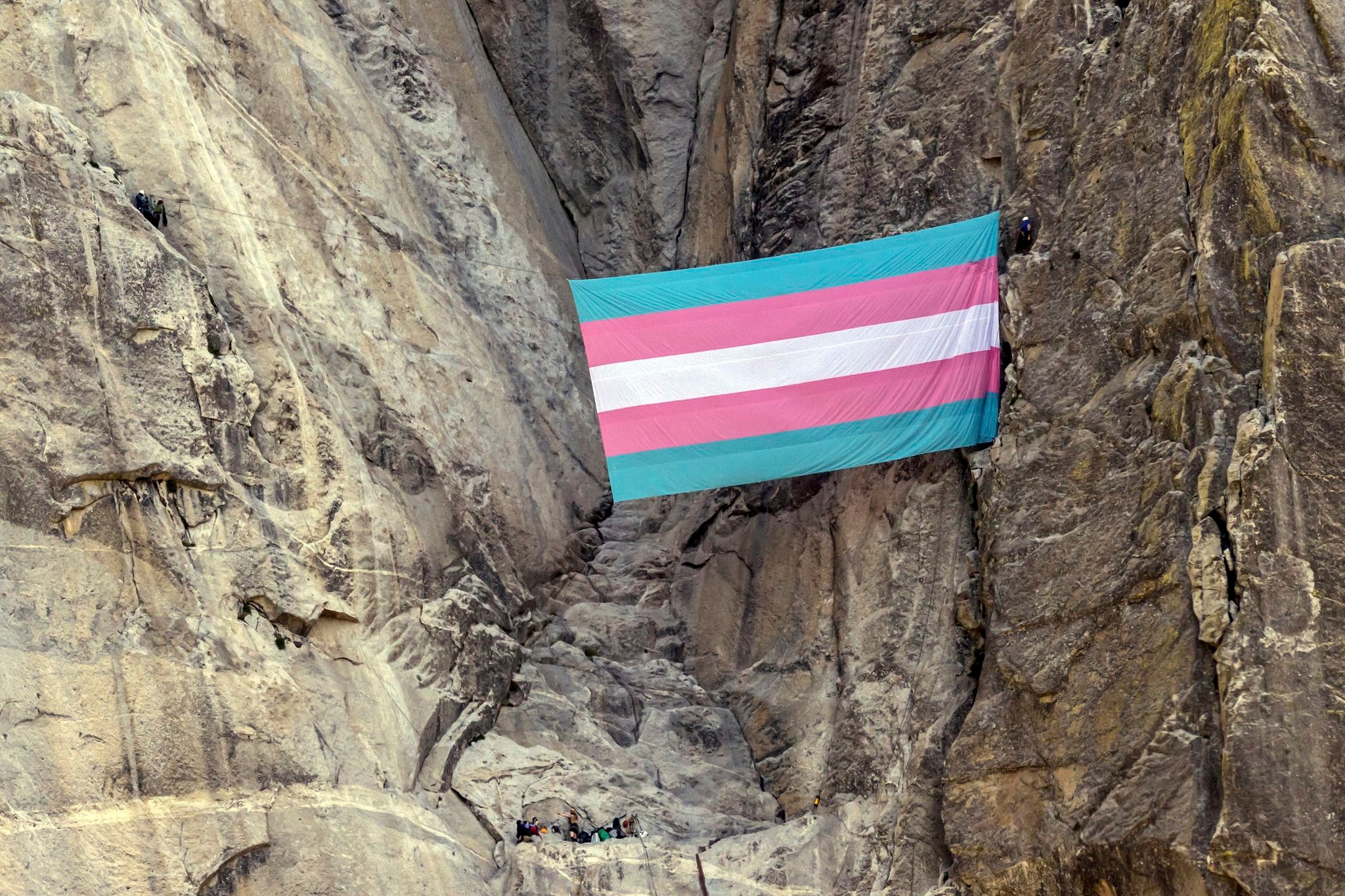
FILE - A group of climbers unfurl a trans pride flag on El Capitan in Yosemite National Park, Calif., on May 20, 2025. (Carlos Avila Gonzalez/San Francisco Chronicle via AP, File) Carlos Avila Gonzalez/AP A group of people, including Shannon Joslin, a Yosemite National Park ranger and biologist who was fired, hang a transgender flag on El Capitan in Yosemite National Park, Calif., May 20, 2025. (Mitchell Overton via AP) Mitchell Overton/AP Yosemite visitors view El Capitan, where a transgender flag hangs in Yosemite National Park, Calif., May 20, 2025. (Jayce Kolinski via AP) Jayce Kolinski/AP A group of people, including Shannon Joslin, a Yosemite National Park ranger and biologist who was fired, hang a transgender flag on El Capitan in Yosemite National Park, Calif., May 20, 2025. (Mitchell Overton via AP) Mitchell Overton/AP A transgender flag hangs on El Capitan in Yosemite National Park, Calif., May 20, 2025. (Jayce Kolinski via AP) Jayce Kolinski/AP A Yosemite National Park ranger was fired after hanging a pride flag from El Capitan while some visitors face potential prosecution for alleged violations of protest restrictions that have been tightened under President Donald Trump. Shannon 'SJ' Joslin, a ranger and biologist who studies bats, said they hung a 66-foot wide transgender pride flag on the famous climbing wall that looms over the California park's main thoroughfare for about two hours on May 20 before taking it down voluntarily. A termination letter they received last week accused Joslin of 'failing to demonstrate acceptable conduct" in their capacity as a biologist and cited the May demonstration. 'I was really hurting because there were a lot of policies coming from the current administration that target trans people, and I'm nonbinary,' Joslin, 35, told The Associated Press, adding that hanging the flag was a way to 'tell myself ... that we're all safe in national parks.' Advertisement Article continues below this ad Joslin said their firing sends the opposite message: "If you're a federal worker and you have any kind of identity that doesn't agree with this current administration, then you must be silent, or you will be eliminated.' Park officials on Tuesday said they were working with the U.S. Justice Department to pursue visitors and workers who violated restrictions on demonstrations at the park that had more than 4 million visitors last year. The agencies "are pursuing administrative action against several Yosemite National Park employees and possible criminal charges against several park visitors who are alleged to have violated federal laws and regulations related to demonstrations," National Park Service spokesperson Rachel Pawlitz said. Joslin said a group of seven climbers including two other park rangers hung the flag. The other rangers are on administrative leave pending an investigation, Joslin said. Flags have long been displayed from El Capitan without consequences, said Joanna Citron Day, a former federal attorney who is now with the advocacy group Public Employees For Environmental Responsibility. She said the group is representing Joslin, but there is no pending legal case. Advertisement Article continues below this ad On May 21, a day after the flag display, Acting Superintendent Ray McPadden signed a rule prohibiting people from hanging banners, flags or signs larger than 15 square feet in park areas designated as 'wilderness' or 'potential wilderness.' That covers 94% of the park, according to Yosemite's website. Parks officials defend restriction on protests Parks officials said the new restriction on demonstrations was needed to preserve Yosemite's wilderness and protect climbers. 'We take the protection of the park's resources and the experience of our visitors very seriously, and will not tolerate violations of laws and regulations that impact those resources and experiences,' Pawlitz said. It followed a widely publicized instance in February of demonstrators hanging an upside down American flag on El Capitan in the wake of the firing of National Park Service employees by the Trump administration. Advertisement Article continues below this ad Among the small group of climbers who helped hang the flag was Pattie Gonia, an environmentalist and drag queen who uses the performance art to raise awareness of conservation issues. For the past five years, Gonia has helped throw a Pride event in Yosemite for park employees and their allies. She said they hung the transgender flag on the granite monolith to drive home the point that being transgender is natural. Trump has limited access to gender-affirming medical treatments, banned trans women from competing in women's sports, removed trans people from the military and changed the federal definition of sex to exclude the concept of gender identity. Gonia called the firing unjust. Joslin said they hung the flag in their free time, as a private citizen. 'SJ is a respected pillar within the Yosemite community, a tireless volunteer who consistently goes above and beyond," Gonia said. Jayson O'Neill with the advocacy group Save Our Parks said Joslin's firing appears aimed at intimidating park employees about expressing their views as the Trump administration pursues broad cuts to the federal workforce. Advertisement Article continues below this ad Since Trump took office, the National Park Service has lost approximately 2,500 employees from a workforce that had about 10,000 people, Wade said. The Republican president is proposing a $900 million cut to the agency's budget next year. Parks have First Amendment areas Pawlitz said numerous visitors complained about unauthorized demonstrations on El Capitan earlier in the year. Many parks have designated 'First Amendment areas' where groups 25 or fewer people can protest without a permit. Yosemite has several First Amendment areas, including one in Yosemite Valley, where El Capitan is located. Park service rules on demonstrations have been around for decades and withstood several court challenges, said Bill Wade, executive director of the Association of National Park Rangers. He was not aware of any changes in how those rules are enforced under Trump. Advertisement Article continues below this ad ___ Associated Press journalist Brittany Peterson contributed reporting from Denver.


NBC News
33 minutes ago
- NBC News
Syria's top diplomat and an Israeli delegation meet in Paris as US pushes for normalizing ties
BEIRUT — Syria's foreign minister held a rare direct meeting with an Israeli delegation in Paris on Tuesday, talks that were brokered by the United States as part of a diplomatic push for Syria and Israel to normalize relations despite a recent surge in tensions between them. Syria's state-run SANA news agency said Foreign Minister Asaad al-Shibani met with Israeli officials to discuss de-escalating tensions and restoring a 1974 ceasefire agreement — a deal that established a demilitarized separation zone between Israeli and Syrian forces and stationed a U.N. peacekeeping force to maintain calm. The statement gave no details on the outcome of the Paris meeting. But a senior Trump administration official, who was not authorized to comment publicly on the matter, confirmed the talks. 'The United States continues to support any efforts that will bring lasting stability and peace between Israel and its neighbors,' the official told The Associated Press, adding that the backing follows President Donald Trump's outlined 'vision of a prosperous Middle East' that includes a 'stable Syria at peace with itself and its neighbors — including Israel.' 'We want to do everything we can to help achieve that,' the official added. The long road to normalization In the past, Syrian officials have acknowledged holding indirect talks with Israel to defuse tensions, but this was the first time they acknowledged taking part in direct negotiations. There was no immediate confirmation of the meeting from Israel. Tensions have soared between the two neighbors following the overthrow of Syrian President Bashar Assad in December in a lightning rebel offensive led by Islamist insurgents. Shortly after Assad's overthrow, Israeli forces seized control of the U.N.-patrolled buffer zone in Syria set up under the 1974 agreement and carried out airstrikes on military sites in what officials said was aimed at creating a demilitarized zone south of Damascus. Israel has said it will not allow hostile forces to establish themselves along the frontier, as Iranian-backed groups did during Assad's rule. It distrusts Syria's new government, which is led by former Islamist insurgents. Syrian President Ahmad al-Sharaa, a former al-Qaida commander who severed ties with the militant group years ago, has pledged to build a new country that respects the rights of minorities, but sectarian violence has erupted on a number of occasions, raising concerns about Syria's fragile transition. Sectarian clashes and Druze grievances Israel stepped up its intervention when violence erupted in Syria's Sweida province last month between Bedouin clans and government forces on one side and armed groups from the Druze religious minority on the other. During the fighting, some government forces allegedly killed Druze civilians, including a medical worker in a hospital in Sweida — an incident that was caught on video — and a U.S. citizen. Other videos circulating online have shown fighters forcibly shaving the mustaches off Druze sheikhs, or religious leaders, and stepping on Druze flags and photographs of religious clerics. The Syrian government has said it is investigating the allegations. The conflict then prompted airstrikes against Syrian forces by Israel before a truce — mediated by the U.S., Turkey and Arab countries — halted most of the fighting. Israel said it was acting to protect the Druze, who are seen as a loyal minority in Israel and often serve in the military. Israel launched dozens of airstrikes on convoys of Syrian forces around Sweida and struck the headquarters of the Syrian Ministry of Defense in the heart of Damascus, Syria's capital. Israel seized the Golan Heights from Syria in the 1967 Mideast war and later annexed the strategic plateau in a move that has only been recognized by the United States. The rest of the international community views the Golan as occupied Syrian territory. A US envoy holds talks Earlier on Tuesday, U.S. envoy to Syria Tom Barrack posted on X that he had held a 'warm and informative meeting' with Moafaq Tarif, the spiritual leader of Druze in Israel, and that the two discussed 'how to bring together the interests of all parties, de-escalate tensions, and build understanding.' Tarif described the meeting as 'excellent' and said the Druze want American assistance with an end to the blockade of Sweida and humanitarian aid for the people there, the return of the Druze who were kidnapped during the fighting, as well as American assurances of Druze security. Though the fighting has largely calmed down, Syrian government forces have surrounded the southern city of Sweida, named after the province, and the Druze have said that little aid is getting in, describing the situation as a siege. While the Druze in Syria have historically been wary of Israel, an increasing number are now open to seeking Israeli assistance. Hundreds demonstrated in Sweida on Saturday to demand the right to self determination for the Druze minority, with some protesters waving Israeli flags. Videos and photos of the spectacle circulating on social media sparked outrage from many other Syrians, who accused the protesters of being traitors. The Associated Press
Yahoo
an hour ago
- Yahoo
US agrees to talks with Brazilian WTO delegates on tariffs
The United States has agreed to Brazil's request to enter talks with the World Trade Organization (WTO) to discuss the 50 percent tariffs imposed by Washington, according to a recent letter. Brazil approached the global trade body in early August after President Donald Trump raised duties on more than a third of US-bound exports from the Latin American powerhouse, including key items like coffee, beef and sugar. Trump hit Brazil with some of his highest tariff rates as punishment for what he calls a "witch hunt" against his ally, former far-right president Jair Bolsonaro, who is on trial for allegedly plotting to attempt a coup. "The United States accepts the request of Brazil to enter into consultations," read a letter dated August 15 from the Washington WTO delegation and published on the organization's website. "We stand ready to confer with officials from your mission on a mutually convenient date for consultations," it continued. The US letter cautioned that some of the issues raised by Brazil "are issues of national security not susceptible to review or capable of resolution by WTO dispute settlement." The WTO consultation process involves seeking a negotiated solution before moving into arbitration. Trump's tariff order also charged that the Brazilian government's recent policies and actions threatened the US economy, national security, and foreign policy. Unlike most countries targeted by Washington's reciprocal tariffs, the United States runs a trade surplus with Brazil, not a deficit. jss/nn/jgc/sla
