



Fergie's heartbreaking admission about devastating double cancer diagnosis
Fergie has admitted her mind went to "dark places" as a "bomb went off in her life" following a double cancer diagnosis. T he Duchess of York was first diagnosed with breast cancer in 2023 and then skin cancer the next year.
Now she is using her experience to back a campaign warning the government against neglecting teenagers with cancer in its upcoming national health plans for the disease. The ex-wife of the Duke of York has signed an open letter to Health Secretary Wes Streeting calling for faster diagnoses, better access to clinical trials and improved mental health support for young people with cancer.
Writing in The Times, Sarah added that her cancer diagnoses felt like a "bomb going off in my life". She also said that while she received support, many young people were left "to struggle alone with the dark thoughts".
And now the duchess said health policies which fail to take teenagers with the disease into account can have 'devastating' and 'tragic' consequences.
She wrote: "I have gone through two diagnoses. It's incredibly important to me to seek to amplify the voices and experiences of people with cancer who receive less attention, whose voices are not listened to and who can be overlooked.
"One group consistently neglected by those developing health plans and policies is teenagers and young adults with cancer. The impact can be devastating."
Fergie backed the Teenage Cancer Trust's campaign #AndYoungPeople on Wednesday and signed an open letter to Mr Streeting asking for teenagers to be considered in the national cancer plan for England. The Duchess, who has been a patron of the charity for many years, wrote: "As most cases of cancer occur in people over 50, they find themselves in a system that isn't designed with young people in mind and continue to suffer huge disadvantages."
She also told of speaking to teenagers who had been 'fobbed' off by health professionals despite presenting multiple symptoms, adding: "The consequences can be tragic."
The Department of Health and Social Care launched a call for evidence to help shape a national cancer plan in February. The blueprint, which is expected later this year, will aim to transform cancer care by improving diagnosis, screening and treatment, as well as bolstering research and looking at ways to help prevent the disease. Kate Collins, chief executive at the Teenage Cancer Trust, said teenagers and young adults were 'often overlooked'.
She added: "There's an opportunity right now for the Government to make a huge difference to the health of a generation – a difference that will have a real impact on their commitment to tackle the biggest killers and build a UK where everyone lives longer healthier lives."
Fergie underwent an operation in 2023 after she discovered she had an early form of breast cancer during a routine mammogram. Months later, she was diagnosed with malignant melanoma skin cancer. It came at the same time King Charles and the Princess of Wales also received cancer diagnoses and underwent treatment.
Get Royal Family updates straight to your WhatsApp!
As the royals get back to their normal duties after a difficult year, the Mirror has launched its very own Royal WhatsApp community where you'll get all the latest news on the UK's most famous family.
We'll send you the latest breaking updates and exclusives all directly to your phone. Users must download or already have WhatsApp on their phones to join in.
All you have to do to join is click on this link, select 'Join Chat' and you're in! We may also send you stories from other titles across the Reach group.
We will also treat our community members to special offers, promotions, and adverts from us and our partners. If you don't like our community, you can check out any time you like. To leave our community click on the name at the top of your screen and choose Exit group. If you're curious, you can read our Privacy Notice.
Hashtags

Try Our AI Features
Explore what Daily8 AI can do for you:
Comments
No comments yet...
Related Articles

Daily Mail
 39 minutes ago
- Daily Mail
Father-of-two, 39, thought stomach pain was from 'dodgy sausage' at BBQ... but it was colon cancer - doctors gave him 'months to live'
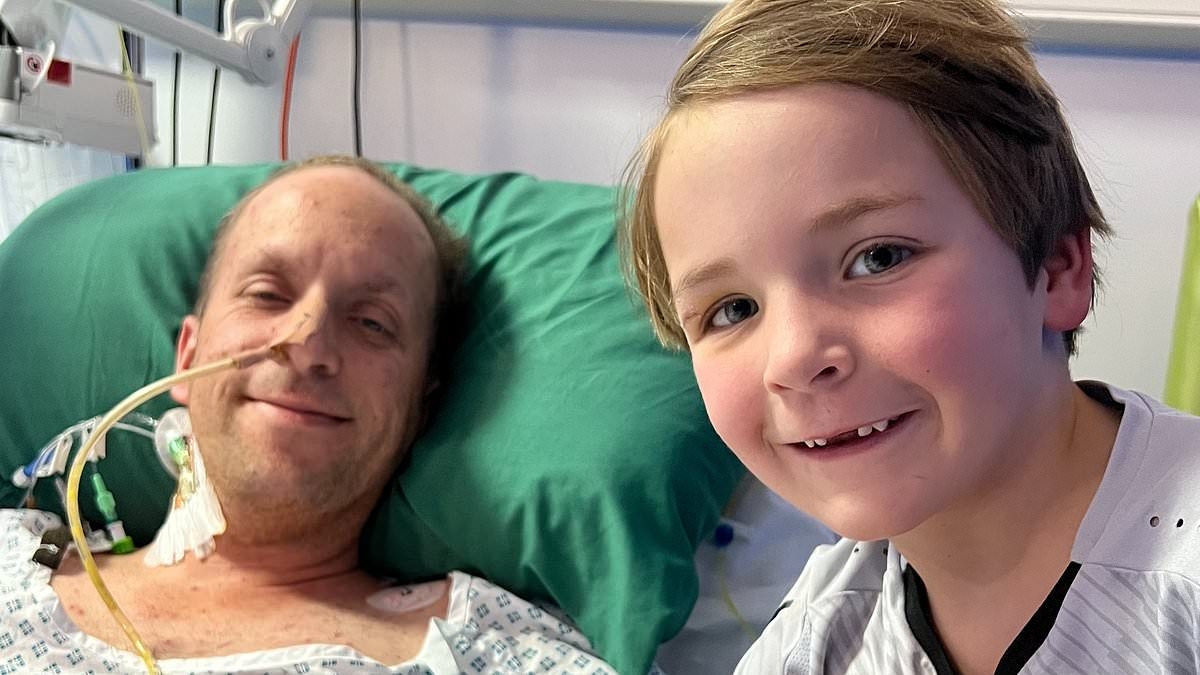
The first sign something was wrong for Matt Eamer came just days after a family barbeque, celebrating his son's second birthday. The then 39-year-old father-of-two from Redhill, Surrey, dismissed the sudden 'spiky' stomach pain as food poisoning. 'I was speaking to work colleagues over the first week or two and thought I'd cooked a dodgy sausage,' he said. But his pain escalated quickly. After a rushed trip to A&E he was sent home with anti-nausea medication Buscopan, yet still felt dreadful. His wife Sarah, 41, a doula, took him to East Surrey Hospital where scans revealed a 'big blockage' in his large intestine. Surgeons removed two-thirds of his bowel in an emergency op. 'A few days later they confirmed it was cancer,' Matt said. The diagnosis was stage four bowel cancer. The disease had already spread to his liver and the lining of his abdomen, and further tests revealed a rare BRAF mutation which drives tumours to grow at speed. 'I can still remember the person's voice when she phoned and said, "the plan for your diagnosis has changed… we're talking months not years from a survival point of view",' Matt recalled of the events in September 2020. On his 40th birthday he was told standard chemotherapy had failed and surgeons found the cancer had advanced further. 'It was a very dramatic, movie-like point,' he said. 'It was a pivotal change. They said, "we've gone in, it's gone further, we're going to try these new drugs." My wife Sarah collapsed to the floor.' Matt began fortnightly Cetuximab infusions combined with four daily Encorafenib pills, new immunotherapy drugs approved just months earlier. Designed to buy only 'three to six months', they had a remarkable effect. Within six months, scans showed no trace of cancer. Five years on, he is still clear and continues treatment. 'Hitting five years with stage four is a rarity,' he said. 'You're not on your death bed but you're forced to think about how you spend your time.' In December 2024, he underwent a 14-hour surgery to remove cancerous tissue in his ribcage, followed by heated HIPEC chemotherapy. The disease had already spread to his liver and the lining of his abdomen, and further tests revealed a rare BRAF mutation which drives tumours to grow at speed. Again, scans showed 'things clear.' Matt, who runs his own design agency, continues working and raising his two children. 'The reality is younger people are able to deal with treatments better and live longer, better lives even if it is stage four,' he said. He adds: 'The reality is the 'bucket and spade things', the little moments. I spend more time looking at my kids' faces, taking them to a show or swimming in the sea — they are heightened. 'It means your ability to be present and focus upon what matters is heightened.' To mark five years since his diagnosis, Matt will join Sir Chris Hoy's charity cycle in Glasgow on September 7, raising funds for Bowel Cancer UK. 'It's marking a milestone in a meaningful, positive way,' he said. Bowel cancer, also known as colorectal cancer, is one of the most common cancers in both Britain and the United States. In the UK around 43,000 people are diagnosed every year, while in the US the figure is more than 150,000. It is the third most common cancer worldwide and the second leading cause of cancer deaths. In older age groups incidence is declining thanks to better screening and awareness, yet in younger people rates are rising sharply, a trend baffling doctors. In England cases among those aged 25 to 49 have surged by around 3.6 per cent per year, one of the steepest increases in Europe, while in America rates in under-50s have been rising by about 2.4 per cent annually over the past decade. Outcomes depend heavily on how early the disease is caught. In the UK one-year survival is around 97 per cent if picked up through screening, but just 49 per cent if discovered in an emergency admission, as was the case for Matt. In the US five-year survival is 92 per cent at stage one but only 13 per cent at stage four. Most people with a diagnosis as advanced as Matt's do not reach the five-year mark, making his story unusual. Risk factors include family history, inflammatory bowel disease, obesity, alcohol, smoking, and diets low in fibre and high in red or processed meats. Researchers are also examining the role of ultra-processed foods, though evidence remains inconclusive, and some studies point to gut bacteria toxins such as colibactin, found in food poisoning, as a possible trigger for early-onset cases. Screening programmes remain vital. In the US guidelines now recommend testing from age 45, while in the UK stool tests are currently offered from 56, with pilot schemes lowering the age to 50. Symptoms to watch for include persistent changes in bowel habits, blood in stools, unexplained weight loss, abdominal pain or bloating, and lumps in the abdomen. Doctors stress that catching the disease early saves lives. Patients diagnosed at stage one are several times more likely to survive long term than those at stage four. But as Matt's case shows, advances in treatment—from new targeted drugs to more effective surgery—are beginning to change what is possible, even in the most serious cases. For him, the experience has redefined life. 'The reality isn't bucket-list dolphins—it's the bucket and spade things,' he said.

Daily Mirror
9 hours ago
- Daily Mirror
BBC Gardeners' World star had 'to-do list' as she opens up on battle with devastating illness
Gardeners' World star Rachel de Thame was diagnosed with breast cancer in 2018, and said that it had a knock-on effect to her life and left her feeling "shaken" Gardeners' World presenter Rachel de Thame has opened up about her "desperate" to-do list following her breast cancer diagnosis in 2018, revealing how the news sent "shockwaves" through her life. Penning her thoughts for The Times at the time, Rachel shared: "While one is grateful to have options, treatment is no walk in the park. Strangely, though, I've also found that there are compensations. Top of the list is a renewed, almost desperate desire to get on with some of the things that for too long have lingered on a mental to-do list." The beloved BBC personality reflected on the impact of her health scare, stating: "When you've felt rocked to your foundations, the only sensible thing is to get on with living." With a newfound outlook, Rachel admitted she's now viewing life through a different lens, with ambitions to transform her garden into a sanctuary for herself and others. She elaborated on her aspirations: "On a more immediate and personal level, I'm focusing on next spring and how I want my garden to look and, above all, make me feel." Fortunately, Rachel's condition was detected early, prompting her to take time off from Gardeners' World as she embarked on her treatment journey. Speaking to the BBC during this period, she conveyed optimism: "I'm doing well and coming towards the end of it. It's caught early so that's all very positive, so on the whole it's better not to be working too much just now," reports the Express. Thankfully, she made a complete recovery and has since extolled the virtues of gardening for its role in her physical and mental well-being during that tough time. At the Chelsea Flower Show, Rachel expressed: "I know there's a big message this year at Chelsea about the importance of gardening for your general health and mental health, if you're going through some chronic illness, whatever it is, it's vital to go out and be in a garden." In one of the most recent episodes of Gardeners' World, fans were left in tears after expert Steve opened up about his terminal diagnosis. He shared: "Very recently, I had been diagnosed with a terminal cancer, and I don't know how long I might live. It could be two months or two years, possibly. "I didn't feel down as a result of it, I just saw it as another challenge, I'm going to have to sort something out for this. "And actually, I have had a big, creative burst, I think, as a result of that positive attitude, and I am getting there. I am finding ways in which Pippa and our son, between them, will be able to manage this whole process once I've gone."


The Sun
17 hours ago
- The Sun
I blamed stomach pain on a dodgy BBQ but then I was told I have just months to live
WHEN Matt Eamer began experiencing stomach pain he put it down to eating "a dodgy sausage" at a family BBQ. But when the pain persisted, doctors discovered a "big blockage" in his intestine, which turned out to be stage 4 cancer. 6 6 Matt, 44, had been celebrating his son Alex's second birthday in September 2020 when "spiky" pain began. The dad-of-two was rushed to hospital and was given Buscopan - an over the counter medication that helps stomach cramps - and sent home. But he continued to feel awful. His wife Sarah, 41, a doula, took him to East Surrey Hospital, Surrey, where tests confirmed the blockage in his large intestine. Just days later, following surgery to remove the mass, it was confirmed as stage four bowel cancer. Matt underwent six months of intense chemotherapy, but during surgery to cut away part of his liver, in March 2021, surgeons told him it had spread to his peritoneum - the lining of the abdominal wall. It was also discovered Matt had a BRAF mutation - a genetic alteration that can lead to uncontrolled cell growth - and his "cancer had formed and grown very quickly". Matt was "looking at months" left to live when he began taking newly approved immunotherapy drugs called Cetuximab infusion and pills called Emcorafenib. But he responded well, and five years on has no signs of cancer, and still takes the medicine. Matt, from Redhill, Surrey, who runs a design agency, said: "I was speaking to work colleagues over the first week or two and thought I'd cooked a dodgy sausage on the BBQ. "My pain escalated quickly. I thought my sore knee was a drunken injury but it was cancer at 27 "I can still remember the person's voice when she phoned and said 'the plan for your diagnosis has changed'. "They said 'we're talking months not years from a survival point of view'. "Hitting five years with stage four is a rarity. "You're not on your death bed but you're forced to think about how you spend your time". He said doctors initially thought the mass might be benign. "They took out two thirds of my large intestine," he said. "A few days later they confirmed it was active cancer." New life-extending drugs After chemotherapy, Matt was informed on his 40th birthday by doctors that his treatment plan had changed Matt has been taking four Encorafenib pills every evening since and has fortnightly infusions of Cetuximab - designed to extend his life by three to six months. "It was a very dramatic movie like point," he said. "It was a pivotal change, they said, 'we've gone in, it's gone further, we're going to try these new drugs. "My wife Sarah collapsed to the floor." He began the new drugs approved just a few months earlier, which target rapid growth of cancer cells. Matt had an "unusual response" to the drugs - with scans after six months not showing "any cancer"- and now has fortnightly infusions. Despite needing a 14-hour surgery in December 2024 to remove tissue in his ribcage that had the BRAF mutation and HIPEC chemotherapy, Matt says doctors are back to the view of not seeing anything, with scans showing things are clear. "I'm never going to know what my future really looks like," he said. "I continue to run my own business and the family. "I remember four or five months ago listening to Virgin Radio and Chris Evans was interviewing Chris Hoy. "He's really trying to challenge the perception of stage four. "The reality is younger people are able to deal with treatments better and liver longer better lives even if it is stage four. "The book he's written highlighting things like being presented with things like a devastating life ending diagnosis, the cliche is you go for big bucket list of swimming dolphins and all that stuff. 6 6 6 6 "The reality is the 'bucket and spade things', the little moments. "I spend more time looking at my kids faces taking them to a show or swimming in the sea, they are heightened. "It means your ability to be present and focus upon what matters is heightened". He is now set to take part in a charity cycle set up by Sir Chris Hoy in Glasgow on September 7 raising funds for Bowel Cancer UK. It will mark five years since he was diagnosed. "It's marking a milestone in a meaningful positive way," he said. To donate, visit his GoFundMe. What are the red flag warning signs of bowel cancer? IT'S the fourth most common cancer in the UK, the second deadliest - yet bowel cancer can be cured, if you catch it early enough. While screening is one way of ensuring early diagnosis, there are things everyone can do to reduce their risk of the deadly disease. Being aware of the signs and symptoms of bowel cancer, spotting any changes and checking with your GP can prove a life-saver. If you notice any of the signs, don't be embarrassed and don't ignore them. Doctors are used to seeing lots of patients with bowel problems. The five red-flag symptoms of bowel cancer include: Bleeding from the back passage, or blood in your poo A change in your normal toilet habits - going more frequently for example Pain or a lump in your tummy Extreme tiredness Losing weight Tumours in the bowel typically bleed, which can cause a shortage of red blood cells, known as anaemia. It can cause tiredness and sometimes breathlessness. In some cases bowel cancer can block the bowel, this is known as a bowel obstruction. Other signs include: Gripping pains in the abdomen Feeling bloated Constipation and being unable to pass wind Being sick Feeling like you need to strain - like doing a number two - but after you've been to the loo While these are all signs to watch out for, experts warn the most serious is noticing blood in your stools. But, they warn it can prove tricky for doctors to diagnose the disease, because in most cases these symptoms will be a sign of a less serious disease.
