



‘I was kidnapped and held in a soundproof box by my stalker'
She would spend the next 13 hours in the 'torture chamber' Thomas had built in a remote storage unit, eventually agreeing to have sex with her captor in exchange for a release that, she was aware, seemed 'highly unlikely'.
An hour earlier, the 30-year-old social worker had been asleep in her bed in the small town Elk Rapids, Michigan, when Thomas broke into her home. Woken by a creaking floorboard, she was reaching for the hatchet she kept under her bed when he overpowered her and began throttling her.
Describing that night with admirable composure in the three-part Disney+ documentary Stalking Samantha: 13 Years of Terror, she recalls telling her assailant: ''If you want to rape me, just do it,' but he said, 'I just want to talk to you, not here.'' Thomas then rammed a ball gag into her mouth and secured it by wrapping duct tape around her head multiple times, binding her wrists and ankles, blindfolding her and bundling her into the back of her own car. He told her he had taken her paddleboard too, because he was planning to fake her death as an accidental drowning at a local lake.
'For a long time afterwards,' Stites tells me via Zoom today, 'my heart would race if I smelt duct tape or lumber.' She would be triggered by 'the sight of somebody in handcuffs on TV. I'd think: 'I know how that feels'. Oh, and the smell of bananas. I don't think this made the cut in the documentary, but he asked if I wanted to take some food with me as we left the house. I asked for a banana'.
I worry that recalling such traumatic events is distressing for Stites, but she shakes her head. 'Actually, telling my story has been helpful in my healing process, in making it less scary and regaining some power,' she says.
'Never seen a stalking case as severe as this'
That story began in 2011, when Stites and Thomas were both students at Grand Valley State University in Michigan. Stites had included the 'socially awkward' older student in conversations, but he quickly began bombarding her with texts asking her for dates. She refused politely at first, and then stated explicitly that she had no romantic interest in him, before blocking his number.
'There's a pervasive idea,' she says today, 'that boys should maybe keep trying. 'Oh, she'll come around.'' Stites shakes her head. 'We should be teaching them that no means no.'
Stites realised Thomas had 'become a threat' when he ambushed her at work with flowers, making a second attempt to hand her the bouquet at a bus stop on her way home.
'At that point,' she tells me, 'I was yelling at him on a street corner. There was no misconstruing me. Anyone who can't understand that is being wilfully ignorant.'
After graduation, Thomas began showing up in her hometown. When a friend spotted him coming out of her apartment, Stites applied for a personal protection order (PPO), a particular version of a restraining order in the US. In 2014, Judge Norman Hayes granted her a six-year PPO – the longest he had ever given at that time – and today tells the documentary team that he had 'never seen a stalking case as severe as this. He was obsessed, absolutely obsessed with her'.
A Netflix-inspired bunker
Stites moved on. She got a job, bought a house, joined a soccer team. But the minute Thomas's PPO expired in 2020, he resumed the stalking. He joined her gym and soccer league. She saw him in bars and grocery stores. Too canny to address or text her, he would stare at her and stick his tongue out. Her friends confronted him, but he ignored them. She applied for another PPO, which, astonishingly, was denied.
Stalking victims are 'often failed' by the legal system, says Stites. Although she later learnt that Thomas had been convicted for stalking another woman before he met her, his previous record did not show up on the system when she applied for a second PPO.
When he saw Stites was trying to have him barred from contact again, Thomas began building the bunker, in which he hid rifles and a crossbow. He was inspired by the Netflix series You, in which a handsome psychopath stalks and kills a different woman every series.
'I had watched the first season of that show too,' Stites shrugs. 'I watched it thinking the man was unwell, disgusting. Christopher had obviously watched it differently.'
Stites survived in Thomas's makeshift prison by using skills she had learnt as a social worker. 'We conduct motivational interviews to work out what might drive a person to make a change in their life.' Thomas was frightened of returning to prison, following his previous conviction, and she worked on that. Stites says she still 'feels badly' about 'taking skills I had learnt to help people and twisting them. As a social worker, your intent is to be honest and do the best for your client. I lied and acted in my own interest'.
Stites promised Thomas she would not turn him in if he released her. He said he couldn't trust her unless she had sex with him, and in desperation, she finally agreed. She tells the cameras that the experience 'was painful, I cried and I shook. I didn't want him to know I was disgusted and terrified. I didn't want him to get angry'. When her ordeal was over, he told her: 'You're the person I'm supposed to marry.' Astonishingly, he then drove her home.
'A powerful and terrifying experience'
Stites immediately called a neighbour, who drove her to the hospital, where she took a rape test. 'I remember asking myself, 'Are they going to believe me?' But I hoped there would be DNA evidence.' Six hours after she arrived at the hospital, Stites met a detective, who used her detailed recollection of her journey to locate Thomas's bunker and arrest him within 36 hours.
Police bodycam footage shows Thomas defiant in custody, claiming the incident was part of consensual sexual roleplay. But in 2024, he was convicted of kidnapping, torture and aggravated stalking, and sentenced (by the same judge who denied Stites's second PPO) to 40 to 60 years in prison.
Viewers will share Stites's frustration that the rape was dropped in exchange for a guilty plea. Today she stresses that 'nobody can give consent under those circumstances'. So, during her courtroom victim statement, she clearly names him as a rapist.
'That was a powerful and terrifying experience all at once,' she says. 'To say that with him standing so close to me, in front of his loved ones and that judge.'
'My body let me down'
These days, Stites says recovery is 'a work in progress'. She had to set up a crowdfunding page to survive financially. 'Accessing medical insurance and getting formal time off at my workplace was a complete nightmare.'
Thanks to exposure therapy, Stites can now cope with the smell of bananas and lumber 'without a heightened response'. But her sense of herself as physically strong and intellectually capable has shifted, 'because I was overpowered '.
'Owning back my body has been a process. There is still a disconnect. I don't, to some degree, like my body, because it let me down. It's a strange thing, I know other sexual assault survivors feel that.'
Her Christian faith was also rocked. 'I had moments in the bunker when I was talking to God. Especially when he left me alone. Ironically, those were more terrifying, because I thought: if he gets in a car accident, then I'm chained to a wall where nobody can find me.' She asked God: 'Why Me? Haven't I been through enough?'
Stalking Samantha ends with a grim statistic: one in three women will become victims of stalking at some point in their lives. Stites hopes that by telling her story she has enabled victims to learn the signs and take action if they feel threatened.
Her advice is: 'Document everything. I wish I had done that sooner. Get written proof, dates, times, photographs. Get other people involved and don't keep it to yourself. Tell your friends and neighbours: this is what this person looks like, this is what car they drive. Change your routines – I was really careful with that when he reappeared in 2020. I got additional security at home: locks and cameras.' These days, Stites has a couple of people with whom she shares her location via tracking apps: 'If I'd had that in 2022, they could have pinged my location at the storage unit.'
Now Stites is setting up a company to support stalking victims and run courses on stalking for social workers and police officers. 'There's not enough information readily accessible out there,' she says. 'I want to use my story as a platform to help others.'
Hashtags

Try Our AI Features
Explore what Daily8 AI can do for you:
Comments
No comments yet...
Related Articles


Daily Mail
 29 minutes ago
- Daily Mail
Why did Casey-Louise die? Heartbreaking photos show girl, 13, cradling her baby sister - amid mystery over her tragic final hours as teen arrested over 'her rape and murder' is bailed
The teenage boy suspected of the rape and murder of 13-year-old Casey-Louise Horrocks is back home behaving 'like he doesn't have a care in the world,' according to neighbours. The schoolgirl was found by paramedics 'unresponsive' last Monday night. She died later in hospital. West Yorkshire Police arrested the boy, who lives in Huddersfield, West Yorkshire, on suspicion of Casey-Louise's rape and murder and the alleged rape of another local girl, aged 16. He was released on conditional police bail pending further enquiries on Friday, August 15. A neighbour said: 'I saw him come home on Friday lunchtime and he can't have spent more than 15 minutes in the house before he was heading out again. 'He left through the gate and jogged away, probably off to meet his mates. 'He is acting like he doesn't have a care in the world.' Another local said: 'He is well known in the area and you would think he would be keeping a low profile under the circumstances. 'I mean, a young lass has died and I think he should show a bit more respect. Maybe stop in and not go out so much.' Today new photographs of Casey-Louise, including one of her cradling what is believed to be her baby sister, Mia, were posted by friends and relatives on a tribute site online. A link to the site, posted on Facebook by Anthony Barton Funeral Directors, encouraged people to share memories, poems and pictures of the 'bright, caring soul who touched the lives of everyone around her.' Among those leaving their 'thoughts' was Casey-Louise's 'best mate', named Cole, who wrote: 'RIP Casey you'll be missed so much. Can't believe you left us so early your (sic) flying with the angels now, fly high love you lots my thunder buddie in the sky.' Her Auntie Dani added that she missed her 'so much,' saying: 'Forever 13. Love you so much bubba xxxx.' While Paula Mills wrote: 'Fly high with the angels beautiful girl. I hope there's an amazing afterlife waiting for you where all your hopes and dreams come true. #foreveryoung#forever13.' While another contributor added: 'You've left a massive hole in the lives of all who had the pleasure of knowing you. Sweet dreams Casey, you'll be sadly missed xx.' In a statement, Mossley Hollins High School, in Manchester, where Casey-Louise was a pupil, said they were 'heartbroken' at the death of the 'big-hearted' youngster. 'We are heartbroken by the loss of Casey‑Louise, a one-of-a-kind young person who brought spirit and warmth wherever she went,' the statement said. 'Casey was bright, full of character, always full of life, and never afraid to be herself. Those lucky enough to know her saw what a big heart she had. 'She was funny, sweet, had a smile that could brighten anyone's day and will be deeply missed by our school community. 'This heartbreaking news has deeply affected our community and as we come to terms with this loss, our thoughts are with Casey-Louise's family, loved ones and all those impacted at this incredibly difficult time.' Pupils will be offered emotional support when they return in September, the statement added. Casey-Louise was found unresponsive by emergency services just after 11.30pm last Monday, August 11. She was taken to hospital but died in the early hours of the following day. A postmortem was inconclusive and it is understood police are awaiting the results of toxiocology tests and a second autopsy to try and establish her cause of death. Originally from Manchester, Casey-Louise was in local authority care when she died. She had been living in Liverpool and was just visiting Huddersfield at the time of her death. Friend Tina Cooper also set up an online fundraiser for the youngster's funeral. So far more than £2,000 has been donated. She said: 'Casey was a vibrant happy 13-year-old with all her life ahead of her. 'Our hearts go out to Casey's family. No one should have to bury their child. Let's help her family send their daughter on her final journey with dignity.' Detective Chief Inspector Stacey Atkinson, of West Yorkshire Police's Homicide and Major Enquiry Team, previously said: 'A post-mortem was not able to determine how she died, and we continue to treat her death as unexplained at this time, pending more enquiries. 'Those enquiries are complex and are likely to be lengthy as we work to fully understand the circumstances of the girl's death. Specially trained officers are supporting her family at this time.' The news of Casey-Louise's death has sent shockwaves through the town. Huddersfield MP Harpreet Uppal said: 'This is a tragic case and my thoughts remain with the 13-year-old teenager and her family and friends. I have been in contact with the police and I am being updated on the investigation.'
Daily Mail
31 minutes ago
- Daily Mail
Wife, 55, fatally shoots husband after argument over changing their open marriage agreement
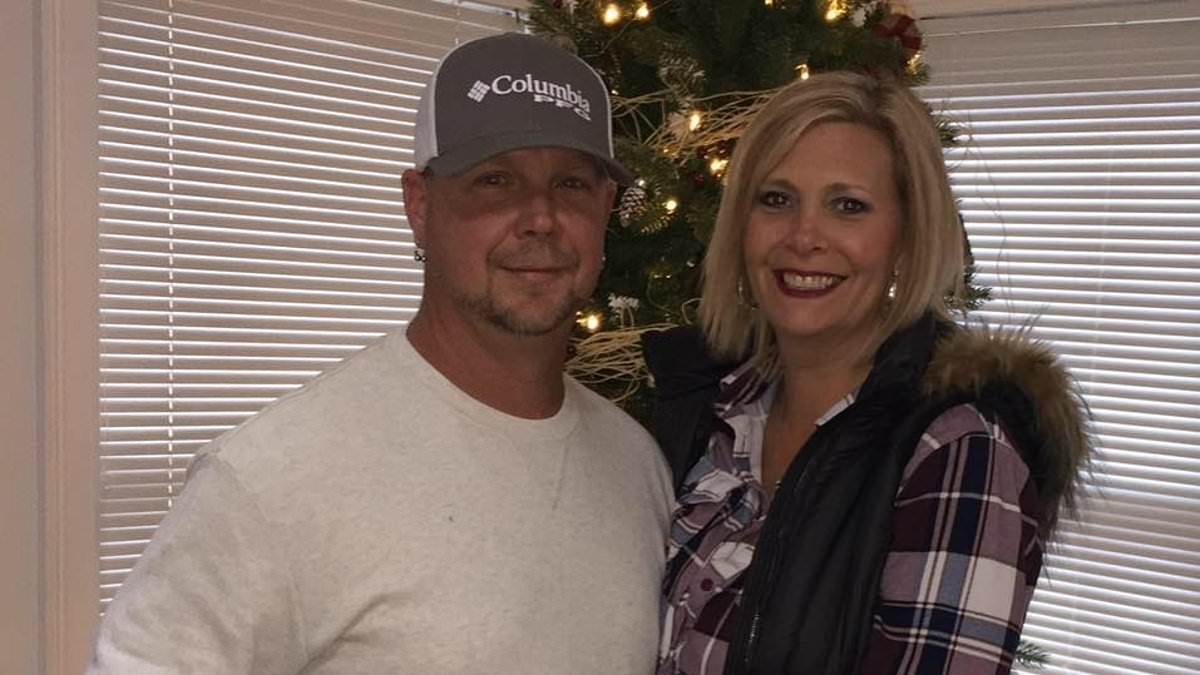
A Georgia woman will spend the rest of her life behind bars after she drunkenly shot and killed her husband amid a dispute over their open marriage. Cheryl Howell Coe, 55, was sentenced on Monday to life in prison without the possibility of parole for the June 2021 shooting of Luther 'Luke' Coe III, 48, inside their home, the Newnan Times-Herald reports. Officials with the Cowetta County Sheriff's Office have said they responded at around 7.30pm on June 23, 2021 moments after Cheryl reported that she shot her husband when she mistook him for an intruder. In body camera footage from the scene, Cheryl told deputies she drank four or five ciders while her husband worked in a detached garage, before she ultimately took a Klonopin and went to bed. She said she was woken up a short time later to an unknown person entering her bedroom, which prompted her to grab her pistol from the nightstand. 'I was just trying to protect myself,' Cheryl said in the body camera footage, which was played at her week-long retrial this month. She went on to claim she did not realize the person entering the room was her husband until he said, 'Cheryl, you shot me.' By the time deputies arrived on the scene, Cheryl was seen applying pressure on her husband's wound as he told authorities, 'I can't breathe.' He was then rushed to the hospital, but soon succumbed to his injuries. Cheryl's story quickly fell apart, however, when the medical examiner found that Luther had suffered from a contact bullet wound - meaning the rifle was pressed against his body and was not fired from a distance as his wife had claimed. Investigators then also uncovered lengthy text message exchanges between the husband and wife in which they appeared to have some issues with their open marriage in the days leading up to the fatal shooting. According to the messages, Cheryl had asked Luther for permission to see another man later in the week. Luther replied by asking his wife if she was planning on seeing another man as well, to which she replied that she could - ending her message with 'lol,' the Times-Herald reports. Luther then replied that her response 'turned his stomach,' at which point Cheryl proposed ending the open marriage - saying she believed it was the cause of their marital issues. But Luther apparently wanted to keep the open marriage going, and they established more ground rules. Other text messages detailed another dispute between the husband and wife, with her accusing him of telling a friend about their private disagreements. Luther became enraged by the accusation and told his wife he needed some time to himself, prosecutors argued. Finally, on the day of the shooting, Cheryl said Luther informed her he was ready to talk. But when she returned home from work that night, her husband and his son were still in the detached workshop on their property and so Cheryl decided to retire to the back porch, where she downed several hard ciders. She said Luther never came back and after an hour on the porch, she went to bed. When the door then swung open, Cheryl said she fired two shots, aiming at the ceiling and behind the television, in hopes that the gunfire would alert her husband in the workshop. But when Cheryl was later confronted by the fact that she called 911 just 11 minutes after she claimed she went to bed, the defendant changed her story and admitted she knew it was Luther entering the room. She claimed she could hear his 'thunderous footsteps' and yelling before he entered their bedroom, where she said Luther told her to 'get her ass out of bed' and dragged her from the mattress. 'I just wanted to be left alone and he wasn't having it,' Cheryl told police. 'He was dragging me out of bed.' When Luther then briefly left the room, Cheryl said she grabbed her pistol and fired a warning shot, which made him 'angry and aggressive,' at which point she fired a second shot to scare him off. 'I wasn't trying to hit him,' she insisted. Cheryl also told police about her and her husband's BDSM practices, saying she was the 'submissive' one but arguing Luther's behavior that night was 'different.' Taking the stand at her trial, Cheryl reiterated her self-defense claims as she described how her husband had become more aggressive with her. She said he once pulled her leg out from under her as she walked down the porch stairs, causing her to suffer a tear in her buttocks and an indentation that required surgery to fully heal. Cheryl also said their BDSM practices became more violent, even though she asked him to stop. 'I didn't enjoy the pain,' she testified. 'He would coerce me and tell me I was doing this for him and [it] made him happy.' On the night of the murder, Cheryl said Luther began to charge at her when she fired the second shot. 'I never told anyone anything about the bad parts of our relationship,' she claimed. 'Luke had a great reputation and [I] did everything I could to protect it.' The 48-year-old had his own business, Platinum Demolition & Grading LLC and had served in the United States Army, according to his obituary. But during closing arguments, prosecutor Laura Lukat focused on Cheryl's changing stories - and argued that even if her justification for shooting her husband were true, it did not justify the use of deadly force. 'She brought a gun to a verbal spat,' Lukat said. 'She brought a gun to a situation that might have ended with one of them staying at a friend's.' Cheryl was ultimately found guilty on all the charges against her - one count of malice murder, one count of felony murder and one count of aggravated assault.
Daily Mail
31 minutes ago
- Daily Mail
I was almost kidnapped at after school care when I was seven years old - this is my serious warning to all parents
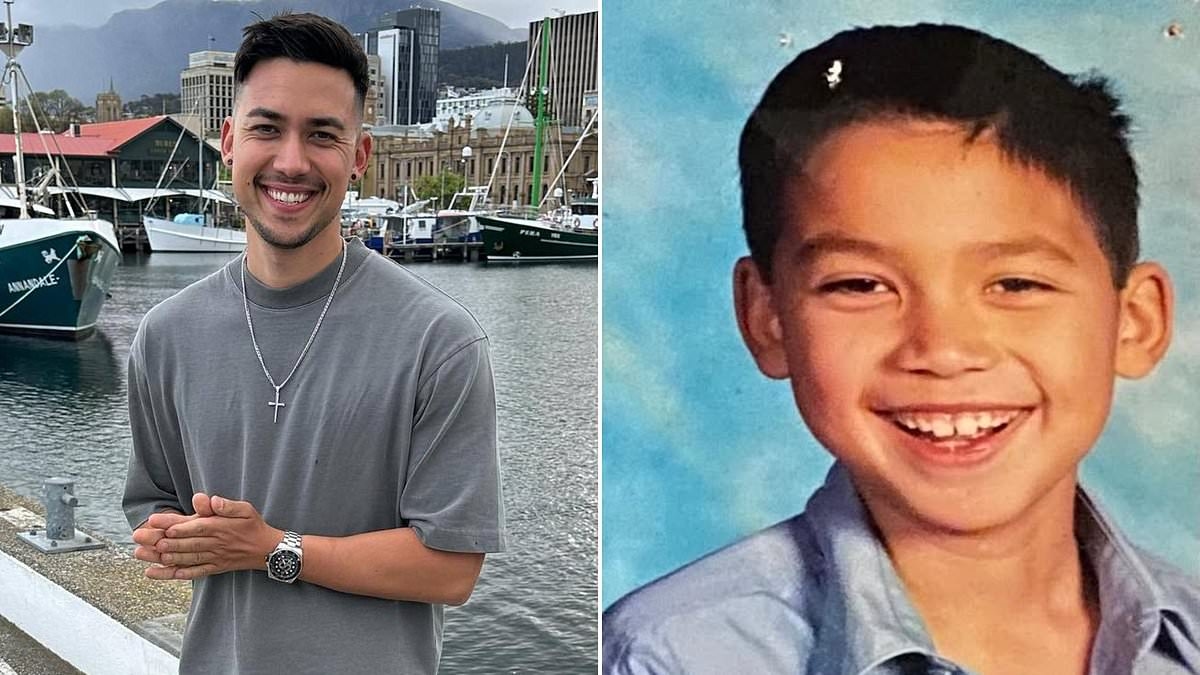
An Australian man has recalled the terrifying moment he was almost kidnapped as a child - and urged parents to equip their children with self-defence skills. Sydney-based comedian and social media personality Jamie Zhu shared the chilling story in a Facebook post, describing how he narrowly escaped a stranger who tried to lure him away after school when he was just seven years old. Jamie said he was waiting at after-school care near his school in Sydney 's north shore in 2001 when a man approached him and his friend. 'I saw a man in the distance wearing an orange and navy striped jumper walk towards us. He had blond hair and wore transparent glasses with a silver frame, and he was staring at me and Joshy as he approached us,' he recalled. The stranger raised his hand and called out to the boys. 'Come on, I've got a surprise for you,' the man said, signalling for them to follow. Jamie said he immediately thought of his mother's caution and alarm bells started ringing in his head. 'This must be what my mum had always warned me of,' he remembered. 'As my body started shaking, adrenaline ran through my veins. I had to run. Fast.' Thinking quickly, Jamie pretended to walk towards the man before bolting in the opposite direction and racing inside the pavilion to get help from a carer. By the time staff rushed outside to investigate, the man had vanished. What unsettled Jamie most was how calm his school friend Joshy was throughout the ordeal. While Jamie's instincts told him to run, Joshy appeared 'completely oblivious' to the danger and later brushed it off by saying the man had even chased him. The thought of what could have happened if both boys had followed the stranger still haunts Jamie. He admitted only his quick thinking - and his mother's early warnings - may have saved them from a grim outcome. 'The man was never found that day. And thank the Lord me and Joshy were safe,' Jamie wrote. Weeks later, Jamie heard reports of a disturbing incident at another after school care nearby involving a naked intruder. Years on, he believes it may have been the same man. Jamie said he was grateful his mother had instilled a 'healthy fear' of strangers and taught him to be vigilant from a young age. But looking back, he wishes he had been given even more tools to protect himself. 'If there was one thing I wish I had learned as a kid, it is self-defence skills,' he said. Now in 2025, he believes the world is even more dangerous than when he was a child. 'With the rise in the adult film industry, violence, war and unrest… it's even more important to keep our kids safe from these potential predators that co-exist alongside us in the communities we live in.' Jamie urged parents to make self-defence training non-negotiable for their children. 'To all parents out there, we live in a pretty dark world now so I would highly encourage you to enroll your kids in a self-defence program. I know I will be doing that when I have a son.' Experts say children can begin learning basic self-defence skills from as young as five, with classes tailored to age and ability. At this stage, it's not about fighting, but about building awareness - teaching kids how to recognise unsafe situations, use a strong voice, and create space to get away. By seven or eight, most children are ready for more structured programs such as judo, karate or taekwondo, which emphasise discipline, respect, and practical techniques for escaping grabs. Parents are also encouraged to role-play scenarios with their kids, reinforcing simple safety rules like staying visible, keeping a safe distance from strangers, and always telling a trusted adult if something feels wrong. Self-defence coaches stress the goal is confidence, not combat - giving children the skills to trust their instincts and act quickly if they ever find themselves in danger.
