


&w=3840&q=100)
Pahalgam probe revealed communication nodes of terrorists, handlers in Pakistan: MEA
Indian security officers inspect the site in Pahalgam where militants indiscriminately opened fired at tourists on Tuesday, Pahalgam, Indian controlled Kashmir, Wednesday, April 23, 2025. (AP Photo)
The Ministry of External Affairs (MEA) has told a parliamentary committee that the initial investigation into the Pahalgam terror attack has revealed that the attackers were in touch with their handlers in Pakistan.
In a presentation before the panel, the ministry said the probe had identified 'communication nodes' between the terrorists and their 'masterminds in Pakistan.'
The nature of the attack bore 'footprints and tracks' similar to previous strikes claimed by The Resistance Front, which the MEA described as another name for the banned terrorist organisation Lashkar-e-Taiba (LeT).
STORY CONTINUES BELOW THIS AD
The ministry asserted that Pakistan's role as a sanctuary for terror groups is 'well established' and backed by credible evidence. It also dismissed Islamabad's accusations that India was responsible for killings on Pakistani soil—allegations termed 'extra-judicial' and 'extra-territorial'—as baseless and lacking any factual support.
It is meant to draw a false equivalence between the two countries to suggest that both neighbours are victims of cross-border terrorism which is not the case, it said in the presentation.
UN-designated terrorists roam freely in Pakistan and continue to incite violence against India, the ministry said in its presentation to the Standing Committee on External Affairs headed by Congress MP Shashi Tharoor.
The Indian armed forces carried out missile strikes early on May 7 at nine terror targets in Pakistan and Pakistan-Occupied Kashmir (PoK), including the Jaish-e-Mohammad stronghold of Bahawalpur and Lashkar-e-Taiba's Muridke base.
The strikes were conducted under Operation Sindoor two weeks after the execution-style killing of 26 civilians in Jammu and Kashmir's Pahalgam.
Over 100 terrorists, including high-value targets such as Yusuf Azhar, Abdul Malik Rauf and Mudasir Ahmed, were eliminated during Operation Sindoor, according to the Indian military.
India and Pakistan reached an agreement on May 10 to halt military actions after four days of intense cross-border drone and missile strikes.
STORY CONTINUES BELOW THIS AD
Following the pause, the Union government formed seven delegations comprising 51 political leaders, parliamentarians and former ministers cutting across party lines who will travel to world capitals to put across India's resolve to tackle terrorism.
With inputs from agencies
Hashtags

Try Our AI Features
Explore what Daily8 AI can do for you:
Comments
No comments yet...
Related Articles

Hans India
 20 minutes ago
- Hans India
Trump tariffs-A dark cloud and a silver lining
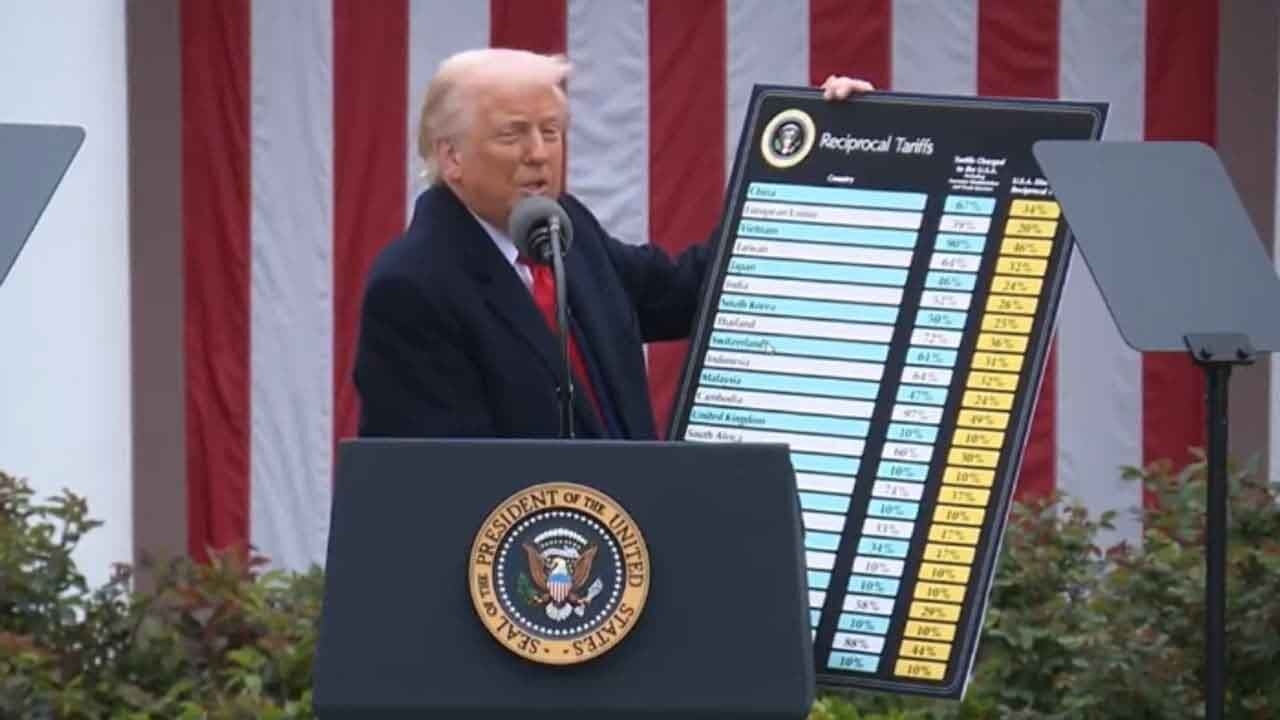
US President Donald Trump has suffered a bad press in India. Still, it is indisputable that the crisis his tariffs have triggered for our economy may not be such a bad thing: it has already goaded the government to reset the GST and FDI regimes. It is a truism that crises force governments into long-overdue reforms, and the present turbulence may, paradoxically, prove to be an inflection point for India's economy. Early signs indicate that Trump's tariffs have broken the policy inertia of the Narendra Modi government; it is rethinking the goods and services tax (GST), foreign direct investment (FDI), and export promotion policies. The government is reportedly working on a 100-day reform agenda prepared by the Commerce & Industry Ministry. It is not merely a firefighting exercise but a comprehensive strategy to improve India's global competitiveness. This is significant because, for too long, India has managed its trade policies reactively, focusing on ad hoc measures rather than laying down forward-looking, structural reforms. Another key area under review is the GST regime. While GST has streamlined indirect taxation, its complexity and compliance burdens have stifled smaller exporters and startups. Rationalising and reducing GST slabs, simplifying compliance, and ensuring quicker refunds could ease liquidity pressures and incentivise export-oriented businesses. If the current crisis accelerates this process, Indian exporters may be better positioned in the medium term, not just against US tariffs but also against rising competition from countries like Vietnam and Bangladesh. Equally important is the prospect of further liberalising the FDI regime. India has already been one of the top global recipients of foreign investment, but procedural hurdles, sectoral restrictions, and unpredictable regulatory interventions have often diluted the benefits. A push to ease investments—particularly from neighbouring countries and emerging Asian markets—signals a pragmatic recognition that India must diversify its capital inflows rather than remain overly reliant on Western investors. Such reforms could open up capital for high-growth sectors like digital infrastructure, renewable energy, and advanced manufacturing. The government's reported plan to provide more tax incentives for startups also reflects an awareness of the shifting global economic landscape. With traditional manufacturing exports facing headwinds, India must increasingly rely on knowledge-driven industries, digital services, and innovative startups to power growth. A supportive tax regime, combined with easier access to foreign capital, could help create globally competitive unicorns and deepen India's digital economy. Then there are proposals to ease certain environmental norms for the leather and footwear sectors. These industries employ millions, generate significant export revenues, and are heavily labour-intensive—precisely the kind of sectors India needs to expand if it hopes to absorb its growing workforce. While the idea is good, the government must ensure that this easing remains focused on cutting red tape; there should be no adverse impact on the environment. On the export infrastructure front, the emphasis on establishing e-commerce hubs and fast-tracking initiatives like BharatTradeNet is timely. Global trade is increasingly digital, and seamless integration of logistics, customs, testing, and certification into unified platforms could sharply reduce transaction costs for exporters. By enabling smaller firms and startups to tap global markets with fewer bureaucratic hurdles, such steps could democratise trade opportunities across sectors and geographies. If all these reforms are implemented effectively, they could make India's export basket more resilient and its domestic economy more attractive for investment.
Hans India
20 minutes ago
- Hans India
'Stable, predictable, constructive ties': Modi, China's Wang Yi discuss steps to ease tensions
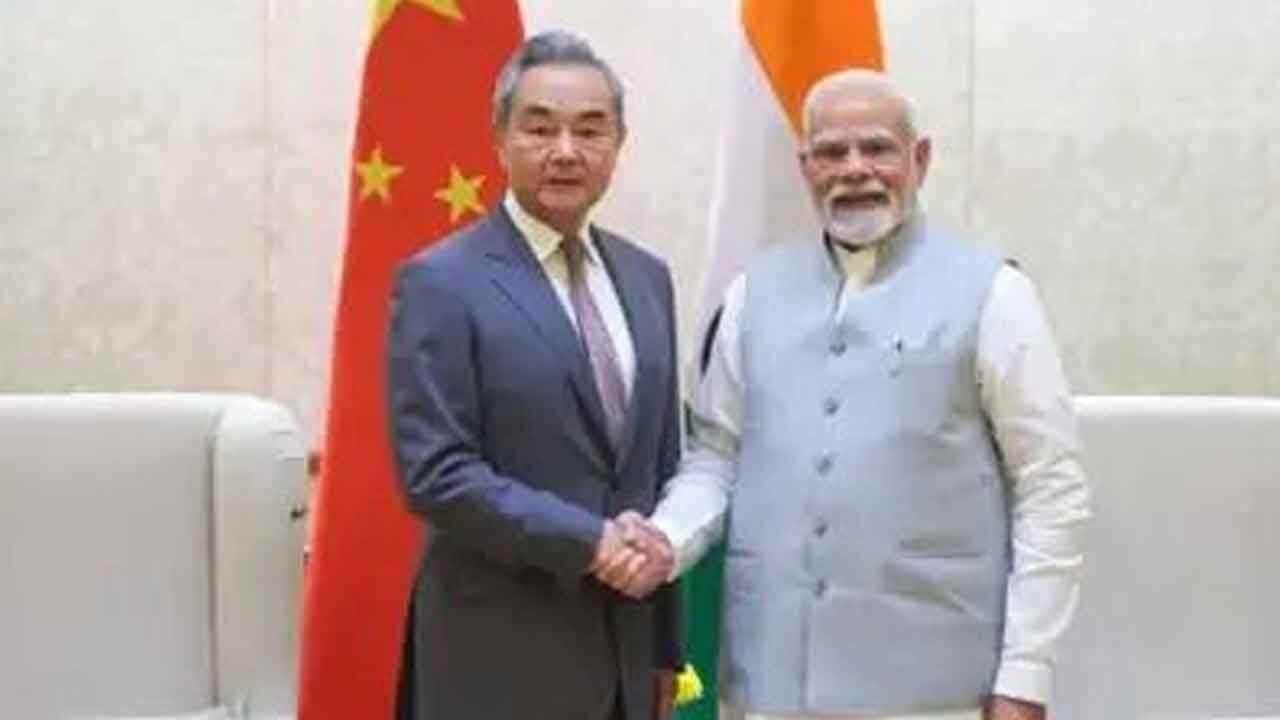
New Delhi: Prime Minister Narendra Modi on Tuesday met Chinese Foreign Minister Wang Yi at the latter's official residence, 7 Lok Kalyan Marg, in New Delhi, as India continues efforts to ease tensions in ties with China. The meeting took place against the backdrop of US President Donald Trump's recent move to impose tariffs, including a 50 per cent tariff on India. Modi stressed the need for peace and stability along the India-China border and reiterated India's commitment to a fair and mutually acceptable boundary resolution. The PM wrote on X after meeting Chinese FM Wang Yi: "Glad to meet Foreign Minister Wang Yi. Since my meeting with President Xi in Kazan last year, India-China relations have made steady progress guided by respect for each other's interests and sensitivities. I look forward to our next meeting in Tianjin on the sidelines of the SCO Summit. Stable, predictable, constructive ties between India and China will contribute significantly to regional as well as global peace and prosperity.' Renowned for his claims of mediating peace between rival nations, Trump may have inadvertently set the stage for an unexpected thaw in India-China ties. Despite Beijing's backing of Pakistan during Operation Sindoor after the Pahalgam terror attack, the recent easing of strains between New Delhi and Beijing is seen, in part, as a fallout of Trump's actions, though he has taken no credit. According to the ministry of external affairs (MEA), Wang Yi is in India at the invitation of National Security Advisor (NSA) Ajit Doval to take part in the 24th round of Special Representatives' (SR) Talks on the India-China boundary issue. During his two-day visit, Wang Yi also held bilateral discussions with External Affairs Minister Jaishankar. Sources indicated that China has promised to address three of India's concerns - rare earths, fertilisers, and tunnel-boring machines. During his public remarks, Jaishankar underlined that 'differences must not become disputes, nor competition conflict,' adding that the visit offered both sides an opportunity to review bilateral ties and exchange views on global and regional developments.
&w=3840&q=100)

Business Standard
20 minutes ago
- Business Standard
India won't take first step to normalise ties, onus on Pakistan: Tharoor
India no longer has the appetite to take the first step in normalising ties with Pakistan after repeated betrayals, senior Congress leader Shashi Tharoor said on Tuesday, urging Islamabad to demonstrate sincerity by dismantling terror networks operating from its soil. He was speaking at the launch of the book "Whither India-Pakistan Relations Today?", an anthology edited by former ambassador Surendra Kumar. The Thiruvananthapuram MP said every Indian attempt at outreach -- from Jawaharlal Nehru's pact with Liaqat Ali Khan in 1950, to Atal Bihari Vajpayee's bus journey to Lahore in 1999, and Narendra Modi's Lahore visit in 2015 -- had been "betrayed" by hostility from across the border. "Given the record of Pakistani behaviour, the onus is on them. They're the ones who have to take the first steps to show some sincerity about dismantling terror infrastructure on their soil. "Why can't they be serious about shutting down these terror camps? Everyone knows where they are. The UN committee has a list of 52 names of individuals, organisations and places in Pakistan. It's not that Pakistan doesn't know they exist," Tharoor said. He said, "Shut them down, arrest some of these characters, show some serious intent." India would be more than willing to reciprocate once such action is taken, but won't take the first step now, the Congress leader said. Recalling the 2008 Mumbai terror attacks, Tharoor said India had provided "overwhelming evidence" of Pakistani involvement, including live intercepts and dossiers, yet "not one mastermind has been prosecuted". He noted that New Delhi showed "extraordinary restraint" after attacks, but subsequent provocations left India with little choice, leading to surgical strikes in 2016 and 'Operation Sindoor'. "In my book Pax Indica, which was published in 2012, I had warned that if there was ever another Mumbai-like attack of comparable impact, with clear evidence of Pakistani complicity, the restraint we had shown in 2008 might become impossible and all bets would be off. "And indeed, that is exactly what happened. No democratic government, least of all in India with its long record of betrayals by Pakistan, could sit idle while its neighbour assaults its civilians and innocent holidaymakers with impunity," he explained. Tharoor also stressed that "peace and tranquillity on the borders is indispensable to our national interest", and cited the reconciliation between France and Germany after World War II, as well as the United States' eventual ties with Vietnam, as examples of adversaries turning into partners. The discussion was also joined by former foreign secretary Kanwal Sibal, former Indian ambassador to Pakistan T C A Raghavan, ex-Army chief general Deepak Kapoor and academician Amitabh Mattoo.
