


Exploring wonders of northern Meliau Range in Central Sabah
Introduction
THE ultramafic land in Sabah covers approximately 4.6% of the landmass, highlighting its limited yet significant geographical extent. Although low in nutrient and high in minerals, this area holds considerable biodiversity importance, serving as a critical habitat for hyperendemic plants found exclusively in this region.
One of the ultramafic localities in the Beluran district is the Meliau Range, which was formerly a Class II production forest reserve, has been re-gazetted as a Class I protection forest reserve in 2015 due to its significant importance in biodiversity and the provision of ecosystem services.
This 22,932 ha-protected area, administered by the Beluran District Forestry Office, is partly bordered by oil palm plantations to the north and the production forest of Ulu Tungud Forest Reserve to the south.
Little is known about the northern part of the Meliau Range Forest Reserve (FR) in central Sabah, unlike the southern part, which was explored 20 years ago. Hence, an expedition to study the flora and fauna, as well as the communities living near the northern part of the Meliau Range was organised by the Forest Research Centre (FRC) of the Sabah Forestry Department (SFD), in April, 2025.
The Chief Conservator of Forests, Datuk Frederick Kugan.
As emphasized by the Chief Conservator of Forests, Datuk Frederick Kugan, such documentation of biodiversity and communities would provide essential baseline information for the department's sustainable forest management, under the Heart of Borneo Initiative. The expedition was led by Mr John Sugau and Mr Razy Japir from FRC Sepilok, with assistance from Mr Abdul Jamal Ibrahim, Beluran District Forestry Officer, and his assistant, Mr Moses Matuin. SFD researchers conducted various research disciplines during the expedition. Researchers from the Forest Research Institute Malaysia (FRIM) and UiTM also participated on selective collaborative projects with SFD.
Soils and topography
The locality features rugged mountains and hills with steep slopes and sharp ridges, making landslides a common occurrence. The soils mainly originate from ultramafic rocks characterised by high magnesium and iron content but low silica content. These soils are typically thin and contain high concentrations of heavy metals, like nickel, chromium, and cobalt, which can be detrimental to many plant species. Essential nutrients, such as calcium, potassium, and phosphorus are often deficient in these soils. Despite these challenging conditions, certain plant species have adapted to thrive in ultramafic environments (known as serpentinophytes), leading to the development of unique plant communities with a high degree of endemism.
Location of Meliau Range FR in central Sabah.
Forest Ecosystems
The Meliau Range FR comprises four main forest ecosystem types, namely Lowland Mixed Dipterocarp Forest, Lowland Ultramafic Forest, Upland Ultramafic Forest, and Lower Montane Ultramafic Forest. In the northern part of the reserve, the low-lying areas near the boundary have been significantly impacted by past logging activities. In contrast, the upland ultramafic forest shows minimal disturbance, with two distinct conditions observed between 400 and 700 metres above sea level: shallow, rocky soils support smaller tree structures, while areas with deeper soils support larger trees. Around 700 metres above sea level, a transition to lower montane forest is marked by the presence of mosses growing on dead logs and the base of trees. Overall, aside from the low-lying areas, the northern part of the Meliau Range retains an intact ultramafic ecosystem that is unique to Sabah and the island of Borneo.
Bornean endemic Nepenthes veitchii found along the ridge top and peak of Bukit Masasau.
The rare Chewlunia sabahensis (Rubiacae) is only found in Sabah.
Bornean endemic Seraya kuning keladi, Richetia laxa.
Plant Diversity
A total of 168 herbarium specimens were collected during the expedition and are in the process of identification. Among these collections, there may be at least two potentially undescribed species from the Rubiaceae and Araceae families. A researcher from FRIM also discovered one interesting fern species, Sphaerostephanos sp. but yet to be identified. Other interesting botanical findings were the Sabah endemic pitcher plant (Nepenthes macrovulgaris), which is restricted to ultramafic areas and the Borneo endemic
Phyllanthus balgooyi (Phyllanthaceae), is native to Palawan and Sabah.
pitcher plant (Nepenthes veitchii), which is a robust plant with a unique tree climbing habit. The rare Chewlunia sabahensis (Rubiacae) is also found there. Interestingly, Seraya kuning keladi, Richetia laxa (Dipterocarpaceae), which is endemic to the northern parts of Borneo and a Vulnerable species, is very common around the area. In Sabah, this species is only known from the central part of Sabah in Beluran and Tongod districts.
The team from UiTM recorded six nickel hyperaccumulator plant species. These include Phyllanthus balgooyi (Phyllanthaceae), which has the second highest concentration of Ni (with more than 16% with Ni) in any living material in the world, after Pycnandra acuminata (Sapotaceae) from New Caledonia, which contains 25% Ni in its latex. P. balgooyi thrives in semi-open areas on ridges within the Meliau Range.
Group photo of the participants.
Besides plants, a fungal survey was conducted, recording diverse species. These findings mark new fungal distribution records for Meliau Range FR, highlighting the area's previously undocumented fungal biodiversity. Notably, a species of Amauroderma was recorded, adding significant value to Meliau's biodiversity as no previous records existed for this genus in the area. Other interesting findings include the delicate Mycena, leathery Microporus, colourful Russula, elegant cup fungus Cookeina, and the blackened wood-decomposer Xylaria.
Wildlife Diversity
The expedition documented 18 mammal species from 11 distinct families. Among these, the Red-leaf Monkey and the Thick-spined Porcupine are exclusive to Borneo. Six recorded species are deemed threatened according to the IUCN Red List, including the Vulnerable Red-leaf Monkey, which is endemic to Borneo. Poaching presents a continuing threat, as signs of wildlife traps were found near the reserve's border. Furthermore, illegal littering, particularly plastic waste, has been observed within the reserve.
The Great Argus pheasant, Argusianus argus (Male).
During the bird survey, a total of 90 bird species were documented, including 1 Critically Endangered, 4 Vulnerable, and 16 Near Threatened species according to the IUCN Red List. Among the most significant records were two Vulnerable hornbills—the Rhinoceros (Buceros rhinoceros) and the Black Hornbill (Anthracoceros malayanus)—which rely on large, mature trees for nesting and foraging. Their presence indicates that elements of primary forest structure continue to exist in the landscape. Near Threatened-listed species, such as the Red-naped and Diard's Trogons, Great Argus, and Bornean Black Magpie further suggest that the forest maintains sufficient canopy continuity and vertical complexity to support birds associated with intact lowland forest. Particularly noteworthy was the detection of the Critically Endangered Malaysian Blue-banded Kingfisher (Alcedo peninsulae), a species closely linked to undisturbed, shaded streams. Its presence emphasises the hydrological integrity of the site and enhances the conservation significance of Meliau Range.
Bornean endemic frog, Meristogenys jerboa.
The species richness and diversity of freshwater fish and anurans were studied specifically along the tributaries of the Tungud River. The assessment documented a total of 33 freshwater fish and frog species, consisting of 15 fish and 18 anurans. Notably, the findings highlight the ecological significance of the area as a refuge for several Bornean endemic species. Among the fish recorded, nine species are endemic to Borneo, with Lobocheilos erinaceus and Gastromyzon borneensis currently listed as Near Threatened according to the IUCN Red List, emphasising the need for ongoing monitoring and habitat protection in the region.
A total of 12 Bornean endemic species of anurans were recorded. Of particular conservation interest is Meristogenys jerboa, which is currently listed as Vulnerable by the IUCN. Its presence in Meliau Range calls for proactive measures to safeguard the area's ecological integrity. The diversity and presence of both endemic and threatened species suggest that the riparian ecosystems within the Tungud River remain relatively intact and healthy.
Bornean endemic damselfly, Libellago phaeton.
For the insect survey, one notable insect that has been recorded is the Bornean endemic damselfly, Libellago phaeton. This species belongs to the family Chlorocyphidae and is currently listed as Near Threatened on the IUCN Red List. Other Bornean endemic insects are a moth from the family Erebidae, Micromorphe oculata and a flower chafer, Ixorida regia bicolor. The 'exploding ant', Colobopsis saundersii, was also recorded here. It is a unique ant that is willing to sacrifice itself when it is threatened. Its defence mechanism involves secreting a sticky, toxic fluid from the body. It is so called because it appears to explode when releasing the yellow secretion from its body.
Socio-economic aspects
The findings revealed that the stakeholders operating near the Meliau Range FR, including plantation companies, demonstrate a significant reliance on the natural water resources flowing from the forest reserve. Rivers originating from the Meliau Range serve as critical water sources not only for estate operations — such as daily use, agricultural activities, and domestic supply — but also for surrounding communities. These include various villages that depend on clean river water for their daily needs. Across the board, plantation representatives acknowledged the importance of these rivers in sustaining both livelihoods and ecosystem balance. Their awareness of the forest's ecological role extends beyond water, as they recognise the Meliau Range as a critical habitat for wildlife, a source of clean air, and a potential ecotourism asset. Despite some operational challenges, such as human-wildlife conflict and unclear boundaries, stakeholders collectively voiced support for preserving the forest reserve.
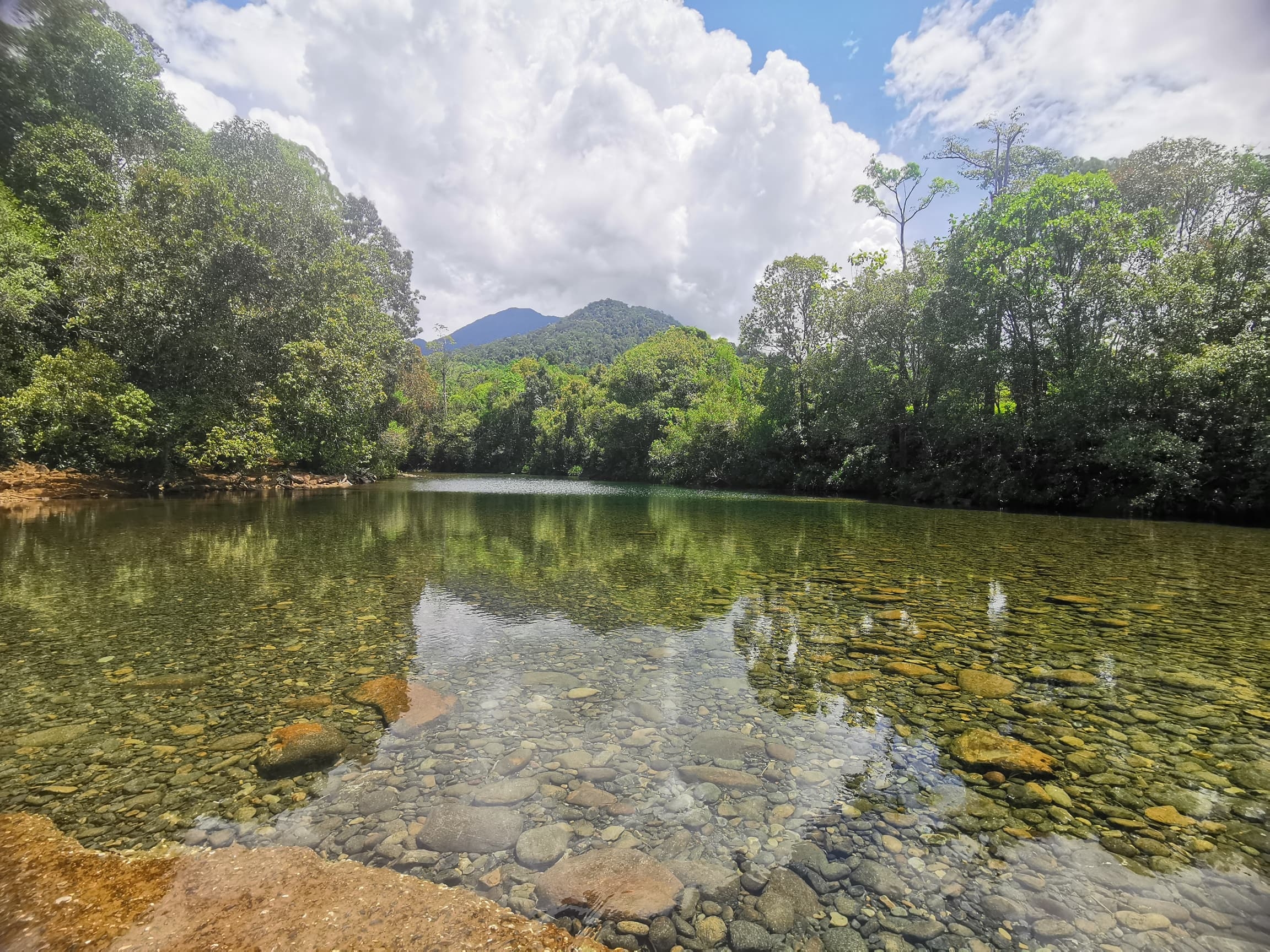
Crystal clear water of Sg Labuk – originating from the Meliau Range, serve as critical water sources for the communities living within the area.
Conclusion
This scientific expedition is essential for gathering first-hand information for forest conservation. The reserve boasts exceptional biodiversity and is home to numerous endemic and threatened species. Datuk Kugan elaborated that the discoveries and findings will further bolster Sabah's reputation as a global biodiversity hotspot and highlight the importance of protecting the lesser-known life forms in Borneo's rainforests. The reclassification of Meliau Range Forest Reserve as a Class I forest reserve is a prudent decision by the Sabah Forestry Department to preserve and conserve these high-conservation-value forests.
Hashtags

Try Our AI Features
Explore what Daily8 AI can do for you:
Comments
No comments yet...
Related Articles


New Straits Times
 12-08-2025
- New Straits Times
PM: Ethical, values-based AI vital for Asean's future
KUALA LUMPUR: Asean nations must unite in shaping artificial intelligence (AI) that reflects the region's shared culture, diversity and values, said Prime Minister Datuk Seri Anwar Ibrahim. He said the 700-million-strong bloc is uniquely positioned to develop AI that is not only advanced, but also inclusive, ethical and rooted in Southeast Asian traditions. "With our extraordinary diversity of cultures and languages, Asean has a generational opportunity to lead in shaping AI that bridges development divides, empowers small businesses, uplifts rural communities, strengthens public services, and expands access to healthcare, education and justice for all," he said at the opening ceremony of the Asean AI Malaysia Summit 2025. Anwar said the region must be "bold and principled" in ensuring AI serves the public good, adding that success should be measured not by technological sophistication, but by its ability to meaningfully improve lives in a sustainable and just way. He said Malaysia's own efforts, under its recently launched AI Nation Framework, would ensure AI becomes "a force for all", driving innovation, better governance and improved quality of life nationwide. The framework focuses on forward-looking policies, a digitally fluent workforce, secure infrastructure, digital trust and strategic investments. "This is more than a roadmap. It is a movement," he said. "Once, highways and ports powered our economic rise. "Now, we will build intelligent highways, secure data pipelines, future-ready talents, and ethical guardrails for AI. "We will get there together, with unity, resolve and unshakable will." The two-day summit at the Malaysia International Trade and Exhibition Centre (Mitec) in Kuala Lumpur is organised by the Digital Ministry. Present were Digital Minister Gobind Singh Deo and Chief Secretary to the Government Tan Sri Shamsul Azri Bakar. Also present were Asean secretary-general Dr Kao Kim Hourn, and Asean delegates, alongside global experts and industry players. The event also marked the launch of ILMU 1.0, Malaysia's sovereign AI platform, short for Intelek Luhur Malaysia Untukmu (Excellent Malaysian Intelligence for You), a homegrown large language model (LLM) developed by YTL AI Labs. Built to understand and process text, voice and images, it places strong emphasis on local context, ethics and safety. The first iteration, ILMU 0.1, was unveiled in December 2024 and outperformed leading global LLMs in Malay-language benchmarks, even passing Malaysia's PT3 and SPM national examinations with top grades.

Borneo Post
12-08-2025
- Borneo Post
ES Sunlogy signs deal for special energy zone devt in Baram
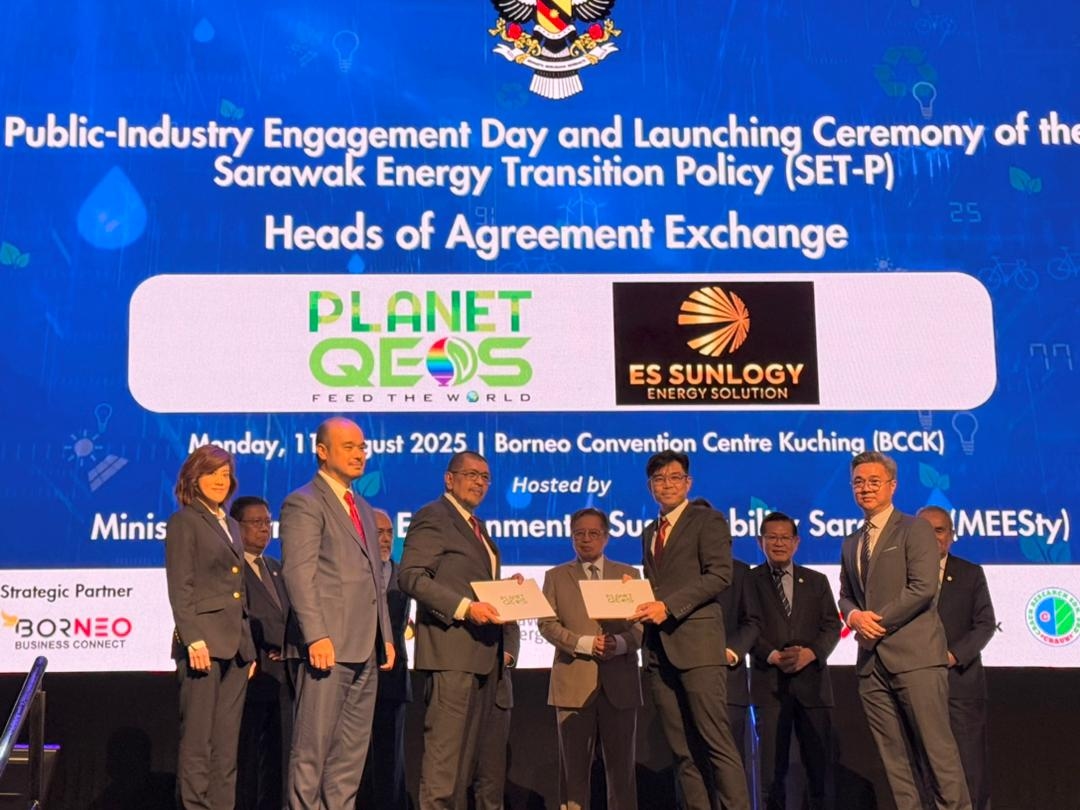
Abang Zohari (centre) witnesses the heads of agreement exchange between ES Sunlogy and Planet QEOS on Monday. KUCHING (Aug 12): ES Sunlogy Bhd (ES Sunlogy), an established provider of mechanical and electrical (M&E) engineering services as well as generation and sale of renewable energy, has entered into a heads of agreement to support the development of a 155 megawatt-peak (MWp) solar hybrid power plant integrated with a 310 megawatt-hour (MWh) Battery Energy Storage System (BESS) in Baram, Sarawak. Signed in partnership with Planet QEOS Sdn Bhd (Planet QEOS), the deal was witnessed by Sarawak Premier Datuk Patinggi Tan Sri (Dr) Abang Abdul Rahman Zohari Tun Openg during the Public-Industry Engagement Day and Launching Ceremony of the Sarawak Energy Transition Policy (SET-P). This flagship initiative forms part of the broader Special Energy Zone (SEZ) launched by the Sarawak Government to accelerate the region's transformation into a clean energy and economic growth hub. ES Sunlogy managing director Khor Chuan Meng, commented, 'Sarawak has taken a visionary step by launching the Special Energy Zone in Baram. 'This initiative will serve as a catalyst for clean energy adoption, rural transformation, and local value creation. ES Sunlogy is honoured to be part of this mission, contributing not only through our renewable energy projects but by anchoring our core M&E expertise in the region. 'We are committed to working closely with the State Government and its agencies to support capacity building and regional infrastructure development in Baram.' Planet QEOS, a Sarawak-based deep technology company, recently received in-principle approval from the Sarawak State Government for its integrated agrovoltaic and renewable energy proposal in Baram, which includes the development of up to 4,000 MWac of solar capacity over a 1,200-hectare site. The initiative combines large-scale solar generation with food and agriculture infrastructure under a patented Sustainable Animal Feed Economics (SAFE) model to support both energy and food security. The Baram project also includes the construction of a dedicated 180-kilometre transmission corridor—repurposing the former Sabah-Sarawak Gas Pipeline—to deliver green energy from Baram to downstream industrial zones in Bintulu. This facility will serve as a regional hub for technical training, systems integration, and knowledge transfer, creating high-value jobs for local talent and upskilling the surrounding communities. The project also contributes to Phase 1 of the Baram DeepTech Energy Program, which aims to deliver 500 MWac of firm renewable energy into the SEB Grid by 2027, powered by 1,850 MWp of solar photovoltaic systems and 3,677 MWh of battery energy storage. This development is expected to form the world's largest single-site BESS-based solar power system, supporting fully dispatchable clean energy with a 60 per cent capacity factor. The Baram DeepTech program represents a critical component of Sarawak's broader plan to build a firm, reliable renewable energy supply equivalent to two Bakun Hydroelectric Plants by 2030. Additionally, ES Sunlogy will support the SEZ's integrated agrovoltaic ecosystem through the deployment of solar energy systems to power agricultural, logistics, and rural development zones within Baram. The SAFE agrovoltaic initiative is expected to generate thousands of employment opportunities in engineering, food production, and clean energy services, while enabling Sarawak to lead innovation in agri-energy convergence across Southeast Asia. By offering engineering and energy solutions tailored to Sarawak's unique geographic and demographic needs, the Group aligns itself with the State's objective to promote sustainable and equitable growth beyond urban centres. With a proven track record of delivering more than 13 projects with over 300MWp of solar capacity across Malaysia, ES Sunlogy plans to establish a dedicated regional presence in Sarawak to support local project execution, talent development, and long-term stakeholder engagement. In alignment with ESG principles, the Company will also incorporate low-carbon construction practices, promote local workforce participation, and provide solar electrification solutions to surrounding communities. Baram Es Sunlogy SET-P solar

Borneo Post
08-08-2025
- Borneo Post
Tuhau and wild fungi workshop empowers Imbak communities
Dr Yap Sau Wai (seated front row, fourth from left) with officers from SFD, UMS, Yayasan Sabah Group and relevant government agencies during the closing ceremony of the Tuhau and Wild Fungi Workshop at ICCA on August 7. TONGOD (Aug 8): The Tuhau (Wild Ginger) and Wild Fungi Workshop under the Bioprospect Project and Development of Wild Fungi, Wild Ginger and Medicinal and Aromatic Plants (TUB) Project (12th Malaysia Plan), held from August 1 to 7 at the Imbak Canyon Conservation Area (ICCA), successfully gathered 86 participants from villages around Imbak Canyon and relevant government agencies to strengthen their knowledge on the biodiversity potential of wild ginger and mushrooms in Sabah. The closing ceremony of the workshop was officiated by the Group Manager of the Yayasan Sabah Group's Research Division cum Project Manager of the Bio-Prospecting Research and Development Project on Wild Mushrooms and Wild Ginger (TUB), representing the director of Yayasan Sabah. Also in attendance were officers from the Sabah Forestry Department (SFD), Universiti Malaysia Sabah (UMS), and Yayasan Sabah Group. The TUB Project, with an allocation of RM5 million under the 12th Malaysia Plan (2021–2025), is a strategic initiative aimed at identifying, protecting, and harnessing the potential of wild ginger and mushroom species in Sabah, contributing to economic development and national food security. The workshop featured presentations, demonstrations, and specimen exhibitions conducted by TS. Dr Elia Godoong (wild ginger research specialist) and Assoc. Prof. Dr. Jaya Seelan A/L Sathiya Seelan (wild mushroom research specialist) from UMS. In her speech, Dr Yap emphasised that the TUB Project is aligned with the Malaysian Sustainable Development Goals (SDGs), particularly Goals 2 (Zero Hunger), 8 (Decent Work & Economic Growth), and 15 (Life on Land). 'The strong commitment and close collaboration between Yayasan Sabah Group, SFD, and UMS are proof of the dedication to ensuring that the research outcomes deliver positive impacts on biodiversity and local communities. 'The Yayasan Sabah Group greatly appreciates the support from SFD and UMS for the close cooperation given throughout these five years,' she concluded. During the closing ceremony, 13 community leaders received participation certificates in recognition of their active involvement in the workshop.
