


Political consultations between the Republic of Uganda and the Embassy of Egypt in Uganda
Ambassador Selim, in his remarks, shared the historical ties between Egypt and Uganda, emphasizing how the relationship has evolved over decades and backed by mutual respect and shared interests. He pointed out that the cooperation between the two countries has played a pivotal role in the socio-economic development of Uganda, with Egypt providing valuable support in sectors that are crucial to Uganda's growth. Specifically, the Ambassador highlighted Egypt's significant contributions to energy, food security, and water management. He emphasized that these areas have had a lasting impact on Uganda's communities, creating opportunities for sustainable development.
One of the most notable areas of collaboration between the two countries has been Egypt's support for infrastructure development in Uganda. Ambassador Selim took pride in sharing about the just concluded groundbreaking ceremony for the construction of the Akii-Bua Stadium, a project that exemplifies Egypt's commitment to enhancing Uganda's sporting infrastructure. This collaboration builds on Egypt's previous contributions to various developmental initiatives in Uganda, including the construction of water facilities, weed removal project on L. Albert and Victoria, energy projects, and agricultural developments. Ambassador Selim expressed his confidence that these projects will have a profound and enduring impact on Uganda's development, particularly in terms of job creation and economic development.
Hon. Okello, in turn, expressed Uganda's sincere appreciation for the continuous support and partnership that Egypt has provided over the years. He highlighted the strategic importance of this collaboration in advancing Uganda's development agenda, particularly in the areas of energy, water, and food security, all of which are critical to the realization of Uganda's long-term development. Hon. Okello also emphasized the need for continued engagement between the two countries to explore new opportunities in trade, investment, and other key sectors. He noted that Egypt's experience in sectors such as agriculture and WASH development presents a valuable opportunity for Uganda to learn and grow through technical cooperation.
The consultations also focused on deepening trade and investment relations between Uganda and Egypt. Both sides acknowledged the untapped potential in expanding bilateral trade, with a focus on sectors such as agriculture, man facturing, infrastructure, and water development projects. Hon. Okello proposed that both governments explore new avenues to foster increased trade between the two countries, as well as implement policies to create a more conducive environment for investment. Both delegations agreed that a more integrated approach to economic cooperation could contribute significantly to the sustainable economic growth of both nations, and by extension, the entire region.
An important aspect of the discussions was the exploration of opportunities for enhanced people-to-people interactions. Ambassador Selim proposed that both countries work together to implement programs that facilitate capacity building exchanges, technical training, and the sharing of knowledge in various fields such as medicine, agriculture, water and energy security. Minister Okello also emphasized the value of such programs, noting that they could foster stronger ties between the people of Uganda and Egypt while also building a foundation for future cooperation in diverse sectors.
Both delegations also discussed the broader regional context of how Uganda and Egypt can work together to address shared challenges facing Africa. These include issues such as regional security, and the promotion of peace and stability across the continent. The discussions highlighted the importance of a unified African approach to solving these challenges, with Uganda and Egypt reaffirming their commitment to working together within regional and continental frameworks.
The bilateral political consultations between Uganda and Egypt have laid a solid foundation for continued collaboration in key areas of mutual interest. The discussions revealed a shared commitment to deepening bilateral ties and creating tangible opportunities for growth and development. Both nations have acknowledged the strategic importance of enhancing cooperation in sectors such as trade, food, water, energy and regional security. The partnership between Uganda and Egypt is a model for African cooperation, demonstrating how two nations, with a history of collaboration, can come together to tackle common challenges and harness their collective strengths.
Distributed by APO Group on behalf of The Republic of Uganda - Ministry of Foreign Affairs.

Try Our AI Features
Explore what Daily8 AI can do for you:
Comments
No comments yet...
Related Articles

Dubai Eye
 8 hours ago
- Dubai Eye
Israel demands release of all 50 Gaza hostages, Israeli broadcaster says
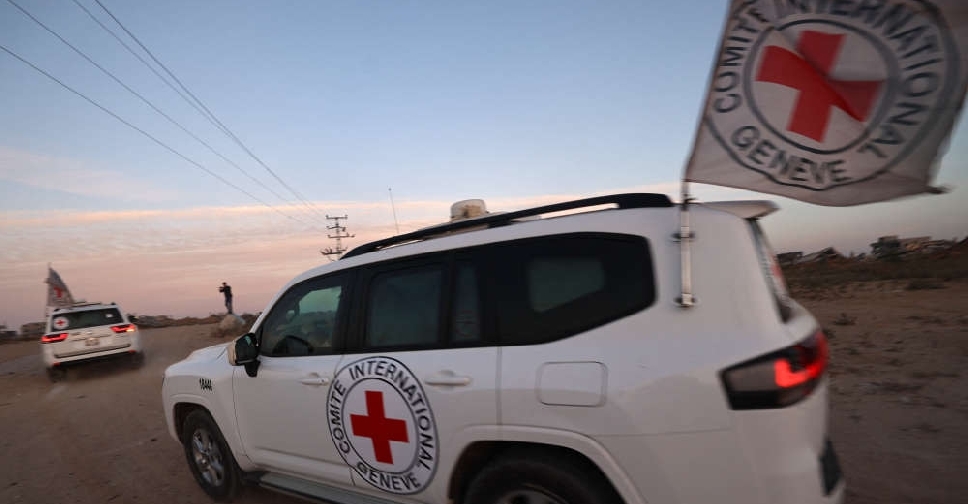
Israel is demanding the release of all 50 hostages held in Gaza, Israeli public broadcaster Kan cited the prime minister's office as saying on Tuesday, as talks on a proposed deal envisaging a 60-day truce and release of half the hostages continue. Efforts to pause the fighting gained new momentum over the past week after Israel announced plans for a new offensive to seize control of Gaza City, and Egypt and Qatar have been pushing to restart indirect talks between the sides on a US-backed ceasefire plan. The deal is nearly identical to a proposal Washington put forward earlier this year, a spokesperson for mediator Qatar said on Tuesday. Hamas rejected that deal in July. Under the deal, ten Israeli hostages held in Gaza will be returned along with the bodies of 18 others, spread out over 60 days. Israel says that of 50 hostages held by Hamas and its allies, 20 are believed to be alive. In exchange, Israel will release 150 detained Palestinians it sentenced to life in prison and 50 Palestinians it sentenced to more than 15 years. For each body Hamas returns, Israel will return the bodies of 10 Palestinian militants. Israel will permit aid to enter Gaza with the involvement of the United Nations and the International Committee of the Red Cross. The proposal includes the release of 200 Palestinian convicts jailed in Israel and an unspecified number of imprisoned women and minors, in return for 10 living and 18 deceased hostages from Gaza, according to a Hamas official. Two Egyptian security sources confirmed the details, and added that Hamas has requested the release of hundreds of Gaza detainees as well. The proposal includes a partial withdrawal of Israeli forces, which presently control 75 per cent of Gaza and the entry of more humanitarian aid into the enclave, where a population of 2.2 million people is increasingly facing famine. The last round of indirect talks between the sides ended in deadlock in July, with the sides trading blame for the collapse. Israel had previously agreed to the outline, advanced by US special Middle East envoy Steve Witkoff, but negotiations faltered over some of its details.

Dubai Eye
8 hours ago
- Dubai Eye
Israel studying Hamas reply to Gaza ceasefire proposal
Israel is studying Hamas' response to a Gaza ceasefire proposal, two officials said on Tuesday of a potential deal for a 60-day truce and the release of half the Israeli hostages still held in the battered enclave. Efforts to pause the fighting gained new momentum over the past week after Israel announced plans for a new offensive to seize control of Gaza City, and Egypt and Qatar have been pushing to restart indirect talks between the sides on a US-backed ceasefire plan. The proposal includes the release of 200 Palestinian convicts jailed in Israel and an unspecified number of imprisoned women and minors, in return for 10 living and 18 deceased hostages from Gaza, according to a Hamas official. Two Egyptian security sources confirmed the details, and added that Hamas has requested the release of hundreds of Gaza detainees as well. The proposal includes a partial withdrawal of Israeli forces, which presently control 75 per cent of Gaza and the entry of more humanitarian aid into the enclave, where a population of 2.2 million people is increasingly facing famine. The last round of indirect talks between the sides ended in deadlock in July, with the sides trading blame for the collapse. Israel had previously agreed to the outline, advanced by US special Middle East envoy Steve Witkoff, but negotiations faltered over some of its details. Israel's plans to seize control of Gaza City in the heart of the Palestinian enclave have since stirred alarm abroad and among the estimated one million people presently living there. On the ground, there were no signs of a ceasefire nearing as Israeli gunfire, tank shelling and airstrikes killed at least 20 Palestinians on Tuesday, according to Gaza health officials. Tanks completed taking control of the Zeitoun suburb, an eastern neighbourhood on Gaza City's outskirts, and continued to pound the nearby area of Sabra, killing three civilians, medics said. Local health authorities said dozens of people had been trapped in their houses because of the shelling. The Israeli military said it was checking the report. ISRAELI PROTESTERS DEMAND DEAL In Israel, the threatened offensive prompted tens of thousands of Israelis on Sunday to hold some of the largest protests since the war began, urging a deal to end the fighting and free the remaining hostages held in Gaza. Prime Minister Benjamin Netanyahu was expected to convene discussions about the ceasefire proposal soon, the two Israeli officials said. He faces pressure from his far-right government partners who object to a truce with Hamas. Ministers Bezalel Smotrich and Itamar Ben-Gvir have called for Israel to keep the war going until Hamas' defeat, and annex Gaza. Hamas official Izzat El-Reshiq said the truce proposal it has agreed to is an interim accord that would pave the way for negotiations on ending the war. A source close to the talks said that, unlike previous rounds, Hamas accepted the proposal with no further demands. But prospects for agreeing an end to the war appear remote, with gaps remaining on the terms. Israel is demanding the group lay down its arms and its leaders leave Gaza, conditions which Hamas has so far publicly rejected. The war began when Hamas-led fighters stormed into Israel, killing 1,200 people and taking 251 hostages. Israel's offensive has since killed more than 61,000 Palestinians, plunged Gaza into humanitarian crisis and displaced most its population.

Middle East Eye
12 hours ago
- Middle East Eye
Egypt mobilises 40,000 troops in Sinai amid Gaza displacement fears, source says
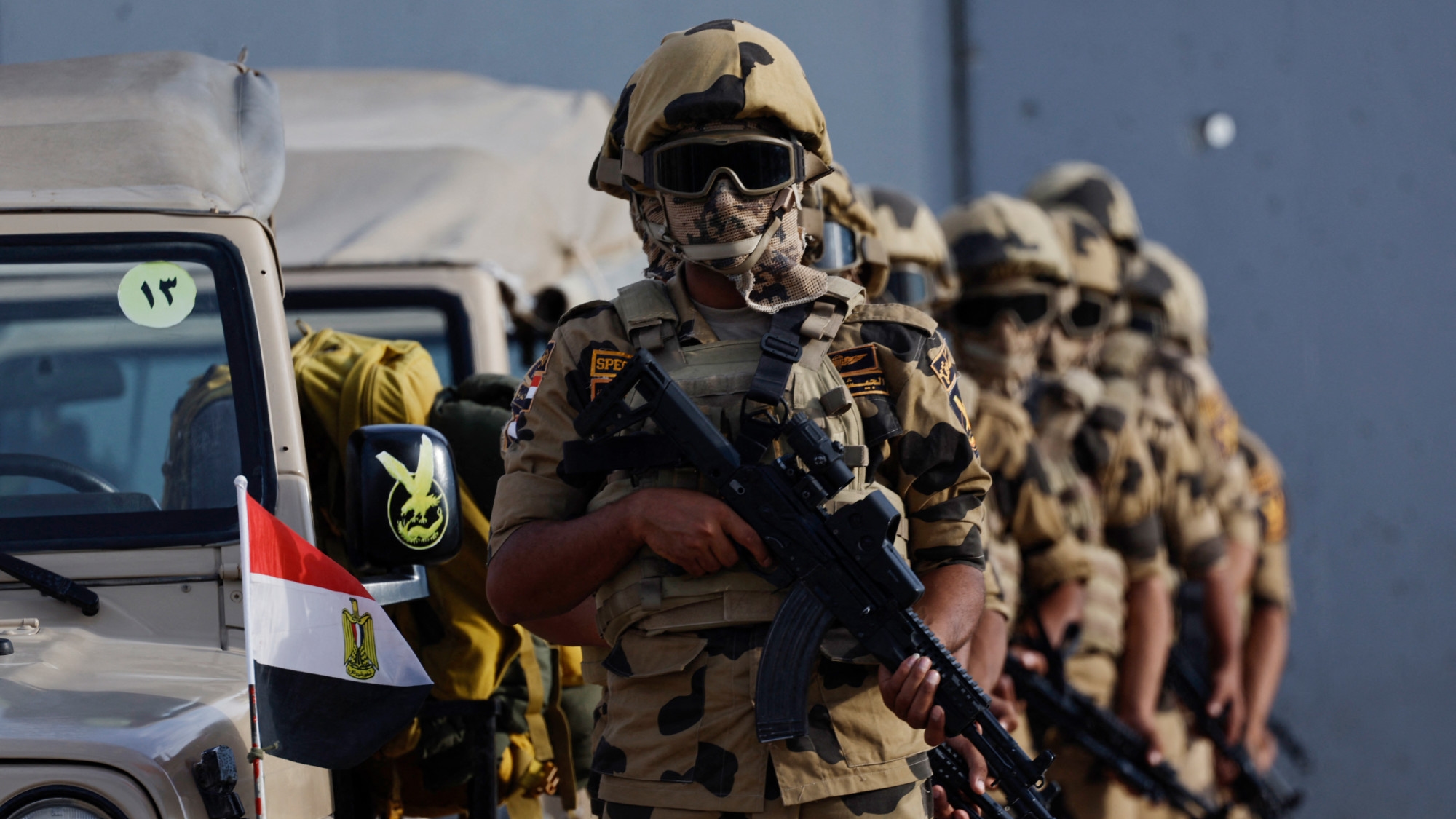
Egypt has deployed additional forces along the border with Gaza amid rising fears that Israel's planned occupation of the strip could push Palestinians into North Sinai, a senior military source told Middle East Eye. He said that about 40,000 soldiers are now deployed in North Sinai, almost double the number allowed under the 1979 Egypt–Israel peace treaty. 'Egypt's army is on the highest state of alert we've seen in years,' the source said. This followed 'direct orders from President Abdel Fattah el-Sisi in his capacity as commander-in-chief, following a meeting with the Supreme Council of the Armed Forces and the National Security Council,' he added. He said that Israel wants to dismantle Hamas in Gaza and force large numbers of Palestinians out, a position Egypt rejects. New MEE newsletter: Jerusalem Dispatch Sign up to get the latest insights and analysis on Israel-Palestine, alongside Turkey Unpacked and other MEE newsletters Egyptian forces are now stationed across various parts of North Sinai, including in 'Zone C,' the area adjacent to the Gaza Strip, he added. Egypt notified Israel of the reinforcements, which have been met with complaints about the size of the force and its presence in restricted zones. 'Egypt insists the mobilisation is defensive, but has made it equally clear that any strike on its territory would be met with a firm response,' the source said. Armoured vehicles, air defence systems, special forces and M60 battle tanks have been deployed to the nearby Rafah and Sheikh Zuweid cities and around al-Joura village near the border with Gaza. 'Egyptian liaison officers informed their Israeli counterparts that the recent measures were purely defensive and aimed at securing the border amid rising tensions,' the source added. A red line Earlier this month, North Sinai Governor Khaled Megawer issued a firm warning against any potential Israeli attacks against Egypt. Speaking to the media from the Rafah border crossing, in response to questions about the possibility of confrontation with Israel, Megawer said: 'Anyone who thinks of approaching our border will be met with an unexpected and outrageous response.' Megawer, who previously served as an army general and head of military intelligence, made the remarks amid growing concern that Israel's planned occupation of Gaza will lead to a mass displacement crisis. Since the start of Israel's genocide in Gaza, there have been reported attempts to forcibly displace hundreds of thousands of Palestinians from the Gaza Strip. North Sinai has long been floated as a possible destination for displaced Palestinians, an idea that has resurfaced multiple times over the decades. Cairo, however, continues to view such a scenario as a red line. Earlier this year, speculation reignited when US President Donald Trump suggested that Egypt and Jordan should accept Palestinians fleeing the war. 'The coming days will likely test both Egypt's security preparations and its diplomatic capacity' - Egyptian political analyst Egypt's response was unequivocal. 'The transfer of Palestinians can't ever be tolerated or allowed,' President Abdel Fattah el-Sisi said at the time. 'The solution is not to remove the Palestinian people from their place.' That sentiment is strongly echoed in North Sinai, where communities have lived on the same land for generations and view the forced displacement of Palestinians as both unjust and destabilising. 'Our land carries the graves of our ancestors, and we can never share it with anyone,' a 78-year-old tribesman in Sheikh Zuweid, who asked to remain anonymous, told MEE. In April, MPs and tribal leaders gathered in El-Arish city, the capital of North Sinai, to formalise their stance that Sinai should never become an alternative homeland for Palestinians fleeing Gaza. Sheikh Salama al-Ahmar of the al-Tarabin tribe said: 'We stand with Gaza, but not at the expense of Sinai's land or Egypt's sovereignty.' The imminent Israeli escalation in Gaza has raised questions about how Egypt would respond to large-scale displacement attempts or increased military activity near the Rafah border crossing, Gaza's only gateway to the outside world besides Israel. 'The coming days will likely test both Egypt's security preparations and its diplomatic capacity to help manage the Gaza crisis without compromising its own strategic interests,' a political analyst told MEE, requesting anonymity. 'An Israeli offensive of this magnitude could trigger a humanitarian catastrophe, forcing Palestinians to flee Gaza en masse, a scenario Israel may be counting on to depopulate Gaza and weaken Hamas permanently,' the analyst added. Economic ties despite tensions Despite widespread public sympathy for the Palestinian cause, Egypt and Israel have maintained strong ties since signing their US-brokered peace treaty in 1979. Egypt was the first Arab country to normalise relations with Israel. Under the treaty, the Sinai Peninsula was divided into zones with strict limits on the deployment of troops and heavy weaponry. Over the years, exceptions have been negotiated, particularly after Egypt's 2011 revolution, when the military increased its presence to combat insurgents in Sinai. While political rhetoric between Israel and Egypt has often been cautious, security and economic cooperation have steadily deepened. Police station stormed in Egypt as outrage over Gaza blockade reaches boiling point Read More » A recent large-scale gas import deal with Israel has sparked controversy in Egypt, as it was signed amid Israel's ongoing assault on Gaza, which has killed over 62,000 Palestinians. 'Cairo adopts a hard line against Israel over Gaza and the Palestinian issue, while maintaining pragmatic economic relations,' a former general intelligence officer and national security expert told MEE, speaking on condition of anonymity. Those ties include importing Israeli gas to meet domestic demand and re-exporting surplus to Europe, as well as cooperation under the Qualifying Industrial Zones (QIZ) agreement. 'Egypt also continues to benefit from US military aid under the peace treaty, while playing a key mediating role in Gaza, a position that strengthens Cairo's regional and international standing,' he added. However, the genocide has pushed bilateral relations to one of their lowest points in decades. Cairo sees Israel's campaign as a threat to border stability, a blow to its mediation efforts, and a potential risk to the durability of the peace treaty. A key point of contention is Israel's control of the Philadelphi Corridor, a narrow strip along the Egypt–Gaza border seized in May 2024. Egypt argues the move violates the peace treaty, while Israel claims it is a necessary buffer to prevent arms smuggling.
