



This nutritionist-designed beauty box has over £200 worth of products but is yours for £89 - here's everything inside
Beauty lovers can now try some of Perricone MD's bestselling makeup and skincare worth over £200 for just £89, and it includes their highly-rated Vitamin C Ester range.
Perricone MD created by Dr. Nicholas Perricone, a world-renowned healthy ageing expert, has launched a highly-anticipated Glow Edit Box in collaboration with nutritionist and Sunday Times bestselling author Emily English. Loaded with handpicked skincare and makeup must-haves, the must-have box includes selections from Perricone MD's bestselling No Makeup and Vitamin C Ester Collections - all for a fraction of the price.
Perricone MD's new Glow Edit Box is a brilliant way to try the best of the brand but for a snip of the price.
With over £200 of product but yours for just £89, it's a savvy way of trying bestsellers and personal favourites from nutritionist and social media sensation Emily English. If you're after a visibly smoother, healthier-looking complexion this summer, then this is the box for you.
With topical skincare solutions backed by powerful ingredients, this beauty box has need-to-know beauty secrets to achieve radiant, youthful-looking skin. And even better news? You can now shop the Glow Edit and get a free sheet mask with the code EMILYENGLISH.
A brand loved for its potent topical skincare solutions backed by powerful ingredients, cutting-edge research and extensive clinical and consumer studies, Perricone MD has joined with another big industry name; nutritionist Emily English.
Brimming with five mini products, perfect for travelling with the summer, the Glow Edit Box contains some of the brand's most-loved products, including the Vitamin C Ester CCC + Ferulic Brightening Under-Eye Cream which users say gives 'an instant lift and brightening' effect.
Using three forms of vitamin C, the brightening eye cream works to dramatically reduce the look of the three types of under-eye discolouration: brown, blue and red as well as minimising the appearance of under-eye puffiness and bags.
Other highlights include the Vitamin C Ester Citrus Brightening Cleanser. Formulated with Vitamin C Ester, a more potent and less irritating form of vitamin C, it works to perk up the skin, brightening and smoothing your complexion. Win win.
Perricone MD is the science-backed skincare brand that has been an industry favourite for nearly three decades.
Developed by Dr. Nicholas Perricone, a world-renowned healthy ageing expert and New York Times bestseller, he created the Perricone MD Three-Tier Philosophy that balances a healthy lifestyle with diet.
In short, the brand's partnership with nutritionist Emily English is a winning duo, encapsulating the powerful connection between a healthy, balanced diet, supplements and potent topical skincare to achieve radiant, youthful-looking skin.
And beauty lovers are already raving about the new Glow Edit Box, writing: 'Absolutely love this selection of products by Perricone, their products never fail to make my skin feel like the best version of itself, not to mention how well each product compliments the other with the combination of skin and skincare infused make-up!!! 10/10!!'.

Try Our AI Features
Explore what Daily8 AI can do for you:
Comments
No comments yet...
Related Articles


Daily Mail
 12 minutes ago
- Daily Mail
Devastating health impact of vaping revealed in major global study
Children who regularly vape are three times more likely to become smokers later in life, a bombshell report has claimed. Figures have long shown how the proportion of kids using e-cigarettes has exploded amid the decline of traditional smoking, with more than a third of 16 to 18-year-olds now regularly inhaling them. For comparison, less than one in ten were doing so a decade ago. But British researchers now believe the gadgets could pose a worse threat to children than thought. In the largest global review on vaping in young people to date, experts from the University of York and the London School of Hygiene and Tropical Medicine (LSHTM), found that vapers were also more likely to smoke more frequently and intensely. Regularly using e-cigs could also increase the odds of respiratory illness and substance abuse, the scientists said. However, other experts urged caution over the findings noting many of the studies assessed were merely observational and could not prove that vaping alone caused such health issues. In the research, the scientists analysed 56 reviews on 384 youth vaping studies. Of these, 21 looked at use of e-cigarettes among young people and later cigarette smoking. Writing in the journal Tobacco Control, the authors said the data available 'consistently indicated a significant association between e-cigarette use and later cigarette smoking in young people'. They said it was difficult to 'infer causality' from their review, but the 'repeated strong associations in prospective cohort studies are consistent with a causal relationship'. The analysis also suggested an increased risk among young people who vape of developing asthma or asthma exacerbation, they added. Other harmful outcomes linked to youth vaping included pneumonia, bronchitis, lower total sperm counts, dizziness, headaches and migraines. There was also a link identified between depression and suicidal thoughts among young vapers. Dr Su Golder, associate professor in health science at the University of York, said: 'The consistency in the evidence is striking. 'Across multiple studies, young people who use e-cigarettes are more likely to smoke in the future. These findings support stronger public health measures to protect teens from the risks associated with vaping.' Dr Greg Hartwell, clinical assistant professor at LSHTM, said: 'We found consistent evidence around transitions to smoking which of course, in turn, opens the door to the multitude of harms that conventional cigarettes bring. 'As the UK Government's chief medical officer states, marketing vapes to children is always unacceptable, and our review shows exactly why further restrictions on the tobacco industry, who control the vaping market, are so important.' Dr Rebecca Glover, senior author of the study, assistant professor at LSHTM, added: 'Vaping is having a detrimental impact on the health of young people globally and vaping appears to be a gateway to other substances. 'Our study provides the strongest evidence to date that young people globally face a serious range of physical and psychological harms from vaping and are at higher risk of transitioning to smoking.' But other experts today, who weren't involved in the research, labelled the findings 'overspeculation' and warned the studies analysed were observational or low quality. Professor Ann McNeill, an expert in tobacco addiction at King College London, said: 'It reported on 56 systematic reviews of which 53 were rated critically low or low quality, meaning authors should be extremely cautious before making any conclusions. 'The authors reported that the reviews found consistently that vaping was associated with subsequent smoking. 'This replicates the findings of many previous reviews and indeed research I have been involved in. 'However, the authors incorrectly state that this supports "a causal relationship". 'in other words that vaping causes smoking—the so-called 'gateway' effect. It is well-established that consistency does not mean causality.' Meanwhile, Dr Emma Beard, an associate professor in statistics and quantitative methods at University College London, said: 'The conclusion that vaping acts as a "gateway" is an overspeculation, especially when the paper notes that at a population level, smoking rates have generally fallen as vaping has risen. 'While protecting youth is vital, this review clearly shows the current evidence base on this topic has some significant weaknesses.' E-cigs allow people to inhale nicotine in a vapour—which is produced by heating a liquid, which typically contains propylene glycol, glycerine, flavourings, and other chemicals. Unlike traditional cigarettes, they do not contain tobacco, nor do they produce tar or carbon—two of the most dangerous elements. Nicotine's effect on the brain is well known—within 20 seconds of inhalation, it triggers the release of chemical messengers such as dopamine, associated with reward and pleasure. But it also increases heart rate and blood pressure and makes blood vessels constrict. This is because nicotine triggers the release of the hormone adrenaline. Despite NHS chiefs insisting it is safer than smoking, vaping is not risk-free. E-cigarettes can contain harmful toxins and their long-term effects remains a mystery. Experts are also concerned the high nicotine content might increase blood pressure and cause other heart problems. Last year, in world-first guidance setting out possible interventions to help people stop using tobacco products, the World Health Organization labelled the evidence around e-cigarettes as 'complex'. Vapes could not be recommended as way to stop smoking as too little is known about the harms and benefits, the UN agency said. In June, in a bid to tackle the surge in youth vaping, it was made illegal for businesses to sell or supply single-use vapes, such as Elf bars and Lost Mary, in shops and online. Only devices considered reusable—with a rechargeable battery and replaceable coil—are now allowed.
Daily Mail
40 minutes ago
- Daily Mail
Biggest shake-up in type 2 diabetes care for decade as patients to be offered fat jabs
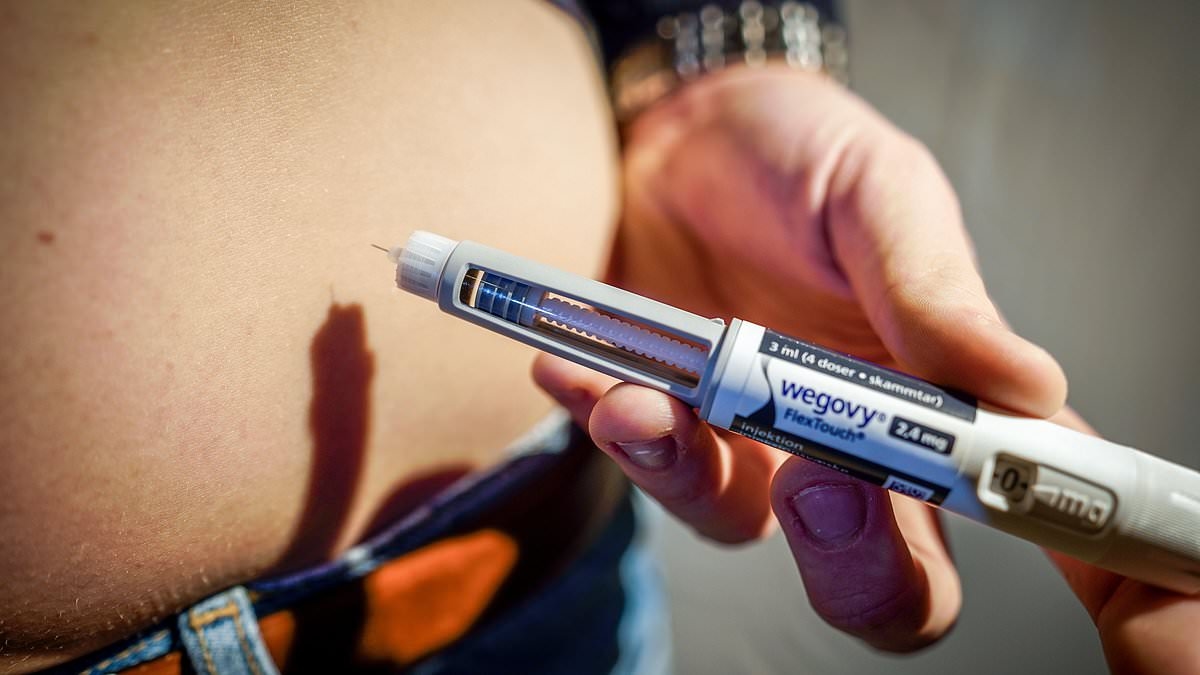
Fat jabs could be offered to people with type 2 diabetes much sooner in the biggest shake up in treatment for a decade. As part of several recommendations by the National Institute for Health and Care Excellence (NICE), patients would receive weight-loss drugs such as Ozempic in the early stages of care, rather than reserving them for the later stages. The new guidance also recommends ditching the current one-size-fits-all approach of starting everyone on the same medication in favour of more personalised care that aims to prevent complications like heart failure and heart attacks. This includes making newer type 2 diabetes drugs, known as SGLT-2 inhibitors, a first-line treatment option in a move that could eventually help save tens of thousands of lives. SGLT-2 inhibitors are once-a-day tablets that reduce blood sugar levels by helping the kidneys remove glucose, which is passed from the body through urine. However, analysis by NICE found these drugs are under-prescribed. The guidelines recommend patients who cannot tolerate metformin – the first-choice type 2 diabetes medication – should start with an SGLT-2 inhibitor on its own. The decision comes after evidence suggested these drugs protect the heart and kidneys as well as controlling blood sugar, NICE said. It is estimated the change could save almost 22,000 lives once uptake reaches 90 per cent of patients. Professor Jonathan Benger, deputy chief executive and chief medical officer at NICE, said: 'This guidance means more people will be offered medicines where it is right to do so to reduce their future risk of ill health. 'This represents a significant evolution in how we approach type 2 diabetes treatment. 'We're moving beyond simply managing blood sugar to taking a holistic view of a person's health, particularly their cardiovascular and kidney health. 'The evidence shows that certain medicines can provide important cardiovascular benefits, and by recommending them as part of initial treatment, we could help prevent heart attacks, strokes and other serious complications before they occur. 'This is particularly important given that cardiovascular disease is the leading cause of death in people with type 2 diabetes.' More tailored care for patients would see semaglutide offered much sooner. Semaglutide, sold under the brand name Ozempic, is licensed in the UK to treat type 2 diabetes, while its other brand Wegovy is also used by the NHS to help obese people lose weight. Around 4.6 million people in the UK are living with diabetes, with nine in ten of those having type 2. However, it is estimated that a further 1.3 million people may have undiagnosed type 2 diabetes. NICE analysed the records of 590,000 people and found SGLT-2 inhibitors are under-prescribed, particularly to women, older people, and black patients. Professor Benger added: 'The evidence from our analysis is clear. There are prescribing gaps that need to be addressed. 'The guideline update published today will help to increase equitable uptake of SGLT-2 inhibitors, which we know can prevent serious health complications.' Dr Waqaar Shah, chairman of the guideline committee, added: 'We know that SGLT-2 inhibitors are currently under-prescribed, and our health economics analysis shows that people living in the most deprived areas would particularly benefit from universal access to these treatments. 'These recommendations could help reduce health inequalities while providing better outcomes for everyone.' Elsewhere, the draft guidance suggests different treatments for diabetes patients with certain characteristics or health conditions. These include adults with cardiovascular disease, who should be offered a triple therapy including weight-loss jabs. Meanwhile, adults diagnosed with type 2 diabetes before 40 should be offered dual therapy before fat jabs are considered, while patients with chronic kidney disease should have tailored recommendations based on their kidney function. A public consultation on the new NICE guidelines is open until October 2. Douglas Twenefour, head of clinical at Diabetes UK, said: 'This long-awaited announcement propels type 2 diabetes treatment into the 21st century. ' Boosting access to newer treatments will be transformative for people with type 2 diabetes, while ensuring the UK keeps pace with the global momentum in treating the condition. 'The majority of people with type 2 diabetes are not currently taking the most effective medication for them, putting them at risk of devastating diabetes-related complications. 'Diabetes is a leading cause of cardiovascular disease, and tailoring treatment based on individual risk could protect thousands against heart attacks and kidney disease. 'These guidelines could go a long way to easing the burden of living with this relentless condition, as well as helping to address inequities in type 2 diabetes treatments and outcomes.'


The Independent
41 minutes ago
- The Independent
Boys and girls should be taught about periods together in school, academics say
Girls and boys should be taught about periods in mixed-sex groups in school to improve their understanding of menstruation, researchers have said. A study by University College London (UCL) academics has suggested that pupils in schools are being given insufficient information around periods. For many pupils they are given just two lessons about periods in their whole school career – one in primary and one in secondary, researchers have said. They have called for lessons on menstruation in schools to be much 'more comprehensive'. Since September 2020, relationships and sex education has been compulsory in secondary schools in England, while relationships education has been compulsory in primary schools. Professor Joyce Harper, from UCL Institute for Women's Health, said: 'Educating pupils about periods may now be compulsory in schools in England and Wales, but we know that for many of them that still only amounts to two lessons in their entire school career.' The researchers suggested that periods should be taught among mixed-sex groups, as well as single-sex groups, which some schools do not currently do. Prof Harper said: 'Our focus groups were also of the view that boys need to be part of that education. 'It was agreed that classes should not be segregated by gender, believing mixed sessions are crucial for boys' education. 'Although some saw value in single-sex classes to allow students to speak more freely, they still felt mixed sessions were essential to improve overall understanding. 'They suggested this could help boys understand and support their friends and future partners through menopause.' Overall, 55 women took part in the study divided into two groups based on age (18 to 25 and 26 to 40) and five focus groups were conducted for each group. They were recruited via social media, and many of the women were educated before the topic on menstruation became mandatory in English schools. The academics said menstruation is 'highly stigmatised' and a 'lack of education' about difficult periods restricts individuals from seeking help. Co-author Caroline Musulin, from UCL Institute for Women's Health, said: 'Many women endure menstrual problems longer than they should due to the inability to speak openly about uncertainties, fears of being dismissed by healthcare professionals, the view that it's 'just' a painful period or feelings of shame. 'Stigma, secrecy, and the expectation to 'cope' with painful periods contribute to the systemic dismissal of menstrual discomfort.' The latest statutory Government guidance on relationships, sex and health education (RSHE) in schools says pupils should be taught about menstruation in primary and secondary school. The guidance, which was published last month, says pupils should learn the facts about the menstrual cycle, including physical and emotional changes, by the end of primary school to help them understand what to expect. By the end of secondary school, pupils should learn about menstrual and gynaecological health – including period problems such as premenstrual syndrome, heavy menstrual bleeding, endometriosis and polycystic ovary syndrome – as well as menopause, the guidance adds. The latest Department for Education (DfE) guidance says: 'RSE lessons should ensure that both boys and girls have opportunities to practise respectful communication and understand experiences which are different from their own, including menstruation and menopause.' Schools in England will have to follow the statutory RSHE guidance from September 2026. Sarah Hannafin, head of policy for school leaders' union NAHT, said: 'Teaching about periods is a vital part of health education for all pupils. 'Although many schools may separate classes to create a safe space for discussions on topics like this, mixed-sex groups should also be planned as it is vital that pupils understand others' experiences. 'Schools need freely available high-quality resources to support them to do this. 'Education about periods needs more than a single lesson but the curriculum in both primary and secondary schools is overcrowded and the new RSHE guidance has added a lot of new content without any additional time being created.' Pepe Di'Iasio, general secretary of the Association of School and College Leaders, said: 'We fully support the need for boys and girls to be taught about menstruation in a comprehensive manner which goes beyond biological facts and covers the wider effects on wellbeing. 'It is essential to be able to discuss this topic openly without misinformation or embarrassment. 'While it is covered in the RSHE curriculum we would welcome consideration of how teaching of this topic might be strengthened.' A DfE spokesperson said: 'Understanding menstruation is an important part of growing up, which is why we have brought in a new relationships, sex and health education curriculum to take effect next year, with clear guidance that pupils should be taught about both physical and emotional changes, as well as topics from endometriosis to heavy menstrual bleeding. 'As part of our plan for change, we're providing teachers with new resources to help them run great lessons on these issues, tackle stigma head-on and support every child to achieve and thrive.'
