


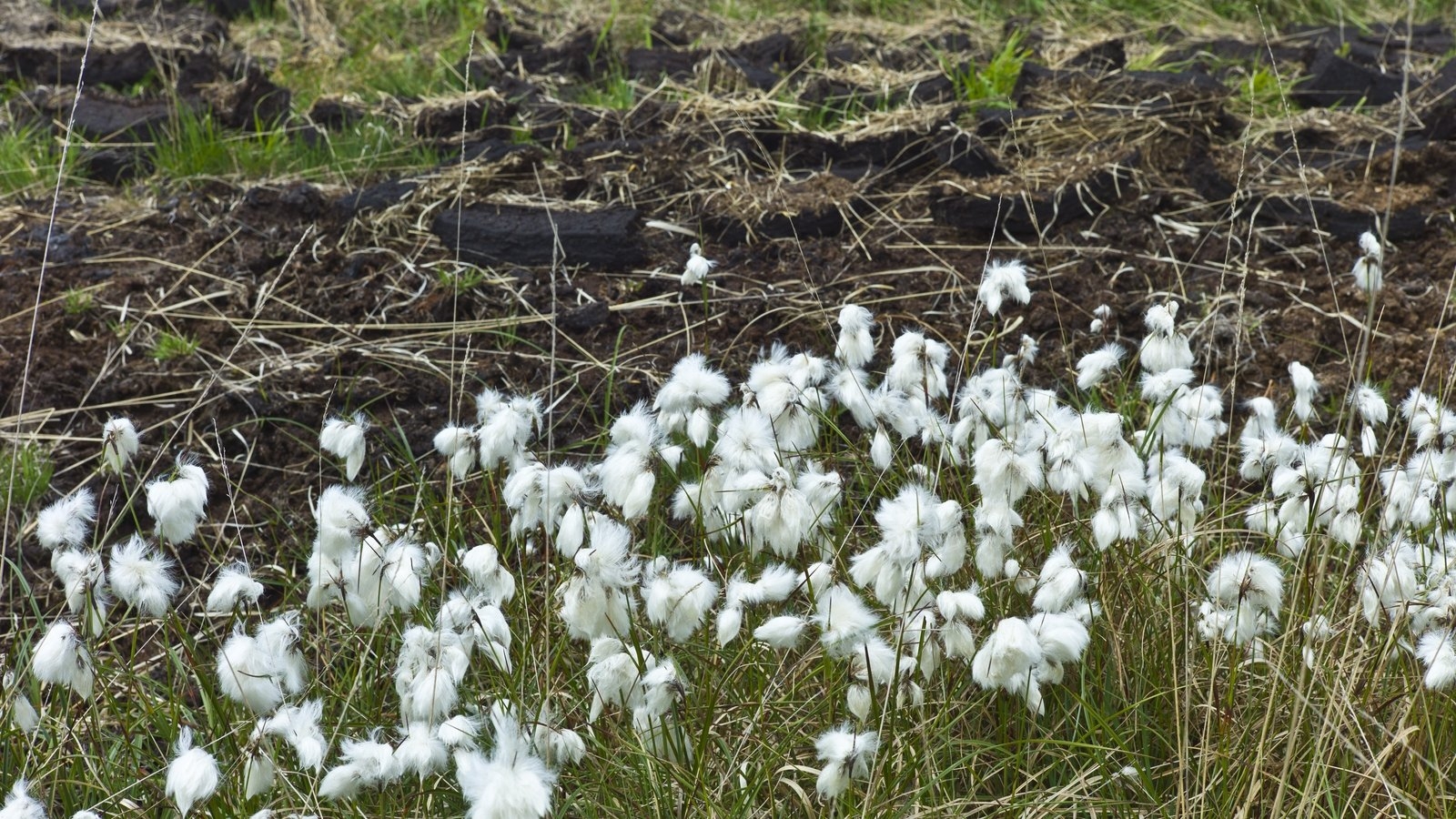
Mapping Ireland's peatlands to help cut carbon emissions
Ireland is pockmarked with patches of dark brown peat soil that make up at least 20% of the land cover, according to Dr Eve Daly, a geophysicist at the University of Galway, who co-led a groundbreaking project on finding peat.
"Peatland soils contain comparable amounts of carbon to the likes of rainforests so a more accurate map can lead to better land management decisions and mitigate against greenhouse gas emissions," she said.
Her research team developed a new mapping approach using gamma radiation measurements to identify for the first time "transition zones" - typically hidden under forests and grasslands - where the soil changes from being peat to mineral-based.
Dr Daly says the area of soil in Ireland considered "peaty" has increased thanks to a new colour-coded "peat/non-peat" map produced by the researchers.
"Improved mapping at higher resolution and locating where hidden organic peat soils are and their extent are key inputs into working out carbon emission factors," she said.
Her project co-leader Dave O'Leary said about 80% of Ireland had now been mapped out in patches of "peat" brown or "non-peat" green.
"Few countries have invested in such an incredible data set, which puts Ireland at the forefront of peatland mapping research," he said.
'New lens'
Land use, including farming and peatland draining, is a major source of Ireland's carbon emissions which could see the country failing to meet an EU-agreed climate target to cut emissions by over 50% by 2030.
A recent report said Ireland risks an EU fine of almost €30 billion if it fails to reach the target and recommended the restoring - and rewetting - of thousands of hectares of peatlands to help deliver "massive" cuts in emissions.
"We need to use more modern technologies or use old technologies with new lenses to try and find these hidden peat soils," Dr Daly said.
Triven Koganti, an agroecology expert at Denmark's Aarhus University, said that 5% of global greenhouse gas emissions came from cultivated peatlands.
"Historical agricultural draining of peatlands... or to use them as a fuel source has led to significant greenhouse gas emissions," he said.
So "an accurate accounting" of peatland boundaries is needed to achieve "current global initiatives to restore peatlands", he said, adding the Irish research "plays an important role in establishing this".
'Bird's eye' technique
The mapping technique - described as "bird's eye" by Dr Daly - is based on gamma-ray data measured by a sensor on board a plane that has been flown low over Ireland for a decade in a state-funded geophysical survey.
"All rocks and different amounts of soils give off a certain amount of natural radiation but peat doesn't as it's full of organic material," she said.
Soils are usually a mixture of broken bits of rock, water and air, but peat soils are distinct from mineral soils as they are formed from decaying plant material, water and air, and contain a very high amount of carbon.
When waterlogged, this carbon is stored in the soil but when water is removed, for example via drainage, peat soils then emit carbon dioxide as the decay process restarts, Dr Daly said.
The State-funded "Tellus" survey began in 2011 and is expected to be completed later this year.

Try Our AI Features
Explore what Daily8 AI can do for you:
Comments
No comments yet...
Related Articles


Irish Post
 7 hours ago
- Irish Post
Met Éireann will fund research project which uses AI to improve flood forecasting
A RESEARCH project which uses AI to improve flood forecasting in Ireland has secured Met Éireann funding. Based at the University of Galway, the study is being led by Dr Indiana Olbert, a lecturer in Civil Engineering at the School of Engineering in the College of Science and Engineering at the university. Titled IMUFF: Integrated Multi-model multi-hazard Flood Forecasting, Dr Olbert's two-year project will address the threat of compound coastal-fluvial flooding – when rivers and streams burst. It seeks to develop an advanced system for three-day flood forecasts using AI-generated time series and water depth maps. 'More than 300 Irish communities at risk from this type of flooding and the project will aggregate diverse data sources - such as meteorological forecasts, river flows, tidal record and satellite data - directly supporting Met Éireann's flood forecasting, strengthening community resilience and improving Ireland's readiness for compound flood events in a changing climate,' a spokesperson for the university explained. The project is one of eight based at universities across Ireland which have been awarded a total of €2.8m in funding from the national meteorological service. The funding is part of Met Éireann's Weather and Climate Research Programme, which aims to strengthen national research capacity and scientific expertise in weather and climate, through high-impact projects. 'I am delighted to receive this funding award from Met Éireann,' Dr Olbert said. 'As floods are amongst the most common and deadly weather-related natural disasters, the project aims to develop a state-of-the-art AI-based compound flood forecasting system,' she added. 'The project will support the forecasting work delivered by the Flood Forecasting Centre at Met Éireann, increasing resilience of Irish communities and better preparing for the growing threat of compound coastal-fluvial floods.' A second project at the University of Galway has also received funding Met Éireann funding. Dr Paul Nolan's T3UD: TRANSLATE-3: Underpinning Data research project has also been awarded a grant. A climate scientist and project lead in the Irish Centre for High-End Computing (ICHEC) at the university, Dr Nolan's project will deliver updated climate projections and related products for Ireland over the next four years. 'Using global data it will also explore how these projections are used in practice across different sectors, addressing uncertainty and risk management,' a university spokesperson explained. 'Ultimately, the work aims to enhance national climate services by producing user-relevant, scientifically grounded projections while communicating the limitations and confidence levels of the data.' Dr Nolan said he and his team were 'delighted' to receive Met Éireann's support. 'The combination of high-resolution local simulations from ICHEC and historical data from Met Éireann means that we can provide the best insights from the worlds of physics and statistics to inform the climate adaptation plans of Irish local authorities, utilities, and other end-users,' he added. Professor Lokesh Joshi, Interim Vice-President for Research and Innovation at the University of Galway, said they were 'delighted' that two university projects have been selected for funding under Met Éireann's research programme. 'These awards recognise the strength of University of Galway's research in vital areas such as delivering advanced climate projections and improving flood forecasting,' he said. 'Together, these projects will help deliver real benefits to communities in Ireland as we face more extreme weather events and a changing climate,' he added. See More: Flooding, Funding, Ireland, Met Eireann, University Of Galway


Irish Examiner
14 hours ago
- Irish Examiner
Met Éireann grants €2.8m to six university projects for flood and climate research
A total of €2.8m has been awarded by Met Éireann to fund weather and climate research projects. The funding will cover six new university projects to further develop climate services and new flood forecasting models. The awards are being made via the Met Éireann Research Call 2024 to innovative projects aimed at addressing climate change, extreme weather events and environmental sustainability. Met Éireann's 'Weather and Climate Research Programme' aims to strengthen national research capacity and scientific expertise in weather and climate through high-impact projects. The flood forecasting project titled 'Integrated Multi-model multi-hazard Flood Forecasting' (IMUFF) is a project based at the University of Galway (NUIG) and will receive €399,976. The other five projects revolve around climate services under Met Éireann's 'TRANSLATE' climate flagship programme. The project receiving the most funding is The 'TRANSLATE-3: Underpinning Data' (T3UD), also hosted at NUIG, which has been awarded €599,992. 'Building Resilience and Adaptation Capacity for future extreme Events' (BRACE) is a project based in University College Cork (UCC) which will receive €599,981. 'Extremes Across Climates and Timeframes' (EXACT), a project in Maynooth University, will get €599,704. The final two climate service projects will collect just shy of €300,000 apiece. They are research projects both hosted in UCC. 'CLImate services for Multi-sector Benefits' (CLIMB) will take in €299,392, and 'Climate-Informed Energy Systems Planning to Support Ireland's Net Zero Ambitions' (ClimEnergise) will get €299,546 from Met Éireann. The 'TRANSLATE' programme continues this Met Éireann-led initiative to optimise standardised climate projections for Ireland. The projects aim to expand the knowledge and understanding of climate change impacts from the annual to decadal timeframe. They will explore the nature of how extreme events are changing and will develop services that support adaptation and decision-making for greater climate resilience in Ireland. The flood forecasting research project is aimed at improving our understanding of the interaction between river discharge, tide and storm surge, providing valuable insights on flood risk. On the awarding of the funding, Director of Met Éireann, Eoin Moran, said: 'On behalf of Met Éireann, I extend my sincere congratulations to University College Cork, Maynooth University and University of Galway. We look forward to the significant advancements each institution will contribute to our collective understanding of weather, climate, and environmental systems. "These research projects represent critical contributions to both national and international efforts to address climate change, extreme weather, and environmental sustainability. As a proud supporter of innovative research, Met Éireann is committed to ongoing exploration that supports adaptive responses and strategic planning for improved climate resilience.'

Agriland
a day ago
- Agriland
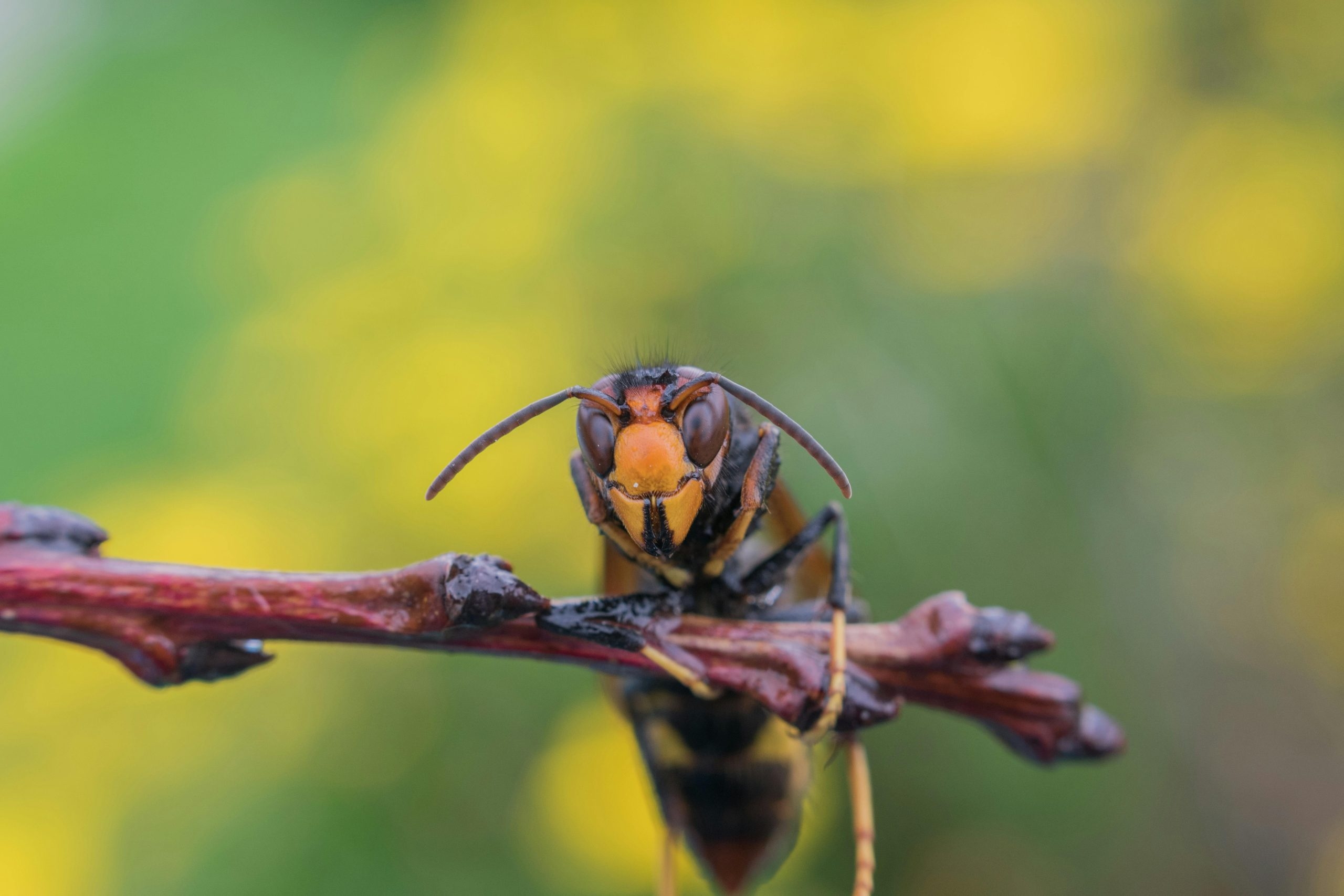
What are the risks to the Irish agri-environment from the Asian hornet?
Following confirmation of the presence of an Asian Hornet in Ireland by the National Parks and Wildlife Service (NPWS), Sussex-based scientist Norman Carreck - who has kept bees since the age of 15 - told us what complications an invasion of the insects would bring to Ireland. Carreck said beekeepers in Ireland will be rightfully concerned by the recent discovery, as these hornets do enjoy eating honeybees. However, the scientist warned that the hornets can have a wider impact on the Irish environment. The scientist described them as a very opportunistic species who eat all sots of insects, and - similar to wasps - enjoy attacking fruits which grow in Ireland, such as blueberries and strawberries. Their feeding habits can cause quite large economic losses to farmers and growers. He also stated that there is a strong public health risk, mostly because hornets nest in places where humans are more likely to disturb their nest. Carreck explained how the species is not individually more aggressive than European hornets or wasps, but warned if you stir up a nest there is a good chance of being stung. He also cited hornet-related fatalities in France and Spain. He urged the public to keep an eye out for the species saying they are quite distinct. Carreck said: "European hornets look a yellow brown colour while Asian hornets are black with yellow legs." When asked will these hornets do well in Ireland, Carreck said: "They are doing really well in warm places such northern Spain and France, but they are also doing reasonably well in northern Italy where it is quite cool, and in Belgium and The Netherlands, where the climate is not too different from Ireland, except drier." They do like good weather to establish, but even though their nest is made of paper and left out in weather, they are remarkably weather-proof, so even torrential rain won't destroy them." Carreck explained that it is possible Ireland's higher rainfall will make it a less habitable environment for the insects, though they have proved to be quite a robust species out of their natural environment.. However, the scientist said the difference in rainfall between the east and west of Ireland may mean the insects could enjoy the east. He added that he would not consider Cork too unsuitable for them. Carreck said that this invasive species can enter the country in many ways. While the Heritage Council's 2023 risk assessment highlighted the role of sentinel hives in importing the insects, the scientist highlighted that the Asian hornet does not need bees to get into Ireland. He said that there is many ways they can get to the island, and an individual queen can arrive though somebody's luggage, as well as fruit, vegetables, and other commodity shipments. Carreck said the most likely entry is through ports, noting that this week's sighting was in Cork, and the last sighting in 2021 was in Dublin, two cities with large ports. Despite this being a common entry point, the UK scientist said that these hornets are equally commonly found on lorries, and so could be found anywhere in the country. Carreck explained how having first appeared in Gloucestershire in 2016, the Asian hornet is now established in the extreme south-east corner of England - such as Kent and east Sussex - since 2022, despite the official government view being that they are not established. He added that originally, there was only one or two nests recorded, up to a max of four nests a year, with numbers falling during Covid-19 due to less cross-Channel traffic. However, he said in 2023, there was suddenly 75 nests in the year. While that figure fell sightly in 2024, this year looks set to beat the 2023 record, as 54 nest have already being confirmed as of last week. Tests by the UK national bee unit and associated lab showed some of this year's queens were offspring of last year, while others were grouped from nests that were not discovered. Carreck explained that the UK's Animal and Plant Health Agency (APHA) bee inspectors have been trained to use cherry pickers to destroy the nests. He said it is still quite early in the season for nests to be spotted at the top of tall trees, as typically they go unnoticed until leaves fall. According to the scientists, as the hornets produce their offspring late in the season, inspectors have to race to the destroy any nests they discover before this point.
