



Enemy demolishes houses in Nur Shams refugee camp east Tulkarm
The Zionist occupation forces demolished on Sunday a number of houses in Nur Shams refugee camp, east of Tulkarm city, in light of the ongoing aggression against it for the eighth consecutive day.
According to the Palestinian News Agency (Wafa), the occupation forces demolished a number of houses in Al-Manshiya neighborhood on the main street of the camp, including the houses of martyrs Mohammed Jaber and Imad al-Din Shehadeh.
It added that the occupation forces continue to search and sabotage houses in Al-Manshiya neighborhood, with citizens inside their houses, which increases their suffering and the gravity of the humanitarian situation.
The occupation forces imposed a tight siege on the camp and its outskirts, turning it into a military barracks, while forcing its residents to leave it by threats and intimidation.
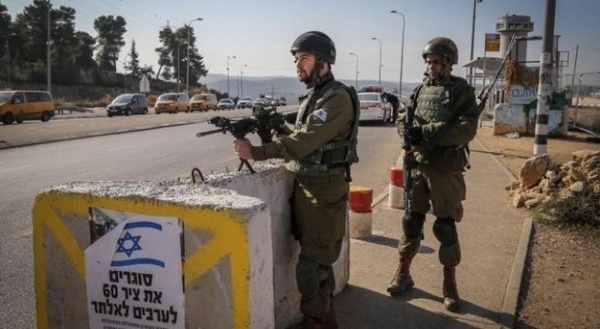
At the same time, the occupation forces pushed military reinforcements of heavy vehicles and bulldozers into the city and its two camps, amid a heavy deployment on Nablus Street, which connects between the camp and Tulkarm camp, coinciding with the seizure of a house on the mentioned street, and turning it into a military barracks.
The occupation soldiers stopped vehicles passing through Nablus Street, searched them, checked the identities of their passengers and subjected them to interrogation, but no arrests were reported.
Whatsapp Telegram Email Print
more of (International)

Try Our AI Features
Explore what Daily8 AI can do for you:
Comments
No comments yet...
Related Articles


Saba Yemen
 37 minutes ago
- Saba Yemen
Zionist enemy continues its demolition policy under pretext of lacking permit in Beit Sira, Ramallah
Ramallah - Saba: This morning, Tuesday, Israeli enemy forces demolished a house, a café, a barracks, and a wall in the village of Beit Sira, west of Ramallah. Security sources reported to the Palestinian News Agency (WAFA) that a large Israeli military force, accompanied by bulldozers, stormed the village and began demolishing the café of citizen Abdul Razzaq Muhammad Mustafa al-Hajj, amid a heavy deployment in the area. In a later development, local sources reported that Israeli bulldozers demolished a house consisting of two apartments, in addition to a barracks and a wall, owned by Yahya al-Abbasiya Anqawi, with eight residents. The house is located on Latrun Street.
Saba Yemen
37 minutes ago
- Saba Yemen
Israeli forces arrest young man in Tulkarm, shut down Jaba checkpoint, & raid Satah Neighborhood in Al-Bireh
Occupied Quds – Saba: Israeli occupation forces on Tuesday arrested a young man from the city of Tulkarm, closed the Jaba military checkpoint northeast of occupied Quds, and stormed the Satah neighborhood in the city of Al-Bireh in the occupied West Bank. According to the Palestinian News Agency WAFA, Israeli forces arrested the young man as part of their ongoing aggression against the city of Tulkarm and its two refugee camps, Tulkarm and Nur Shams, which has now continued for the 205th consecutive day. A military foot patrol stormed several streets in Tulkarm and stationed in Nablus Street, known as 'Banks Street,' before moving towards the vicinity of Thabet Thabet Governmental Hospital, where they disrupted traffic and prevented vehicles from passing, causing a major traffic jam. The agency added that Israeli soldiers fired live bullets and stun grenades toward civilians before abducting a young man, blindfolding and handcuffing him, and taking him toward the Hadaida neighborhood in Tulkarm refugee camp. His identity remains unknown. In a related development, Israeli forces closed the Jaba military checkpoint this evening, restricting the movement of Palestinians. Local sources confirmed that Israeli troops raided the Jaba–Ram road and hurled stun grenades at Palestinian vehicles at the entrance of Ram town, while simultaneously shutting down the nearby Jaba checkpoint, which led to a severe traffic jam. Meanwhile, Israeli occupation forces also stormed the Satah neighborhood in Al-Bireh, where they fired stun grenades and toxic tear gas. No injuries were reported.

Saba Yemen
39 minutes ago
- Saba Yemen
Yemeni Support Battle of Awareness: Implications of Leader of Revolution's Speech on Genocide & Crime of Starvation in Gaza
Sana'a - Saba: In his latest speech, the Leader of the Revolution, Sayyed Abdulmalik Badr al-Din al-Houthi, outlined a strategic reading that reaffirms the equation of Yemeni support for the Palestinian people in its military, naval, and political dimensions as an option rooted in the awareness of the situation, he placed the aggression on Gaza within a comprehensive project targeting the nation's identity, decision-making, and sovereignty, and framed the steadfastness of the Palestinians as a living standard by which to measure the presence of values and the strength of will within the body of the nation, from the Atlantic to the Gulf. Based on this vision, the Leader presented the crime of starvation as the most dangerous form of genocide, explaining that it is a systematic policy managed using precise mechanisms and carefully calculated figures aimed at depriving civilians of the necessities of life, turning a morsel of bread, a dose of water, and medicine into blackmail and pressure cards more deadly than the fires of direct war. In this context, he refuted the occupation's claims about facilitating the entry of aid, stating that what is allowed does not exceed meager, select quantities, often expired, used to polish a false image of absent "humanity," while the actual reality is governed by the equation of closure and economic strangulation witnessed before the eyes of the world. He also revealed that the occupation not only controlled the volume and quality of aid, but also transformed it into a systematic tool of killing, by randomly dropping it from the air, killing civilians, or by targeting its distribution points with live ammunition, this situation transforms aid into a bloody trap, exacerbating the suffering of the besieged and adding a new chapter to the record of crimes that have affected every inch of the Gaza Strip as a result of the Zionist extermination machine. This, the commander explained, is linked to international and American recognitions that described what is happening in Gaza as genocide, these recognitions carry a heightened political and legal significance, as they are issued by circles that have long provided cover for the enemy, this completely exposes the false narrative of "self-defense" and provides the boycott and prosecution movements with additional leverage, enhancing their ability to pressure and hold accountable. From a humanitarian perspective, the speech described the targeting of children as the crime of the century, where cold political calculations intersect with the cruelty of stripping away humanity, all international slogans proclaimed to protect children have fallen flat, and the killing of children has become conclusive evidence of the complete moral collapse of the global value system. In the same context, the Leader placed the targeting of media professionals in its true context as part of the occupation's war on truth, explaining that the killing of journalists and photographers is not an accidental incident, but rather a systematic policy aimed at silencing witnesses and drying up sources of living evidence of crimes, ensuring that the enemy's narrative remains the sole source of evidence on the international scene. This is linked to the expansion of the discourse to characterize the crime from isolated incidents to an integrated system, in which the tools of direct killing intertwine with the health blockade, the destruction of infrastructure, and forced displacement, all within the framework of a systematic political engineering aimed at reshaping Palestinian society on the basis of long-term humiliation and subjugation. Turning to the cultural depth, the Leader of the Revolution explained that these crimes do not represent isolated individual deviations, but rather are the product of a deeply rooted intellectual and ideological structure in Zionist society, where the generation is raised on hatred and murder is presented as a personal achievement that inspires pride, transforming brutality into a collective culture rooted in consciousness and behavior. From this perspective, the Leader's speech linked the daily crimes in Gaza to the battle for awareness related to the sanctity of Al-Aqsa Mosque, emphasizing that the incursions and Judaization projects do not represent mere displays of force, but rather deliberate steps aimed at severing the spiritual and historical connection between the nation and its sanctities, paving the way for their long-term abandonment. At the height of the moral warning, he likened complete submission to occupation to slavery worse than idolatry, explaining that such slavery destroys the essence of man, uproots his dignity, and transforms him into a docile tool in the hands of the aggressor to implement his will and serve his projects, he emphasized that freedom represents an essential condition of faith and a solid foundation for building the nation's cultural identity and preserving its dignity, generation after generation. The analysis extends to the occupation's announcement of its intention to seize control of Gaza City, explaining that this step represents a dangerous escalation that goes beyond the direct military dimension to the organized displacement of two million people, coupled with the systematic destruction of the remaining urban infrastructure and basic services, transforming the city into a population vacuum and a scene of ruins, this requires urgent practical action at the political, legal, and field levels to halt the crime and prevent its recurrence. In contrast, the Leader discussed the impact of resistance and the cooperation of Palestinian factions in imposing the cost of the occupation and disrupting its paths, explaining that the level of field coordination between these factions is reshaping the balance of time to favor the steadfast. The Leader of the Revolution also expanded the scene to the regional arena, revealing the continuation of Israeli attacks in Syria despite the "de-escalation" arrangements, he explained that these violations represent clear evidence that the occupation's goal is centered on imposing surrender rather than achieving peace, and that it views southern Syria as an open area of influence within which it operates militarily and security-wise according to its expansionist agenda, in clear violation of all international agreements and obligations. When addressing the Lebanese issue, the Leader offered a critical reading of the government's position regarding the American paper laden with Israeli dictates, explaining that the course of the past decades has proven with facts that the deterrence equation has crystallized due to the resistance and its steadfastness, while the official army, bound by political decisions, has remained distant from engaging in confrontation with the occupation, this makes retaining the resistance's weapons and continuing to support them a strategic option for protecting Lebanon and preserving its sovereignty. This intersects with the Leader's warning of a broader project aimed at stripping the peoples of the region of their strength by confining arms to loyalist regimes and using them to fuel internal strife and conflict, this transforms the security system from a tool for protecting homelands and preserving sovereignty into a means of oppression and settling scores, leaving the door open for the enemy to expand and impose its agendas without real resistance. Regarding the Palestinian Authority, the Leader explained that security coordination with the occupation represents a direct extension of the functions of colonialism by proxy, the apparatus supposedly meant to protect the people is transformed into a tool serving the occupier's agenda, undermining national legitimacy from its very foundations, this underscores the fundamental difference between those who protect their people and defend their rights, and those who are content to manage their affairs under the authority and command of the enemy. The Leader of the Revolution also pointed to the paradoxes of the international scene, whereby some Western countries are adopting measures to boycott the occupation, while Arab regimes are actively supporting it through deals and military cooperation, this is a stark contradiction that exposes the nature of official policies and the depth of their moral crisis, it confirms that positions are no longer measured by declared slogans, but by actual practices on the ground. The Leader of the Revolution's speech concluded by linking practical Yemeni support to its tangible results, starting with disrupting supply lines and disrupting the enemy's logistical movement, and reaching clear economic and security repercussions such as the postponement of airline flights to Lod Airport, he emphasized that this pressure, combined with the popular momentum of millions and the university and student movement, gives the official position its moral depth and symbolic value, and proves the support of Palestine as the essence of Yemen's identity and its strategic choice, until victory is complete and the land and holy sites are liberated. M.M
