


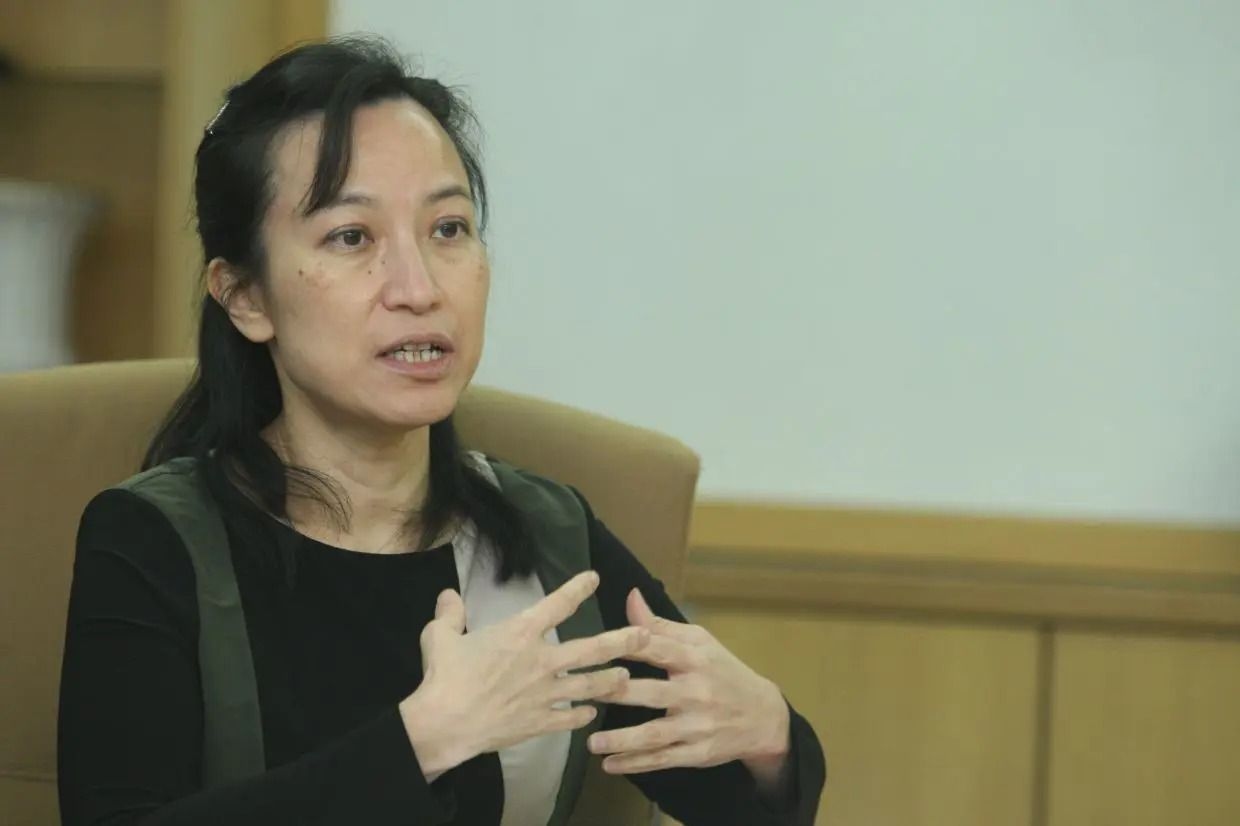
UM surgeon honoured on the world stage
Prof April, who specialises in colorectal surgery and previously served as Dean at UM's Faculty of Medicine, was recognised for founding the country's largest colorectal surgery unit and helping shape surgical training nationwide.
To boost surgical capacity nationwide, she helped develop the National Curriculum for General Surgery and a Train-the-Trainers programme, while continuing to advocate for equity and excellence in the field.
RCSI Council Member Mr John Caird, who read her citation, applauded Prof April's outstanding contributions to health and ongoing dedication to enhancing medical education and surgical training.
She has also received global honours, including recent Honorary Fellowship awards from the Royal College of Surgeons of England, the American and Philippine Societies of Colon and Rectal Surgeons, and the American College of Surgeons.
Currently, she serves as councillor of the International Surgical Society and director of the International Office at the Royal College of Surgeons of Edinburgh.
The RCSI conferring ceremony took place at its St Stephen's Green campus in Dublin on July 7.
Prof April was among 402 healthcare professionals conferred with Fellowships and Memberships at the ceremony, which RCSI President Professor Deborah McNamara described as a celebration of service and innovation in healthcare around the world.
'Throughout our 241-year history, RCSI Fellows, Members and Diplomates have a proud legacy of healthcare service and innovation across the world. Each of you has the potential to make a difference in the lives of many individuals as well as society at large. Especially in these turbulent times, each of us has the power to improve the world around us,' she said on the RCSI website.
The Honorary Fellowship is the highest distinction granted by the College, recognising individuals for outstanding contributions to surgery and medical education.
Hashtags

Try Our AI Features
Explore what Daily8 AI can do for you:
Comments
No comments yet...
Related Articles


Focus Malaysia
 14 hours ago
- Focus Malaysia
We don't just need smart doctors—we need kind ones
THE recent revelation of a doctor's horrid living conditions in Sabah after struggling for years with severe depression due to workplace bullying is unfortunately not as shocking as it should be. This was just another reminder of the worrying lack of compassion and empathy in Malaysia's healthcare sector. As a society, we seem to revere medical doctors as a symbol of intelligence, status, and career success. Yet for all this reverence, an image of kindness is not often associated with doctors in Malaysia—though it should be expected of someone who dedicates their lives to healing. Despite often being known for their intelligence, smarts alone do not make a good doctor. Compassion, empathy, and humanity are just as essential. And when these are lacking, the system suffers. The struggles of medical doctors, especially junior doctors in Malaysia with workplace bullying is actually a common problem, and a recent scientific study estimated just how widespread this problem is. A team of researchers from UiTM, Universiti Malaya (UM), and Universiti Kebangsaan Malaysia (UKM) published a study in 2021 that included 1074 junior doctors from twelve government hospitals across central Malaysia. The team found that one in 10 junior doctors in the study reported being bullied at work, but this is likely to be an underestimation. The type of bullying reported includes being humiliated or ridiculed, having gossip spread, being shouted at, and being given unmanageable workloads. And this wasn't a rare occurrence as many doctors reported this behaviour weekly or even daily. So why are some people in the healthcare sector perpetuating such negative behaviour towards their juniors? Some theorise that the power, admiration, and respect associated with being a medical professional tends to attract individuals with negative personality traits. For example, teenagers who display narcissistic behaviour or who feel entitled might be attracted to high-status professions—like medicine—out of their desire for admiration. And research has in fact shown that narcissism in the workplace is associated with workplace bullying. But this might not be the sole reason. In Malaysian culture, we tend to place far too much weight behind seniority and titles that abusive behaviour by people with any degree of seniority or any title is often overlooked or normalised. And out of fear of repercussions, nobody speaks up against this behaviour, even if they know it is wrong. Even when someone does speak up, they might merely be brushed off due to our 'tidak apa' attitude. 'We went through this, so you must too' is often the justification given for bullying in the workplace, while 'Don't tarnish the reputation of the hospital' is used to dissuade would-be whistleblowers. Furthermore, a lack of willingness among those in power to take action against such perpetrators likely leaves juniors feeling disillusioned about their chosen profession, one that is meant to care for others and promote healing. Emotional intelligence, empathy, and compassion are critical in the medical field, yet for some reason these traits are lacking among some medical professionals. Despite the misguided justifications given in an attempt to minimise the impact of workplace bullying, the costs are substantial. Constant bullying and a harsh working environment can lead to burnout and depression, which not only lead to decreased efficiency at work but also leaves a significant mental, emotional, and physical toll on victims. Ultimately, the healthcare system will lose out on qualified medical professionals who quit due to the pressure exerted on them from workplace bullying. Even those who try to tough it out may end up being hostile and combative due to their toxic workplace. Ultimately, when doctors are hurting and the healthcare system takes a toll, patients are affected too. The good news is that this problem can be fixed—if everyone does their part. Institutes of higher learning and medical educators need to emphasise the importance of empathy, compassion, communication, and humanity more than what is currently being done. Assessment needs to evaluate emotional intelligence alongside academic metrics. Health Minister Datuk Seri Dr Dzulkefly Ahmad meanwhile has promised that new guidelines will be launched in October to curb the use of hurtful or offensive language—which will be classified as a form of workplace bullying—in government hospitals and clinics. And although the Health Ministry's online portal for reporting cases of workplace bullying, MyHELP was launched back in 2022, there must be a strong commitment from the ministry to thoroughly investigate submitted reports and take action against bullies in the healthcare sector. It goes without saying that the healthcare sector is meant to be a safe place not just for patients, but for all healthcare practitioners as well. We cannot expect compassionate care from doctors if they (especially the juniors) are subjected to workplace bullying every day. A good doctor is not just smart, but also kind to everyone, which includes peers and subordinates. As Malaysians, we always consider kindness as one of our biggest strengths. There's no reason why this should not be true of our healthcare sector as well. ‒ Aug 19, 2025 Dr Jazli Aziz is with the Department of Oral and Craniofacial Sciences, Faculty of Dentistry, Universiti Malaya. The views expressed are solely of the author and do not necessarily reflect those of Focus Malaysia. Main image: Pexels/Tima Miroshnichenko


The Star
10-08-2025
- The Star
Only lab tests can confirm chikungunya infection
Constant vigilance: A worker fogging parts of Alor Setar as a preventive measure against mosquitoes. PETALING JAYA: You get bitten by a mosquito and days later, there is a sudden onset of fever, muscle pain, headache and rash. While one may assume it is a dengue infection, there is also debilitating joint pain that lasts for days. Chikungunya – a similar mosquito-borne infection – could be the reason for the discomfort in the joints throughout your body. 'Both dengue and chikungunya have almost identical symptoms such as sudden high fever, headache, rash and muscle aches. 'However, chikungunya is more often associated with severe, sometimes debilitating joint pain and swelling, which can last weeks to months. 'Dengue is more likely to cause bleeding manifestations, low platelet counts and in severe cases, shock,' said Universiti Putra Malaysia consultant clinical microbiologist Prof Dr Zamberi Sekawi. He said laboratory tests are needed for confirmation, noting that symptoms alone may not be definitive. While chikungunya is not new in Malaysia, he voiced concerns over cross-border transmission. 'Early detection is possible through clinical suspicion and rapid laboratory confirmation in travellers returning from affected areas showing fever and joint pain symptoms,' he said. Universiti Malaya virologist Dr Sazaly Abu Bakar said it is difficult to determine whether the illness is due to chikungunya or dengue infection, just based on symptoms. 'Testing is essential as dengue can be deadly. 'Chikungunya, meanwhile, can be debilitating,' he said. He also said the virus will most likely be carried by the Aedes mosquito, which is the same as dengue. Dr Sazaly said the high volume of travel and short-travel distance between Malaysia and afflicted regions like China means a viraemic person can possibly carry the virus here.
The Star
01-08-2025
- The Star
Using AI play for early growth
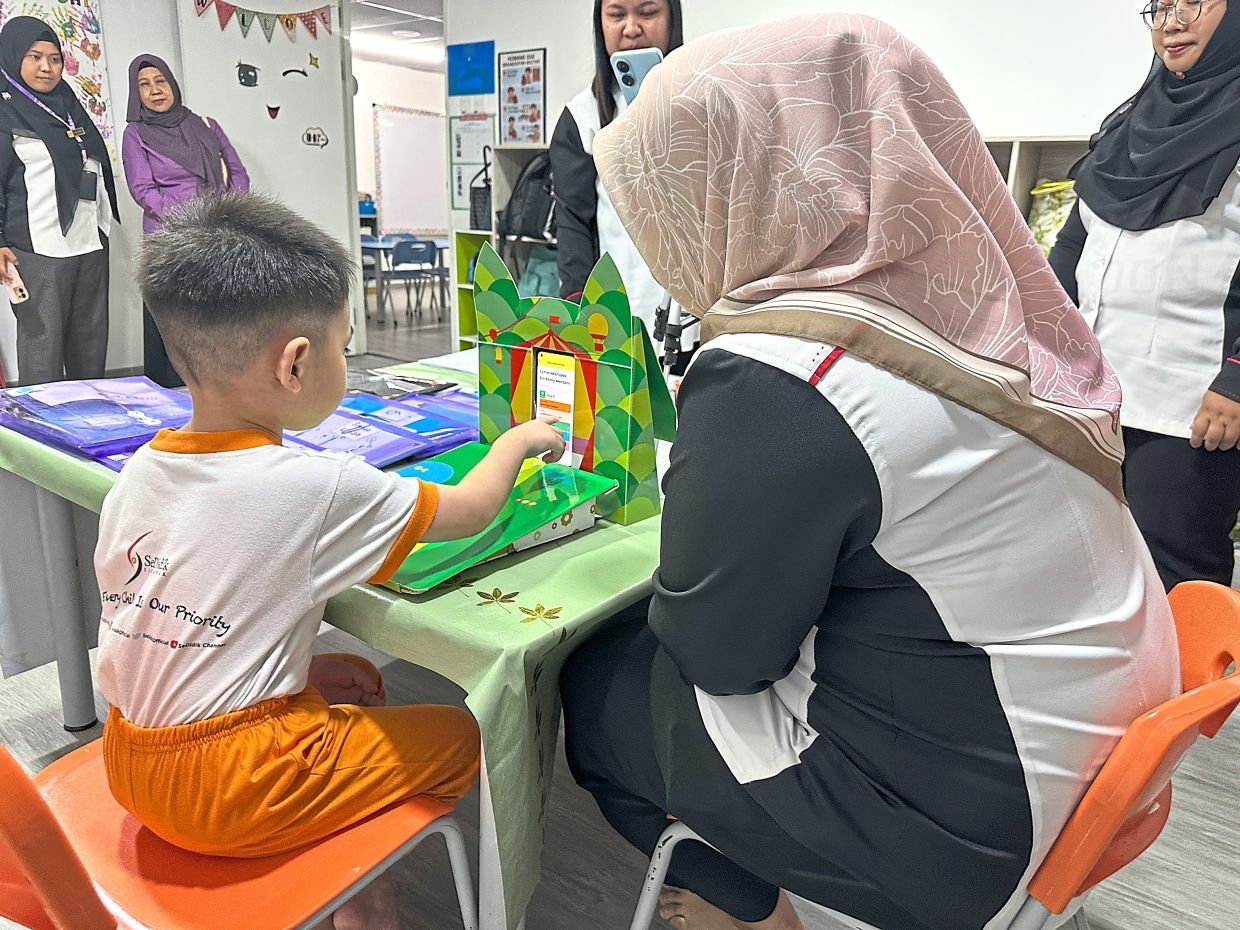
Game changer uses technology to tackle development issues in children PETALING JAYA: As a child, Tokyo-born Shun Matsuzaka had boundless love for learning, but that passion rarely reflected in his grades, as he struggled to achieve good results. It wasn't until he was 19, during his foundation year at a university in the United Kingdom, that he was diagnosed with dyslexia. This changed not just his life but also shaped his ambition to help other children going through what he had to go through. Having moved to Malaysia in 2017, Matsuzaka, along with his partner Masaki Ishibashi, founded TOY8 in 2018, a social impact venture designed to unlock every child's potential through play and data. Together, they planned to establish an AI-powered playground in 2020 in a 45,000sq ft (4,180sq m) space at a mall in Kuala Lumpur. Filled with motion sensors and cameras, the playground would allow them to observe children's play and extract insights into their cognitive and motor strengths, which would then be explained to the parents if any issues were found. Sadly, the plan was derailed even before it could take off following the Covid-19 pandemic. TOY8 co-founder Matsuzaka. Defeated but not beaten, Matsuzaka was then inspired by a letter he received from the Tokyo city office – an invitation for his daughter to attend a mandatory three-year-old developmental screening. 'It was then I realised that while this was standard practice in Japan, Malaysia had no equivalent system for those aged between three and six – a gap in the most crucial window of brain development. 'Most parents had no structured way to know whether their child's development was on track or not and this gap, between the need for early detection and the absence of reliable access, became our new focus,' he said. Matsuzaka and his team then developed the first AI-powered, gamified screening and intervention system in Malaysia in 2022 in collaboration with Sunway University, Universiti Malaya, the Health Ministry Clinical Research Centre and a former Nintendo game director. The system utilised smartphone-based games to screen five core domains of development – language, cognition, fine and gross motor skills and social-emotional abilities. 'These games are intentionally designed to be exciting, intuitive and culturally relevant, enabling teachers in preschools and kindergartens to conduct reliable developmental checks during classroom time without requiring clinical expertise. 'If a child is flagged for mild or moderate developmental support needs, they can be supported through the TOY8 intervention programme, which offers over 3,000 plus fun game activities personalised to the child's profile. 'These interventions can then be delivered at school or home with the guidance of trained educators or caregivers,' Matsuzaka said. Matsuzaka also said TOY8's system empowers teachers with technology, not only to screen and support children but also to actively participate in the reduction of developmental inequality. 'Instead of relying solely on overburdened specialists, we shifted part of the responsibility to well-equipped preschool classrooms, ensuring that more children are identified early and supported effectively during the brain's most critical years of development.' Since its inception, TOY8 has screened over 15,000 children across Malaysia and other Asean countries with Sarawak becoming one of the first Malaysian states to adopt the model at scale in 2023. By integrating digital screening into its public preschools, the state now stands as a beacon of inclusive early education, not just in Malaysia but for the entire Asean region. 'By the end of the year, our programme in Sarawak will expand to screen 600 children, supported by a growing network of trained educators and interventionists. 'We are now hoping to present the Sarawak model as a regional policy proposal at the 2025 Asean Business Summit under the Inclusive Education 2.0 framework, as well as expand our reach to other Asean countries,' he added. Meanwhile, the Star Golden Hearts Award (SGHA) returns for the 11th edition to honour everyday Malaysians whose compassion and selflessness have made a lasting impact on others. With McDonald's Malaysia as the new strategic partner, SGHA is poised to broaden its reach and deepen its impact nationwide. This year also marks the debut of the McDonald's Caring Hearts Award – a special recognition honouring individuals or grassroots groups whose heartfelt acts of kindness have uplifted lives in profound and lasting ways. Since its inception in 2015, SGHA has honoured over 100 individuals and organisations whose efforts have inspired action, transformed lives and strengthened communities nationwide.
