


Latest news with #AWE

BBC News
 08-08-2025
- General
- BBC News
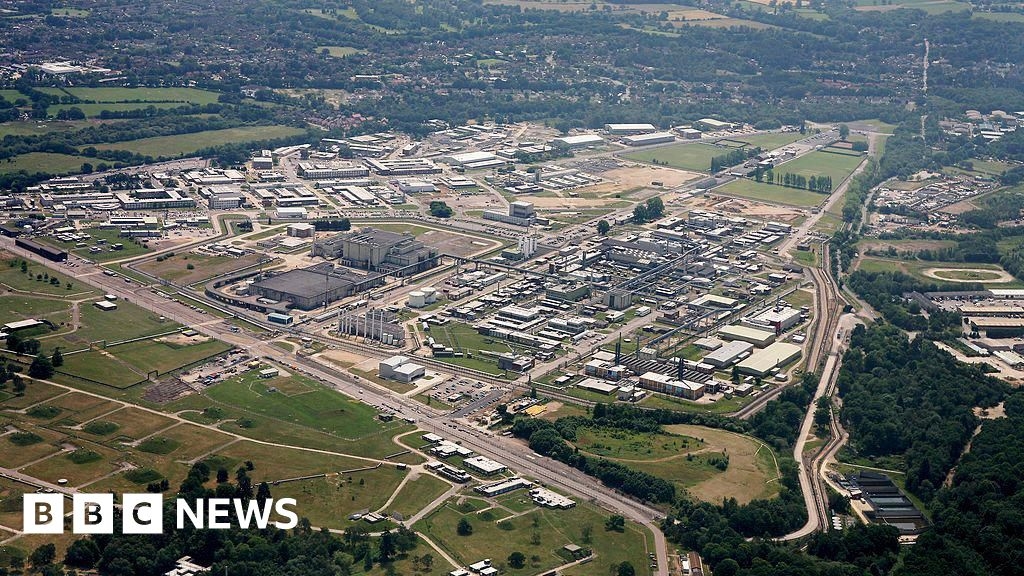
AWE Aldermaston site safety procedures 'improved'
An atomic weapons site has improved procedures after an explosive component was damaged, the nuclear watchdog has Office for Nuclear Regulation (ONR) served an improvement notice to the Atomic Weapons Establishment (AWE) site in Aldermaston, Berkshire in followed an incident when an explosive component was unintentionally damaged by workers assembling a unit for testing said it had conducted regular site visits and reviewed safety and AWE had "constructively and proactively engaged". The damage was caused when workers failed to follow appropriate procedures when manually handling the improvement notice required AWE to better plan, oversee and control activities in the Explosive Technology Centre at the site, which maintains and develops nuclear warheads, said there was no risk to the public or the environment from the Allmark, ONR's head of regulation for weapons sub-directorate, said: "The licensee has taken clear and coordinated action to address the identified shortfalls and we are satisfied that it has demonstrated compliance with the notice."ONR will continue its routine regulatory oversight of the stated mission is to protect society by securing safe nuclear nuclear regulator takes enforcement action when licensees are found to be failing to meet the safety and security standards required by can range from advice by inspectors to warnings, letters, improvement or prohibition notices, or prosecutions and instigating court proceedings. You can follow BBC Berkshire on Facebook, X (Twitter), or Instagram.


CTV News
29-07-2025
- Entertainment
- CTV News
Downtown to light up during first ‘Night Light Festival'
Art Windsor-Essex (AWE) and the Gordie Howe International Bridge Community Benefits Plan are collaborating to bring Windsor its first ever 'Night Light Festival'. It will take place from Sept. 18 to 20, turning the outside of the gallery 'into a vibrant, glowing wonderland'. 'We're so excited about the incredible response following today's press conference unveiling Windsor's very first nighttime public art festival; Night Light!' said Jennifer Matotek, executive director of AWE. 'We can't wait to bring this festival to life with the support of our partner, the Gordie Howe International Bridge project. Over three magical nights, public spaces will come alive with interactive installations, breathtaking digital art, and luminous creations. Windsor is about to experience something unforgettable – we're counting down the days.' From Sept. 1 to Sept. 21, outdoor exhibitions will be part of the festival, in addition to offsite displays at the Gallery at the Capitol and the Windsor International Aquatic and Training Centre. Workshops will also take place, allowing you to make your own wearable creative technology. 'The Gordie Howe International Bridge will soon bring artistic lighting to the Windsor-Detroit skyline at night, and the project team is excited to support this electrifying new festival through the Community Benefits Plan,' said David Henderson, CEO of Bridging North America. 'This investment will help bring people downtown to enjoy the riverfront in an exciting and inspiring way.'


The Sun
27-06-2025
- General
- The Sun
We live in town building Britain's NUKES where mysterious ‘explosions' go off – we fear we're targets for war on UK soil
TERRIFIED villagers living in the shadow of Britain's top-secret nuclear weapons site say they feel like 'sitting ducks'. Residents in the sleepy village of Aldermaston, Berkshire, have spoken of their fear after hearing "mysterious explosions" from the neighbouring nuclear weapons facility AWE. 16 16 16 Living next to the Automatic Weapons Establishment - where the UK's most powerful bombs are designed - feels like being "on the front line", according to locals. They say their village would be targeted in the event of a nuclear or terrorist attack and have called on the Ministry of Defence to provide them with greater protection. The Sun can exclusively reveal that the state-owned site has agreed to launch a new emergency text alert system after mounting pressure from panicked neighbours. It comes after years of "mystery explosions", blaring sirens, and rumours of hazardous experiments behind the razor-wire fences – just yards from family homes. Business owner Kerry Thomas was one of the first to sign up to the text service that is due to come into operation in the next fortnight. The 45-year-old told The Sun: 'Everyone in the village was sent a letter by AWE telling us they wanted to share more communications with locals residents about what was going on at the site. 'We were invited to join a text service and the plan is that they will keep us posted about anything that is going on there, such as any planned security drills, or unusual events in and around the complex. "I think it is a great idea because it will stop people worrying or speculating every time they hear the sirens going off. "To be fair to AWE, they do seem to want to engage with the local community. 'I know they donate money for public events here in the village and they have hosted regular village hero award ceremonies. 'They have always worked with the village, rather than against it." Kerry admitted the growing global tensions and hostilities raging in the Middle East has made her nervous about hostile forces targeting her home town. Nuclear strikes, secret bunkers for Royals, & massive cyber attacks… how Britain is secretly bracing for war with Russia She said: 'Sure, we are right in the firing line here, but you have got to carry on living your life as best you can. "It was the same when the West was bombing Iraq years ago. 'There was a heightened risk of attack here, but we tried to go out about our lives as normal. 'Despite the extra risk associated with living somewhere like here, it's still a wonderful place to live." Kerry continued: "I have lived with what goes on here all my life, so it's all I know really. "You grow up knowing that if there is ever a nuclear war, we will be among the first to be hit. "We are in the middle of such beautiful countryside, yet really close to Reading and London. "I wouldn't live anywhere else.' She said she understands the need to invest extra billions in our defence capabilities and believes it is "money well spent". She added: "The UK has to keep up-to-date with modern nuclear technology. 16 16 "The way the world is now, it is simply a necessary evil. "We have to be well equipped with the best nuclear weapons in order to protect ourselves. "I wish it wasn't necessary, but in reality it is. "I try not to worry about it anymore and despite what people say about living next to a nuclear site, none of us here glow in the dark.' The government's recently-announced £15bn replacement for Britain's nuclear arsenal is being designed at the site. Earlier this month, Labour's John Healey became the first defence secretary to visit the AWE site since 2018. He told how Labour was making a generational decision to support expensive weapons that he hoped would protect the UK. He said: 'We've got a government recognising that we need to invest now if we're going to be able to maintain our strength of our independent UK nuclear deterrence in the decades to come. Labour's previous leader, Jeremy Corbyn, was heavily opposed to nuclear weapons. Operations have begun to scale up at Aldermaston with the initial phases of work on the new warhead under way. About 1,500 employees have joined AWE in the past year, bringing the total number of workers at the state-owned company to 9,500. Building surveyor Chris Robinson, 65, suggested that the text notifications did not go far enough to safeguard locals. 16 16 He called for the installation of an Israeli style defence shield like the Iron Dome at the 750-acre facility. He said: "I recognise that we need to have a strong nuclear capability because that is the only thing that is going to ensure world peace. "The existence of the concept of mutually assured destruction is ironically what keeps us all safe. "But I would like to see some kind of Iron Dome-style protection for the area because at the moment it feels like we are sitting ducks. "The AWE site would be a prime target for terrorists and we need to be better protected here." He recalled the recent break in at RAF Brize Norton by Palestine Action yobs in the neighbouring county of Oxfordshire as he called for greater measures to be put in place. Chris added: 'You only have to look at the break-in down the road last week to see how easy it is for someone who is determined enough to get into these complexes. 'Can you imagine the damage someone could do if they were to get inside the base at AWE with explosives strapped around them? 'I worry that idiotic leaders like Donald Trump are making the world a less and less safe place. "That kind of reinforces the need for all countries to have the best nuclear bombs because that international nuclear deterrent is what keeps us all safe in the end. 'I've never been inside the base but I hate the look of it from the outside. "It has lots of very ugly buildings. It's a shame they don't screen it a bit better with trees. 16 16 16 'It does feel a bit weird that I'm living right next to a nuclear plant, but I guess it's got to be somewhere." Components for Britain's nuclear warhead – known as Holbrook – are designed, tested and built at Aldermaston. The warheads themselves are largely assembled at the nearby Burghfield site, before being transported by road to Coulport, in Scotland. The assembly process is completed there and the Trident missiles, with their British warheads, are loaded on to submarines at nearby Faslane. Aimee Kirkpatrick, 20, who has lived in the village all her life, told how regular practice drills often send the villagers into a frenzy. She explained: 'Almost every week, sirens will go off at the base. "It's very scary for those of us who live here because we never know if it's a practice drill or the real thing. 'If a nuclear bomb is ever going to be dropped on the UK, and I hope to God it never is, I'd much rather be right underneath it when it lands than die painfully over time from the fall-out. 'I accept we live somewhere that's going to be a prime target, but my life is here so I don't want to move away.' Aimee, who works at a local pub while studying for a marketing degree, said many of her friends from school are now apprentices at AWE. She said: 'They love working there because the company is actually a really good employer. "The pay is good and they're learning interesting stuff. 16 16 16 "One of them is involved in nuclear physics, which must be a pretty cool apprenticeship to be doing.' The new nuclear device, called Astraea, will not be ready for deployment until the 2030s or 2040s. It will be designed at Aldermaston, principally using small test explosions, which are then extrapolated by an onsite supercomputer to simulate a nuclear blast. Its explosive power is not yet known, though independent experts think it will probably be more than the 80-100kt Holbrook, and possibly closer to 475kt, a benchmark set by the most powerful US warhead. For comparison, the bomb dropped on Hiroshima, which killed between 70,000 and 140,000 people (estimates vary widely), was 15kt. 16


The Guardian
22-06-2025
- Politics
- The Guardian
‘No danger of blowing up Reading': the site building UK's next nuclear weapons
Nestled in the heart of rural Berkshire, the 300-hectare (750-acre) military complex at Aldermaston is an incongruous sight. It comprises a mix of 1950s and 1960s institutional buildings, heated by a steam tube system more familiar in Soviet structures, and a handful of modern offices, several of which are in the process of being built. But the technology inside the complex, one of Britain's most sensitive defence locations, is far from that era of cold-war hostility. The sprawling campus is the largest of three locations where Britain manufactures its nuclear warheads – and where the UK will design and build a £15bn replacement for its current arsenal without making a single explosive test. Armed police with carbine rifles patrol and watch from the rooftops, protecting the nuclear materials and the site's 7,500 employees. The staff work for AWE, the former Atomic Weapons Establishment, whose project is at the heart of Labour plans to revitalise nuclear with weaponry that may last to the 2070s. On Thursday, John Healey became the first defence secretary to visit the site since 2018, arguing that Labour was making a generational decision to support expensive weapons that he and other members of the government hoped would protect the UK by never coming close to being used. 'We've got a government recognising that we need to invest now if we're going to be able to maintain our strength of our independent UK nuclear deterrence in the decades to come,' Healey said, wondering aloud why some of his immediate Conservative predecessors had not come to visit. Labour's previous leader, Jeremy Corbyn, was opposed to nuclear weapons, but under Keir Starmer the party firmly shifted to the pro-nuclear camp long before winning the election. It is now pressing forward with civil nuclear development, giving the go-ahead this month for a new £14.2bn reactor at Sizewell, in Suffolk, as well as the next nuclear bomb. Ministers' commitment to nuclear is one they believe has public backing. At a time of global uncertainty, not least with Israel attacking Iran to prevent the latter acquiring its own nuclear bomb, public support for the UK to maintain its stock of nuclear weapons is growing, they say. Polling conducted by YouGov on behalf of the Ministry of Defence suggests support for Trident, the submarine-based nuclear weapons system, rose to 65% in March 2025, the highest level since sampling for the department began in 2018. Components for Britain's nuclear warhead – known as Holbrook – are designed, tested and built at Aldermaston. The warheads themselves are largely assembled at the nearby Burghfield site, before being transported by road to Coulport, in Scotland. The assembly process is completed there and the Trident missiles, with their British warheads, are loaded on to submarines at nearby Faslane. Operations have begun to scale up at Aldermaston with the initial phases of work on the new warhead under way. About 1,500 employees have joined AWE in the past year, bringing the total number of workers at the state-owned company to 9,500. These are the kind of skilled jobs Labour is eager to talk up. The new device, called Astraea, will not be ready for deployment until the 2030s or 2040s. Its explosive power is not yet known, though independent experts think it will probably be more than the 80-100kt Holbrook, and possibly closer to 475kt, a benchmark set by the most powerful US warhead. For comparison, the bomb dropped on Hiroshima, which killed between 70,000 and 140,000 people (estimates vary widely), was 15kt. Sign up to First Edition Our morning email breaks down the key stories of the day, telling you what's happening and why it matters after newsletter promotion It will be designed at Aldermaston, principally using small test explosions which are then extrapolated by an onsite supercomputer, Damson, to simulate a nuclear blast. One engineer said Damson used 17MW of power, considerably more than the Met Office's supercomputer, which consumes 2.7MW, and AWE says it can perform 4.3 million billion calculations per second. The other key facility on the site is Orion, a set of 12 lasers that, when brought together, can simulate the moment a nuclear bomb is detonated. One scientist said the energy involved was 'no greater than boiling a teaspoon of water' and there was 'no danger of blowing up Reading'. In any event, the lasers come together in a vacuum to safeguard against any possible explosions. Materials intended for the warhead are tested in the laser to see how they will behave when the bomb is blown, though the amounts involved are minute, often a few millimetres in size. To see if they can prepare the experiments, staff members are asked to build a tiny model of a bicycle, with handlebars and spokes. It is not a task for everybody; after six months some employees can manage but others cannot. The question, though, is why a £15bn investment in a new nuclear warhead is necessary, because Holbrook warheads, if regularly refurbished, could continue to be viable. One reason for the upgrade is that the US is designing a new warhead, the W93. The UK and US programmes have operated in parallel, sharing design features to save money, but not fissile materials (plutonium or enriched uranium), which would breach the nuclear non-proliferation treaty to which both countries are signatories. A second reason, said David Cullen, a nuclear expert at the Basic thinktank, was for 'the UK to maintain its position as a member of the nuclear club'. The issue is partly one of skills: 'The capability to deploy warheads atrophies if you don't have warhead designers who have actually made a nuclear bomb,' he added. But that is the cost, in other words, of the UK maintaining a seat near the top of the diplomatic table.


Otago Daily Times
20-06-2025
- Entertainment
- Otago Daily Times
Soundscapes of the Southern Lakes
Celebrated Kiwi pianist Michael Houstoun. PHOTO: SUPPLIED Some of New Zealand's most acclaimed chamber musicians are heading our way in October, to perform during the fifth At the World's Edge (AWE) Festival. Artistic director Benjamin Baker's brought together acclaimed pianist Michael Houstoun, cellist James Bush and composer in residence John Psathas, who'll be joined by a cast of international artists. This year's festival draws on the natural world as a source of creative inspiration — between October 4 and 12 there'll be seven curated performances across the district and a series of free events to highlight the many ways composers engage with nature. In Queenstown, AWE will be based at Te Atamira. "As a festival rooted in the landscapes of the Southern Lakes, we're constantly inspired by our surroundings," festival director Justine Cormack says. "It's a privilege to celebrate five years of extraordinary performances with artists and audiences who share our belief that music, like nature, can shift our perspective and stir something deeply personal." That theme's also guiding the AWE+ series of free public performances, workshops and talks, which include Queenstown-based architect Fred van Brandenburg, who'll share insights into biomimicry and design, and Olympic freeskier Jossi Wells on the parallels between performance, creativity and the alpine environment, while there'll also be a keyboard-focused programme with works for piano and harpsichord, and performances from Aussie harpsichordist Erin Helyard and Houstoun. AWE culminates in a tour of schools across the Southern Lakes between October 13 and 17. For more info, or to buy tickets, see
