


Latest news with #Afghanis

Herald Malaysia
 11-08-2025
- Politics
- Herald Malaysia
UN urges better response as two million Afghanis returned home this year
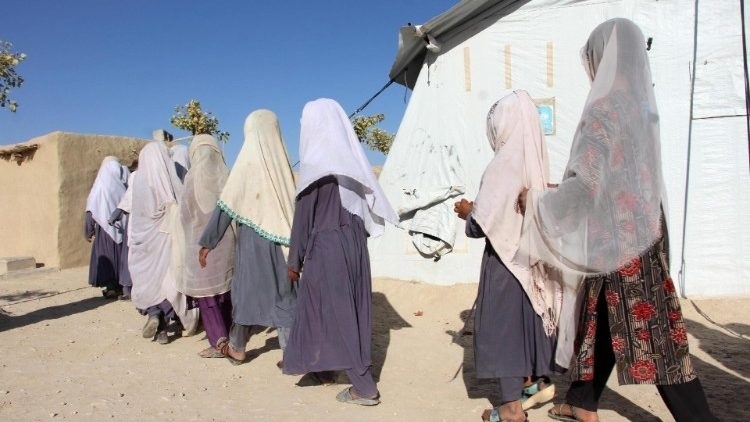
The UN Children's Fund, UNICEF, welcomes reports that two million Afghanis, including half-a-million children, returned home to Afghanistan this year, but warns of critical challenges in the country and inherent in society, especially for girls. Aug 11, 2025 Women in Afghanistan (ANSA) By Deborah Castellano LubovWhile it is reassuring that two million Afghans returned to Afghanistan this year, a better response is required, according to UNICEF Deputy Executive Director Ted Chaiban, in a statement released following his recent visit to Afghanistan. Mr. Chaiban, who serves as UNICEF's Executive Director for Humanitarian Action and Supply Operations and who has visited the Middle Eastern country four times, discussed the situation of the returnees, insisting that "a safe, dignified, voluntary, and phased approach" is needed "with increased support for children and families." UNICEF, the United Nations agency for children, works to protect children's rights everywhere and does so across more than 190 countries and territories. In his statement, the agency's Deputy Executive Director for Humanitarian Action and Supply Operations recalled the millions returned "from Iran and Pakistan so far this year alone, in addition to a significant number from countries in Central Asia." Yet, there are various concerns as they return in high volumes to the nation where more than half the population requires humanitarian assistance and is struggling to overcome the impact of more than four decades of conflict complicated by drought. Improved access in country, but common concerns Compared to past visits, Mr. Chaiban observed "improved access throughout Afghanistan," which has allowed UNICEF to reach more children, women, and communities with humanitarian services. For instance, he praised the offering of humanitarian and protection services in a coordinated manner by the de facto authorities, UN agencies, NGOs, and other partners, and reception centres at border points across Afghanistan to respond to the high number of returnees. Yet, the families he met at the border, he acknowledged, despite looking forward to the future in their home country, were anxious about rebuilding their lives and often concerned with the continuity of education for their daughters beyond sixth grade. Education a critical issue Education in Afghanistan, Mr. Chaiban lamented, remains a critical issue, particularly for adolescent girls who are not permitted to go to school beyond sixth grade, as he warned that this "not only impacts girls, but all women in the country when they miss out on formal secondary education, university, and subsequently employment." He said he had met many bright young students, girls and boys, who wanted to become teachers, surgeons, engineers, full of hope for a future in Afghanistan, but observed how the ban on adolescent girls' education in Afghanistan shatters the dream. Reaffirming that education for all children is at the heart of UNICEF's mandate, the UN agency official appealed, "we strongly advocate for a lifting of the ban so that girls of all ages can stay in school, receive a good education, can work, and play a role in society." 'We strongly advocate for a lifting of the ban so that girls of all ages can stay in school, receive a good education, can work and play a role in society.' While stressing UNICEF acknowledges and extends gratitude for the efforts made by host governments, including Iran and Pakistan, over the years to accommodate Afghan nationals in their countries, the official nonetheless expressed concern for the well-being of families and individuals, including children, undertaking often difficult and sudden journeys to return. Special protection required for children By the end of July, he reported, UNICEF had documented and supported more than 6,000 unaccompanied and separated children and reunified them with their families and relatives. Children, particularly unaccompanied children, he said, "require special protection," with their best interests assessed by child protection authorities ensuring their well-being, and offering support for family reunification. While he acknowledged that rapid scale-up has seen a coordinated and joined-up delivery of first-line response at reception points, he lamented that "more is needed to ensure the safe passage of returnees whilst on the move, including the quality of continued care during their return, and sustained access to essential services in areas of return inside Afghanistan to support sustainable reintegration." "With limited access to education, health services, and economic opportunities," he said, "the ability of communities to absorb the high number of returnees within a compressed timeframe is becoming increasingly difficult." Systemised and phased approach Mr. Chaiban insisted that returnees require "a systemized and phased approach" that ensures "the safety, dignity, and voluntariness of those on the move," the "continuity of care throughout their journey" and "measures to access continued protection in host countries, if needed." "Such an approach," he explained, "is particularly critical for vulnerable groups—especially women and children, including separated and unaccompanied children. With this sentiment, Mr. Chaiban said, "UNICEF therefore calls for dialogue between Iran, Pakistan, and Afghanistan to phase the returns and allow the Afghan authorities, UN Agencies, NGOs and partners to better manage the response," while calling on donors "to support humanitarian action for the returnee population, including for children, both at the point of reception and in areas of final resettlement.' 'UNICEF therefore calls for dialogue between Iran, Pakistan and Afghanistan to phase the returns and allow the Afghan authorities, UN Agencies, NGOs and partners to better manage the response, and on donors to support humanitarian action for the returnee population, including for children, both at the point of reception and in areas of final resettlement.'--Vatican News


News18
11-08-2025
- Politics
- News18
Kabul residents struggle daily amid severe water shortages and queues
Kabul [Afghanistan], August 11 (ANI): Water scarcity continues to be a daily struggle for residents of District 13 in Kabul, where long queues form early in the morning as people seek to secure drinking water for their families, Tolo News small children to elderly men, residents of District 13 face immense challenges in accessing clean water. Yar Mohammad, a local resident, told Tolo News, 'I come here and take five barrels of water daily, and even that is not enough. Water consumption is very high. Previously, a 1000-Ltr barrel cost 40 Afghanis, now it's 70 Afghanis ($1.1)."Another resident, Mohammaduddin, urged people to conserve water, stating, 'People should not waste water because the water level will drop, and it will harm them," as reported by Tolo appealed to the government for long-term solutions. Bashir Ahmad, a resident, said, 'We wander around looking for water. Our request from the government is to pay attention and provide facilities for us."A child from the area, Mohammad Faiz, added, 'I come early in the morning until 11 o'clock. Sometimes our barrels are filled, sometimes they remain empty. We ask the government to help us with a public water tap," according to Tolo management experts emphasized the need for coordinated efforts among national and international bodies. Najib Rahman Sadeed, a water affairs expert, said, 'Governments, international organizations, the people, and private enterprises must all work in coordination to solve this problem. Projects such as transferring water from the Panjshir watershed, especially now that work is ongoing on the Baghdara Dam, can strengthen this process."The Ministry of Energy and Water highlighted its efforts to manage water supplies in Kabul. Matiullah Abed, spokesperson for the ministry, stated, 'The Ministry has a plan to transfer water from the Shah wa Arus Dam to Kabul. Fortunately, the cabinet of the Islamic Emirate has established a committee led by the Administrative Office, with relevant departments included, and technical work has begun."Earlier, the state-owned water supply company inaugurated a project to transfer water from the Qargha Dam to a 10,000-cubic-meter reservoir at Kabul Polytechnic University, aiming to ease the water shortage in the capital. (ANI)


Express Tribune
08-08-2025
- Business
- Express Tribune
Influx of Afghan returnees fuels Kabul housing crisis
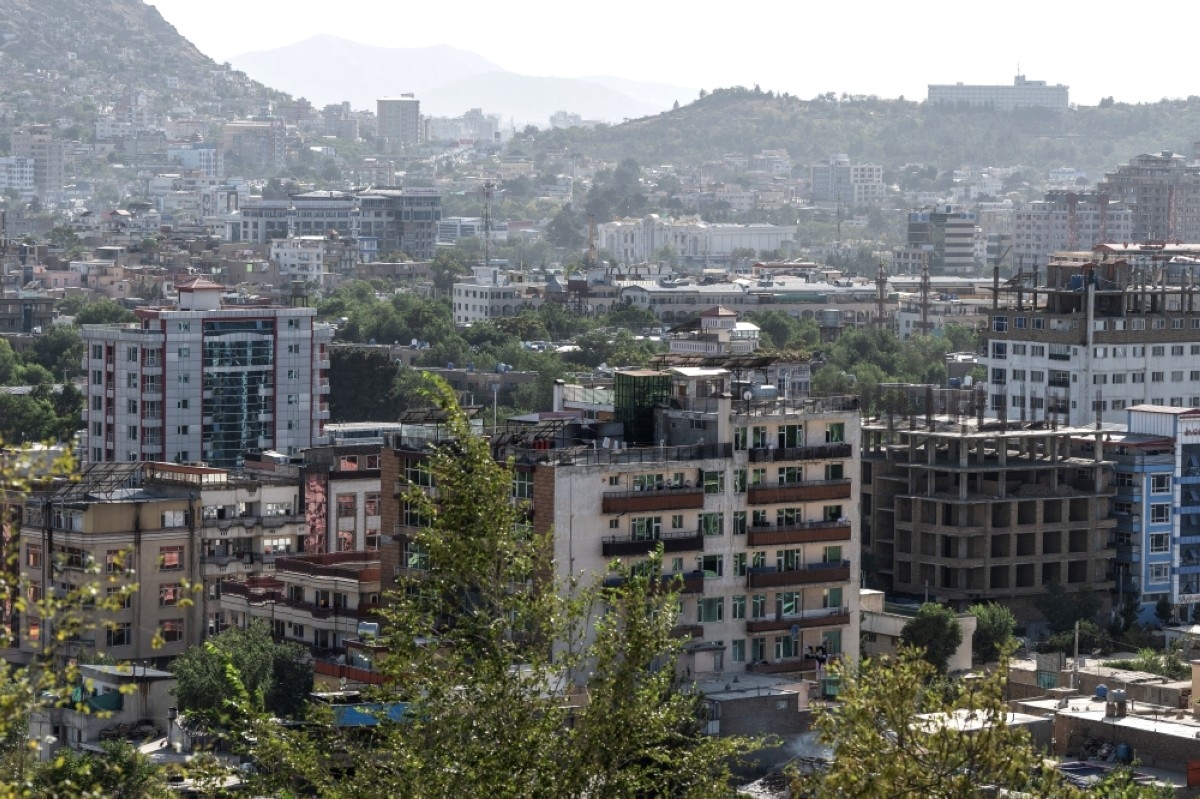
Zahra Hashimi fears being evicted from a single basement room that has served as her home since she and her family returned from Iran. Her husband, who works odd jobs, earns about 80 Afghanis per day (a little over a dollar), not enough to pay the rent for the property, which has no electricity or running water. More than 2.1 million Afghans have returned from Pakistan and Iran so far this year, according to the United Nations refugee agency. They join earlier rounds of mass expulsions from the neighbouring countries, deported or driven out by fear of arrest. Multiple Kabul property dealers told AFP that rental prices had skyrocketed with the influx of returnees. "Since landlords noticed that refugees (from Iran and Pakistan) were returning, they doubled their rents," said real estate agent Hamed Hassani, calling for the government to "intervene". "We have many refugees who come to ask us for an apartment to rent, and most of them cannot afford what's available," he said. The housing pressures have affected long-time Kabul residents also. Tamana Hussaini, who teaches sewing in the west of Kabul, where rents are lower, said her landlord wants to raise the 3,000 Afghani rent for their three-bedroom apartment. The family of eight tried to move out, but "rents are too high. It's a frustrating situation where you can't stay, but you can't leave either." Weeks after he was forced to return from Iran, Mohammad Mohsen Zaryab was still searching for somewhere to live in Kabul, where rental prices have soared along with an influx of Afghans expelled from neighbouring countries. Zaryab, fled with their meagre belongings to Kabul, expecting the swelling city of eight million to offer the best prospects of finding work in a country where half the population lives below the poverty line. The 47-year-old factory worker, begged landlords to bring down prices of accommodation for his family of eight, only to be told, "If you can't pay, someone else will". He had expected when he returned in July to find more solidarity for Afghans coming "from far away with no home". A year ago, a three-room house would on average cost 10,000 Afghanis ($145) per month, but renters now pay 20,000, said Nabiullah Quraishi, the head of a property dealership. The cost amounts to a fortune for the majority of Afghanistan's 48 million people, 85 percent of whom live on less than one dollar a day, according to the UN. Two years ago, multiple landlords would come to Quraishi's business every month seeking help renting their property. Now, demand outstrips supply, he said. The municipality denies any housing crisis in the city. Major urban development plans, which include building new roads even if it means bulldozing numerous residences, are further straining housing access. "Seventy-five percent of the city was developed unplanned," municipality spokesman Nematullah Barakzai told AFP. "We don't want this to happen again."

Kuwait Times
07-08-2025
- Business
- Kuwait Times
Influx of Afghan returnees fuels Kabul housing crisis
KABUL: Weeks after he was forced to return from Iran, Mohammad Mohsen Zaryab was still searching for somewhere to live in Kabul, where rental prices have soared along with an influx of Afghans expelled from neighboring countries. More than 2.1 million Afghans have returned from Pakistan and Iran so far this year, according to the United Nations refugee agency. They join earlier rounds of mass expulsions from the neighboring countries, deported or driven out by fear of arrest. Many of the returnees, like Zaryab, fled with their meager belongings to Kabul, expecting the swelling city of eight million to offer the best prospects of finding work in a country where half the population lives below the poverty line. Zaryab begged landlords to bring down prices for his family of eight, only to be told, 'If you can't pay, someone else will'. The 47-year-old factory worker said he had expected when he returned in July to find more solidarity for Afghans coming 'from far away with no home'. Multiple Kabul property dealers told AFP that rental prices had skyrocketed with the influx of returnees. 'Since landlords noticed that refugees (from Iran and Pakistan) were returning, they doubled their rents,' said real estate agent Hamed Hassani, calling for the government to 'intervene'. 'We have many refugees who come to ask us for an apartment to rent, and most of them cannot afford what's available,' he said. A year ago, a three-room house would on average cost 10,000 Afghanis ($145) per month, but renters now pay 20,000, said Nabiullah Quraishi, the head of a property dealership. The cost amounts to a fortune for the majority of Afghanistan's 48 million people, 85 percent of whom live on less than one dollar a day, according to the UN. Two years ago, multiple landlords would come to Quraishi's business every month seeking help renting their property. Now, demand outstrips supply, he said. The municipality denies any housing crisis in the city. Major urban development plans, which include building new roads even if it means bulldozing numerous residences, are further straining housing access. 'Seventy-five percent of the city was developed unplanned,' municipality spokesman Nematullah Barakzai told AFP. 'We don't want this to happen again.' Zahra Hashimi fears being evicted from the single basement room that has served as her home since she and her family returned from Iran. Her husband, who works odd jobs, earns about 80 Afghanis per day (a little over a dollar), not enough to pay the rent for the property, which has no electricity or running water. 'We lost everything when we returned to Afghanistan,' said Hashimi, whose eldest daughter can no longer attend school under Taliban rules that deny women and girls schooling and employment. Her two primary-school-aged daughters could still attend, but the family cannot afford the tuition. The housing pressures have also affected long-time Kabul residents. Tamana Hussaini, who teaches sewing in the west of Kabul, where rents are lower, said her landlord wants to raise the 3,000 Afghani rent for their three-bedroom apartment. The family of eight tried to move out, but 'rents are too high', she told AFP. 'It's a frustrating situation where you can't stay, but you can't leave either.' — AFP


Int'l Business Times
07-08-2025
- Business
- Int'l Business Times
Influx Of Afghan Returnees Fuels Kabul Housing Crisis
Weeks after he was forced to return from Iran, Mohammad Mohsen Zaryab was still searching for somewhere to live in Kabul, where rental prices have soared along with an influx of Afghans expelled from neighbouring countries. More than 2.1 million Afghans have returned from Pakistan and Iran so far this year, according to the United Nations refugee agency. They join earlier rounds of mass expulsions from the neighbouring countries, deported or driven out by fear of arrest. Many of the returnees, like Zaryab, fled with their meagre belongings to Kabul, expecting the swelling city of eight million to offer the best prospects of finding work in a country where half the population lives below the poverty line. Zaryab begged landlords to bring down prices for his family of eight, only to be told, "If you can't pay, someone else will". The 47-year-old factory worker said he had expected when he returned in July to find more solidarity for Afghans coming "from far away with no home". Multiple Kabul property dealers told AFP that rental prices had skyrocketed with the influx of returnees. "Since landlords noticed that refugees (from Iran and Pakistan) were returning, they doubled their rents," said real estate agent Hamed Hassani, calling for the government to "intervene". "We have many refugees who come to ask us for an apartment to rent, and most of them cannot afford what's available," he said. A year ago, a three-room house would on average cost 10,000 Afghanis ($145) per month, but renters now pay 20,000, said Nabiullah Quraishi, the head of a property dealership. The cost amounts to a fortune for the majority of Afghanistan's 48 million people, 85 percent of whom live on less than one dollar a day, according to the UN. Two years ago, multiple landlords would come to Quraishi's business every month seeking help renting their property. Now, demand outstrips supply, he said. The municipality denies any housing crisis in the city. Major urban development plans, which include building new roads even if it means bulldozing numerous residences, are further straining housing access. "Seventy-five percent of the city was developed unplanned," municipality spokesman Nematullah Barakzai told AFP. "We don't want this to happen again." Zahra Hashimi fears being evicted from the single basement room that has served as her home since she and her family returned from Iran. Her husband, who works odd jobs, earns about 80 Afghanis per day (a little over a dollar), not enough to pay the rent for the property, which has no electricity or running water. "We lost everything when we returned to Afghanistan," said Hashimi, whose eldest daughter can no longer attend school under Taliban rules that deny women and girls schooling and employment. Her two primary-school-aged daughters could still attend, but the family cannot afford the tuition. The housing pressures have also affected long-time Kabul residents. Tamana Hussaini, who teaches sewing in the west of Kabul, where rents are lower, said her landlord wants to raise the 3,000 Afghani rent for their three-bedroom apartment. The family of eight tried to move out, but "rents are too high", she told AFP. "It's a frustrating situation where you can't stay, but you can't leave either." Since returning to Afghanistan from Iran, Mohammad Mohsen Zaryab has struggled to find a place to live AFP Multiple Kabul property dealers told AFP that rental prices had skyrocketed with the influx of returnees AFP Major urban development plans are further straining housing access AFP
