


Latest news with #AshokSethi


Hindustan Times
 26-06-2025
- Business
- Hindustan Times
Chandigarh: No trace of ₹2,000-crore basmati consignments to Iran, say exporters
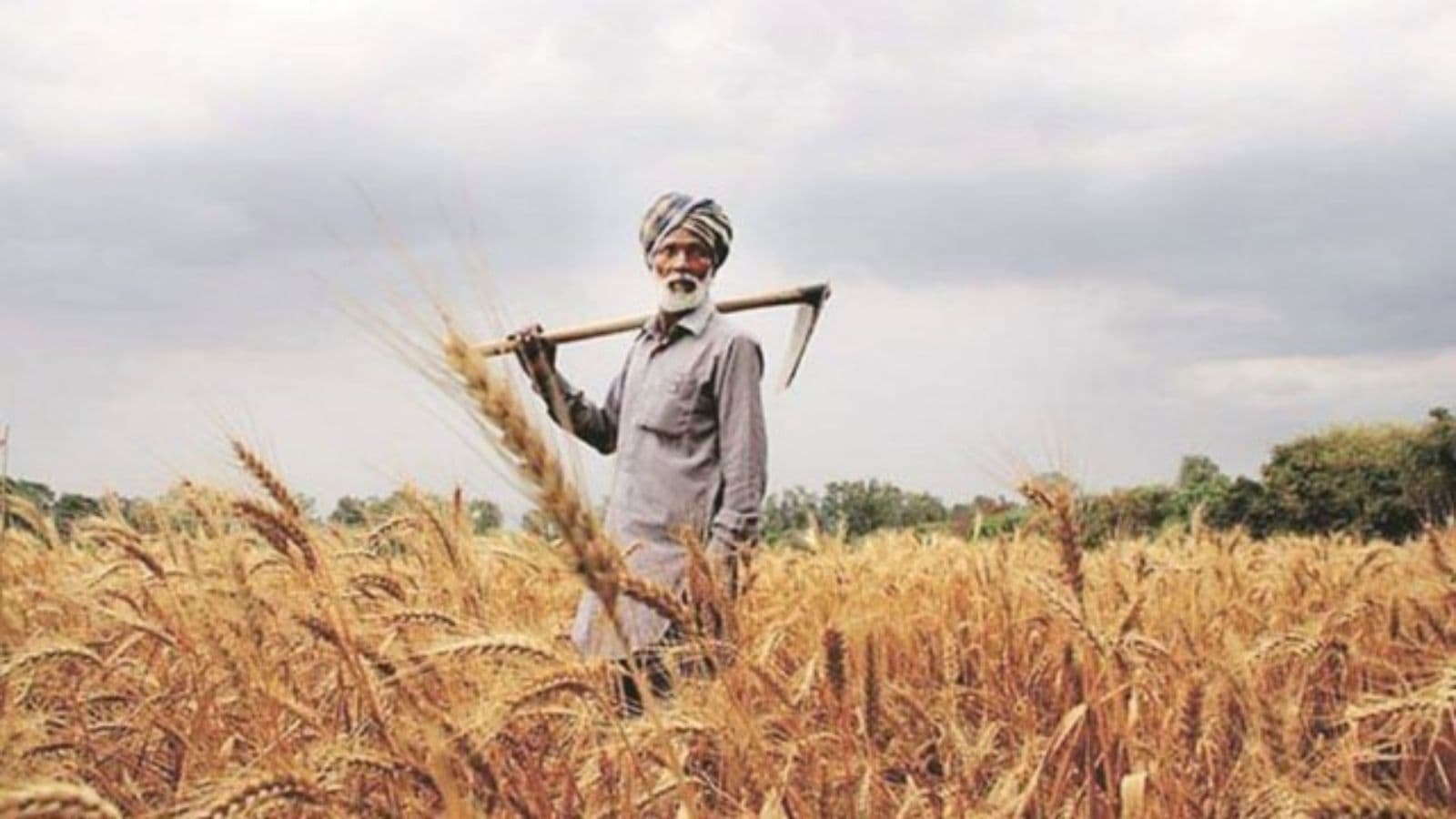
Amid the Iran-Israel conflict, consignments of basmati worth ₹ 2,000 crore is untraceable, exporters have said. The country's basmati trade, to which Punjab's produce contributes at least 40%, has suffered severely, they said. According to exporters, their communications with Iran traders have now become ineffective. (HT Photo) These consignments were sent during the past one month. All communications with Iran have now become ineffective, they say. 'We actually do not know where the consignments are, have they been delivered or stuck at Iranian ports, particularly Bandar Abbas, Bushehr and Chabahar,' said Ashok Sethi, director of the Punjab Rice Millers and Exporters' Association. Iran, a major importer of aromatic grain from India, annually takes grian to the tune of 7 to 9 lakh tonne at a tentative cost of ₹ 8,000 crore to ₹ 9,000 crore. In 2019, due to trade sanctions imposed on Iran by the US, the basmati export from India suffered badly. It has been witnessing recovery for the past two years. 'It was coming back on track, but this war has taken its toll,' Sethi said. Before the sanctions, India used to export 15 lakh tonne basmati alone to Iran, the half of which has been shifted to Pakistan. According to Sethi, Punjab's 1509 and 1121 varieties are much preferred by the Iranians. During sanctions, the grain was sent to the country through traders based in Dubai. He added that the Centre should play a proactive role in saving the trade, which is earning huge foreign exchange to the rune of ₹ 40,000 crore for the country. 'The war has ended, but the scenario is still uncertain. The entire trade season may be affected,' said Ranjit Singh Jossan, vice-president of another exporter association. 'Iran allows exports in phases. On June 1, they sanctioned import of 2.5 lakh tonne of basmati. When we were in the process of sending the consignments, the war erupted and the entire 2.5-lakh-tonne consignment is in doldrums as due to war, ports have become non-operational and the entire produce has been stuck at the ports,' said Jossan. He said that on July 21, the government of Iran would ban import to push its local crop. 'After that, the produce will not be allowed inside the country even if it has reached the ports. Even if some consignments have been received by local traders in Iran, there is no guarantee of payments,' he added. As the farmers in Punjab these days are transplanting paddy, a target of 7 lakh hectares has been fixed for the area under the aromatic crop. 'We are having a good monsoon. Hopefully, we will have a good crop and the war will have no impact when the crop matures,' said an official in the state agriculture department.

Indian Express
14-06-2025
- Business
- Indian Express
As Israel-Iran conflict escalates, Basmati exporters feel the pinch
The escalation of tensions between Israel and Iran, propelling the Middle East, already on edge, into even greater upheaval is giving Basmati exporters in Punjab sleepless nights. Middle East in general and Iran in particular a major importer of Basmati rice from India. Several ships carrying the table staple are currently in transit and exporters are worried that in the tension between Iran and Israel escalates further and the conflict is prolonged, the ships may have to return, inflicting on them losses worth several crores. 'We cannot afford a conflict. A number of our ships, with consignments of Basmati, are already in transit. If the conflict deepens, our Basmati would not be able to reach the destination. This will mean a loss of millions for us,' Ashok Sethi of Punjab Basmati Exporters Association told The Indian Express. Middle-East is a major consumer of Basmati from India and Punjab accounts for 40 per cent of nation's Basmati production. 'This is giving us sleepless nights. Ever since our parners in the Middle East informed us about Israel launching an attack, we have just kept our fingers crossed,' said Sethi. Israel launched attacks on the heart of Iran's nuclear and military structure Friday, deploying warplanes and drones to attack key facilities and kill top generals and scientists — a barrage it said was necessary before its adversary got any closer to building an atomic weapon. Iran retaliated by sending a swarm of drones at Israel, with Supreme Leader Ayatollah Ali Khamenei warning of 'severe punishment.' Sethi said, 'We will be having very serious economic consequences if the situation worsens. At least 70 per cent of our Basmati exports are linked with Middle-East. The logistics companies are already worried. Shipments will be delayed. Entire trade ecosystem will be affected. We are really worried'. He added that the consignments cannot be insured too as the insurance firms refuse cover to the consignment mean for conflict zone. 'All this will have serious repercussions. It is not only about Basmati, but also about oil. India will suffer a great deal if oil imports are impacted due to the conflict,' he added. According to Agricultural and Processed Food Products Export Development Authority (APEDA), India's foreign exchange earnings from basmati rice exports were Rs 48,000 crore in 2022, out of which Punjab contributed at least 40%. Arvinder Pal Singh Chawla, another exporter said that Iran was second largest importer of India's Basmati after Saudi Arabia. 'This conflict will definitely affect us. I do not know for how long the situation will continue. At the moment it is end of season. We are waiting for reimbursements. Some ships are still in transit. Financially, we will be affected'. He added that out of 60 million tonnes of Basmati exported by India, 40 million tonnes went to Middle East alone. 'We are monitoring the situation how it is panning out.' Sethi said, 'We are already suffering economically as our trade with Pakistan and Afghanistan is hit due to India's strained relations with the neighbouring country. We are a landlocked state and Amritsar is closest to Lahore. But we cannot even raise the issue in the present circumstances'. Sethi said paddy sowing season has begun in Punjab. 'It is at this juncture that area from under paddy can be diverted to Basmati. But with Middle East turning into a conflict zone, the farmers here will be discouraged from sowing Basmati. I have already started getting calls from farmers as to what would happen next,' he said. According to the Punjab agriculture department, the 1121, 1509 and 1692 varieties of Basmati are grown in the state. In case exporters fail to export Basmati to the countries in the Middle East, they will be forced to sell in the domestic market, where aromatic rice does not fetch the premium rates.


Time of India
10-05-2025
- Business
- Time of India
Research centre delay hurts Punjab basmati exports.
Chandigarh: Even as Punjab grapples with the dual challenge of farmers' struggle to grow pesticide-free basmati and ongoing efforts to wean them off water-intensive paddy, the state govt is yet to allocate the necessary land for a Centre-backed project. The proposed basmati research centre in Tarn Taran , intended to include basmati sample testing facilities, remains stalled, hindering a much-needed boost to the state's basmati exports in the competitive global Agricultural and Processed Food Products Export Development Authority ( APEDA ) had decided to set up the research centre, and the state govt initially offered to provide 14 acres of land in Khabba Rajputan village in Tarn Taran on a 30-year lease. It was to include a seed centre and training centre for delay comes amid the recent headwinds faced by Indian basmati exporters. Following a period of struggle due to the now-withdrawn minimum export price (MEP), the industry had to later deal with the complexities arising from the ongoing Iran-Israel conflict, further impacting their ability to sell produce in the global to Ashok Sethi, director of Punjab Rice Millers and Exporters' Association, the stalled basmati research centre was vital to prevent European rejection of export orders due to pesticide contamination. Operation Sindoor India-Pakistan Tensions Live Updates: India hits back after Pakistan violates ceasefire; Nagrota sentry hurt in brief gunfire Operation Sindoor Live Updates: Drones shot down at multiple places in J&K as Pakistan violates bilateral understanding Pak drones enter Indian airspace, explosions heard just hours after truce deal He highlighted the expensive alternative of private lab testing that costs around Rs 10,000 per sample. "A local exporter is now setting up his own laboratory. Every year, 4-5 containers are sent back from Europe. In August last year, the then secretary, agriculture and APEDA officials visited the site. The project is delayed despite the state govt's push for crop diversification," he APEDA official added that the state-of-the-art research centre was to be funded by APEDA but is held back for want of necessary land by the state govt. The proposed research centre in Tarn Taran was envisioned to ensure the quality of Punjab's basmati exports, he stands as a major contributor to India's annual basmati rice exports, which are valued at approximately Rs 50 thousand crore. With a production level of 3.84 lakh metric tonnes in the last recorded period, the state accounts for a substantial 42.7% of the total national output. Key export destinations for Indian basmati in 2023-24 included Saudi Arabia, Iran, Iraq, the United Arab Emirates, the USA, and Yemen Republic."The absence of such a facility leaves Punjab's significant basmati production vulnerable to international quality standards, potentially jeopardising its market share and the income of its farmers. The state govt's inaction on providing land for this vital project raises questions about its commitment to both crop diversification and supporting the basmati sector," said Amarjit Singh, a basmati exporter from PUNJAB HAS BANNED 10 INSECTICIDESThe state govt issued a gazette notification in 2023 to prohibit the sale, stock, and distribution of the insecticides on the basmati crop for being a "potential constraint in export and consumption of basmati rice." There is a risk of more than the maximum residual level (MRL) of pesticides on account of the use of the agro-chemicals, it said. MSID:: 121056937 413 |
