


Latest news with #CarnegieCenter

DW
 08-08-2025
- Politics
- DW
5 years after protests in Belarus: Have things changed? – DW – 08/08/2025
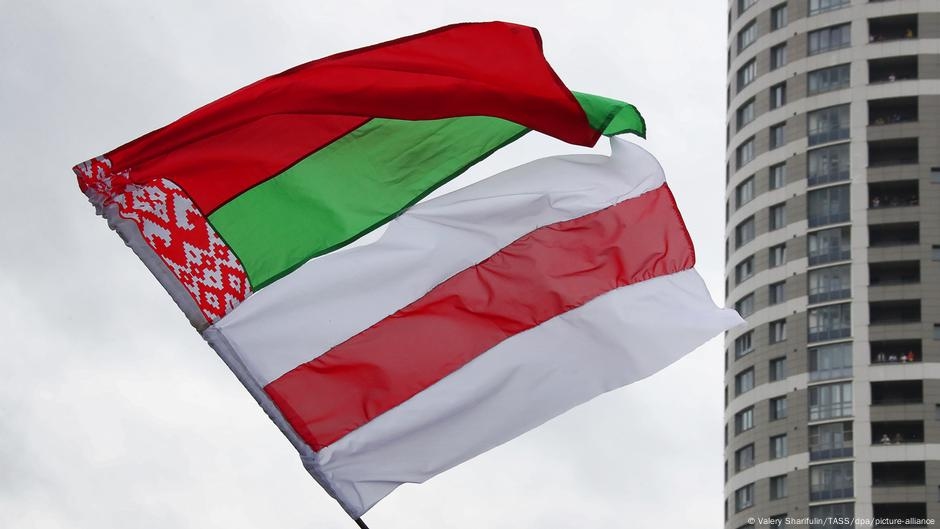
Five years ago, mass protests rocked Belarus — but the regime clamped down hard. What's changed since then? And could things have turned out differently? No one saw it coming when the largest protests in Belarus' history erupted five years ago — in a country that had already been ruled autocratically by Alexander Lukashenko for more than a quarter of a century. At the time, people took to the streets to protest against the results of the August 9, 2020, presidential election, which was rigged in Lukashenko's favor. They were also angered by the authorities' lack of steps to protect the population against the COVID-19 pandemic and the arrest of the most promising opposition presidential candidates and thousands of citizens. Women organized marches and students took to the streets. Workers, actors, and athletes protested, diplomats were dismissed, and doctors and teachers wrote open letters to voice their dissatisfaction. In turn, the country's security forces responded with a wave of violence. Many people were hurt and even killed, with a steady stream of injured people taken directly from police stations to hospitals. And the Hollywood story of the then housewife Sviatlana Tsikhanouskaya, who entered the race for the Belarusian presidency in place of her then-imprisoned husband Siarhei Tsikhanouski, ended without a happy ending. She was forced into exile in Lithuania. Over the years, Alexander Lukashenko increasingly worked to secure Russia's support. He helped Vladimir Putin in the war against Ukraine, triggered a migration crisis on the border with the European Union, gained power for another five-year term, and still has no intention of stepping down. But could things have turned out differently? The developments in Belarus could not have turned out any differently at the time, says Artyom Shraibman, an expert at the Carnegie Center, a foreign policy think tank. "The West had no leverage at these critical moments to weaken the Lukashenko regime in any way," the Berlin-based political scientist said in an interview with DW. DW columnist Alexander Friedman, who teaches Eastern European history at German universities, points to the global political paradigm, which was different in 2020. "From a European perspective, Belarus was perceived as a zone of Russian interests where extreme caution was required," he said. The situation might have been different if Putin had not supported Lukashenko and had instead taken a neutral position. Five years on, there are no longer even digital traces of the mass protests in Belarus. The media outlets that reported on them at the time are now closed or operate from abroad. Their websites are blocked by the Belarusian authorities. Many people have also deleted their private photos and videos of the events of 2020, fearful that authorities will use them to identify participants in the protests. Articles, reports, archives, and social media posts have also disappeared. At the same time, it is increasingly difficult for the regime in Belarus to hide the enormous scale of the repression. According to the human rights center "Viasna" in Belarus, at least 8,519 people have been prosecuted for political reasons since 2020, and a total of more than 60,000 people have been imprisoned. Among the most prominent prisoners is activist and flutist Maria Kolesnikova, who was sentenced to 11 years in prison. Her relatives have had no contact with her to this day. The same applies to banker and philanthropist Viktor Babaryka, who is serving a 14-year prison sentence. And human rights activist Ales Bialiatski is currently the only Nobel Prize winner in the world who has to work six days a week in a penal colony. "Bialiatski's health is deteriorating; he has problems with his eyesight and his legs," said Leonid Sudalenko, a former political prisoner and Bialiatski's colleague at Viasna, in an interview with DW. To view this video please enable JavaScript, and consider upgrading to a web browser that supports HTML5 video Even today, Belarusians are still being persecuted in connection with the 2020 protests. Since the beginning of the year, more than 1,700 people have been arrested on administrative, criminal, and politically motivated charges. And those are only the numbers known to human rights activists. The reasons for detention are manifold. Some were photographed during the protests. Others liked "extremist" web content – although in Belarus, all independent media is classified as "extremist", including DW. Some left "incorrect" comments on the web, campaigned for the "wrong" candidate in the 2020 elections, made donations or sent parcels to political prisoners. The list of "extremist" offenses is long. For example, a company that produced jewelry pendants in the shape of a map of Belarus was recently labeled "extremist." In recent months, the regime has released political prisoners in small groups — more than 300 people in total. In June 2025, this included Siarhei Tsikhanouski, blogger and husband of the leader of the Belarusian democratic forces, Sviatlana Tsikhanouskaya. He was released from custody on the day Alexander Lukashenko met with US President Donald Trump's special envoy, Keith Kellogg. The Belarusian regime makes no secret of the fact that it would release political prisoners in exchange for concessions from the West. Lukashenko declared on July 31 that he was prepared to hand over several thousand people. "If you want them, take them! What do you offer in return?" he wrote after talks with the US delegation. Artyom Shraibman believes the West could do more to support people in Belarusian prisons. "It could negotiate more actively for the release of these people and offer Lukashenko concessions in terms of his reputation and diplomacy — phone calls, visits and contacts." In theory, Western countries could go even further, he said, and "consider lifting some sanctions in order to reach a kind of exchange with Lukashenko to end the migration crisis and release political prisoners." But the expert said that such steps would be unlikely to radically change the situation in Belarus. Instead, they could change the prospects of individual victims of this regime. Their fates are largely in the hands of the West. However, since Belarus has not been and is not a priority, there has been no sign of serious willingness to get involved so far.


New York Times
09-07-2025
- Politics
- New York Times
Putin, Undeterred by Trump's Words, Escalates His War Against Ukraine
President Vladimir V. Putin of Russia is brushing aside President Trump's professed disappointment in him and is pushing ahead in Ukraine with renewed intensity, having already priced in the possibility of new U.S. pressure, analysts and people close to the Kremlin said. The Russian leader is convinced that Russia's battlefield superiority is growing, and that Ukraine's defenses may collapse in the coming months, according to two people close to the Kremlin, who insisted on anonymity to speak candidly about sensitive diplomacy. Given Russia's ongoing offensive, they say, Mr. Putin views it as out of the question to halt the fighting now without extensive concessions by Ukraine. 'He will not sacrifice his goals in Ukraine for the sake of improving relations with Trump,' Tatiana Stanovaya, a senior fellow at the Carnegie Russia Eurasia Center, said. Mr. Putin's recalcitrance highlights a stark reversal from some expectations earlier this year, when Mr. Trump came into office and aggressively pursued a rapprochement with Moscow, having pledged on the campaign trail to end the war in Ukraine in 24 hours. Mr. Trump's friendly approach to the Kremlin and an Oval Office shouting match with President Volodymyr Zelensky of Ukraine seemed to offer a rare opening for Mr. Putin. Mr. Trump's clear sympathy for the Russian leader, many Russians hoped, could yield sanctions relief, Western investment, arms-control deals and a favorable geopolitical realignment in Europe. All Mr. Putin needed to do, it seemed, was accept a Ukraine cease-fire that would have allowed Russia to keep the territory it had already captured. Want all of The Times? Subscribe.

New York Times
06-07-2025
- Politics
- New York Times
China and Russia Keep Their Distance From Iran During Crisis
When Russia enlisted the aid of China, North Korea and Iran in its war against Ukraine, some American and British officials began talking about a new 'axis.' It appeared that the four countries were united by anger, authoritarianism and animus against the United States and its allies. But Iran's sales of drones and ballistic missiles to Russia for its war and oil shipped to China did not pay off when it mattered, raising doubts about unity among the nations. None of the other three states rushed to aid Iran during its war with Israel or when U.S. forces bombed Iranian nuclear sites. China and Russia, by far the two most powerful countries among the four, issued pro forma denunciations of the American actions but did not lift a finger to materially help Iran. 'The reality of this conflict turned out to be that Russia and China didn't run to Iran's rescue,' said Alexander Gabuev, the director of the Carnegie Russia Eurasia Center. 'That just exposes the limitations of the whole 'axis' idea.' 'Each of them is pretty selfish and doesn't want to get embroiled in the wars of others,' he added. 'These are very different wars and different sets of conflicts. The countries are not necessarily sharing the same structures and values and institutional links the same way the U.S. and its allies do.' Want all of The Times? Subscribe.

New York Times
10-05-2025
- Politics
- New York Times
Putin Puts on Show of Defiance as Cease-Fire Talks Drag On
He hugged a North Korean general. He squired China's leader around with special care. He spoke of the sacrifices of soldiers. And he paraded Russian-made drones for the first time across Red Square. President Vladimir V. Putin of Russia drew attention to the very factors that have enabled him to wage war against Ukraine into a fourth year, as he presided over festivities on Friday in Moscow to commemorate the 80th anniversary of Soviet victory over the Nazis during World War II. Mr. Putin's full-scale invasion of Ukraine in 2022 initially proved catastrophic for Russian forces, but he has since turned around the situation on the battlefield. Among his helpers: North Korean soldiers and ammunition, Chinese oil purchases and technology, Russian soldiers shouldering immense losses and seemingly unending swarms of Russian drones. All were represented on Red Square in some way, as the Russian leader underscored to the world, through a Soviet-style display of pageantry and militarism, that he does not need to stand down in Ukraine. 'Truth and justice are on our side,' Mr. Putin told the more than 11,500 military personnel that the Kremlin said had gathered for the parade, including over 1,500 involved in Moscow's war against Ukraine. 'The whole country, society and people support the participants of the special military operation,' Mr. Putin added, using the Kremlin's chosen euphemism for the war. Alexander Gabuev, the director of the Carnegie Russia Eurasia Center, said the events were calibrated to communicate a clear message: 'If people believe that Russia is exhausted, that the will, equipment and personnel to fight is not there, these people are dead wrong.' 'That's the message that he's trying to send,' Mr. Gabuev said. 'Not necessarily that this is the reality.' Mr. Gabuev noted that in addition to the Chinese leader, Xi Jinping, one of the most powerful people in the world, Mr. Putin also welcomed President Luiz Inácio Lula da Silva of Brazil, the largest country in Latin America. Their presence was part of a broader attempt by the Kremlin to show that despite isolation from the West, Russia has maintained and in many cases improved ties elsewhere. In a trip that will serve as a response to Mr. Putin's gathering, the leaders of four nations allied with Ukraine — Britain, France, Germany and Poland — on Saturday made their first joint visit to Kyiv, Ukraine's capital. Their arrival was intended to show their support and highlight their calls for Russia to agree to a 30-day unconditional cease-fire. The events came as President Trump, who had promised on the campaign trail to broker peace in Ukraine within 24 hours, said talks with Russian officials were continuing. He reiterated his support for the cease-fire, which Kyiv has supported, and threatened to impose additional sanctions if Russia holds out. 'Thousands of young soldiers are dying on a weekly basis, and everybody should want it to STOP,' Mr. Trump wrote on Truth Social ahead of the events. 'I do, and the United States of America does, also.' Mr. Trump is scheduled to embark this next week on a trip to the Middle East, the first major foreign foray of his second term, though he has said he will not meet there with Mr. Putin. Trump administration officials came in with enthusiasm about striking a deal with Mr. Putin to end the war in Ukraine, but they have since said Russia is asking for too much in negotiations and have threatened to walk away. Mr. Putin could welcome that outcome, particularly if could continue normalizing relations with Washington and achieve sanctions relief, without having to make concession on Ukraine. 'The question going forward will be: If the U.S. in fact does pull back from the negotiations to try to end the war, will the U.S.-Russia track, the reset, continue?' said Angela Stent, a Russia expert and professor emerita at Georgetown University. 'I think we don't quite know that yet. What Putin wants, and he has wanted that from the beginning, is to separate the two.' In comments broadcast on Sunday on state television, Mr. Putin said Moscow had 'enough strength and means to bring what was started in 2022 to a logical conclusion with the outcome Russia requires.' The day before Friday's Victory Day festivities, Mr. Putin held a separate summit for Mr. Xi, the Kremlin's most important foreign partner, and signed a raft of joint documents that rebuked United States both implicitly and explicitly. The statements seemed calibrated to communicate that despite Mr. Trump's demands in peace negotiations with Moscow and in his trade war with Beijing, the nations would stand together. Mr. Xi denounced what he called hegemonic bullying, a clear reference to Mr. Trump's trade broadside. Mr. Putin, who has toned down his vitriol against the United States while hoping to reset ties with Washington, for once seemed the less confrontational of the two. 'The timing and the tone is probably not what Russia would want to have,' Mr. Gabuev said. 'But that's the price you pay for being a partner of China.'
