


Latest news with #ChurchoftheEast


Indian Express
 6 hours ago
- General
- Indian Express
Ancient cross dating back 1,400 years unearthed from Abu Dhabi's Sir Bani Yas Island
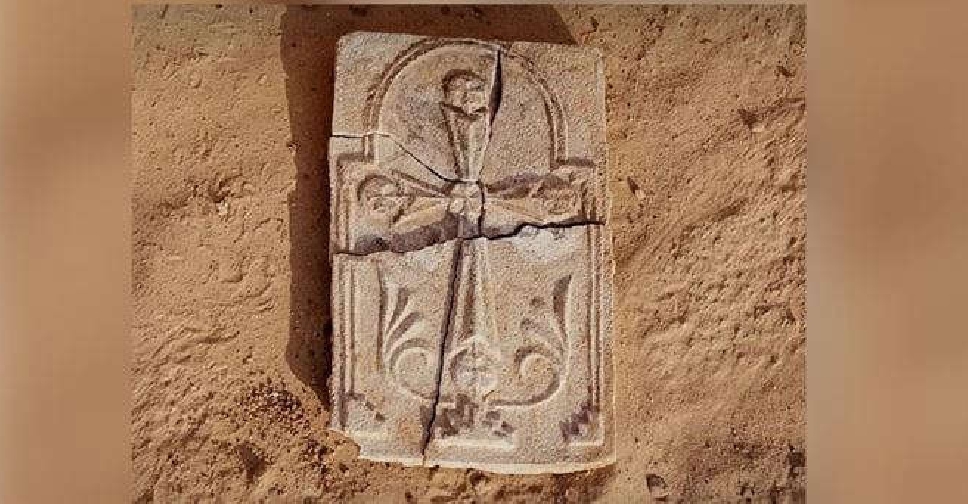
In a remarkable discovery, the Department of Culture and Tourism – Abu Dhabi (DCT Abu Dhabi) has announced the discovery of an ancient Christian cross, during an ongoing excavation. The cross, moulded on a stucco plaque, is estimated to be around 1,400 years old and was found from the ancient monastery on Sir Bani Yas Island. History unearthed by the DCT Abu Dhabi team! An ancient cross from a 7th-8th century monastery on Sir Bani Yas Island, our first major dig in 30 years. This discovery highlights the UAE's legacy of peaceful co-existence. — Department of Culture and Tourism – Abu Dhabi (@dctabudhabi) August 19, 2025 According to archaeologists, the cross is similar to those found in Iraq and Kuwait, and is linked to the Church of the East, which originated in ancient Iraq. 'The discovery of this ancient Christian cross on Sir Bani Yas Island is a powerful testament to the UAE's profound and enduring values of coexistence and cultural openness. It stirs within us a deep sense of pride and honour and reminds us that peaceful coexistence is not a modern construct, but a principle woven into the very fabric of our region's history,' Mohamed Khalifa Al Mubarak, Chairman, DCT Abu Dhabi, said on Tuesday. Sir Bani Yas Island, which is located off the coast of Al Dhafra Region in Abu Dhabi part of ancient churches and monasteries that emerged across the region, including Umm Al Quwain, Kuwait, Iran, and Saudi Arabia in the sixth and seventh centuries. Excavations began on Sir Bani Yas Island in 1992 and the Abu Dhabi Islands Archaeological Survey (ADIAS) has uncovered a church and a monastic complex occupied at the same time as the monastery from where the cross was discovered. Excavations resumed in Sir Bani Yas Island in January this year, and the cross, which is 27cm long, 17cm wide and about 2cm thick, is the most significand find from there yet. The Department of Culture and Tourism – Abu Dhabi has unveiled its latest archaeological discovery: a stucco cross found in the courtyard of a house belonging to an ancient monastery on Sir Bani Yas Island. The discovery is a reminder of the UAE's rich history.#AbuDhabiCulture — Abu Dhabi Culture (@AbuDhabiCulture) August 19, 2025 Archaeologists are currently researching and exploring a group of courtyard houses near the monastery, where early Christian monks lived in retreat. As part of restoration efforts carried out by DCT Abu Dhabi in 2019, the church and monastery, which are located within nature reserves home to gazelles and hyrax, are now protected by shelters. The Sir Bani Yas church and monastery site has also been reopened to the public with a small exhibition of artefacts from previous excavations, such as glass chalices, a cross-shaped stucco, and a stamp seal with a scorpion motif.

Dubai Eye
8 hours ago
- General
- Dubai Eye
Ancient Christian cross discovered in Abu Dhabi
Archeologists in Abu Dhabi discovered a Christian faith cross moulded onto a plaque that has been dated to the 7th or 8th century on Sir Bani Yas Island, as the emirate reignites efforts to unearth its history. The style of the cross shows similarities with finds from Iraq and Kuwait, and is linked to the Church of the East, which has origins in ancient Iraq. The emirate had launched a new fieldwork campaign on Sir Bani Yas Island in January. The find is the first major excavation in over 30 years, when a seventh-to eighth-century Christian monastery was first discovered on Sir Bani Yas Island. His Excellency Mohamed Khalifa Al Mubarak, Chairman, DCT Abu Dhabi, said, 'The discovery of this ancient Christian cross on Sir Bani Yas Island is a powerful testament to the UAE's profound and enduring values of coexistence and cultural openness. It stirs within us a deep sense of pride and honour and reminds us that peaceful coexistence is not a modern construct, but a principle woven into the very fabric of our region's history." 'The ongoing discoveries from Sir Bani Yas Island, even after 30 years of research and excavation, underscore the magnitude of our cultural legacy and the importance of our continued commitment to its preservation and understanding." "These discoveries deepen our connection to the past and inspire future generations to embrace the spirit of unity and mutual respect that has long defined our community.' Excavations since 1992 have uncovered a church and a monastic complex occupied at the same time as the monastery. They are currently interpreted as separate spaces, where senior monks retreated for periods of contemplation and ascetic seclusion. Archaeologists are currently researching and exploring a group of courtyard houses near the monastery, where early Christian monks lived in retreat. Sir Bani Yas is part of a wider group of churches and monasteries that emerged across the region around the same period, with similar sites found in Umm Al Quwain, Kuwait, Iran, and Saudi Arabia. Christianity spread and declined across the Arabian Peninsula between the fourth and sixth centuries CE. Christians and Muslims later co-existed until the eighth century CE, when the Sir Bani Yas monastery was abandoned. Today, the church and the monastery, set within nature reserves home to gazelles and hyrax, serve as a reminder of Abu Dhabi's ancient past. As part of restoration efforts carried out by DCT Abu Dhabi in 2019, the church and monastery are now protected by shelters. The Sir Bani Yas church and monastery site has reopened to the public with improved facilities, including directional signage and a small exhibition of artefacts from previous excavations, such as glass chalices, a cross-shaped stucco, and a stamp seal with a scorpion motif.

TAG 91.1
12 hours ago
- General
- TAG 91.1
Ancient Christian cross discovered in Abu Dhabi
Archeologists in Abu Dhabi discovered a Christian faith cross moulded onto a plaque that has been dated to the 7th or 8th century on Sir Bani Yas Island, as the emirate reignites efforts to unearth its history. The style of the cross shows similarities with finds from Iraq and Kuwait, and is linked to the Church of the East, which has origins in ancient Iraq. The emirate had launched a new fieldwork campaign on Sir Bani Yas Island in January. The find is the first major excavation in over 30 years, when a seventh-to eighth-century Christian monastery was first discovered on Sir Bani Yas Island. His Excellency Mohamed Khalifa Al Mubarak, Chairman, DCT Abu Dhabi, said, 'The discovery of this ancient Christian cross on Sir Bani Yas Island is a powerful testament to the UAE's profound and enduring values of coexistence and cultural openness. It stirs within us a deep sense of pride and honour and reminds us that peaceful coexistence is not a modern construct, but a principle woven into the very fabric of our region's history." 'The ongoing discoveries from Sir Bani Yas Island, even after 30 years of research and excavation, underscore the magnitude of our cultural legacy and the importance of our continued commitment to its preservation and understanding." "These discoveries deepen our connection to the past and inspire future generations to embrace the spirit of unity and mutual respect that has long defined our community.' Excavations since 1992 have uncovered a church and a monastic complex occupied at the same time as the monastery. They are currently interpreted as separate spaces, where senior monks retreated for periods of contemplation and ascetic seclusion. Archaeologists are currently researching and exploring a group of courtyard houses near the monastery, where early Christian monks lived in retreat. Sir Bani Yas is part of a wider group of churches and monasteries that emerged across the region around the same period, with similar sites found in Umm Al Quwain, Kuwait, Iran, and Saudi Arabia. Christianity spread and declined across the Arabian Peninsula between the fourth and sixth centuries CE. Christians and Muslims later co-existed until the eighth century CE, when the Sir Bani Yas monastery was abandoned. Today, the church and the monastery, set within nature reserves home to gazelles and hyrax, serve as a reminder of Abu Dhabi's ancient past. As part of restoration efforts carried out by DCT Abu Dhabi in 2019, the church and monastery are now protected by shelters. The Sir Bani Yas church and monastery site has reopened to the public with improved facilities, including directional signage and a small exhibition of artefacts from previous excavations, such as glass chalices, a cross-shaped stucco, and a stamp seal with a scorpion motif. A multi-faith church, inspired by the ancient site, has also been built adjacent to the visitor centre.


Telegraph
08-03-2025
- General
- Telegraph
Sacred Mysteries: Unveiling the Evensong of Mesopotamia
It's an intriguing title. The Book of Before & After sounds like a novel by Philip Pullman. In fact it is a translation of the liturgy of the hours of the Church of the East. The reference is to the Psalms and hymns recited day by day before and after the stable core of Psalms sung at evening and morning prayer. The translation is by the enterprising American-born Chaldean Catholic priest working in California, Father Andrew Younan. If this rings a bell, don't stop reading on that account, because my mention of him a few weeks ago was in connection with another book: the poetic sermons of Narsai, the 5th-century saint active on the present border of Syria and Turkey. But an obvious interest of the ancient liturgy used by the Chaldeans (who are in communion with the Pope) and by the Assyrians (who are not), and indeed by the Syro-Malabarese Catholics of Kerala, is its use of a dialect of Aramaic, the language that Jesus spoke. The church that grew up beyond the eastern borders of the Roman Empire was not under the thumb of the Emperor, yet supported generations of scholars who preserved and translated ancient Greek philosophy, notably that of Aristotle, much of whose works were lost to the West for centuries. The importance of liturgy – worship by the Church – is that it expresses beliefs in a more vital way than credal formulae. It conveys things about God and his involvement with humanity that cannot be said by theology. The difference is greater than that between the rules of football and a game of football. In translating these acts of worship, Fr Younan is anxious to help prevent the Chaldean Catholic Church in America, which is now lively and numerous, from losing its identity. There is a well-meaning tendency to make Chaldean Sunday services less demanding by adopting Westernised music and style. 'This is, in my experience, an easy way out that will be suicidal in the long run,' he told the admirable religious journalist Luke Coppen in an interview for The Pillar website. 'If the Chaldean Church ends up feeling just like a Latin Church, then why not just go to a Latin Church?' The liturgy of the hours in the Church of the East bears similarities to Morning and Evening Prayer in the Church of England's Book of Common Prayer. More Psalms are chanted, and the numbering of them agrees in part with the Hebrew version (and the CofE) and half with the Greek version (and the Latin rite). The oriental flavour comes mostly from the music (illustrated in an accompanying online resource), and from the earnest, elevated and repeated prayers. The day starts (as in Hebrew worship) in the evening. Evening prayer begins and ends with the Our Father, ornamented with internal doxologies ('Holy, holy, you are holy; our Father in heaven...'.) In the middle of evening prayer comes the Lakhu Mara, at the lighting of lamps, with the refrain: 'We give you thanks, O Lord of all, we glorify you, Jesus Christ; you raise our bodies into life, you are the Saviour of our souls.' It also includes the Trisagion, borrowed from the most ancient Greek liturgy and in use in the Latin liturgy of Good Friday: 'Holy God, Holy Mighty One, Holy Immortal One: Have mercy on us.' Absent from the liturgy is any statement of the heresy known as Nestorianism. Indeed in Sunday Evening Prayer, Jesus, the name given to the child born of Mary, is addressed as Creator. He is both God and man, as the Catholic and Orthodox churches agree.
