


Latest news with #DamonYoung

Sydney Morning Herald
 08-08-2025
- General
- Sydney Morning Herald
More than words: How we say it best when we say nothing at all
When my daughter was three, she learnt to shrug. Clumsily, it must be said. Somehow Tess sank her head rather than hoisting her shoulders. A rookie error magnified by chats on the phone, where Tess shrugged to grandma instead of using words. With no FaceTime, no Zoom, my mum didn't know that Tess didn't know. Eventually she nailed it – the shrug, I mean. One more piece of visual vocab to add to the nod, the air quotes, the meh waggle, her withering eyeroll. Separate from words, each gesture offers meaning, a nuance in context. A facepalm in traffic declares frustration, different from its squeamish betrayal during a horror film. Despite their silence, gestures speak. More than enrich our language, as philosopher Damon Young argues, gestures perform as a parallel language, 'the tangible culminations of a living tempo'. They can brim with immensities like the Hercules statue, the demigod hovering his finger on his lower lip, an ageless naïve 'amazed by his own stone self', as Young writes in Immortal Gestures (Scribe, 2025). Gesture derives from gerere, Latin to carry. But carry what? Implicit meanings, of course, from the doom of an emperor's thumb to the hush of the librarian's finger. Yet also the ancestral baggage of the signal itself, to the point our gestures are not uniquely ours. Sociologist Pierre Bourdieu claims, 'Society literally informs our bodies in this way'. In effect, we carry our culture through every wave and pout. Loading Even if unsighted to our gestures, as shown by a study among congenitally blind participants. Yes, the blind also gesture, suggesting the embedded necessity of this 'other language', the molecular urge to sketch our story via our anatomy. Nor was that the only revelation. Seyda Ozcaliskan, a psychologist at Georgia State University, led her team observing two lots of blind speakers – one in English, the other Turkish. With no visual learning, each group gestured in its own distinct way. English speakers, recounting the same story, fused action and direction ('rolling downwards', say) into a single movement. While Turkish speakers would isolate each detail via hand signals, mirroring their native grammar where both rolling and descending resist the unity of a verbal clause. Proof that speech and syntax shape each nation's tic-tac. Gesture study is blossoming across academia, aided by video technology that allows researchers to anchor each twitch to its exact point of speech – or pause. Books reflect the boom, with Lauren Gawne, a senior lecturer in Languages and Cultures at LaTrobe University, offering Gestures: A Slim Guide (OUP, 2025) to the genre. Scholarly in tone, Gawne's book unlocks the wonders of alternative spaces that various cultures adopt. As westerners, the semaphored telling of a journey moves left to right: a kinetic sentence. Subconsciously, we flourish hands as though the future lies before us, the past behind our shoulder. Yet high in the Andes, the opposite is true among Aymara speakers, where the past is what can't be seen, while the future remains invisible behind the speaker's back.

The Age
08-08-2025
- General
- The Age
More than words: How we say it best when we say nothing at all
When my daughter was three, she learnt to shrug. Clumsily, it must be said. Somehow Tess sank her head rather than hoisting her shoulders. A rookie error magnified by chats on the phone, where Tess shrugged to grandma instead of using words. With no FaceTime, no Zoom, my mum didn't know that Tess didn't know. Eventually she nailed it – the shrug, I mean. One more piece of visual vocab to add to the nod, the air quotes, the meh waggle, her withering eyeroll. Separate from words, each gesture offers meaning, a nuance in context. A facepalm in traffic declares frustration, different from its squeamish betrayal during a horror film. Despite their silence, gestures speak. More than enrich our language, as philosopher Damon Young argues, gestures perform as a parallel language, 'the tangible culminations of a living tempo'. They can brim with immensities like the Hercules statue, the demigod hovering his finger on his lower lip, an ageless naïve 'amazed by his own stone self', as Young writes in Immortal Gestures (Scribe, 2025). Gesture derives from gerere, Latin to carry. But carry what? Implicit meanings, of course, from the doom of an emperor's thumb to the hush of the librarian's finger. Yet also the ancestral baggage of the signal itself, to the point our gestures are not uniquely ours. Sociologist Pierre Bourdieu claims, 'Society literally informs our bodies in this way'. In effect, we carry our culture through every wave and pout. Loading Even if unsighted to our gestures, as shown by a study among congenitally blind participants. Yes, the blind also gesture, suggesting the embedded necessity of this 'other language', the molecular urge to sketch our story via our anatomy. Nor was that the only revelation. Seyda Ozcaliskan, a psychologist at Georgia State University, led her team observing two lots of blind speakers – one in English, the other Turkish. With no visual learning, each group gestured in its own distinct way. English speakers, recounting the same story, fused action and direction ('rolling downwards', say) into a single movement. While Turkish speakers would isolate each detail via hand signals, mirroring their native grammar where both rolling and descending resist the unity of a verbal clause. Proof that speech and syntax shape each nation's tic-tac. Gesture study is blossoming across academia, aided by video technology that allows researchers to anchor each twitch to its exact point of speech – or pause. Books reflect the boom, with Lauren Gawne, a senior lecturer in Languages and Cultures at LaTrobe University, offering Gestures: A Slim Guide (OUP, 2025) to the genre. Scholarly in tone, Gawne's book unlocks the wonders of alternative spaces that various cultures adopt. As westerners, the semaphored telling of a journey moves left to right: a kinetic sentence. Subconsciously, we flourish hands as though the future lies before us, the past behind our shoulder. Yet high in the Andes, the opposite is true among Aymara speakers, where the past is what can't be seen, while the future remains invisible behind the speaker's back.

San Francisco Chronicle
08-07-2025
- San Francisco Chronicle
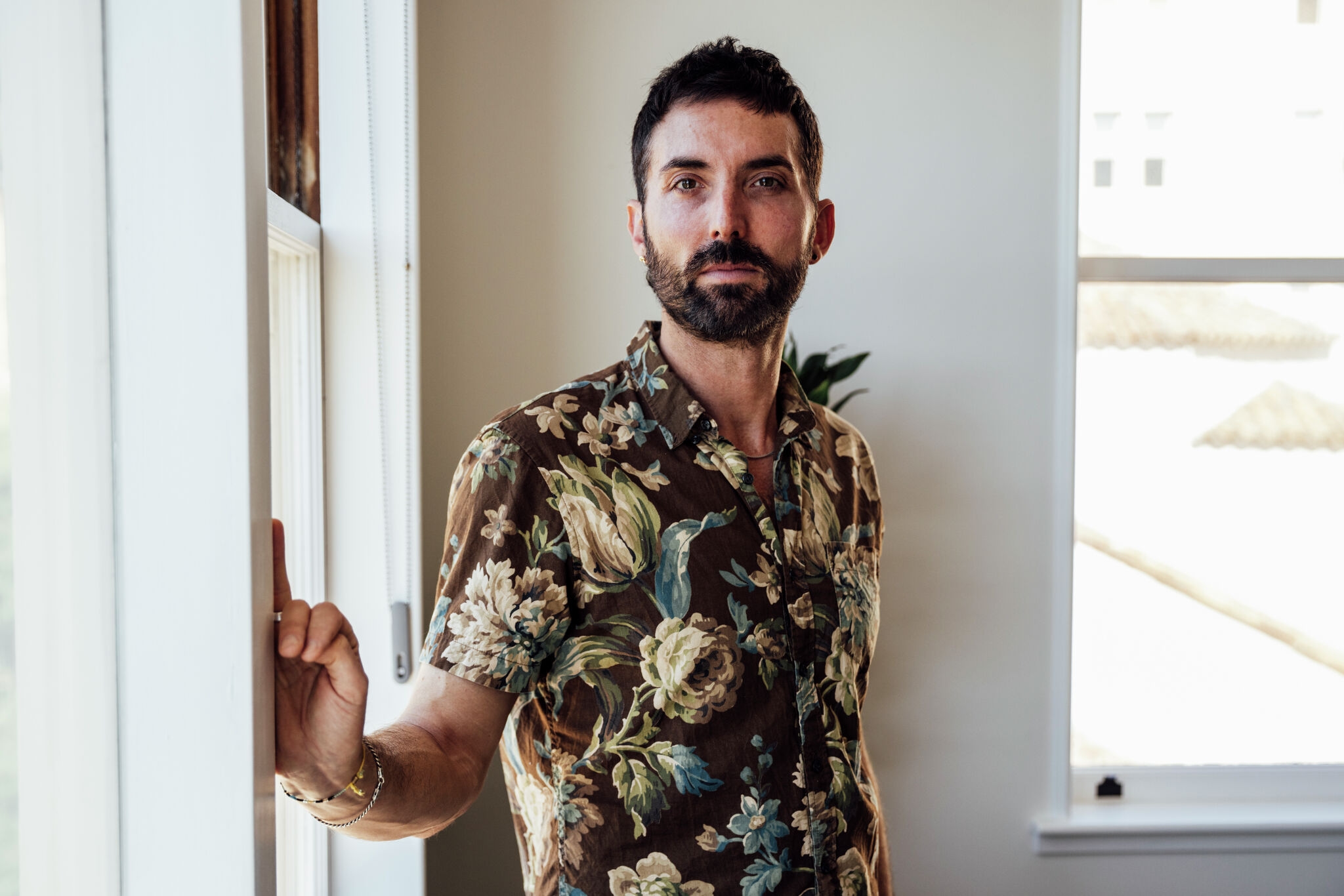
Gay Berkeley professor was attacked during S.F.'s Pride celebration. He says no one stepped in to help
The Saturday Pride celebration at Dolores Park was a typical one: sunny, joyous and bustling with people picnicking and dancing. UC Berkeley film professor Damon Young, his boyfriend and their group of friends were enjoying the festivities at the top of the hill around 6 p.m. before Young decided to take the dog home to feed him dinner. He kissed his boyfriend goodbye, telling his friend they'd be back later. Walking along the park path that parallels Church Street, Young noticed a group of young people — whom he estimated to be in their late teens or early 20s — taking up a lot of space on the path. A few minutes after he'd squeezed by them, he felt a tap on his shoulder and turned around. One of the men from the group accused Young's dog of urinating on his shoe, Young said. Dumbfounded by the accusation, Young told them that it wasn't true. But Young said he soon felt that it was all a set-up. In minutes he was brutally attacked in broad daylight. The group's ringleader began shoving him in the chest before a flurry of the punches began. Staggering, Young shouted, 'Can somebody help me?' After the next punch, he fell to the ground, Young said. Young was still clutching his dog's leash as the ringleader kneeled over him, repeatedly pummeling him in the same spot on his jaw. 'I was feeling the repeated blows in that same spot and thinking, 'Am I going to die?'' said Young, who is an associate professor of French and film media. 'Every blow felt like it was doing more damage.' Eventually, the attacker stopped and rejoined his group of friends, Young recalled. Young realized he was laying on a group of revelers' picnic blanket. A man next to him offered him a cold beer for his jaw. A woman next to him asked Young if he was okay. 'I'm not okay,' Young heard himself saying. 'I don't feel okay.' He was later diagnosed with a concussion and soft tissue damage to his jaw, medical records show. Spokespersons for Pride did not respond to a request for comment. Immediately after the attack, Young tried to call his boyfriend seven times over 15 minutes. The calls weren't going through because of the signal overload in the park. Young said there were no police officers to be seen. Stumbling out of the park, he spotted a fire truck and firefighters who were attending to another incident, he said. Young said he told them he had been assaulted and that he didn't know what to do. One firefighter 'looked at me like I was crazy or high and he didn't want to be bothered,' said Young, who said the firefighter then called for his supervisor, who told Young that he should find a police officer in the park. Young said when he told the officers that he needed medical attention, they offered to call an ambulance. Worried about his dog and his car, Young said he asked if they could medically treat him, but they again told him to find an officer in the park, he said. Defeated and stunned, he drove the ten minutes home. By that point, his calls and messages to his boyfriend, Emilio Rojas, had gone through. Rojas rushed home and took Young to UCSF Parnassus, where he underwent a CT scan and stayed for observation for six hours. Supervisor Jackie Fielder, whose district includes Dolores Park, said the incident was horrible to hear' and that she hoped Young recovered swiftly. 'We must remain vigilant to prevent more cases like these,' she said. A San Francisco police spokesperson confirmed the attack, writing that no arrests had been made as of Monday afternoon. Young filed a police report about a week after the attack. 'Every aspect, including whether this was hate motivated, is being explored in this open and active investigation,' said Officer Paulina Henderson. Young said his attackers didn't touch any of his possessions: the iPad in his bag, his phone or wallet. Young also filed a complaint with the San Francisco Fire Department about the incident, alleging unprofessional behavior on the part of its employees. In an email shared with the Chronicle, a lieutenant wrote that the department would be looking into the allegations and asked for evidence related to the members' actions. In a statement to the Chronicle, Fire Department spokespersons said that they were reviewing what had been sent to their department about the incident. At the hospital, doctors tended to Young's face, the right side of which was swollen and inflamed. Scans showed he had sustained soft tissue damage and hematoma swelling. Young's face looked 'deformed,' said Rojas. The impacted area was dangerously close to many important nerve endings, Young said doctors told him. 'That feeling of being so alone has shaken some basic confidence I had in what it means to exist physically in the world,' said Young, who wishes a bystander had offered to call the police or help him get medical support. He felt there was something symbolic about the cap he was wearing that day flying off in the scuffle. The message around the brim said: 'Love is overtaking me.'
