


Latest news with #GreekOrthodoxChurchoftheProphetElias

MTV Lebanon
 01-07-2025
- Politics
- MTV Lebanon
Syria's Christians fear for future after devastating church attack
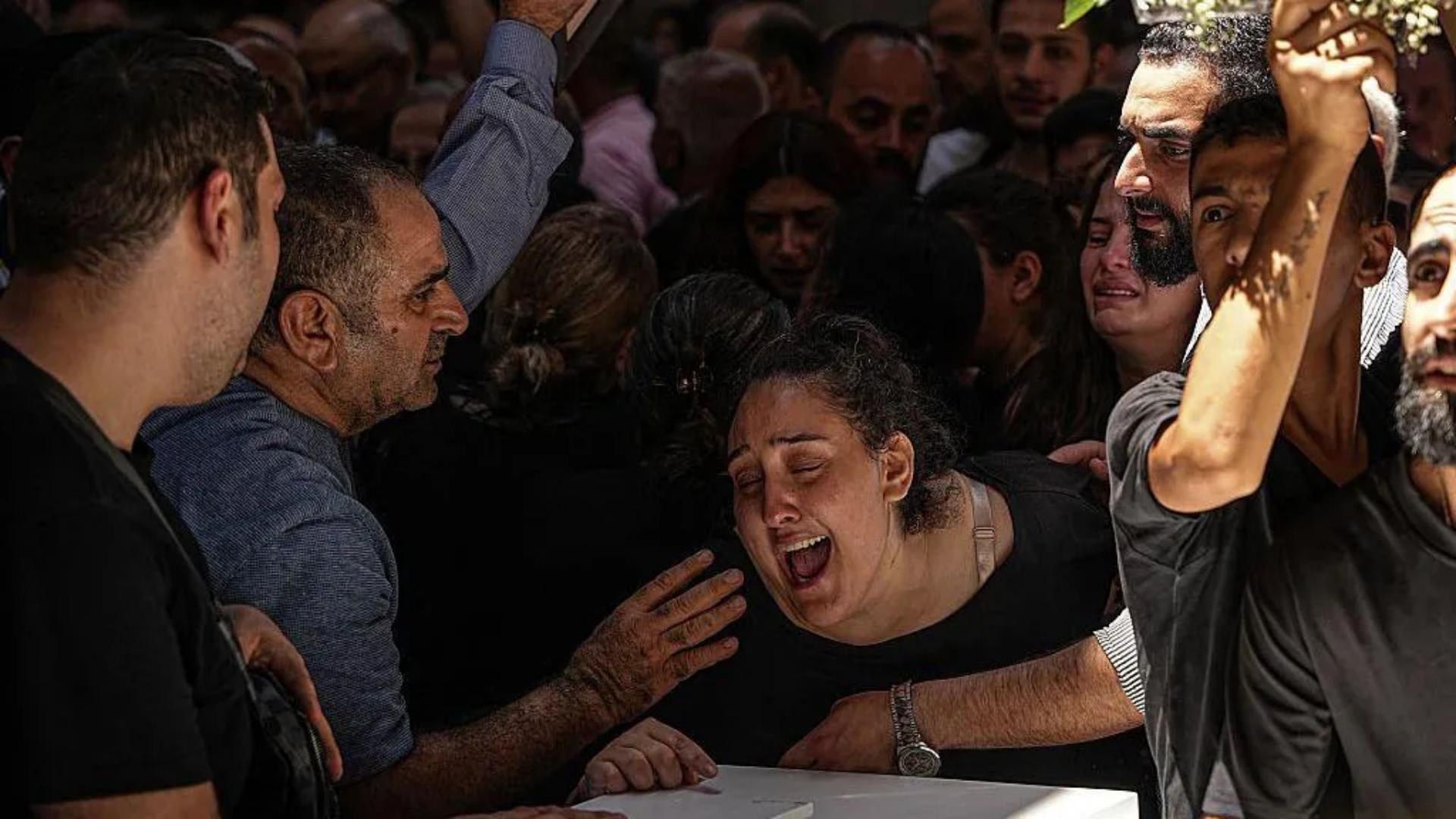
"Your brother is a hero." This is what Emad was told after finding out his brother had been killed in a suicide explosion at a church in the Syrian capital of Damascus. His brother, Milad, and two others had tried to push the suicide attacker out of the church building. He was killed instantly – alongside 24 other members of the congregation. Another 60 people were injured in the attack at Greek Orthodox Church of the Prophet Elias, in the eastern Damascus suburb of Dweila on 22 June. It was the first such attack in Damascus since Islamist-led rebel forces overthrew Bashar al- Assad in December, ending 13 years of devastating civil war. It was also the first targeting of the Christian community in Syria since a massacre in 1860, when a conflict broke out between Druze and Maronite Christians under Ottoman rule. The Syrian authorities blamed the attack on the Islamic State (IS) group. However, a lesser- known Sunni extremist group, Saraya Ansar al-Sunnah, has said it was behind the attack – though government officials say they do not operate independently of IS. Milad had been attending a Sunday evening service at the church, when a man opened fire on the congregation before detonating his explosive vest. Emad heard the explosion from his house and for hours was unable to reach his brother. "I went to the hospital to see him. I couldn't recognise him. Half of his face was burnt," Emad told me, speaking from his small two bedroom-home which he shares with several other relatives. Emad is a tall, thin man in his 40s with an angular face that bears the lines of a hard life. He, like his brother, had been working as a cleaner in a school in the poor neighbourhood, which is home to many lower to middle class and predominantly Christian families. During Bashar al-Assad's rule, members of Syria's many religious and ethnic minority communities believed the state protected them. Now, many fear the new Islamist-led government, established by the rebels who overthrew him last December, will not do the same. While interim President Ahmed al-Sharaa and his government have pledged to protect all citizens, recent deadly sectarian violence in Alawite coastal areas and then in Druze communities around Damascus have made people doubt its ability to control the situation. Many of Emad's family members echoed this sentiment, saying: "We are not safe here anymore." Angie Awabde, 23, was just two months away from graduating university when she got caught up in the church attack. She heard the gunshots before the blast. "It all happened in seconds," she told me, speaking from her hospital bed as she recovers from shrapnel wounds to her face, hand and leg, as well as a broken leg. Angie is frightened and feels there is no future for Christians in Syria. "I just want to leave this country. I lived through the crisis, the war, the mortars. I never expected that something would happen to me inside a church," she said. "I don't have a solution. They need to find a solution, this is not my job, if they can't protect us, we want to leave." Before the 13-year civil war, Christians made up about 10% of the 22 million population in Syria - but their numbers have shrunk significantly since then with hundreds of thousands fleeing abroad. Churches were among the buildings bombed by the Syrian government and allied Russian forces during the war – but not while worshippers were inside. Thousands of Christians were also forced from their homes due to the threat from hardline Islamist and jihadist groups, such as IS. Outside the hospital where Angie is being treated, coffins of some of the victims of the church attack were lined up, ready for burial. People from all walks of life, and representing different parts of Syrian society, attended the service at a nearby church, which took place under a heavy security presence. In a sermon at the service, the Patriarch of the Greek Orthodox Church in Syria, John Yazigi, insisted "the government bears responsibility in full". He said a phone call from President Ahmed al-Sharaa expressing his condolences was "not enough for us", drawing applause from the congregation. "We are grateful for the phone call. But the crime that took place is a little bigger than that." Sharaa last week promised that those involved in the "heinous" attack would face justice. A day after the bombing, two of the suspects were killed and six others arrested in a security operation on an IS cell in Damascus. But this has done little to allay fears here about the security situation, especially for religious minorities. Syria has also seen a crack down on social freedoms, including decrees on how women should dress at beaches, attacks on men wearing shorts in public and bars and restaurants closing for serving alcohol. Many here fear that these are not just random cases but signs of a wider plan to change Syrian society. Archimandrite Meletius Shattahi, director-general of the charitable arm of the Greek Orthodox Patriarchate of Antioch, feels the government is not doing enough. He refers to videos circulating online showing armed religious preachers advocating for Islam over loud speakers in Christian neighbourhoods, saying these are not "individual incidents". "These are taking place in public in front of everybody, and we know very well that our government is not taking any action against [those] who are breaching the laws and the rules." This alleged inaction, he says, is what led to the attack at the Church of the Prophet Elias.

Saudi Gazette
23-06-2025
- Politics
- Saudi Gazette
Suicide bombing at Damascus church kills 22
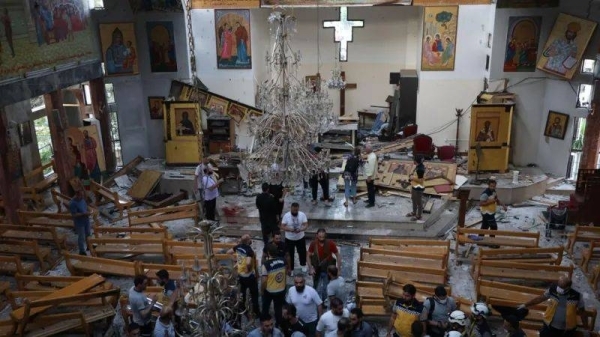
DAMASCUS — At least 22 people have been killed and 63 others wounded in a suicide bomb attack at a church in Damascus, Syria's health ministry has said. A man opened fire with a weapon at the Greek Orthodox Church of the Prophet Elias in the Dweila neighborhood during a service on Sunday evening before detonating an explosive vest, according to the interior ministry. It said the attacker was affiliated with the jihadist group Islamic State (IS). There was no immediate claim from the group itself. Photos and video from inside the church showed a heavily damaged altar, pews covered in broken glass and blood spattered across the walls. Witness Lawrence Maamari told AFP news agency that "someone entered [the church] from outside carrying a weapon" and began shooting. People "tried to stop him before he blew himself up", he added. Another man who was in a nearby shop said he heard gunfire followed by an explosion that sent glass flying. "We saw fire in the church and the remains of wooden benches thrown all the way to the entrance," Ziad said. It was the first such attack in Damascus since Islamist-led rebel forces overthrew Bashar al-Assad in December, ending 13 years of devastating civil war. The Greek Orthodox Patriarchate of Antioch said in a statement: "The treacherous hand of evil struck this evening, claiming our lives, along with the lives of our loved ones who fell today as martyrs during the evening divine liturgy." According to initial information, the bomb blast occurred at the entrance to the church, resulting in the deaths of people who were both inside the building and in the immediate vicinity, it added. The patriarchate called upon Syria's interim authorities to "assume full responsibility for what has happened and continues to happen in terms of violation against the sanctity of churches, and to ensure the protection of all citizens". Interior Minister Anas Khattab said specialised teams from his ministry had begun investigating the circumstances of what he called a "reprehensible crime". "These terrorist acts will not stop the efforts of the Syrian state in achieving civil peace," he added. The office of UN special envoy for Syria, Geir Pedersen, condemned the attack and urged Syrians "to unite in rejecting terrorism, extremism, incitement and the targeting of any community". US special envoy Tom Barrack said: "These terrible acts of cowardice have no place in the new tapestry of integrated tolerance and inclusion that Syrians are weaving." Interim President Ahmed al-Sharaa - whose Sunni Islamist group, Hayat Tahrir al-Sham (HTS), is a former al-Qaeda affiliate in Syria and is designated as a terrorist organisation by the UN, US and UK - has repeatedly promised to protect religious and ethnic minorities. However, Syria has been rocked by two waves of deadly sectarian violence in recent months. IS has frequently targeted Christians and other religious minorities in Syria. In 2016, the group claimed a series of blasts near the Shia Muslim Sayyida Zeinab shrine in a southern suburb of Damascus, which killed more than 70 people. IS once held 88,000 sq km (34,000 sq miles) of territory stretching from western Syria to eastern Iraq and imposed its brutal rule on almost eight million people. Despite the group's military defeat in Syria in 2019, the UN has warned that the threat posed by IS and its affiliates remains high. A report published in February warned that the group might take advantage of the transition in Syria to surge attacks and make the country a renewed hub for recruiting foreign fighters. It estimated that IS had between 1,500 and 3,000 fighters in Syria and neighbouring Iraq, with most of them, including key leaders, based in Syrian territory. About 300 fighters were based in the central Badia desert, which served as a centre for planning external operations, it said. More than 9,000 IS fighters are being detained prisons spread across north-eastern Syria and 40,000 other people linked to IS, mostly women and children, are held in several camps. — BBC
