


Latest news with #HayleyBrown


Daily Record
 06-08-2025
- Daily Record
Parents of young kids should know this genius hack to prevent holiday tantrums
If your child is attached to their favourite toy or teddy bear, this tip could make your life a whole lot easier. The summer holidays can easily wear down busy parents, particularly those with younger schoolkids. Tantrums can become all too common when the kids are at home for six weeks, especially when the wee one's favourite toy magically disappears. Losing a beloved teddy can be heart-breaking for both children and parents, but one expert has revealed a clever parenting hack that could save tears and tantrums. Hayley Brown, smart tech expert at AO, has suggested sewing a tracker into your child's most beloved toy to make sure you can always find it in times of crisis. The expert said: 'Losing a favourite teddy can be distressing - for both children and their parents. But using a small smart tracker like an Apple AirTag or Samsung SmartTag can help you find it in seconds.' Smart trackers use Bluetooth to connect to your smartphone, showing the teddy's last known location on a map on your screen. Some even emit a sound or guide you with precision tracking when you're nearby, perfect for finding a bear buried under a pile of laundry or left behind at Grandma's house. If you're interested in trying out this nifty parenting hack, AO offers a pack of four Apple AirTags for £89, or they are also available on Amazon in a pack of two for £28. Alternatively, Amazon also offer a four-pack of similar LifeTags currently on sale for £29.99. Hayley recommends discreetly sewing the tracker into a seam or pocket when your child isn't looking - nap time works well. Name it clearly in the app so it's easy to locate. The expert concluded: 'Test it out by moving the teddy to another room and checking that the sound works or that its location shows clearly on your phone. It's a quick and clever way to avoid bedtime dramas.' And the summer holidays abroad come with extra risks of tantrums, as lost teddy's are not so easily recovered. Back in February, an international hunt was launched after a Scouse four-year-old lost her favourite cuddly toy in Tenerife when she and her family were catching some winter sun. Jennifer Kay, the child's mum, believed the teddy may have ended up on a flight to Edinburgh. The mum said at the time: "It's my daughter's favourite bear and has been for years. He goes everywhere with her. He was made by a close family friend, a gift when she was born. "He is a knitted teddy bear, quite unique and soft. It would have been better to pack him in the case of course, but she insists he travels with her. Teddy was last seen at a café in the Tenerife Airport when it fell out of her bag. However, they had reason to believe the bear ended up in Edinburgh. Months later, however, the family have still not reported that they found the missing bear. Join the Daily Record WhatsApp community! Get the latest news sent straight to your messages by joining our WhatsApp community today. You'll receive daily updates on breaking news as well as the top headlines across Scotland. No one will be able to see who is signed up and no one can send messages except the Daily Record team. All you have to do is click here if you're on mobile, select 'Join Community' and you're in! If you're on a desktop, simply scan the QR code above with your phone and click 'Join Community'. We also treat our community members to special offers, promotions, and adverts from us and our partners. If you don't like our community, you can check out any time you like. To leave our community click on the name at the top of your screen and choose 'exit group'.
Yahoo
31-07-2025
- Health
- Yahoo
Inside the race to cure cancer: ‘We're at the cusp of a golden era of treatment'
Imagine getting a cancer diagnosis, and instead of having to break the devastating news to your family, enduring harrowing treatments and frantically googling survival rates, it felt more like being told you had the flu. That could be a reality in the not-too-distant future, thanks to the 'treatment revolution' already underway, according to Sir Stephen Powis, the outgoing medical director of NHS England. Although one in two people will get cancer in their lifetime, and there are 385,000 cancer diagnoses each year in the UK, Powis believes that 'we are at the cusp of a golden era in terms of the way we treat a range of cancers … for many cancers now, people should be confident that it's not a death sentence.' Hayley Brown, science engagement manager at Cancer Research UK, agrees. 'In the 1970s, only one in four people survived cancer for 10 years or more, now it's two in four,' she says. 'More and more people are surviving with fewer side effects and we can see the day coming closer when we can all live free from the fear of cancer.' Brown says that one of the biggest breakthroughs has been the development of cancer vaccines, which are set be rolled out to 10,000 patients on the NHS over the next five years. 'Doctors and scientists have been working on cancer vaccines for decades, but they've now reached a point where they're seeing real promise in boosting survival rates for skin, bowel, lung, brain and pancreatic cancers,' says Brown. 'The vaccines currently being trialled have been developed using the same technology as the Covid vaccine.' Some, such as LungVax, are preventative and are given to patients identified as being at high-risk of developing the disease. Others, such as a melanoma vaccine, are given to patients who have already been diagnosed with cancer to prevent its recurrence. Science fiction is now a reality But they're not a one-size-fits-all anti-cancer shot. A sample of a patient's tumour is removed during surgery, followed by DNA sequencing of the sample using AI. This information is used to make a custom-built jab, specific to the patient's tumour. It primes the immune system to look for cancerous cells and destroy them, with fewer side effects than chemotherapy. 'This is one of the most exciting things we've seen in a really long time,' says Dr Heather Shaw, the national coordinating investigator for the trial of the melanoma vaccine, the first dose of which was delivered at UCLH in 2024. 'This is a really finely honed tool. To be able to sit there and say to your patients that you're offering them something that's effectively like cordon bleu dining versus McDonald's.' Brown also points to CAR-T therapy which is revolutionising the treatment of blood cancers, which often affect children and young people. This involves collecting T-cells from a patient's blood, genetically modifying them to produce proteins which can recognise and destroy cancer cells, and then putting the improved immune cells back into the patient. 'Our researchers are taking drugs and techniques that once seemed like science fiction and making them a reality,' says Brown. It's well known that early detection of many cancers dramatically improves survival rates, but doing biopsies can be invasive and time consuming. This is why scientists are excited about 'synthetic biopsies' (which force cancer cells to produce biomarkers, making them more easily detectable via PET scans, blood tests and even breathalysers) and 'liquid biopsies' — blood tests which can diagnose cancer by detecting DNA fragments in plasma. At trials held at the Institute for Cancer Research in South Kensington, a liquid biopsy was able to predict the risk of breast cancer returning three years before any tumours showed up on scans. Meanwhile, researchers at Oregon Health & Science University have developed PAC-MANN, a test which can pick up signs of pancreatic cancer from just one drop of blood. Eat your heart out, Elizabeth Holmes. Stopping cancer before it starts Traditional cancer therapies have been long and arduous, but pioneering, ultra-fast treatment options are on the horizon. 'New drugs and approaches are making treatment more convenient and accessible for patients,' says Dany Bell, strategic adviser for cancer care at Macmillan Cancer Support. Earlier this year, the NHS announced it would be the first health service in Europe to offer cancer patients a quick injection of the immunotherapy drug nivolumab. This so-called 'super jab' only takes five minutes, compared to an IV drip which takes up to an hour. 'Some immunotherapy now comes in tablet form or can be self-injected at home,' says Bell. Meanwhile, at Cern in Switzerland, they've developed Flash, a way of delivering radiation therapy with fewer side effects than traditional radiotherapy — and it takes less than a second. Technology is not only being used to identify and treat cancer faster than ever before, it can even predict its likelihood of happening in the first place. MIT scientists have developed an AI learning model called 'Sybil' which can forecast a person's likelihood of developing lung cancer up to six years in advance. AI models are also being used to create algorithms which look for patterns in a person's behaviour to detect early warning signs for a person's risk of developing cancer. So how soon will we be able to say we've cured the Big C? Brown points out we're already seeing the benefits of preventative measures brought in relatively recently. The NHS is on track to end cervical cancer by 2040 thanks to the HPV vaccine introduced in 2008. 'Beating cancer won't come from one silver bullet, but combinations of these breakthroughs and treatments and preventions,' says Brown. 'There's a lot of hope.'
Yahoo
01-06-2025
- General
- Yahoo
'Every child will have contact with a stranger online'
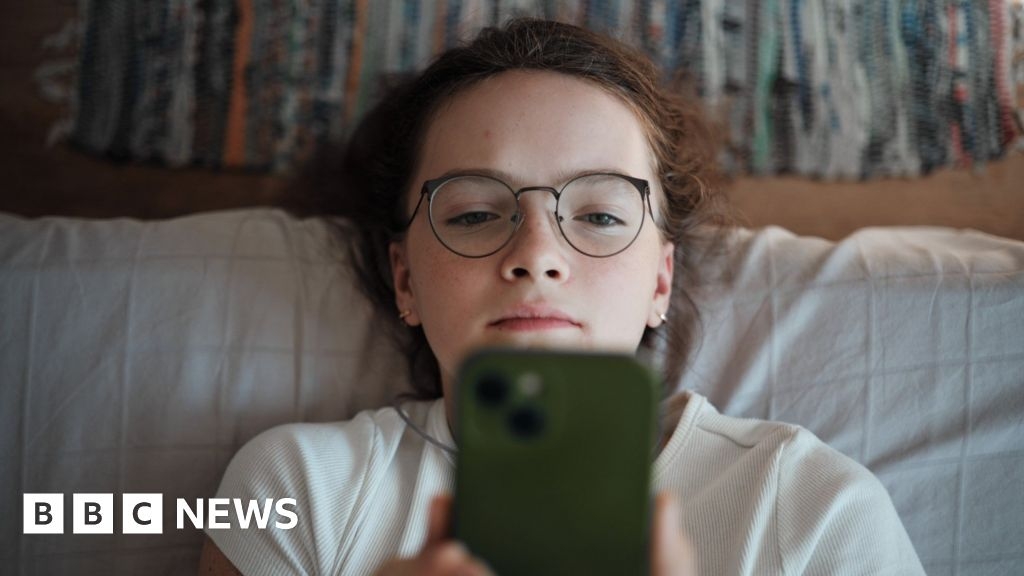
Sophie was just 17 when she was contacted online by someone she believed to be a boy of her own age. Having just split from her boyfriend, Sophie - not her real name - admits she was feeling low and lacking self-confidence, so welcomed his attention. "He told me I was pretty and we chatted on and off for about a month or so on various social media platforms," she says. He asked her to send him some pictures, which she did. "I didn't think much of it," she says. He then told her she could make money from the pictures, and asked for more, including sexually explicit shots. "So I began sending him pictures of what he asked for. Before too long, it was videos and I was in way too deep," she says. Sophie realised something was amiss when people began to contact her to say they had seen the videos. The "boy" asked her for more photos and video, this time of her with others, and she never received any money. "I felt like I was in a mess and it was all too much," she says. Sophie is one of hundreds of people who have been helped by Bedford-based charity Link to Change. It offers help, support and guidance to young people aged from seven to 26 in four areas of exploitation: sexual, criminal, online and financial. Operating for 20 years, its clients are referred by organisations including police and schools, as well as parents. "At some point, every child will have contact with a stranger online," warns Hayley Brown, its chief executive. "Find me a young person that doesn't have a phone or a tablet, and if a young person has a phone or tablet, there is a way and means they can be contacted," she says. What is crucial, she adds, are the decisions made after that contact. "It's about being able to have those conversations with young people and make them aware of what's happening." "There needs to be more around what we are doing in society," says Ms Brown. "We can blame the social media companies; however, what we have is a generational gap, around young people, technology that they are using and parents' knowledge and understanding around that." Parents, she says, have a "fine line" to negotiate as young people's critical thinking will not be fully developed. "What they think might be a wise decision might not be a wise decision," she warns. Everyone, she says, needs to be aware of grooming "as it's a natural process" that builds trust. The groomer could be an older male, she says, but "could be their best friend, someone in their class, someone the same age as them". As the mother of a 13-year-old herself, she says: "There's an element of needing to trust my child but also being able to know and monitor what they are doing. "So many young people are scared to report something that's happened to them as they're scared of the trouble they'll get in. It's not the young person's fault. "They're not asked to be groomed. In society, we put the blame on children, but this is abuse; this child has been abused." If you have been affected by the issues raised in this article, help and support is available via BBC Action Line. Demand for the charity's services are up: its referrals have increased by 233% in four years. "We are at a point where our waiting list is so high, we're having a battle with our capacity," Ms Brown says. But she says it is worth it, because the charity has a 98% success rate in helping people exit exploitation. "We will not close a young person's case until all aspects of their life are on track," she says. While it is still unclear who Sophie's groomer was, she says the support she received "helped change my life". "They helped me to understand what had happened to me - it wasn't my fault," she says. "I had one-to-one support for about eight months in total. "They helped not only with the exploitation, but to be able to build my confidence and self-esteem and my mental health struggles." James Simmonds-Read, national programme manager for The Children's Society, says online spaces can be "hugely positive" for young people. They can be places to learn, to connect and have fun, but can also be used by abusers to "exploit and groom". "That's why it is so important for adults to build open, trusting relationships where children can tell them anything without fear of judgement while also staying alert to signs of potential harm, and speaking up if something doesn't feel right," he says. "Children won't always realise they're being groomed - that's why adults need to stay switched on to the signs." These can include: Sudden changes in behaviour, particularly after time online Mentioning or meeting new friends they met on gaming or social apps Talking about offers of making "easy money" Being secretive or withdrawn about online activities He advises anyone with concerns to report them to the police and to contact the platform where any incidents of grooming, exploitation, or abuse are taking place. Follow Beds, Herts and Bucks news on BBC Sounds, Facebook, Instagram and X. 'I was groomed and exploited at parties aged 14' Child sex abuse survivors demand ring-fenced funding New exploitation hub builds 'team around a child' Bedfordshire Violence and Exploitation Reduction The Children's Society Link To Change

BBC News
01-06-2025
- Health
- BBC News
'Every child will have contact with a stranger online'
Sophie was just 17 when she was contacted online by someone she believed to be a boy of her own age. Having just split from her boyfriend, Sophie - not her real name - admits she was feeling low and lacking self-confidence, so welcomed his attention."He told me I was pretty and we chatted on and off for about a month or so on various social media platforms," she asked her to send him some pictures, which she did. "I didn't think much of it," she then told her she could make money from the pictures, and asked for more, including sexually explicit shots."So I began sending him pictures of what he asked for. Before too long, it was videos and I was in way too deep," she realised something was amiss when people began to contact her to say they had seen the "boy" asked her for more photos and video, this time of her with others, and she never received any money."I felt like I was in a mess and it was all too much," she says. Sophie is one of hundreds of people who have been helped by Bedford-based charity Link to offers help, support and guidance to young people aged from seven to 26 in four areas of exploitation: sexual, criminal, online and for 20 years, its clients are referred by organisations including police and schools, as well as parents. "At some point, every child will have contact with a stranger online," warns Hayley Brown, its chief executive."Find me a young person that doesn't have a phone or a tablet, and if a young person has a phone or tablet, there is a way and means they can be contacted," she is crucial, she adds, are the decisions made after that contact."It's about being able to have those conversations with young people and make them aware of what's happening." "There needs to be more around what we are doing in society," says Ms Brown."We can blame the social media companies; however, what we have is a generational gap, around young people, technology that they are using and parents' knowledge and understanding around that."Parents, she says, have a "fine line" to negotiate as young people's critical thinking will not be fully developed."What they think might be a wise decision might not be a wise decision," she warns. Everyone, she says, needs to be aware of grooming "as it's a natural process" that builds groomer could be an older male, she says, but "could be their best friend, someone in their class, someone the same age as them". As the mother of a 13-year-old herself, she says: "There's an element of needing to trust my child but also being able to know and monitor what they are doing."So many young people are scared to report something that's happened to them as they're scared of the trouble they'll get in. It's not the young person's fault."They're not asked to be groomed. In society, we put the blame on children, but this is abuse; this child has been abused." If you have been affected by the issues raised in this article, help and support is available via BBC Action Line. Demand for the charity's services are up: its referrals have increased by 233% in four years."We are at a point where our waiting list is so high, we're having a battle with our capacity," Ms Brown she says it is worth it, because the charity has a 98% success rate in helping people exit exploitation. "We will not close a young person's case until all aspects of their life are on track," she says. While it is still unclear who Sophie's groomer was, she says the support she received "helped change my life". "They helped me to understand what had happened to me - it wasn't my fault," she says."I had one-to-one support for about eight months in total. "They helped not only with the exploitation, but to be able to build my confidence and self-esteem and my mental health struggles." James Simmonds-Read, national programme manager for The Children's Society, says online spaces can be "hugely positive" for young can be places to learn, to connect and have fun, but can also be used by abusers to "exploit and groom"."That's why it is so important for adults to build open, trusting relationships where children can tell them anything without fear of judgement while also staying alert to signs of potential harm, and speaking up if something doesn't feel right," he says."Children won't always realise they're being groomed - that's why adults need to stay switched on to the signs."These can include:Sudden changes in behaviour, particularly after time onlineMentioning or meeting new friends they met on gaming or social appsTalking about offers of making "easy money"Being secretive or withdrawn about online activitiesHe advises anyone with concerns to report them to the police and to contact the platform where any incidents of grooming, exploitation, or abuse are taking place. Follow Beds, Herts and Bucks news on BBC Sounds, Facebook, Instagram and X.


Press and Journal
17-05-2025
- Entertainment
- Press and Journal
Aberdeen dancer Hayley lands star role as body double for Hollywood actress Vanessa Hudgens
Not many people can say they've been a body double for one of the most famous Hollywood stars in the world. But that is exactly what happened to Aberdeen dancer Hayley Brown. After being booked as a backing dancer for the film The Princess Switch 3, the 34-year-old suddenly found herself as a body double for the American actress Vanessa Hudgens. 'I was thrown in at the deep end as I'd danced before but I'd never done stand-in work,' says Hayley. 'So I was sitting there looking around the room and there were all these famous actors and I just thought, 'why am I sitting here'. 'But it was an amazing experience and I'm so glad I just went for it.' So how did Hayley become a stand-in for a Hollywood megastar? It all begins when Hayley was just a toot. 'I've danced since I was three years old,' says Hayley. 'I used to love performing at school or in my own back garden, copying dances from music videos at the time. 'I even made my dad make a stage for me to perform on.' Despite having a love of performing, it wasn't until Hayley was a teenager when she really got into it. 'When I was about 15/16, some of my friends were doing the local pantomime with Attic Theatre so I got involved with that,' says Hayley. 'Sharon Gill, who was organising the panto at the time, then encouraged me to join her cheerleading group so I randomly fell into that.' Unbeknown to Hayley at the time, cheerleading was like a springboard into the world of performing. 'As part of the cheerleading group we went to Disneyland to perform,' says Hayley. 'It was an amazing experience to compete against cheerleading teams from across the world.' But although Hayley was performing on the global stage she still doubted herself. 'I still didn't really have the confidence to pursue dance as a career,' says Hayley. 'Also, there wasn't really further education in Aberdeen, I thought you always had to move away to Edinburgh or Glasgow.' But everything changed for Hayley, who worked in childcare, when she saw one of her friends perform in a show. 'I remember going to watch my friend's dance show and I thought 'oh that's what I should be doing',' says Hayley. 'So I went on to study dance at Telford College in Edinburgh and Morningside Advanced training. 'I can't thank the teachers from Morningside dance school in Edinburgh enough for everything they taught me.' Hayley's first big break into the film industry happened when she got a part as a dancer in the hit Scottish film Sunshine on Leith starring Peter Mullan. 'I was in the big dance scene at the end,' says Hayley. 'It was quite lucky as apparently, they had finished the film but the directors weren't happy with the ending so they decided to do this big dance scene at the end.' After completing her training in Edinburgh, Hayley moved back to Aberdeen where she became a dance teacher. It was during lockdown when Hayley got her next big break. 'Everything stopped during lockdown but people who worked in TV and film could get a permit and still work,' says Hayley. 'So my dance agent put me forward for a couple of films.' Hayley ended up landing a role as a backing dancer for A Castle for Christmas, a romance/comedy film starring Brooke Shields, Drew Barrymore and Carl Ewes. 'It was filmed at Dalmeny House in Edinburgh and in other locations across South Queensferry,' says Hayley. 'I was in a scene where they have a little ceilidh dance. 'Brooke Shields was lovely, she had a sore ankle but she powered through. 'And Carl Ewes, who was in Stranger Things, was keen to practice his Scottish accent so he remained in character the entire time.' And just when Hayley thought things couldn't get better, she landed a role as a dancer in The Princess Switch 3: Romancing the Star, a film starring Vanessa Hudgens. 'Initially I was hired as a dancer but then I was asked to stay on as part of the crew and ended up body doubling for Vanessa,' says Hayley. 'I had a similar height, hair colour and skin colour as Vanessa so I was a stand-in for her. 'So basically, I would watch her do a scene as they rehearsed and then when Vanessa went into hair and make-up, I would I stand there and pretend to be her so the crew could set up all the lights and cameras. 'I would also sometimes be her hand double.' So what was it like to work alongside the High School Musical star who boasts 50.3 million Instagram followers? 'Vanessa was really lovely,' says Hayley. 'I actually don't know how she did it as she played three characters in the film so it must've been mentally and physically exhausting. 'Also, all her characters had different hair colours too so she had to go and sit for hours in hair and makeup. 'I definitely respected the graft that she put into the film.' Reflecting on the experience, Hayley says it's great to see more films being shot in Scotland as it opens the doors for local performers. 'The Princess Switch 3 was filmed in locations in Edinburgh including Hopetoun House, near South Queensferry as well as at Gosford House in East Lothian and Newbattle Abbey in Midlothian,' says Hayley. 'I always thought you had to go down to London to do these things so it's great know that there's jobs in Edinburgh and Glasgow. 'To be able to get experience in front and behind the camera made me realise that there is a film world out there which is not so far away.' One of the most surreal experiences Hayley had was when she was a dancer on the third season of the hit BBC programme The Traitors as well as a The Traitors US celeb version. 'The Traitors is filmed in Inverness so we were very lucky that they were looking for people for that,' says Hayley. 'So I was in the most recent series, the third one. 'I was one of a group of clowns with balloons who did a dance as part of one the contestants' tasks. 'It was a surreal experience because I watch the Traitors. 'After filming it was difficult as I knew who was in the final but I couldn't say anything.' And although working in TV and films may sound glamorous, Hayley says it's far from it. 'While filming The Traitors, we were outside in the mud and the rain for a long time waiting around as they set up the cameras and check the angles,' says Hayley. 'There's a lot of waiting around so you know to take your snacks and a book.' Most recently, Hayley has worked on Half Man, a forthcoming British and American television series written, created and starring Richard Gadd who starred in the hit Netflix show Baby Reindeer. And when she's not on film sets, Hayley loves nothing more than working as a freelance dance teacher in Aberdeen. She can also be found modelling or performing in many local pubs, clubs or corporate events and fundraisers. 'I love making people feel good and seeing their confidence grow,' says Hayley. 'I also love getting to meet new people all the time, travelling and being involved with amazing projects and talented people and of course, all the fun costumes.' With so many exciting projects coming her way, Hayley is embracing this period of her life. 'I'm just enjoying life right now,' says Hayley. 'When I was younger I used to lack confidence and now I just don't care. 'If an opportunity comes up I just go for it. 'It's good as I can inspire younger people now and show them what you can achieve.' For more information on Hayley, check out her Instagram page @hayleycbrown1 And if you liked this story, you may also like: I was an extra in a new Aberdeen movie — here's what it was like on set at the Blue Lamp
