


Latest news with #IntelligenceServicesAct1994

Spectator
 11-07-2025
- Politics
- Spectator
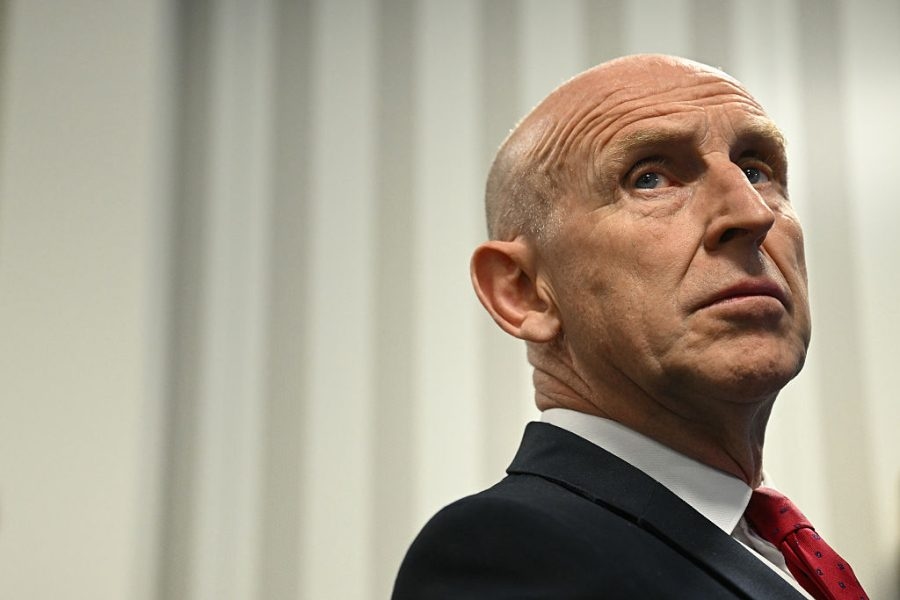
Britain must wake up to the threat of Iran
The Islamic Republic of Iran is a 'wide-ranging, persistent and unpredictable' threat to the United Kingdom. That was the sobering conclusion this week of the intelligence and security committee, which has spent several years examining Iranian policy and activity, taking evidence and analysing a huge amount of classified information. The committee's chairman, Lord Beamish (former Labour MP Kevan Jones), warned that the government had not developed a comprehensive or in-depth approach to the threat posed by Iran but had instead focused on short-term crisis management. The intelligence and security committee (ISC) of parliament is a unique body. Despite its name, it is not a select committee, but established by statute under the provisions of the Intelligence Services Act 1994. Its nine members, drawn from both Houses of Parliament, are nominated by the prime minister in consultation with the leader of the opposition and approved by each House, though approval is a formality. Iran is an implacable, dedicated and daring opponent, determined to harm us and our interests The ISC scrutinises the 'policies, expenditure, administration and operations of the agencies and departments which form the UK intelligence community'. It takes evidence from ministers, officials and experts, like a select committee, but this is always done in private due to the sensitive nature of the subject matter. Its reports are agreed upon by a long and consultative process: they are submitted to the prime minister and, under the Justice and Security Act 2013, can only then be laid before parliament and subsequently published once he has agreed that nothing in them could prejudice the activities of the intelligence services. Some passages may be redacted. The report on Iran has been subject to unusually long delays. The committee took evidence between 2021 and 2023, the process finishing before Hamas attacked Israel on 7 October 2023. Its conclusions were presented to the previous government in April 2024. Final publication was substantially delayed by the general election and change of administration, but Beamish argues that, while the landscape of the Middle East has changed, the report remains relevant and valid. In recent years, we have tended to see Iran through two lenses: that of its support for Islamist proxy groups across the Middle East like Hamas, Hezbollah, Palestinian Islamic Jihad and the Houthis; and its nuclear programme. The ISC argues that this has led to insufficient concentration on other kinds of threat. Iran's intelligence services have attempted to kidnap or murder UK-based dissidents and opponents of the régime in Tehran, and have not hesitated to target Jewish and Israeli interests in Britain. Indeed, the Home Office's Homeland Security Group considers Iran to be as great a threat as Russia in terms of physical attacks on individuals in the UK. Iran also regards the UK as a leading target for espionage and cyber disruption, only marginally below the United States, Israel and Saudi Arabia in its prioritisation. Although it lacks the technological capabilities of Russia and China, in this area as in others the Iranian government has a very high risk appetite and may be willing to undertake operations of a kind which other adversaries would regard as too provocative. All of this is particularly relevant in light of the House of Commons defence committee's publication this week of a report on 'grey zone' warfare. This kind of threat, just below the threshold of conventional warfare, is already a reality for the UK. Although Russia and China are the most active adversaries of the UK, the ISC's report emphasises that we should not downplay the threat posed by Iran. The government is not doing enough on Iran, or, rather, it is not conducting policy in a systematic and organised way. The ISC, which is sometimes accused of having too close and comfortable a relationship with Whitehall because of its unique structure and methodology, was explicit in its criticism: Across government, there is a lack of Iran-specific expertise and seemingly no interest in building a future pipeline of specialists… there is no sense from anyone we spoke to of how the various government strategies on Iran relate to each other, which of them takes precedence – or, crucially, who is responsible for driving implementation and will be held accountable. This should be a wake-up call for the government. Of course it is dealing with a range of pressing threats to national security, especially in terms of Russia and China, as well as working closely with allies to support Ukraine in its defence against Russian military aggression. But Iran has to be placed into a matrix of action by the government and given proper consideration: it represents an implacable, dedicated and daring opponent, determined to harm us and our interests. Tehran will not wait until the UK is less busy.
&w=3840&q=100)

Business Standard
16-06-2025
- Politics
- Business Standard
Meet Blaise Metreweli, first woman to lead UK's MI6 spy agency in 116 years
For the first time in its 116-year history, the UK's Secret Intelligence Service, commonly known as MI6, will be led by a woman. Blaise Metreweli, a seasoned intelligence officer who joined the agency in 1999, will take charge later this year, succeeding current chief Sir Richard Moore, the BBC reported. Currently serving as Director General 'Q', Metreweli heads MI6's technology and innovation division—responsible for shielding agent identities and countering adversaries such as China's expanding biometric surveillance network. Reacting to her appointment, Metreweli said she was 'proud and honoured' to take on the role. 'MI6 plays a vital role – with MI5 and GCHQ – in keeping the British people safe and promoting UK interests overseas,' she said. 'I look forward to continuing that work alongside the brave officers and agents of MI6 and our many international partners,' she added. Prime Minister Sir Keir Starmer called the appointment 'historic', particularly at a time 'when the work of our intelligence services has never been more vital'. A look at Blaise Metreweli's background Metreweli, 47, studied anthropology at the University of Cambridge before joining British intelligence. She has held senior roles in MI5—MI6's domestic counterpart—and worked extensively across the Middle East and Europe. In 2024, she was awarded the Companion of the Order of St Michael and St George (CMG) for her contributions to British foreign policy. In a 2021 interview with The Telegraph—where she was referred to as 'Director K'—Metreweli shared rare insights into her perspective on modern threats. 'The threats we are looking at primarily exist around protecting the government, protecting secrets, protecting our people – so counter-assassination – protecting our economy, sensitive technology and critical knowledge,' she said. On Russia, she said: 'Russian state activity – not Russia itself – remains a threat.' On China: 'It is changing the way the world is, and that presents amazing opportunities and threats for the UK.' The significance of becoming 'C' As MI6 chief, Metreweli will assume the codename 'C'—a tradition dating back to the agency's first head, Captain Mansfield Cumming, who signed documents in green ink. That custom continues to this day: only 'C' writes in green. The role of 'C' includes reporting directly to the Foreign Secretary and participating in the powerful Joint Intelligence Committee alongside the heads of MI5 and GCHQ. While 'C' does not authorise 'licence to kill' missions directly, the Foreign Secretary can approve such operations under Section 7 of the Intelligence Services Act 1994. A challenging time for British intelligence Metreweli takes over at a critical time. The UK's foreign intelligence service faces evolving threats from states like Russia, China, Iran and North Korea. These nations are increasingly coordinating to undermine Western alliances. Technological advances are also transforming spycraft. While MI6 has traditionally focused on human intelligence, the service is now adapting to a world shaped by satellites, cyber capabilities and digital surveillance. Last year, in a joint op-ed with CIA Director William Burns in the Financial Times, Sir Richard Moore warned that global security was under threat 'in a way we haven't seen since the Cold War'. They called China's geopolitical rise the defining challenge of the 21st century and vowed to counter Russia's 'reckless campaign of sabotage across Europe'. Support from leaders and security heads Sir Richard Moore, who steps down after five years as MI6 chief, welcomed Metreweli's appointment: 'Blaise is a highly accomplished intelligence officer and leader, and one of our foremost thinkers on technology. I am excited to welcome her as the first female head of MI6.' Foreign Secretary David Lammy described her as the 'ideal' choice to address the UK's evolving security challenges: 'She will ensure we remain resilient in the face of global instability and emerging threats,' he said, also thanking Sir Richard for his leadership. Prime Minister Starmer echoed the sentiment, expressing full confidence in Metreweli's leadership: 'I know Blaise will continue to provide the excellent leadership needed to defend our country and keep our people safe.'


Saudi Gazette
16-06-2025
- Politics
- Saudi Gazette
MI6 appoints first female chief in 116-year history
LONDON — Britain's MI6 will be led by a woman for the first time in the foreign intelligence service's 116-year history. Blaise Metreweli, who joined the Secret Intelligence Service in 1999, will become the 18th chief of the organisation and take over from Sir Richard Moore later this year. She is currently responsible for technology and innovation at the service and said she was "proud and honoured" to have been asked to lead. Prime Minister Sir Keir Starmer called the appointment "historic" at a time "when the work of our intelligence services has never been more vital". MI6 is tasked with gathering intelligence overseas to improve the UK's security, with its core aims being to stop terrorism, disrupt the activities of hostile states and bolster cyber-security. Its chief, commonly referred to as "C", is the only publicly named member of the Metreweli, 47, is currently Director General "Q" - head of the crucial technology and innovation division that aims to keep the identities of secret agents secret, and come up with new ways to evade adversaries like China's biometric surveillance."MI6 plays a vital role - with MI5 and GCHQ - in keeping the British people safe and promoting UK interests overseas," she said."I look forward to continuing that work alongside the brave officers and agents of MI6 and our many international partners."Ms Metreweli, who studied anthropology at the University of Cambridge, has previously held director level roles in MI5 - MI6's sister, domestic security agency - and spent most of her career working in the Middle East and the King's overseas and international birthday honours list in 2024, she received the Companion of the Order of St Michael and St George (CMG) for her services to British foreign to the Telegraph in December 2021 when she was at MI5, under the pseudonym of "Director K", Ms Metreweli said threats to UK national security "really are diverse"."The threats we are looking at primarily exist around protecting government, protecting secrets, protecting our people - so counter-assassination - protecting our economy, sensitive technology and critical knowledge," she added that "Russian state activity - not Russia itself - remains a threat" and that China was "changing the way the world is and that presents amazing opportunities and threats for the UK".It is a common misnomer to think that the "C" stands for Chief. It does not. Britain's very first spy agency was called the Secret Service Bureau, established in the 1900s. It was led by a Royal Navy officer, Captain Mansfield Cumming. He always signed his letters "C" and the codename has Cumming wrote in green ink. To this day, the head of MI6 is the only person in Whitehall who will write in does C give his or her agents a "licence to kill"? No. But the foreign secretary can. Under Section 7 of the Intelligence Services Act 1994, an MI6 agent can be authorised to carry out certain actions which would otherwise be illegal - including using lethal force. But it is a long and complicated legal organization she will be running faces unprecedented and multiple these emanate primarily from Russia, China, Iran and North Korea, as the four nations co-operate ever more closely to undermine UK and Western interests across the there are technical challenges role is to recruit human agents to steal secrets from Britain's adversaries, which include both hostile nations and non-state groups like an age of rapid digital innovation, MI6 is having to pedal ever faster to stay ahead of its enemies and to remain relevant, when so much intelligence is now gathered online and from September, outgoing chief Sir Richard - alongside then-CIA chief William Burns - warned that the international world was "under threat in a way we haven't seen since the Cold War".Writing in the Financial Times, the pair said that beyond the war in Ukraine, the two foreign intelligence services were continuing to "work together to disrupt the reckless campaign of sabotage across Europe being waged by Russian intelligence".Sir Richard and Mr Burns added that they saw the rise of China as the main intelligence and geopolitical challenge of the century. They also said they had pushed "hard" for restraint and de-escalation in the Middle Sunday, Sir Richard, who will step down in the autumn after five years in the role, said he was "absolutely delighted" with the "historic appointment" of his colleague."Blaise is a highly accomplished intelligence officer and leader, and one of our foremost thinkers on technology," he said."I am excited to welcome her as the first female head of MI6."Foreign Secretary David Lammy, to whom Ms Metreweli will be accountable as MI6's new chief, said she was the "ideal" candidate and would ensure the UK was able to tackle the challenges of "global instability and emerging security threats"."I would also like to pay tribute to Sir Richard Moore for his service and leadership," he said."I have worked closely with him over the past year and thank him for his valuable contribution enhancing our national security and protecting the British public."Sir Keir also thanked Sir Richard for his "dedicated service"."I know Blaise will continue to provide the excellent leadership needed to defend our county and keep our people safe," he added. — BBC
