


Latest news with #Jamila


CBS News
 a day ago
- CBS News
Slain NYPD detective's 3rd son is born weeks after Manhattan office shooting
The son of a New York City police detective murdered in the July mass shooting at a Manhattan office building was born over the weekend, the NYPD said Monday. Detective Didarul Islam's widow Jamila gave birth to the couple's new baby boy, Arham, their third son, on Sunday, the department shared on social media. Islam was off-duty working security at 345 Park Avenue when a gunman stormed the building in Midtown on July 28. Four people were killed and another was wounded before the shooter turned the gun on himself, police said. The 36-year-old was born in Bangladesh and moved to the United States as a child. His family said it was his dream to join the NYPD. "He always wanted to be a police officer to serve his community, to serve the people around him, and set a better example for his kids," Zamilur Rahman, Islam's cousin, told CBS News New York. The couple has two other boys, Ahyan and Azhaan, ages 4 and 7. "Together, they will carry forward their father's legacy of service and courage — a legacy the NYPD will guard and uphold with the same devotion Didar gave to this city. Jamila, Ahyan, Azhaan, and now, Arham will forever be part of the NYPD family," Police Commissioner Jessica Tisch wrote. Security guard Aland Etienne, Blackstone executive Wesley LePatner and Julia Hyman of Rudin Management were also killed in the attack.


New York Times
04-08-2025
- Politics
- New York Times
A Book About War-Torn Afghanistan That Reads Like a Novel
THE AFGHANS: Three Lives Through War, Love, and Revolt, by Asne Seierstad; translated by Seán Kinsella Afghanistan has largely disappeared from the news since the Taliban took over in August 2021, in a victory that restored the restrictive Islamic movement to power, humiliated the United States and crushed Afghan women who had embraced the Western notion that they could follow their dreams. In light of this neglect, Asne Seierstad's new book, 'The Afghans,' is a valuable addition to the canon of literature on the country. A Norwegian journalist who has published several other books set in war-torn countries, including the best-selling 'The Bookseller of Kabul' (2003), Seierstad writes compellingly, with an eye for the details and dialogue that make her subjects come to life. She manages to achieve a rare intimacy, something that is tough in a book about Afghanistan, a place where outsiders are seldom allowed inside homes and most men don't speak the names of their wives publicly. But her book also raises questions about how she constructs her narrative nonfiction. At nearly 430 pages, 'The Afghans' is a sprawling epic focused largely on three figures whose lives Seierstad recounts with vivid granularity: Jamila, a high-powered women's advocate; Bashir, a Taliban commander; and Ariana, a young law student (Seierstad has changed her name to protect her privacy). Through their stories, the book also traces the country's complicated recent history — from the Soviet invasion of 1979 through an American-backed insurgency, civil war, the initial rise of the Taliban, the return of the United States and its allies after 9/11, and, finally, the restoration of the Taliban after the U.S. withdrawal in 2021. For nearly 20 years, between 2001 and 2021, Western intervention created a unique laboratory in Afghanistan's major cities, primarily in Kabul, the capital, for testing what a version of democracy could mean in a country where the Taliban had banned women from the public sphere and required everyone to conform to their vision of a strict Islamic way of life. Women shed burqas and joined the work force. Boys dressed in Western clothes, watched Bollywood movies and hoped to build a new Afghanistan. Girls started school. Want all of The Times? Subscribe.

Gulf Today
28-05-2025
- Entertainment
- Gulf Today
Traditional muse, millennial views: Old and new live in Jamila Patanwala's art
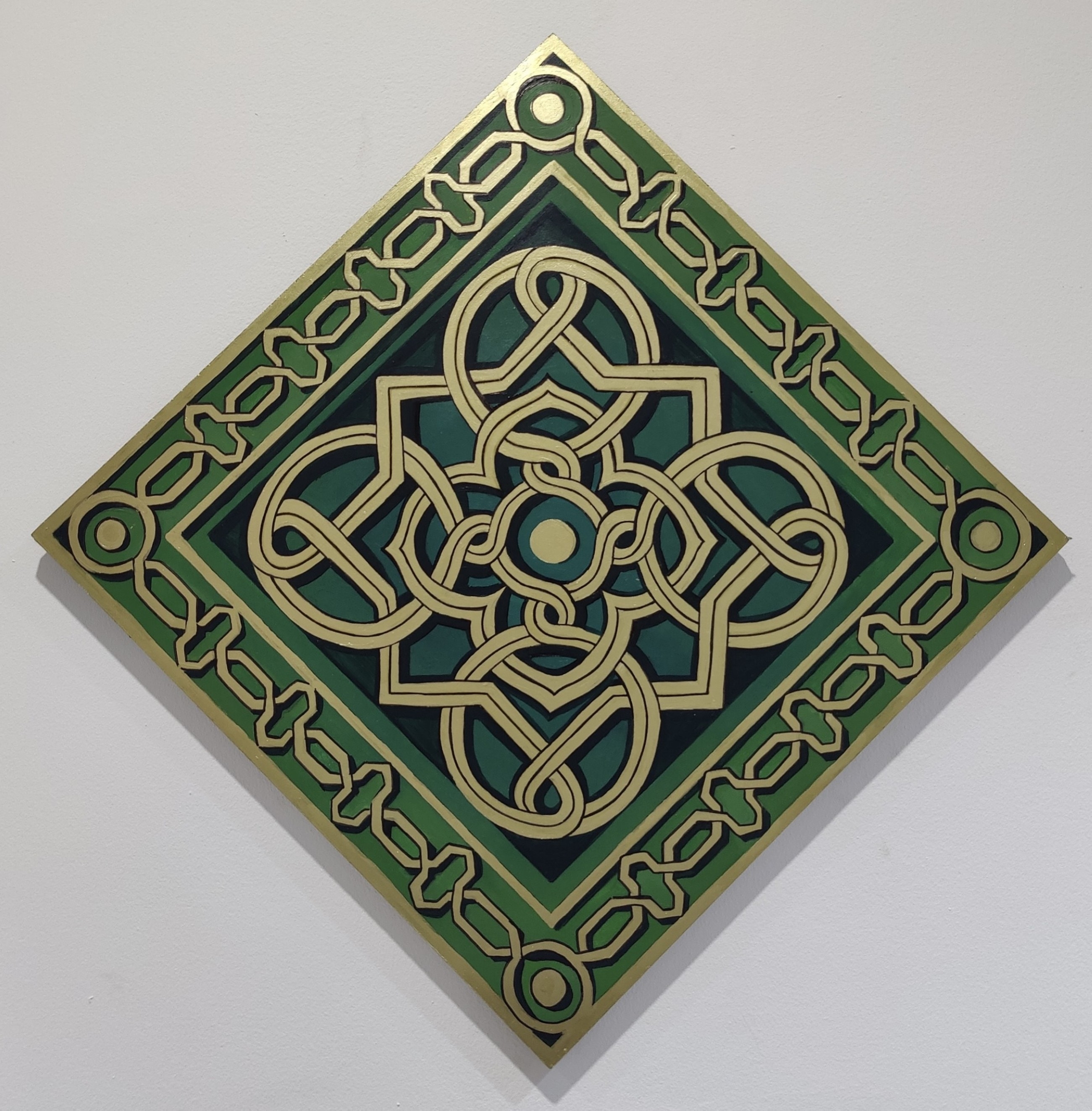
Jamila Patanwala is a contemporary Islamic artist, based in Dubai. 'My work is a reflection of my roots, and I strive to create pieces that invite the viewer to explore Islamic art in a contemporary manner,' she says. She primarily works in acrylics and mixed media, using bold colours 'to evoke the regality of Islamic patterns and calligraphy.' Her work is inspired by the richness of Islamic architecture, Quranic verses in Arabic calligraphy, and Nature. Some of her works were shown in an exhibition in Dubai International Art Centre (DIAC) recently. They were commented upon for their focus on the subject, the detailing of their meaning and the expertise of their execution. From her workspace comes Mishqaat-ul-Anwar, in acrylic on canvas, inspired by the Jamea Al Anwar mosque in Cairo, Egypt. Jamila's painting depicts a mishqaat or lamp or light from the mosque. Fruits of the Holy Quran, created in mixed media (it was shown at DIAC) is a sculptural and calligraphic art series that brings to life sacred fruits mentioned in the Quran, through the medium of clay. Rehnuma in acrylic and go leaf on canvas, is influenced by the opulent history and cultural significance of calligraphy. Work titled Fruits of the Holy Quran. Shuja'at (Courage) in acrylic on canvas depicts a lion, its mane forged with swords — a crown of steel shaped by bravery, sacrifice, and divinely bestowed strength, says Jamila. Noorun-Ala-Noor or Light upon Light in acrylic is a luminous tribute to divine beauty and spiritual profundity. 'I have tried to give a contemporary look to the exterior Medallion motif on Jamea Al Anwar,' Jamila says. 'I have recreated it on a square MDF plank, trying to mimic the original's placement on the exterior wall of the mosque.' Shubbak Al Anwar in acrylic on MDF refers to the discovery of a Fatemi shubbak - a stucco grille with floral patterns - during the restoration and revival of the Jamea Al Anwar mosque. 'The painting of this window or grille evokes a sense of tranquility and spiritual elevation, symbolising the divine connection between the sacred space inside and the world beyond,' says Jamila. The Golden Armour is an illustration which portrays a woman dressed in the Rida, the traditional attire of Dawoodi Bohra women. 'This piece symbolises the strength, dignity, and beauty I find in wearing the Rida — not as a restriction, but as a radiant shield of identity and faith,' says Jamila. 'Just as armour protects a warrior, the Rida envelops me in a sense of purpose, confidence, and pride. Through this artwork, I aim to challenge the often misunderstood narrative around the hijab and abaya. They are not symbols of oppression, but of autonomy, progress, and inner strength.' The golden hue of the artwork represents empowerment, resilience and spiritual richness. Jamila Patanwala speaks more on her work to Gulf Today Why did art interest you? My interest started in childhood, seeing my older brother's sketches. Watching his pencil bringing images to life made art feel natural and achievable; so I picked up a pencil too. That early habit, which started as a sibling inspiration, grew into my own creative voice and passion for Arabic calligraphy, motifs, and Nature‑inspired pieces. What do you mean by 'Contemporary', as in contemporary artist? 'Contemporary' means 'of our time'. A contemporary artist is someone engaging with the ideas, material, technologies and culture of the present moment. I try to weave my own spiritual experience into a work; so the art reflects how faith feels now, not as it was felt centuries ago. The reinterpretations of classical motifs through contemporary lens, connects tradition with present day aesthetics. Jamila Patanwala is based in Dubai. How can Islamic art be interpreted in a contemporary way? My work begins with the foundations of Islamic art — calligraphy, geometry, and arabesque motifs — but I weave in elements of Nature and present them through today's materials and formats. You'll see paintings brought up to mural size technologically and calligraphy being projected on digital screens. So, while the vocabulary is traditional, the presentation turns it into a contemporary conversation. How has India and UAE influenced you as an artist? The India-UAE axes gave me a unique blend of deep tradition and modern aesthetics. India inspires the craft, colour, memory and devotional content; the UAE sharpens aesthetics, scale and global visibility. The dialogue between the two is what gives my pieces a cutting edge. Why do you use bold colours? In Islamic calligraphy, hues like lapis blue or radiant gold, evoke divinity and awe more powerfully than muted tones. I use bold colours because I want the message in my work to come through loud and clear. How does architecture inspire you as an artist? I am drawn to painting architecture, because buildings hold so much meaning. Islamic architecture is not just about structures - they are symbols of faith and connection to the divine. Architectural geometry and patterns provide me a sense of order and harmony. What is the role of calligraphy in your art? Calligraphy is the heart of my work. I use sacred words because they instantly give meaning to the composition. It's worship in a visual form. Is Art a profession for you or is it only a hobby? Art isn't just a hobby for me — it's my profession, my practice, and my purpose. I see art as service. Whether through conversation, workshops, or simply sharing my work, my goal is to bring art into people's lives in a meaningful way.


Borneo Post
23-05-2025
- Entertainment
- Borneo Post
Miri's beloved hornbills Jimmy and Faridah live on in new book by local author
Jamila holding her new book which she published on her own. MIRI (May 24): A heartfelt tale of love, loss and second chances comes to life in a new book written by local author Jamila Abdul Basha, celebrating the lives of Miri's beloved hornbills, Jimmy and Faridah. Titled 'A Love Story: Jimmy and Faridah', the book tells the emotional story of the oriental pied hornbill pair whose bond, tragedy and legacy touched the hearts of many and helped inspire the creation of the Piasau Nature Reserve. The story also introduces Juliet, Jimmy's new mate after Faridah's death, showing how life in the reserve continues to evolve with hope and resilience. Jamila began her research in 2021, and finalised the book earlier this year. Writing the book, she said, was not simply a matter of documenting facts; it required emotional immersion. 'When writing the book, I put myself in Jimmy's position to better convey the emotions of the story. These birds have feelings of joy and sadness. When Faridah died, Jimmy was greatly affected,' she said. Her motivation to write the book stemmed from a desire to preserve the hornbills' story beyond oral retellings. 'If their story is not penned into words and kept in a book, it would be unfortunate for it would be lost forever, only passed on as a verbal story from one generation to another,' she added. More than just a wildlife story, the book presents moral lessons through the lives of the birds, particularly Jimmy, whose loyalty, patience, and faithfulness reflect values often cherished in human families. 'Jimmy showed qualities that we may find lacking in our generation. I hope readers, especially children, will be inspired by the values embedded in this story,' Jamila said. Cover of 'A Love Story: Jimmy and Faridah'. In 2013, Faridah was tragically killed in a poaching incident, despite being part of a protected species under Sarawak's wildlife laws. Locals mourned the loss, as did Jimmy, who showed clear signs of distress after her passing. Over time, Jimmy found companionship again with Juliet, offering a powerful symbol of the enduring beauty of second chances and the natural cycle of life. 'This love story creates an environment of love, sadness and joy, which are emotions common among us humans too. It reflects a family's experience of grief and the hope of a second chance at love,' she said. Beyond Sarawak, the story is already resonating with readers abroad. Jamila had the honour of presenting the first copies of her book to Mayor of Baguio city Philippines Benjamin B Magalong and his wife, Arlene Magalong during their visit to the Piasau Nature Reserve Park office on Wednesday (May 21). She also shared that the National Library of Malaysia had reached out to her regarding the book, and she has since sent five copies to the library to be kept in its collection for public access and preservation. 'A Love Story: Jimmy and Faridah' also marks Jamila's first book written entirely on her own. Drawing from years of observation and emotional reflection, she said the experience of crafting the story was deeply personal and fulfilling. The book includes personal reflections, photos, and historical background to help readers appreciate the hornbills' story and the reserve's creation. She hopes the story of Jimmy, Faridah and Juliet will continue to inspire both locals and visitors. 'This book is a gift to our children and future generations. I believe their story will be recognised by bird lovers everywhere. Those who hear about Jimmy will want to visit and experience the beauty of life in this part of the world,' she concluded. The book will be available after the launch, with further details on where to get copies to be announced. book Faridah hornbills Jamila Abdul Basha Jimmy love story miri


New Indian Express
10-05-2025
- Entertainment
- New Indian Express
Shining in Style: a mother-daughter fashion duo
Many of us, growing up, would have watched our mother dressing up and admired her style, hoping to someday be like her. We may have even tried on her jewellery, messed up her makeup or gotten hopelessly tangled in her sarees. But fashion designer Seema Malhotra didn't just admire her mom – Jamila Malhotra shining in Bengaluru's elite social circles with her intricate hand embroidered outfits – but also learnt her skills, creating the luxury bridal fashion brand, Shimmer, in UB City, alongside her. 'I think I developed that flair from her because she was always a trendsetter,' says Seema, as Jamila adds, 'I used to do all my own designing and embroidery. Slowly, Seema also got interested... It was beautiful because, my mother too, was a great seamstress,' adds Jamila. What started off as making clothes for friends and family, evolved into more as the pair began to dress Bollywood celebrities like Manisha Koirala, Raveena Tandon, Farah Khan, and more while working alongside foreign designers to create costumes for actors in Hollywood films like Cate Blanchett in Elizabeth (1998), Finding Neverland (2004), and Judi Dench in Shakespeare in Love (1998) which went on to win an Oscar for costume design. 'We worked on the embroidery for Judi Dench's peacock gown which got a lot of attention. A lot of research went into it – we looked up stitches and embroidery styles that were done hundreds of years ago. It's very different from working in Bollywood, where things are churned out a day before the shoot,' recalls Seema.
