


Latest news with #LEAG
Yahoo
 23-07-2025
- Business
- Yahoo
Factbox-Cancelled and postponed green hydrogen projects
MADRID (Reuters) -Developers of green hydrogen have scaled back investments and scrapped projects globally as elevated production costs and weak demand for the low-carbon fuel have made many ventures unviable. Here are some projects that have been cancelled, postponed or scaled back. EUROPE ** Energy company LEAG's plans to build one of Europe's largest green energy hubs on the site of disused coal-fired power plant units in eastern Germany have been postponed indefinitely, it said in June. ** Steelmaker ArcelorMittal had planned to convert two plants in Germany to green hydrogen, but it shelved the 2.5 billion euro ($2.9 billion) plan in June despite the offer of 1.3 billion euros in public subsidies. ** Iberdrola, Europe's largest utility, scaled back its green hydrogen ambitions by almost two thirds in March 2024 after funding delays for some projects. Its 2030 production target fell to about 120,000 tons of green hydrogen a year, compared with a previous goal of 350,000 tons. ** Spain's Repsol cut its 2030 target for green hydrogen production by up to 63% in February to between 0.7 gigawatts (GW) and 1.2 GW of electrolyser capacity by the end of the decade, with Chief Executive Josu Jon Imaz highlighting the challenges of a high-cost industry heavily reliant on subsidies. ** BP said in April that it was shutting its team looking into hydrogen and liquefied natural gas (LNG) for transport. ** Shell scrapped plans for a low-carbon hydrogen plant on Norway's west coast owing to lack of demand, it said in September, days after Equinor cancelled a similar project planned for Norway. ** Oil refiner and biofuel maker Neste withdrew in October from an investment into renewable hydrogen production at its plant in Porvoo, Finland, citing challenging market conditions. AUSTRALIA ** Origin Energy said in October that it intended to exit a potential hydrogen development project in the Hunter Valley Hydrogen Hub (HVHH) in New South Wales. ** Global commodities trader Trafigura in March abandoned plans to build a A$750 million ($491.5 million) green hydrogen plant at its Port Pirie lead smelter in South Australia. ** Australian billionaire Andrew Forrest in July last year cut back plans for his company, Fortescue, to produce 15 million metric tons of green hydrogen by 2030, blaming costs and the amount of renewable energy sources needed. ** Woodside Energy, Australia's largest independent oil and gas producer, shelved two green hydrogen projects in Australia and New Zealand last September. ** The Queensland state government this year pulled funding for a A$12.5 billion plant to produce 200 tons of liquefied hydrogen by 2028, placing the future of one of Australia's largest and most advanced green hydrogen projects in serious doubt. Japanese investors Kansai Electric and Iwatani exited soon after. UNITED STATES ** U.S. startup Hy Stor Energy in September cancelled its reservation for more than 1 GW of electrolyser capacity with Norwegian electrolyser manufacturer Nel. ** Air Products said in February that it was looking to cancel plans to construct a 35 ton per day facility to produce green liquid hydrogen in Massena, New York, largely because of regulatory developments rendering existing hydroelectric power supply ineligible for the Clean Hydrogen Production Tax Credit. ASIA ** Japan's Kawasaki Heavy Industries walked away from a coal-to-hydrogen project in Latrobe last December, citing time and cost pressures. ($1 = 1.5260 Australian dollars) ($1 = 0.8613 euros) (Compiled by Pietro LombardiEditing by David Goodman) Error in retrieving data Sign in to access your portfolio Error in retrieving data Error in retrieving data Error in retrieving data Error in retrieving data


Reuters
23-07-2025
- Business
- Reuters
Cancelled and postponed green hydrogen projects
MADRID, July 23 (Reuters) - Developers of green hydrogen have scaled back investments and scrapped projects globally as elevated production costs and weak demand for the low-carbon fuel have made many ventures unviable. Here are some projects that have been cancelled, postponed or scaled back. ** Energy company LEAG's plans to build one of Europe's largest green energy hubs on the site of disused coal-fired power plant units in eastern Germany have been postponed indefinitely, it said in June. ** Steelmaker ArcelorMittal ( opens new tab had planned to convert two plants in Germany to green hydrogen, but it shelved the 2.5 billion euro ($2.9 billion) plan in June despite the offer of 1.3 billion euros in public subsidies. ** Iberdrola ( opens new tab, Europe's largest utility, scaled back its green hydrogen ambitions by almost two thirds in March 2024 after funding delays for some projects. Its 2030 production target fell to about 120,000 tons of green hydrogen a year, compared with a previous goal of 350,000 tons. ** Spain's Repsol ( opens new tab cut its 2030 target for green hydrogen production by up to 63% in February to between 0.7 gigawatts (GW) and 1.2 GW of electrolyser capacity by the end of the decade, with Chief Executive Josu Jon Imaz highlighting the challenges of a high-cost industry heavily reliant on subsidies. ** BP (BP.L), opens new tab said in April that it was shutting its team looking into hydrogen and liquefied natural gas (LNG) for transport. ** Shell (SHEL.L), opens new tab scrapped plans for a low-carbon hydrogen plant on Norway's west coast owing to lack of demand, it said in September, days after Equinor ( opens new tab cancelled a similar project planned for Norway. ** Oil refiner and biofuel maker Neste ( opens new tab withdrew in October from an investment into renewable hydrogen production at its plant in Porvoo, Finland, citing challenging market conditions. ** Origin Energy ( opens new tab said in October that it intended to exit a potential hydrogen development project in the Hunter Valley Hydrogen Hub (HVHH) in New South Wales. ** Global commodities trader Trafigura ( in March abandoned plans to build a A$750 million ($491.5 million) green hydrogen plant at its Port Pirie lead smelter in South Australia. ** Australian billionaire Andrew Forrest in July last year cut back plans for his company, Fortescue ( opens new tab, to produce 15 million metric tons of green hydrogen by 2030, blaming costs and the amount of renewable energy sources needed. ** Woodside Energy ( opens new tab, Australia's largest independent oil and gas producer, shelved two green hydrogen projects in Australia and New Zealand last September. ** The Queensland state government this year pulled funding for a A$12.5 billion plant to produce 200 tons of liquefied hydrogen by 2028, placing the future of one of Australia's largest and most advanced green hydrogen projects in serious doubt. Japanese investors Kansai Electric (9503.T), opens new tab and Iwatani (8088.T), opens new tab exited soon after. ** U.S. startup Hy Stor Energy in September cancelled its reservation for more than 1 GW of electrolyser capacity with Norwegian electrolyser manufacturer Nel ( opens new tab. ** Air Products said in February that it was looking to cancel plans to construct a 35 ton per day facility to produce green liquid hydrogen in Massena, New York, largely because of regulatory developments rendering existing hydroelectric power supply ineligible for the Clean Hydrogen Production Tax Credit. ** Japan's Kawasaki Heavy Industries (7012.T), opens new tab walked away from a coal-to-hydrogen project in Latrobe last December, citing time and cost pressures. ($1 = 1.5260 Australian dollars) ($1 = 0.8613 euros)

Reuters
27-06-2025
- Business
- Reuters
German's LEAG indefinitely postpones green hydrogen project
BERLIN, June 27 (Reuters) - German coal miner and power generator LEAG on Friday said it was postponing plans for a 110 megawatt green hydrogen production plant in the eastern state of Saxony, saying political and economic conditions for the plant did not develop as expected. "We are currently postponing plans for hydrogen production in Boxberg and initially shifting our focus to other technologies for the generation, storage, and flexible provision of electricity," a spokesperson for the company told Reuters, confirming an earlier report by Hydrogen Insight.


Forbes
26-06-2025
- Business
- Forbes
Every Major Global Energy Source Hit Record Highs In 2024
NOCHTEN, GERMANY - APRIL 30: In this aerial view the Boxberg coal-fired power plant stands behind ... More the newly inaugurated PV-Park Boxberg solar energy park on April 30, 2024 in Nochten, Germany. LEAG, the energy company that owns both, is building what it claims will be Germany's biggest concentration of green energy production, with solar energy parks and wind farms that will have a capacity of seven gigawatts by 2030 under the so-called GigawattFactory project. The Boxberg solar park stands on recultivated land of a former open-pit coal mine. The region of southern Brandenburg and northern Saxony has long been heavily dependent on coal. Germany is seeking to shutter its coal-fired energy production by 2038. (Photo by) This week The Energy Institute (EI) released the 2025 Statistical Review of World Energy, which was published previously for more than 70 years by BP. The full report and all data can be found at this link. The Statistical Review is instrumental in providing comprehensive data on global oil, gas, and coal production and consumption, as well as on carbon dioxide emissions and renewable energy statistics. Over the next month, I will delve into the various categories from the report. But today, I want to highlight a foundational change in how global energy supply is measured—along with a few key findings that set the stage for what's to come. Total Energy Supply The 2025 edition marks a major shift in how global energy supply is calculated. For decades, the industry relied on 'Primary Energy Consumption' as a benchmark. That's now changing. The Statistical Review—citing the methodologies used by the International Energy Agency (IEA), U.S. Energy Information Administration (EIA), BP, and Eurostat—has adopted a metric called Total Energy Supply (TES). So, what is TES, and why does it matter? In a nutshell, Total Energy Supply reflects the actual amount of energy available to meet a country's demand. It accounts for production and imports, subtracts exports and storage, and adjusts for losses during conversion and transmission. It captures the energy that reaches end users in a usable form—whether that's electricity, gasoline, or thermal energy. The older method used for primary energy calculations tended to treat all energy sources as if they had the same conversion losses. For example, fossil fuels like coal or natural gas are burned to generate electricity, but a significant portion of that energy is lost as heat in the process. Non-combustible renewables like wind, solar, and hydro don't incur those same losses. Yet under the old method, those renewables were still penalized with assumed inefficiencies, making their contribution appear smaller than it actually was. By contrast, TES offers a more apples-to-apples comparison. It gives a truer sense of how much useful energy is actually delivered to society. This is particularly important as countries transition away from combustion-based energy and toward more direct-use sources like electricity from wind and solar. An Illustrative Example Some may view this change as an attempt to exaggerate the progress of renewables. Others may not understand what this definition change really entails. Thus, a simplified example may help. Suppose a country burns 1 million barrels of oil to generate electricity in a year. Due to conversion losses, only about 40% of that energy makes it to the grid. Under the old system, all 1 million barrels were counted as primary energy, even though the usable output was far less. Now imagine that same country uses wind power to generate the equivalent 400,000 barrels' worth of electricity. Under the old approach, analysts would reverse-engineer how much oil that displaced and also credit wind with 1 million barrels of primary energy—treating it like oil to keep the comparison consistent. Under TES, both sources are measured based on actual usable output. In this example, oil and wind each contribute 400,000 barrels' worth of delivered energy. It's a more consistent, technology-neutral reflection of what is really powering the system. Some skeptics may view this change as an attempt to inflate the contribution of renewables, but in reality, it removes distortions that previously exaggerated fossil fuel inputs. The authors of the Statistical Review concluded that TES offers a better lens for measuring the true structure and direction of the global energy system. Highlights of the 2025 Statistical Review Global energy demand rose by 2% in 2024, reaching a new all-time high. In fact, every major energy source—coal, oil, gas, renewables, hydro, and nuclear—hit record levels of consumption. Electricity demand outpaced overall energy growth at 4%, reinforcing the growing shift toward electrification. Meanwhile, wind and solar power expanded by 16%, driven primarily by China, which accounted for 57% of all new additions. Global solar capacity has nearly doubled in just two years. But the broader picture is more complicated. Fossil fuel use also increased—albeit modestly—demonstrating that while clean energy is growing fast, it's being layered on top of rising demand, not yet replacing conventional sources at scale. Global carbon dioxide emissions rose another 1% in 2024, marking the fourth consecutive annual record. It's a sobering reminder that despite extraordinary progress in renewable deployment, the world is still struggling to decouple economic growth from emissions. Looking Ahead This edition of the Statistical Review highlights a central tension of the energy transition: we're building more clean energy than ever before, but we're not yet letting go of the old. Over the coming weeks, I'll take a closer look at trends in oil, gas, coal, renewables, and emissions—providing deeper insight into what's driving growth, what's slowing it down, and where the world's energy trajectory may be headed next.

Bloomberg
24-03-2025
- Business
- Bloomberg
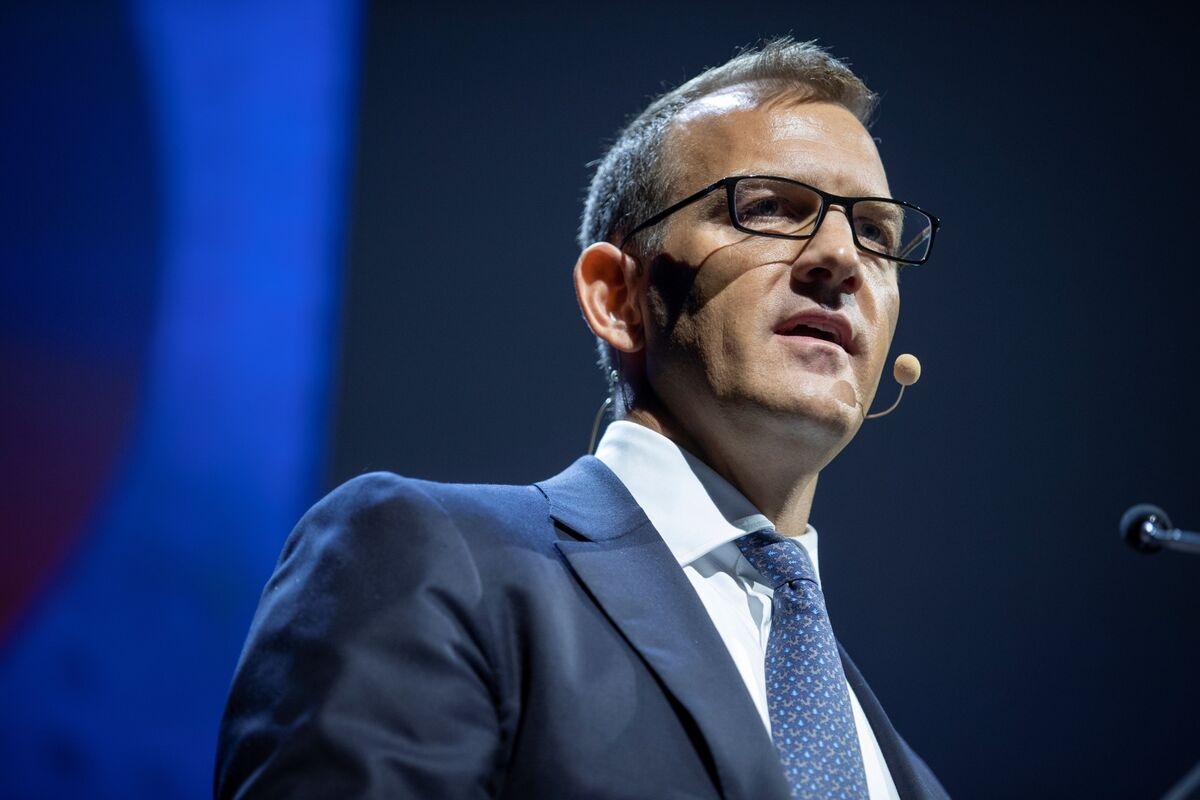
Czech Billionaire Kretinsky Gains Full Control in Germany's LEAG
Czech industrial tycoon Daniel Kretinsky has gained full ownership of a major operator of coal mines and power plants in Germany after buying a stake from the billionaire Kellner family. EP Energy Transition, a unit of Kretinsky's EP Group, has acquired the remaining 30% in LEAG from the Kellners' PPF Group NV for an undisclosed price, according to statements from both parties.
