


Latest news with #LaurenDavis


Forbes
 10-06-2025
- Health
- Forbes
Alphafold 3 Extends Modeling Capacity To More Biological Targets
Doctor working on digital tablet with medical interface and digital healthcare and network concept. The people behind the original protein modeling tool Alphafold have now developed a newer version, Alphafold 3, which is changing the way that this fundamental technology works. Looking at the changes in the newest version, you find that Alphafold 3 extends to a broader spectrum of molecular structures, including ligands (ions or molecules with certain binding properties) and other ions, as well as something called 'post-translational modifications' – (here's the Wikipedia entry.) Additionally, Alphafold 3 uses a reformed 'Pairformer' architecture to process pairwise relationships (more on that later) - it has better prediction accuracy, and improved performance in making some types of predictions. (Here's more from NIH). The original Alphafold technology earned its makers, John Jumper and Demis Hassabis, a Nobel prize, and now these tools are still redefining what it means to do drug discovery. So how does Alphafold work for big drug companies? In a TED talk explaining some of this commercial success, Lauren Davis, someone with MIT ties, shows us a bit of how this works, helping companies to come up with life-saving medicines. Davis points to a 'transformative' process where new tools enable rapid development, on a more efficient framework. One aspect of this, she points out, is target identification – predicting the structure of a given target. That way, companies can sidestep some of the human and animal testing that's expensive and labor-intensive, not to mention sensitive. She compares the system to a dating app, where you narrow down potential matches before proceeding with actual testing, which would be analogous to meeting someone for a date (read: investing time and effort.) She talks about the process of scoring potential inhibitors, which she says she's excited about because she used to be on the MIT soccer team. In general, Davis paints a picture of how Alphafold actually applies in the commercial world. That's a little bit about the way is that Alphafold is contributing to the medical community. But there's another feature of this new model that I was interested in, and I ended up getting different results from different LLM models, so let's look at that a bit: If you ask ChatGPT whether Alphafold 3 is open source, you get this - at least, I did: '(Alphqafold 3 is) not open-sourced; instead, it is accessible through a cloud-based platform provided by DeepMind for non-commercial research purposes. This approach has elicited some concerns within the scientific community regarding transparency and accessibility.' As a source, the model lists this Wired article. However, when I looked at a post from Dario Amodei from November of last year, I found this, suggesting, albeit in a terse way, that Alphafold 3 has become open source: 'AI protein prediction tool, AlphaFold3, is open source.' Now, when I asked Copilot the same thing, as a result of typing a search into Bing, it gave me this: 'Not fully open source - AlphaFold 3 is not fully open source. While the source code and model weights are available for academic use under specific non-commercial restrictions, access to the model weights is limited to those with academic affiliations. This means that while researchers can use the software for non-commercial applications, they cannot freely access the training weights for commercial use.' And there were a number of sources listed. So the most likely answer, based on all of that input, is that Alphafold 3 is 'sort of' open source – that is, as Copilot said, that some of the weights and other aspects are public, but other aspects of the technology are not. ChatGPT contends, above, that the cloud-based platform that Alphafold 3 is on is 'maintained by DeepMind for non-commercial research purposes.' Anyway, in this case, we don't really have to guess: just check the GitHub for the new version. But this shows how you can get different information from different models, something we are going to have to learn to navigate. In any case, this new version of Alphafold continues the tradition of giving us new tools for drug discovery. Davis, in her talk, used the example of lisinopril as an ACE inhibitor, and explained how the Alphafold process can apply to predicting and modeling how an inhibitor will work. Practically, we have millions and millions of Americans on these drugs, and they apply to a wide scope of health conditions, so it's abundantly useful to take advantage of AI in these ways. Will it lower the cost of drugs? We'll see.
Yahoo
10-04-2025
- Business
- Yahoo
WA legislature considers tax on online dating companies
The Brief A bill in the Washington legislature could tax online dating companies based on the amount of users they have in the state. Money generated from the measure would solely go towards domestic violence programs, says bill sponsor Rep. Lauren Davis. OLYMPIA, Wash. - Taxing Cupid to generate millions of dollars: that's the goal of one bill in the Washington state legislature targeting online dating companies. What they're saying House Bill 2071, sponsored by Representative Lauren Davis, wants to tax companies $1 per month for every Washingtonian using an online dating service. While still working out the number, Rep. Davis says about half-a-million people in Washington are currently using an online dating app, so the measure could generate around $6 million every year for the state. The money would solely go towards domestic violence programs, something Davis says has seen cuts in recent years. A University of Pennsylvania study showed that dating partners had more cases of domestic violence than married spouses. Around 40% of dating relationships start online. HB 2071 does not have a scheduled hearing yet, but Davis hopes it will be discussed during budget negotiations near the end of the session. The Source Information in this story is from Washington Representative Lauren Davis and FOX 13 Seattle reporting. Convicted child molester linked to missing WA grandmother case FBI investigating Tesla charging station damaged overnight in Lacey Remains of Laurie Krage identified in Pierce County, WA cold case Police: Man sets building on fire during Auburn standoff, likely dead Juvenile shot near King County middle school, deputies say Tariffs live updates: Trump's sweeping plan takes effect, including 104% on China To get the best local news, weather and sports in Seattle for free, sign up for the daily FOX Seattle Newsletter. Download the free FOX LOCAL app for mobile in the Apple App Store or Google Play Store for live Seattle news, top stories, weather updates and more local and national coverage, plus 24/7 streaming coverage from across the nation.
Yahoo
09-04-2025
- Politics
- Yahoo
Washington state Democrats want to tax online dating apps
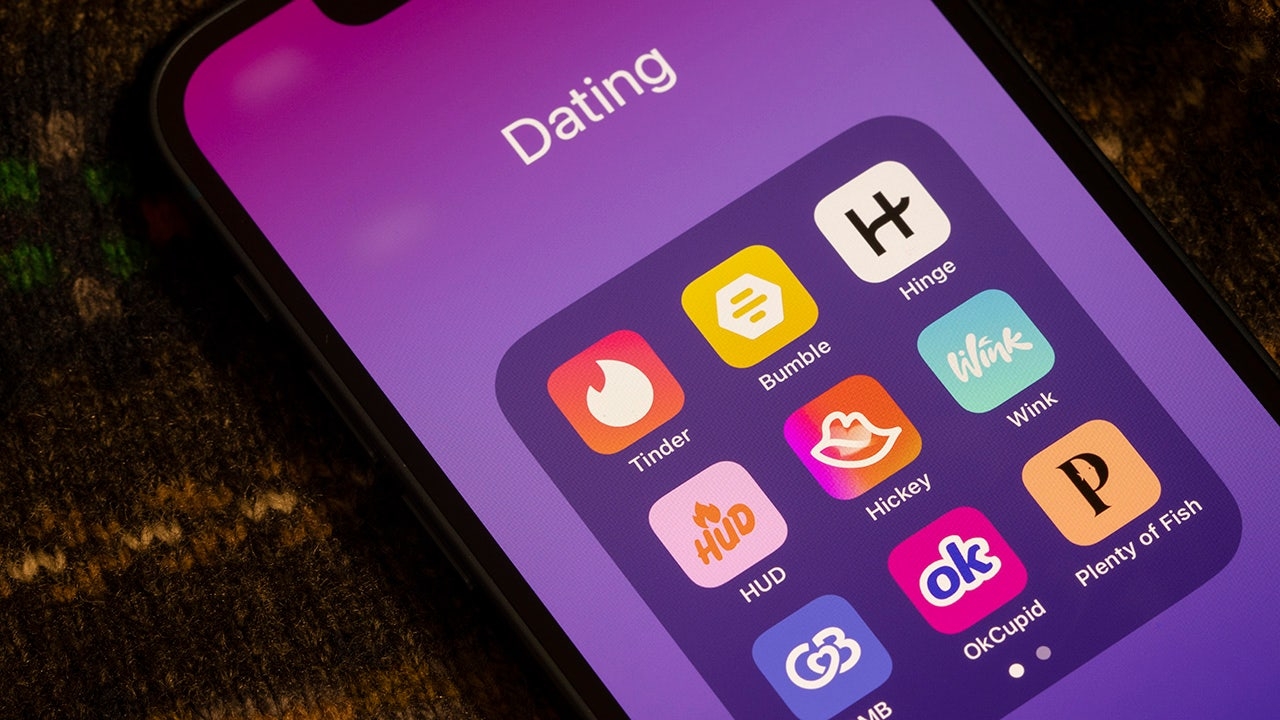
Finding love in Washington state could come with a price. A bill proposed by two state Democratic lawmakers would impose a tax on dating apps. Under the terms of House Bill 2071, dating app companies would be required to pay $1 per Washington-based user each month, regardless of whether the user pays for the service. Users with inactive accounts for at least 24 months would be excluded. The money would be used to fund domestic violence programs. How To Not Fall In Love With Ai-powered Romance Scammers The money would be put into the newly created state Domestic Violence Services Account, which funds programs and support services for victims. Read On The Fox News App Fox News Digital reached out to the offices of state representatives Lauren Davis and Shaun Scott, both Democrats, who are behind the legislation. Fox News Digital also reached out to several dating app companies for reaction. "Online dating companies can determine how to absorb the cost," Davis told Fox News Digital. "They could simply cut it out of their profits, or increase the fees for paid users by $1/month or possibly begin charging for free users (though the latter is probably less likely)." The bill targets dating apps like Hinge, Bumble and Tinder. The legislation had its first reading Tuesday and has been referred to the state House Finance Committee. Stop These V-day Scams Before They Break Your Heart And Your Bank Account Funding for domestic violence programs is necessary after lawmakers in 2023 passed HB 1169, which removed the Crime Victim Penalty, which was paid for by those convicted of crimes. The CVP provided the primary funding for victim advocates who work in prosecutors' offices, Davis said. "When HB 1169 was passed, the state made a commitment to backfill the funding loss from the CVP with general fund state (GFS) dollars," she said. "Unfortunately, the state has not kept this commitment. Prosecutors' offices across the state have been forced to lay off victim advocates, and scores of victims are no longer receiving victim advocacy services." Davis explained that her bill is intended to replace the missing funds. She further criticized Washington's legal system, calling it "a nightmare for victims." "The system is designed for the protection of defendants, not victims," she said. "I cannot fathom how I would've ever navigated the system successfully without a victim advocate, and I am rightly horrified that similarly situated victims will no longer receive help. "The purpose of this tax proposal is to keep the state's promise to crime victims and not defund victims services," she added. "Though a nexus is not required for a tax as it is for a fee, there is a reasonable nexus between online dating apps and domestic violence."Original article source: Washington state Democrats want to tax online dating apps

Fox News
09-04-2025
- Politics
- Fox News
Washington state Democrats want to tax online dating apps
Finding love in Washington state could come with a price. A bill proposed by two state Democratic lawmakers would impose a tax on dating apps. Under the terms of House Bill 2071, dating app companies would be required to pay $1 per Washington-based user each month, regardless of whether the user pays for the service. The money would be used to fund domestic violence programs. The money would be put into the newly created state Domestic Violence Services Account, which funds intervention programs and support services for victims. The only users excluded are those with inactive accounts for at least 24 months. Fox News Digital reached out to the offices of state representatives Lauren Davis and Shaun Scott, both Democrats, who are behind the legislation. Fox News Digital also reached out to several dating app companies for reaction. "Online dating companies can determine how to absorb the cost," Davis told Fox News Digital. "They could simply cut it out of their profits, or increase the fees for paid users by $1/month or possibly begin charging for free users (though the latter is probably less likely)." The bill targets dating apps like Hinge, Bumble and Tinder. The legislation had its first reading Tuesday and has been referred to the state House Finance Committee. Funding for domestic violence programs is necessary after lawmakers in 2023 passed HB 1169, which removed the Crime Victim Penalty, which was paid for by those convicted of crimes. The CVP provided the primary funding for victim advocates who work in prosecutors' offices, Davis said. "When HB 1169 was passed, the state made a commitment to backfill the funding loss from the CVP with general fund state (GFS) dollars," she said. "Unfortunately, the state has not kept this commitment. Prosecutors' offices across the state have been forced to lay off victim advocates, and scores of victims are no longer receiving victim advocacy services." Davis explained that her bill is intended to replace the missing funds. She further criticized Washington's legal system, calling it "a nightmare for victims." "The system is designed for the protection of defendants, not victims," she said. "I cannot fathom how I would've ever navigated the system successfully without a victim advocate, and I am rightly horrified that similarly situated victims will no longer receive help. "The purpose of this tax proposal is to keep the state's promise to crime victims and not defund victims services," she added. "Though a nexus is not required for a tax as it is for a fee, there is a reasonable nexus between online dating apps and domestic violence."
Yahoo
09-04-2025
- Politics
- Yahoo
Swiping left or right on adating app could soon cost money with new tax
This story was originally published on Whether you swipe left or right as you're looking for the love of your life on your phone, one state lawmaker is introducing a new bill to tax online dating companies, and it would be up to those companies to decide whether to pass the tax onto customers. Rep. Lauren Davis, D-Shoreline, introduced House Bill 2071 on Tuesday, which would require dating app companies like Tinder, Bumble, and others to pay the $1 excise tax per every user in Washington per month. The tax would not apply to users who have accounts, but have not accessed those accounts for 24 months. Davis said she is looking for a way to fund services for domestic violence victims, intervention treatment, and perpetrator treatment. 'Domestic violence (DV) perpetrators as a group are extremely dangerous and they are responsible for an untold share of community violence, not just against their intimate partners, but more broadly,' Davis said. 'Having a DV conviction is the No. 1 predictor of recidivism, the No. 1 predictor of violent crime. These individuals are the folks who are most likely to kill a law enforcement officer.' Davis, who was a victim of domestic violence, shared her own story during a House Community Safety, Justice, and Reentry Committee meeting at the State Capitol in 2023. 'In the summer of 2021, I ended a tumultuous relationship that was defined by a pattern of severe psychological abuse and course of control,' Davis testified. 'When I had broken up with him previously, my abuser would threaten my career or threaten to kill himself in order to get me back. The day I left for good, he used his body to block my exit so I couldn't leave his house. I was able to break free and I never looked back.' Tuesday, Davis told KIRO Newsradio her bill is a response to the state's failure to make good on a promise to fund services after the House passed HB 1169 to eliminate the Crime Victims Penalty without backfilling lost funding. 'The State has massively defunded victims' services that operate out of prosecutors' offices specifically and help victims navigate our impossible legal system, which is entirely focused on the needs, wants, wishes, rights, and protections of criminal defendants and not victims,' Davis said. KIRO Newsradio reached out to several online dating services, who have yet to respond at the time of publishing. Follow Luke Duecy on X. Submit news tips here.
