


Latest news with #Ludocene

Daily Mirror
 10-08-2025
- Entertainment
- Daily Mirror
Ludocene is the ‘Tinder for Games' app that just might help solve the issue of game discoverability
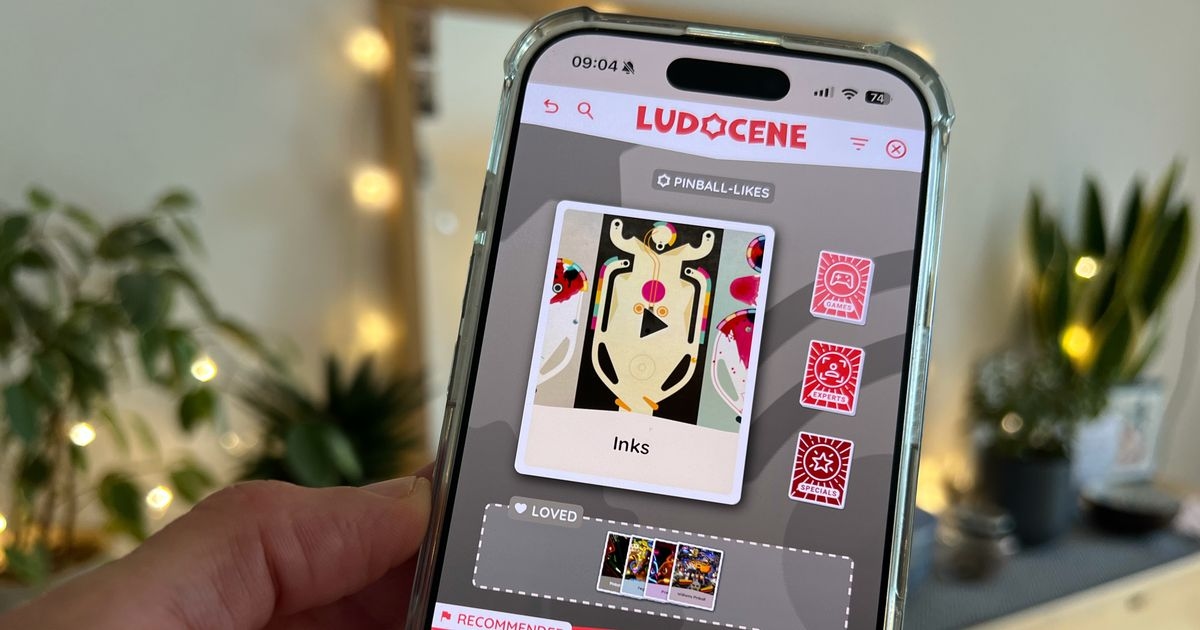
With thousands of new games releasing on Steam and digital console storefronts each year, Ludocene aims to make finding your next favourite video game a lot less intimidating. Following the launch of Ludocene earlier this week, we speak to its creator, Andy Robertson, about the way the app intends to pair players up with great games they otherwise wouldn't know about. There are a lot of video games that are released each year. Like a lot. Since the advent of digital-only storefronts – and Steam in particular – it's resulted in a new kind of era where players are spoilt for choice. An unfortunate side effect of such excess, however, is the issue of actually finding which one of these games to play next. After all, how do you know if you'll like a game if you don't even know it exists in the first place? The answer, veteran journalist and gaming database aficionado Andy Robertson thinks, is Ludocene. Described by many as a 'dating app that matches you with games rather than people', it launched earlier this week following an extended beta period, hoping to help players who are frequently inundated with things to play by pairing them up with a title that best suits their tastes. At a time where game discoverability has become an issue due to more titles than ever being launched, there's an argument to say Ludocene is needed now more than ever. Ludocene makes it so all you need to do is build up a deck filled with some of your most beloved games, and then swipe your way to your next potential perfect match. To celebrate the launch of Ludocene's 1.0 release on National Play Day this past Wednesday, August 6, I sat down with Robertson, the app's creator, to learn more about how the idea of a ' Tinder for games' app came to be and his future hopes and ambitions for how it may change the way players find their next favourite video game. Where did the idea for 'Tinder but for games' first come from? We were frustrated trying to find games we loved on Steam and other stores. They have recommendations, but frequently funnel us to the popular games, and often not a good match for our tastes. We had a database of games we had created over the last five years, which specifies which games you'd love based on your current favourites. The "Tinder for games" idea (as coined by some press) came about by asking, how could we offer a stream of games to someone and let them make simple choices about which they loved? You initially funded Ludocene via Kickstarter. Did the amount of interest and support it garnered surprise you? We were blown away by the support on Kickstarter. Not least because this is (essentially) a free tool and on Kickstarter people usually back things to get some physical product cheaply. We were humbled by how much people wanted this to happen, and were willing to back us to create this tool for the good of everyone. The UI and deck-building design is very satisfying and tactile. Why was this an important aspect to include in Ludocene? We wanted to make discovering games fun. If it's not fun to find your next video game then something has gone wrong with the process. This is about moving discovery from a commercially funnelled process to something really playful, where you could stumble across your next favourite game in a fun way. We ended up making what is essentially a deck-builder, rogue-like game. Which has been fun, but was a challenge to get right. We love how it's turned out but know there is still some 'jank' we will need to finesse as the tool spreads wider. Ludocene is powered by recommendations from game makers, journalist and educators. Did they take much convincing? We've been inundated with requests to become Experts on the tool. Each time we onboard someone they are usually surprised how deep our game catalogue goes. But also, they are brilliant at spotting games we don't have yet. We then prioritise the games that these experts want to suggest, to add next. What went behind the decision to launch the app a month early to coincide with National Play Day? The app is inspired by play as something that's good in its own right. This is true in a physical playground but also true in digital spaces. We loved the idea of a National Play Day this year that celebrates spaces where play can happen. I've had a long conversation with Play England and have contributed to their recent play strategy, which is very inclusive of digital play, so picking this day as our launch was a great fit. Finally, what are your hopes for Ludocene in the near and far future, and in what ways do you hope it helps the issue of game discovery? This is just the start; getting it into the hands of everyone who wants to find great games. People who enjoy the tool can support with a small subscription (price of a coffee) each month. which will help us improve the features, make it simpler and responsive and also pay for an ever-wider group of Experts to offer their play tastes. We hope to play a part in putting game discovery back in the hands of the players, and offer a space where Experts can share their tastes and be recognised for the value this brings.
Yahoo
11-03-2025
- Entertainment
- Yahoo
A dating app for video games tackles one of the industry's big issues
"Too many video games, too little time," has never been more true. Almost 19,000 titles went live on PC games store Steam in 2024 - about 360 a week. There are positive ways to look at this. Tools are more accessible and easier to use, barriers to entry are lower, self-publishing is easier and ideas are never short in supply. But for developers "discoverability" – getting your new release noticed - has never been more challenging in a landscape dominated by blockbusters and online games such as Fortnite and Call of Duty. It's also harder for potential customers to find them, with recommendations often dictated by search engine and store algorithms. But Ludocene - described as a "dating app for video games" hopes to change that. Games journalist Andy Robertson, the man behind the project, says the goal is to help people find those "ones that got away". "In any given year there's just so many games and some of those will rise to the top, they'll get lucky or they'll just be brilliant enough to punch through that noise," he tells BBC Newsbeat. "But there's loads of really great games that just get sort of buried and lost in that shuffle." Ludocene itself looks a bit like a game - each title in its database is represented by a card with a trailer on one side and more information on the reverse. The "dating app" element comes from users swiping to keep - or discard - the suggestions, slowly building up a collection of recommended titles. Ludocene's entries are chosen by a selection of well-known gaming experts – journalists, streamers and other figures. Its makers say the hand-picked suggestions give you a better chance of finding quality titles outside the mainstream. "And so what we're hoping is not just to get the popular games everybody's playing, but those kind of odd little games that would be a perfect match just for you," says Andy. One of the experts involved in Ludocene is veteran US games journalist Brian Crecente. He set up gaming websites Kotaku and Polygon, led video games coverage at Rolling Stone and Variety, and now runs a consultancy business. He says there's currently "a perfect storm for not knowing what to play" thanks to the reliance on search engine optimisation (SEO) and automatic algorithms. "There's just so much stuff," he says. "Books, comics, movies, music, video games. It's very hard to discover what it is you might like and you might miss out on some hidden gems." A lot has been written about layoffs and studio closures in the video games industry, but Brian points out that many websites and magazines dedicated to it have also closed. "So you have this rising tide of new games coming out and then a drop in the number of people covering video games," he says. Brian thinks Ludocene has got people interested partly because it fills that space for people looking for more detailed, informed recommendations. "Having an approach that helps you discover things that give you a better sense of whether you're going to like it allows you to invest your money, and for me, more importantly, your time in the things that you really enjoy," he says. Ludocene seems to have struck a chord with the gaming community. It's currently a prototype, but breezed past its £26,000 Kickstarter target four days ahead of its deadline and plans to fully launch as a web app in August. Independent developer Jodie Azhar, founder of studio Teazelcat Games, says she thinks the project looks "really exciting" overall. "Hopefully, they're finding the things that existing algorithms are missing - really high quality games that didn't quite get the marketing at launch or the media coverage," she says. But she does have some hesitation about the dating app mechanic. "It's a binary swipe one way," she says. "The worry there is, if you ignore a particular game, is that going to cut out a whole bunch of other games that the algorithm deemed similar? "So a lot hinges on how good the algorithm is in working out what games are similar and what a player may enjoy interacting with." Jodie says she has some concerns about the team's ability to keep up with the pace of new releases and ensure that its recommendations stay varied. "How quickly can you update or how vast can you make that dataset to make it really effective?" she says. However, Jodie is pleased the app will be free to use when it launches, and says that will make people "more likely to give it a try to invest in it". Why so many games are failing right now - and why others are breakout hits Hellblade 2 leads the way at Bafta Games Awards Pokémon boss believes series can last another 50 to 100 years Andy admits that keeping the database updated will be a challenge. He's also the founder of The Family Gaming Database, which adds about two games per day. He expects Ludocene to update more quickly because it needs less data for each entry. Having experts on board helps to identify "blind spots", he says, and hitting the crowdfunding goal means the project will have time to build its database before launch. Backers can try the full app early and any money raised above the target will go towards building extra features. Andy hopes the indie-focused project will ultimately help to shine a spotlight on the "passion projects" often made by small teams or individuals. "The idea is it's kind of levelling the playing field," he says. "Just having someone as a bit of a cheerleader to say diversity in games is really important." Listen to Newsbeat live at 12:45 and 17:45 weekdays - or listen back here.
Yahoo
11-03-2025
- Entertainment
- Yahoo
A dating app for video games tackles one of the industry's big issues
"Too many video games, too little time," has never been more true. Almost 19,000 titles went live on PC games store Steam in 2024 - about 360 a week. There are positive ways to look at this. Tools are more accessible and easier to use, barriers to entry are lower, self-publishing is easier and ideas are never short in supply. But for developers "discoverability" – getting your new release noticed - has never been more challenging in a landscape dominated by blockbusters and online games such as Fortnite and Call of Duty. It's also harder for potential customers to find them, with recommendations often dictated by search engine and store algorithms. But Ludocene - described as a "dating app for video games" hopes to change that. Games journalist Andy Robertson, the man behind the project, says the goal is to help people find those "ones that got away". "In any given year there's just so many games and some of those will rise to the top, they'll get lucky or they'll just be brilliant enough to punch through that noise," he tells BBC Newsbeat. "But there's loads of really great games that just get sort of buried and lost in that shuffle." Ludocene itself looks a bit like a game - each title in its database is represented by a card with a trailer on one side and more information on the reverse. The "dating app" element comes from users swiping to keep - or discard - the suggestions, slowly building up a collection of recommended titles. Ludocene's entries are chosen by a selection of well-known gaming experts – journalists, streamers and other figures. Its makers say the hand-picked suggestions give you a better chance of finding quality titles outside the mainstream. "And so what we're hoping is not just to get the popular games everybody's playing, but those kind of odd little games that would be a perfect match just for you," says Andy. One of the experts involved in Ludocene is veteran US games journalist Brian Crecente. He set up gaming websites Kotaku and Polygon, led video games coverage at Rolling Stone and Variety, and now runs a consultancy business. He says there's currently "a perfect storm for not knowing what to play" thanks to the reliance on search engine optimisation (SEO) and automatic algorithms. "There's just so much stuff," he says. "Books, comics, movies, music, video games. It's very hard to discover what it is you might like and you might miss out on some hidden gems." A lot has been written about layoffs and studio closures in the video games industry, but Brian points out that many websites and magazines dedicated to it have also closed. "So you have this rising tide of new games coming out and then a drop in the number of people covering video games," he says. Brian thinks Ludocene has got people interested partly because it fills that space for people looking for more detailed, informed recommendations. "Having an approach that helps you discover things that give you a better sense of whether you're going to like it allows you to invest your money, and for me, more importantly, your time in the things that you really enjoy," he says. Ludocene seems to have struck a chord with the gaming community. It's currently a prototype, but breezed past its £26,000 Kickstarter target four days ahead of its deadline and plans to fully launch as a web app in August. Independent developer Jodie Azhar, founder of studio Teazelcat Games, says she thinks the project looks "really exciting" overall. "Hopefully, they're finding the things that existing algorithms are missing - really high quality games that didn't quite get the marketing at launch or the media coverage," she says. But she does have some hesitation about the dating app mechanic. "It's a binary swipe one way," she says. "The worry there is, if you ignore a particular game, is that going to cut out a whole bunch of other games that the algorithm deemed similar? "So a lot hinges on how good the algorithm is in working out what games are similar and what a player may enjoy interacting with." Jodie says she has some concerns about the team's ability to keep up with the pace of new releases and ensure that its recommendations stay varied. "How quickly can you update or how vast can you make that dataset to make it really effective?" she says. However, Jodie is pleased the app will be free to use when it launches, and says that will make people "more likely to give it a try to invest in it". Why so many games are failing right now - and why others are breakout hits Hellblade 2 leads the way at Bafta Games Awards Pokémon boss believes series can last another 50 to 100 years Andy admits that keeping the database updated will be a challenge. He's also the founder of The Family Gaming Database, which adds about two games per day. He expects Ludocene to update more quickly because it needs less data for each entry. Having experts on board helps to identify "blind spots", he says, and hitting the crowdfunding goal means the project will have time to build its database before launch. Backers can try the full app early and any money raised above the target will go towards building extra features. Andy hopes the indie-focused project will ultimately help to shine a spotlight on the "passion projects" often made by small teams or individuals. "The idea is it's kind of levelling the playing field," he says. "Just having someone as a bit of a cheerleader to say diversity in games is really important." Listen to Newsbeat live at 12:45 and 17:45 weekdays - or listen back here.


BBC News
11-03-2025
- Entertainment
- BBC News
Ludocene: Could a dating app for games help smaller developers?
"Too many video games, too little time," has never been more 19,000 titles went live on PC games store Steam in 2024 - about 360 a are positive ways to look at are more accessible and easier to use, barriers to entry are lower, self-publishing is easier and ideas are never short in supply. But for developers "discoverability" – getting your new release noticed - has never been more challenging in a landscape dominated by blockbusters and online games such as Fortnite and Call of also harder for potential customers to find them, with recommendations often dictated by search engine and store Ludocene - described as a "dating app for video games" hopes to change journalist Andy Robertson, the man behind the project, says the goal is to help people find those "ones that got away"."In any given year there's just so many games and some of those will rise to the top, they'll get lucky or they'll just be brilliant enough to punch through that noise," he tells BBC Newsbeat."But there's loads of really great games that just get sort of buried and lost in that shuffle." Ludocene itself looks a bit like a game - each title in its database is represented by a card with a trailer on one side and more information on the "dating app" element comes from users swiping to keep - or discard - the suggestions, slowly building up a collection of recommended entries are chosen by a selection of well-known gaming experts – journalists, streamers and other makers say the hand-picked suggestions give you a better chance of finding quality titles outside the mainstream."And so what we're hoping is not just to get the popular games everybody's playing, but those kind of odd little games that would be a perfect match just for you," says Andy. One of the experts involved in Ludocene is veteran US games journalist Brian set up gaming websites Kotaku and Polygon, led video games coverage at Rolling Stone and Variety, and now runs a consultancy says there's currently "a perfect storm for not knowing what to play" thanks to the reliance on search engine optimisation (SEO) and automatic algorithms."There's just so much stuff," he says."Books, comics, movies, music, video games. It's very hard to discover what it is you might like and you might miss out on some hidden gems." A lot has been written about layoffs and studio closures in the video games industry, but Brian points out that many websites and magazines dedicated to it have also closed. "So you have this rising tide of new games coming out and then a drop in the number of people covering video games," he thinks Ludocene has got people interested partly because it fills that space for people looking for more detailed, informed recommendations."Having an approach that helps you discover things that give you a better sense of whether you're going to like it allows you to invest your money, and for me, more importantly, your time in the things that you really enjoy," he says. Ludocene seems to have struck a chord with the gaming currently a prototype, but breezed past its £26,000 Kickstarter target four days ahead of its deadline and plans to fully launch as a web app in developer Jodie Azhar, founder of studio Teazelcat Games, says she thinks the project looks "really exciting" overall."Hopefully, they're finding the things that existing algorithms are missing - really high quality games that didn't quite get the marketing at launch or the media coverage," she she does have some hesitation about the dating app mechanic."It's a binary swipe one way," she says."The worry there is, if you ignore a particular game, is that going to cut out a whole bunch of other games that the algorithm deemed similar?"So a lot hinges on how good the algorithm is in working out what games are similar and what a player may enjoy interacting with."Jodie says she has some concerns about the team's ability to keep up with the pace of new releases and ensure that its recommendations stay varied."How quickly can you update or how vast can you make that dataset to make it really effective?" she Jodie is pleased the app will be free to use when it launches, and says that will make people "more likely to give it a try to invest in it". Andy admits that keeping the database updated will be a also the founder of The Family Gaming Database, which adds about two games per expects Ludocene to update more quickly because it needs less data for each experts on board helps to identify "blind spots", he says, and hitting the crowdfunding goal means the project will have time to build its database before can try the full app early and any money raised above the target will go towards building extra hopes the indie-focused project will ultimately help to shine a spotlight on the "passion projects" often made by small teams or individuals. "The idea is it's kind of levelling the playing field," he says. "Just having someone as a bit of a cheerleader to say diversity in games is really important." Listen to Newsbeat live at 12:45 and 17:45 weekdays - or listen back here.


The Guardian
19-02-2025
- Entertainment
- The Guardian
Looking for something new to spice up your game play? The Tinder of games is here
As any adult who loves video games knows, there are simply too many of them – 19,000 games were released in 2024 on PC games storefront Steam alone, not counting all the playable delights on consoles and smartphones. Most of us have backlogs of unplayed classics that make us feel guilty about buying newer games. Finding things that are actually good, meanwhile, can feel totally impossible. At least 50% of the questions people send in for this newsletter are a variant of 'Help, what should I play?' We do our best to help, but even though it's my job to know about games, I still don't have infinite time to play them. Streamers play games all day, but even they usually specialise in particular games or genres and rarely stray outside them. Trying to Google recommendations these days leads you down a rabbit hole of hard-to-parse Reddit threads and misleading AI slop. Enter Ludocene, a new app launching on Kickstarter this week that hopes to solve this problem. It is described as Tinder for video games. When you load it up you'll see a bunch of cards with game names, details and screenshots on them, as well as links to trailers, and you can sort them into yes/no piles. Based on what you say you like, it'll show you new cards for games you may like to play. If you like the look of a game you can add it to your deck, so you remember to check it out later. You can easily see which games connect to each other, so it's transparent where the recommendations come from. You can also select a particular expert – quite a few streamers, critics and other games media people have signed up already – to see their recommendations. Experts have their own cards too, showing a photo and a brief description of their background. The app's recommendation engine is powered only by human recommendations, not by an algorithm that relies on player data, genre tags or AI. It's based on a dataset put together over five years by the team behind Family Gaming Database, a recommendation site for parents. 'Amazing games are so often buried in the mass,' says longtime games writer Andy Robertson, who's leading the project. 'I wanted a way to follow experts with similar tastes to mine so I could find the games I'm missing. The system needed to be flexible and simple, and not take itself too seriously … The combination of matching with games like you do on a dating app, and building a hand of favourite games like in a deck builder, was perfect. My hope is that this makes game discovery fun and effective again, and pays experts for their expertise.' If it hits its Kickstarter goal, Ludocene will be free to use in its basic form, with no ads – there'll be a cheap subscription model down the line to unlock extra features, for no more than £3 a month. 'We don't make any assumptions about how much knowledge you have,' Robertson says. 'If you've only played Mario Kart and Minecraft you can dive in and start picking games. The system learns your tastes as you go and presents you with appropriate options. It really comes into its own when you pick more specific games for your deck. Whether that's Elden Ring, Balatro, A Short Hike or Shadow of the Colossus, the system learns your taste and throws up ever more specific and niche suggestions.' I'm someone who loves a specific and niche suggestion. The current 'if you like this, you might like that' game recommendation engines that you see on Steam and other storefronts are deeply lacking in the human touch that makes a recommendation meaningful. Ludocene caters to people who want a recommendation from an expert rather than a robot. Another splendid resource for discovering games I've recently come across is the Thinky Games website – a database and reviews site for puzzle lovers. It has a huge selection of games that you can search for by genre and platform, from phones to Nintendo Switch. Each game's description is written by an actual human who has played the game rather than scraped from store data. I guess I would say this, as a games critic of nearly 20 years, but I truly believe in the value of person-to-person game recommendations, especially in this era of AI-driven outsourcing of the soul. (I haven't signed up as a Ludocene expert, by the way, but I may well do so in future.) If you like the look of it, you can check out its Kickstarter page. Remember The Oregon Trail, that classic educational game where you had to ride your wagon across 19th century North America while avoiding the ultimate end-of-level boss: dysentery? Well, Keep Driving is that, but set in the early 2000s and with fewer intestinal infections. You've just bought your first car and now you're driving it across the country to a music festival. As you cruise, procedurally generated pixel landscapes drift by and hitchhikers thumb lifts, then tell you stories. It's effectively a management role-playing game where you repair and feed your gas guzzler while managing your own need for food and sleep. You can finish in four hours, but there are multiple endings to discover on subsequent playthroughs. A fun concept, beautifully realised. Available on: PC Estimated playtime: eight hours plus Sign up to Pushing Buttons Keza MacDonald's weekly look at the world of gaming after newsletter promotion 'For years, Maciej 'Groobo' Maselewski stood as the undisputed champion of Diablo speedrunning.' Thus begins Ars Technica's intriguing story of possible corruption in the shadowy world of the speed run – i.e. finishing games really quickly. A squad of modern-day speedrunning sleuths have been unable to replicate Grobo's success even with state-of-the-art software tools. Expect a Netflix exposé soon. Grapefuit Games, the independent studio co-founded by artist and game creator Robert Yang, has written A Sports-Like Manifesto, which you can read on its website. It defines a sports-like game as one that features elements of a sport without attempting to simulate the whole universe around it in intricate detail. Frankly, mainstream sports sims are beginning to resemble humourless chimera, more concerned with licensing deals and player likenesses than gameplay, so I hope more developers take Yang's approach. Keith is writing about this soon, but just a heads-up: a new memoir by veteran games writer Julian 'Jaz' Rignall has just launched via Bitmap Books. The Games of A Lifetime is a look back at Rignall's long career writing for magazines such as Zzap! 64, Computer & Video Games and Mean Machines, focusing on the games that stuck with him through the years. A fascinating read for veteran games mag aficionados. 'Less Star Wars – more Blade Runner': the making of Mass Effect 2's Bafta-nominated soundtrack I made the worst role-playing game of all time – and loved every minute of it 'There's no stress': gamers go offline in retro console revival Lost Records: Bloom & Rage (Tape One) – go back to a riot grrrl summer in clever teen thriller | ★★★★☆ This one comes from JohnnyBiscuits on BlueSky who asked: 'Nightreign looks like a huge departure in format from Elden Ring and for FromSoft in general too – [I'm] interested in other examples where developers have got out on a limb like this, particularly with a well loved IP.' Ooh, good question, and it's got me searching through my memory banks. As a Sega fan the first thoughts I had were of Virtua Fighter Kids, a strange comedy spin-off from Virtua Fighter 2 where all the combatants are children but with adult characteristics like facial hair, and Typing of the Dead, which turns horror shooter House of the Dead 2 into a typing sim. Or there's Namco's 16bit console title Pac-Man 2: The New Adventures, which reimagines the arcade maze game as a point-and-click adventure. I think, however, that the grandest about-turn in games history was Conker's Bad Fur Day from Rare, which took the visual style of harmless family games such as Banjo-Kazooie and Donkey Kong Country, and applied them to a wildly scatological, adult-orientated booze-n-swears fest. Surely the biggest image change since John Travolta's machine gun-wielding assassin in Pulp Fiction. If you've got a question for Question Block – or anything else to say about the newsletter – hit reply or email us on pushingbuttons@
