


Latest news with #LuisVayas


CTV News
 5 days ago
- Politics
- CTV News
Plastic pollution talks go into overtime as countries push for late breakthrough
A plenary session takes place during the second part of the fifth session of the Intergovernmental Negotiating Committee on plastic pollution at the European headquarters of the United Nations in Geneva, Switzerland, Wednesday, Aug. 13, 2025. (Martial Trezzini/Keystone via AP) GENEVA - Talks to create the world's first legally binding treaty to tackle plastic pollution went into overtime on Thursday, with talks adjourned to the following day. Countries scrambled to bridge deep divisions over the extent of future curbs on what was meant to be the final day of negotiations at the United Nations in Geneva. But with just 30 minutes left in the scheduled meeting, the chair of the talks of the International Negotiating Committee (INC), Luis Vayas Valdivieso, told delegates the negotiations would run into Friday. The INC is a group established by the United Nations Environment Assembly (UNEA) in 2022 with the mandate to develop a legally binding global treaty to address plastic pollution. Late Thursday night, countries had been awaiting a new text that could be the basis for further negotiations after delegations who want an ambitious plastics treaty threw out the one proposed on Wednesday. States pushing for a comprehensive treaty, including Panama, Kenya, Britain and the European Union, shared frustration that key articles on the full life cycle of plastic pollution - from the production of polymers to the disposal of waste - as well as the harm to health had been removed entirely from the text. Oil-producing nations are against curbs on the production of virgin plastics derived from petroleum, coal, and gas, while others want it to be limited and to have stricter controls over plastic products and hazardous chemicals. 'You cannot reconcile these two positions, and so I think that the chair will keep on trying. I don't know if he can, and if he can't, it will be time to seriously think about how to move forward,' David Azoulay, the managing attorney of the Center for International Environmental Law's Geneva Office, told Reuters. EU Commissioner Jessika Roswall said a 'weak, static agreement serves no one.' 'A treaty that covers the full life cycle of plastics and can evolve with science is a vital step ... The next few hours will show whether we can rise to the moment,' she said in a statement. Panama described Wednesday's draft text as 'repulsive' and called for a complete rewrite. Saudi Arabia, which is resisting major curbs, said nothing could be agreed until the treaty's scope was clearly defined. More than 1,000 delegates have gathered in Geneva for the sixth round of talks, after a meeting of the Intergovernmental Negotiating Committee in South Korea late last year ended without a deal. Advocacy groups held a banner and chanted against a 'weak treaty' on Thursday as they waited for delegates to arrive in the U.N. plenary hall in Geneva for further discussions. The OECD warns that without intervention, plastic production will triple by 2060, further choking oceans, harming health, and exacerbating climate change. Compromise Norwegian Minister of Climate and Environment Andreas Bjelland Eriksen, co-chair of the High Ambition Countries group, told Reuters that all parties need to compromise. 'We are willing to discuss all articles, three, six, for example, to be able to create the package that can be good enough for everyone,' he said, pointing to potential openness to re-discussing restrictions on chemicals and production. Ross Eisenberg, president of America's Plastic Makers, which is part of the American Chemistry Council, said he was optimistic. 'We think this can be really good for our industry, society, and for the environment,' he told Reuters. The council, which supports a deal without limits on plastic production, warned that the U.S. might not ratify a treaty containing provisions to ban chemicals or restrict plastic production. However, Colombian lawmaker Juan Carlos Lozada urged that no deal would be better than a watered-down deal. Some 300 businesses, including Unilever, have pressed for an ambitious treaty that harmonizes rules globally. 'If we don't get that degree of harmonization, we risk further fragmentation ... and higher costs,' Ed Shepherd, senior global sustainability manager at Unilever, told Reuters. Reporting by Olivia Le Poidevin and Emma Farge in Geneva; additional reporting by Alexander Marrow in London; editing by Giles Elgood, Marguerita Choy and Stephen Coates.

Yomiuri Shimbun
04-08-2025
- Politics
- Yomiuri Shimbun
Plastic Pollution Treaty's Creation Uncertain Due to Conflicting Views; Oil-Producing Countries Fear Impact on Resource
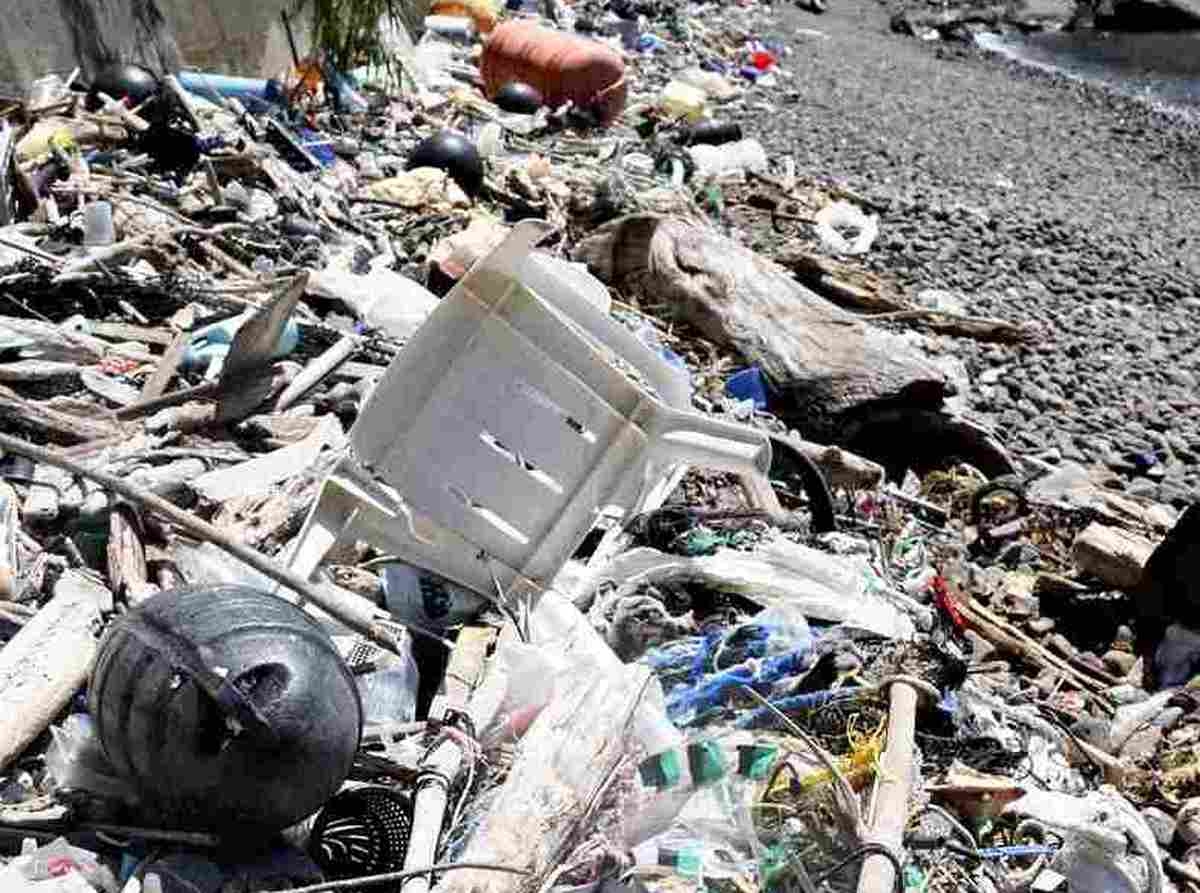
A meeting of an intergovernmental negotiating committee was expected to resume in Geneva on Tuesday to formulate an international treaty to prevent pollution by plastic waste. Conflicting opinions among the participating countries, however, are dampening the chances of the treaty being concluded. Japan has been working to promote drafting of the treaty and is calling on other countries to cooperate. The U.N. Intergovernmental Negotiating Committee meeting intended to yield the world's first treaty on plastic waste in Busan, South Korea, during talks from Nov. 25 to Dec. 1 last year but failed to do so due to opposition from oil-producing countries. There are fears that, if no agreement is reached this time, momentum for drafting the treaty may be lost. Opinions divided 'Although there is still a great deal of uncertainty, we will proactively and constructively engage in negotiations to reach a conclusion,' Environment Minister Keiichiro Asao said at a press conference after a Cabinet meeting Friday. Plastic waste, the majority of which does not decompose in nature, moves across and beyond national borders via rivers and oceans, causing serious environmental damage. The U.N. Environment Assembly adopted a resolution in 2022 to create a legally binding treaty to prevent pollution by plastic waste. More than 170 countries and regions have been holding discussions once or twice a year since, with the aim of establishing a comprehensive treaty that regulates the production of plastic products, discourages single-use plastics and promotes recycling, among other things. However, from the outset, opinions have been strongly divided, particularly on production restrictions. Island nations where large amounts of plastic waste have washed ashore have proposed setting global targets for reducing plastic use and banning the production as well as the import and export of harmful plastic products. The European Union and African nations have agreed with these proposals. Russia, Saudi Arabia and other major producers of oil, the main raw material for plastic, have strongly opposed such moves, saying they would lead to a reduction in petroleum exports. Emphasizing the usefulness of plastic products in medical and other areas, the oil producers demanded that wording that could lead to production regulations not be included in the treaty. The negotiations in Busan ended with only a 'draft text' that included both sides' arguments. Luis Vayas, ambassador of Ecuador to Britain, who chaired the meeting, said the work was far from complete. Proposal for compromise The creation of environmental treaties is based on the principle of consensus among countries and regions. During the previous five rounds of negotiations, there were some areas where participating parties were largely in agreement, such as the establishment of systems for collecting plastic waste. Some participants therefore have proposed creating a treaty based only on the areas where agreement is deemed possible. However, it remains unclear whether such compromises will be accepted. Island nations, for instance, have said that such acts would render the treaty ineffective. The inauguration of the second administration of U.S. President Donald Trump in January has also cast a shadow over the negotiations. The United States discarded the largest volume of plastic containers and packages per capita as of 2015. Trump in February criticized the previous U.S. administration's initiative to promote the use of paper straws as 'ridiculous' and signed an executive order to halt it. The United States had previously taken a position between the island nations and oil-producing countries. But the possibility of Washington shifting closer to the oil producers in the current negotiations has been pointed out. 'Last chance' Japan led the compilation of the 'Osaka Blue Ocean Vision' in 2019, which aims for there to be no further plastic pollution in the world's oceans by 2050, at the Group of 20 summit in Osaka. Tokyo also submitted a draft resolution to the 2022 U.N. Environment Assembly pushing for the establishment of the treaty on plastic waste. In intergovernmental negotiations, Japan has advocated measures to reduce plastic production that are tailored to each country's circumstances in a bid to encourage both island nations and oil-producing countries to cooperate. A resolution at the U.N. Environment Assembly set a target of finalizing the treaty by the end of 2024. The talks in Geneva, which are scheduled to conclude on Aug. 14, are being viewed as 'over time.' 'If no compromise is reached this time, the momentum for the establishment of the treaty could quickly be dampened. This may be our last chance [to conclude the treaty],' a senior Environment Ministry official said.
